Quick answer
Efficacy Pest Control's Goa branch in Chimbel provides scheduled, documented commercial pest control across Panaji. This covers offices, shops, warehouses, restaurants and hotels in areas such as Campal, Miramar, Altinho, Taleigao and Ribandar. Each programme starts with a site inspection and follows Integrated Pest Management, using CIB&RC-registered products. Service reports are shared after visits, and food businesses receive documentation aligned with HACCP and FSSAI audit expectations.
Key points
- Commercial pest control in Panaji is handled by Efficacy Pest Control's Goa branch in Chimbel.
- Programmes follow Integrated Pest Management: inspection, sanitation and proofing advice, then targeted treatment.
- The Goa operation is a licensed pest control operator (Directorate of Agriculture, Goa) using CIB&RC-registered products.
- Service reports are shared after visits, and food businesses receive documentation aligned with HACCP and FSSAI audit expectations.
- Panaji's humid coastal climate and heavy south-west monsoon make year-round, scheduled pest management sensible for businesses.
Commercial pest control in Panaji, Goa is handled by our Goa branch in Chimbel. We provide scheduled, documented pest management for offices, shops, showrooms, warehouses, clinics, cafés, restaurants and hotels across Panaji (often called Panjim). This includes Altinho, Campal, Miramar, Caranzalem, Dona Paula, Taleigao, St Inez and Ribandar.
A commercial programme is different from a one-off home treatment. It is built around your business: where food is handled or stored, and when customers and staff are on site. It also takes into account what auditors or head office expect to see, and which pests are realistic risks for your type of premises. The aim is steady, recorded control rather than a single spray and nothing more.
What does a commercial pest control programme include?
- A site inspection to find pest activity, entry points and the conditions that attract pests.
- Integrated Pest Management (IPM): sanitation and proofing advice first, then targeted treatment only where it is needed.
- Licensed application: we are a licensed pest control operator with the Directorate of Agriculture, Goa, and we use CIB&RC-registered products.
- Scheduled visits at a frequency matched to your risk, either as one-time work or under an annual maintenance contract.
- Service reports shared after visits as proof of service, with WhatsApp updates for clients.
- Material Safety Data Sheets (MSDS) maintained for the products we use.
For an overview of how this works across Goa, see our commercial pest control service page.
What do different Panaji businesses need?
Panaji is Goa's capital, so its commercial mix is broad. It includes government and corporate offices, banks, retail streets and markets, and cafés and restaurants. There are also hotels along the Mandovi riverfront and towards Miramar and Dona Paula, as well as clinics, schools, colleges and storage spaces serving local shops. Each carries different risks, so the plan changes with the premises.
| Type of premises | Pests we typically look for | Where we focus |
|---|---|---|
| Restaurants, cafés and bakeries | Cockroaches, rodents, flies, ants | Kitchens, food stores, drains, waste areas, under and behind equipment |
| Hotels and guest houses | Bed bugs, cockroaches, rodents, mosquitoes | Guest rooms, kitchens, stores, staff accommodation, gardens |
| Offices and banks | Cockroaches, ants, rodents | Pantries, washrooms, false ceilings, cable trays, server and record rooms |
| Shops and showrooms | Rodents, cockroaches, ants, lizards | Stockrooms, back-of-house areas, shutters, display bases |
| Warehouses and stores | Rodents, stored-product insects, termites | Loading points, racking, pallets, building perimeter |
| Clinics and schools | Cockroaches, ants, flies, mosquitoes | Canteens, pantries, washrooms, drains, open grounds |
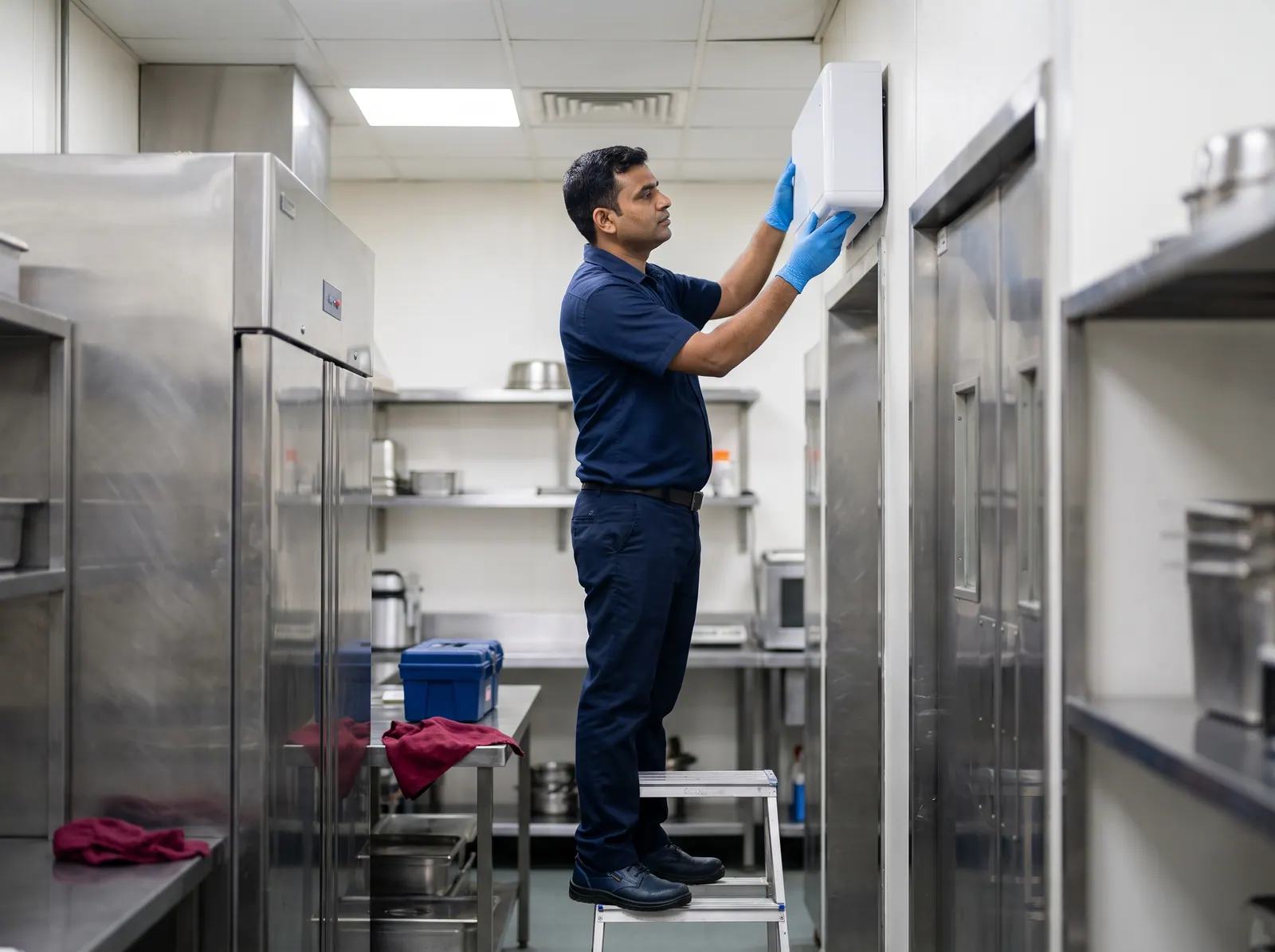
Restaurants, cafés and hotel kitchens
Food businesses carry the highest stakes. FSSAI's Schedule 4 hygiene requirements expect food businesses to keep pests under control. HACCP-based systems also treat pests as a hazard to be managed and recorded.
Our documentation for food businesses is aligned with HACCP and FSSAI audit expectations, so your records are ready when an inspector or brand auditor asks. Kitchen work centres on three things:
- Gel baiting and crack-and-crevice treatment for cockroaches.
- Tamper-resistant bait stations and traps for rodents.
- Source reduction for flies.
For more on kitchen cockroaches, see our guide to cockroach treatment in Panaji.
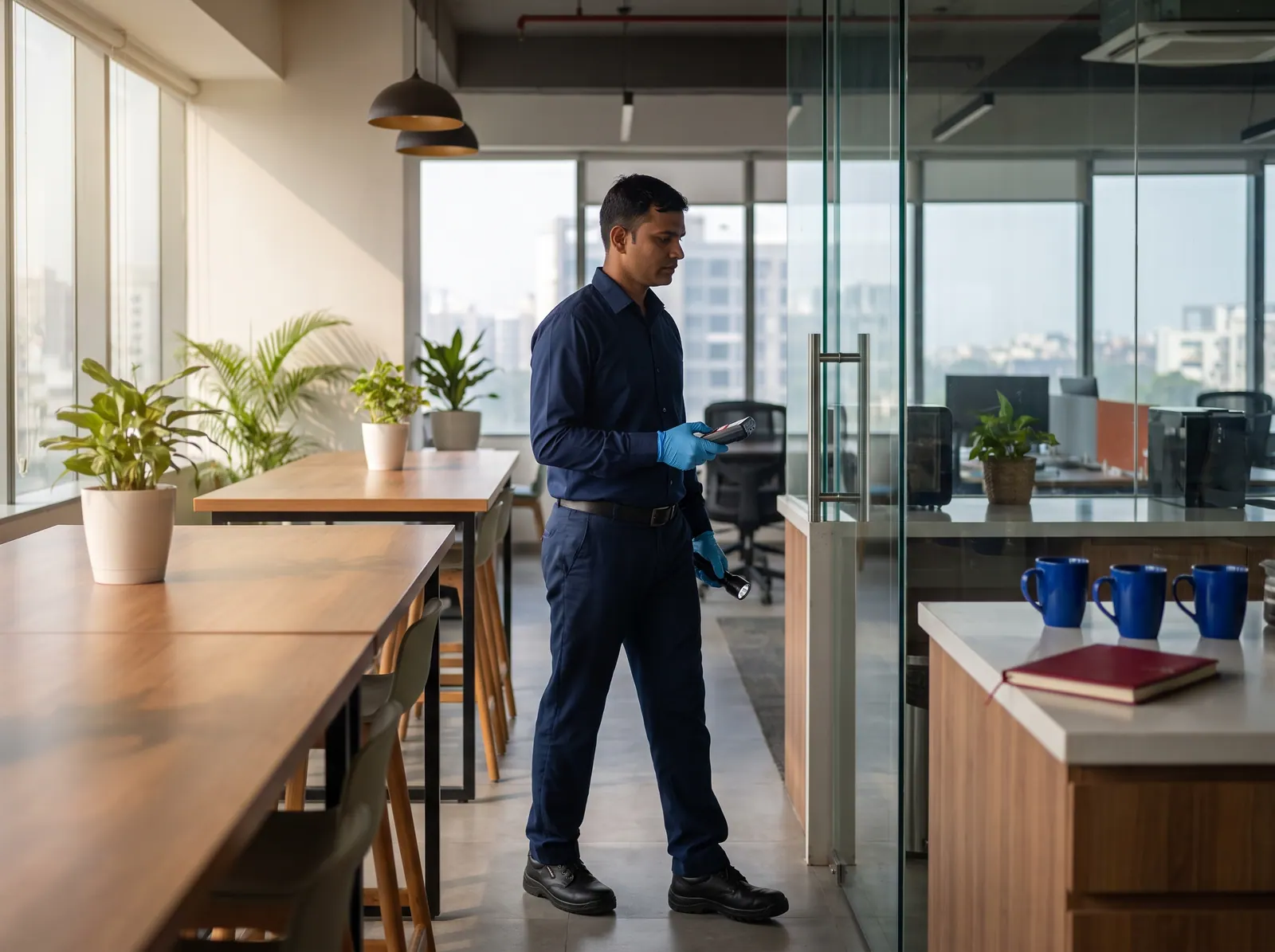
Offices, banks and service premises
Office pest problems are usually quieter but still disruptive. Typical examples are cockroaches in pantries, ants near desks where people eat, and rodents in false ceilings and cable runs, where they can gnaw wiring.
We plan visits around your working pattern and keep treatments targeted, so workstations and meeting rooms are not disturbed. Our page on office pest control in Goa covers this in more detail.
Shops, showrooms and storage
On busy retail streets, shops often share walls, drains and back lanes, so pests move easily between units. Stockrooms full of cardboard, packed goods or fabric give rodents nesting material and cover.
Here we focus on three things: proofing gaps around shutters and pipes, placing bait stations at likely entry points, and recording activity over time. Rodent behaviour and proofing are explained in our page on rodent control in Panaji.
Why does Panaji need a year-round approach?
Panaji sits where the Mandovi river meets the Arabian Sea. It has a humid coastal climate and a very heavy south-west monsoon. Several local conditions shape commercial pest control here:
- Monsoon pressure. Heavy rain floods drains and burrows, which can push rodents and cockroaches indoors. Damp conditions also favour termites and ants, and blocked gutters or stored water become mosquito breeding sites.
- Riverside and seafront sites. Properties in Campal, Miramar, Dona Paula and Ribandar contend with persistent humidity. This makes damp storerooms and service areas more attractive to pests.
- Older buildings. Older parts of the city, such as Fontainhas and the slopes of Altinho, have structures with timber doors, beams and furniture. In these buildings, termites and wood borers can be a real concern. See wood borer treatment in Panaji.
- Mixed-use buildings. A café, an office and flats may share one building. Pests found in one unit often come from another, so proofing and cooperation with building management matter as much as treatment.
- Seasonal footfall. Tourist seasons and festivals bring more visitors, more food handling and more waste. Each of these gives pests more opportunities.
How does a commercial service visit work?
- Inspection and discussion. A technician walks the site with your representative. Together they identify pests, entry points and the conditions supporting them.
- Risk and timing check. We note food areas, customer and patient zones, and sensitive equipment, then agree a time that suits your operations.
- Treatment plan. You receive a clear plan covering methods, visit frequency and what your team needs to do. Products are CIB&RC-registered, and MSDS are maintained for each one.
- Preparation. You clear the areas to be treated, remove or cover food and packaging, and follow any specific instructions given.
- Targeted treatment. We use gels, baits, bait stations and spot treatments, applied according to label directions. Most treatments take a few hours, depending on the pest and the size of the area.
- Report and follow-up. A service report is shared after the visit. We review activity at the next scheduled visit and adjust the plan if needed.
What records will your business receive?
For businesses, the paperwork matters almost as much as the treatment. After visits you receive a service report as proof of service, and you get updates on WhatsApp. For food businesses, we provide documentation aligned with HACCP and FSSAI audit expectations. We also maintain MSDS for the products used, which your safety officer or auditor may ask to see.
We suggest keeping a single pest control file. It should hold service reports, any site plan showing bait-station positions, product information and the recommendations you have acted on. A tidy file makes audits quicker, and it shows a pattern early if activity rises in one area.
Our Goa operation received the Indian Eminence Award (2026 – Goa), Certificate of Excellence. A purchase manager at one of our Goa clients has written that bed bugs in their staff accommodation were solved within the first three months. The same client also mentions being happy with our cockroach, lizard and rodent treatments.
One-time treatment or annual maintenance contract?
| One-time treatment | Annual maintenance contract (AMC) | |
|---|---|---|
| Best suited to | A specific problem, new premises before opening, or a one-off need | Food businesses, hotels, offices and stores with ongoing risk or audit cycles |
| Visits | A single visit or a short series | Year-round scheduled visits |
| Records | Report for the work done | Service reports building into a full-year record |
| Main benefit | Deals with the immediate issue | Problems are noticed early, before they reach customers |
Businesses that are audited or that handle food usually find an AMC easier to manage. The visits are already planned and the records accumulate without extra effort.
How is the cost worked out?
There is no single rate for commercial work. After inspection, we share a quotation based on:
- The size and layout of the premises, including stores, terraces and outdoor areas.
- Your type of business and its hygiene or audit requirements.
- The pests involved and how established they are.
- How often visits are needed: one-time, monthly, quarterly or under an AMC.
Payment is as per the quotation or invoice. We accept cash, UPI, card, net banking and bank transfer. If you need to reschedule, please cancel at least 48 hours before the visit, as a late-cancellation fee may apply.
For specific services, a warranty applies to the treated area, as set out in your service agreement. It varies by pest and treatment. It does not cover structural changes, new construction, or cases where post-service instructions were not followed.
What can your staff do between visits?
- Close bins and clear waste at the end of each shift.
- Clean under and behind cooking equipment, counters and shelving regularly.
- Store goods on racks off the floor and away from walls.
- Avoid stacking empty cardboard in stores or back lanes.
- Fix dripping taps and leaks, and keep drain covers in place.
- Report gaps around pipes, doors and shutters so they can be sealed.
- Note where and when pests are seen, and share this at the next visit.
Arranging a site inspection in Panaji
Our Goa branch in Chimbel handles commercial work in Panaji. Tell us your type of business, where it is in the city, the size of the premises and the pests you are seeing. We will then arrange an inspection and propose a suitable programme.
Branch details are on our Goa branch page. Other services available in the city are listed on our pest control in Panaji page.
Frequently asked questions
QIs commercial pest control safe to carry out in a working restaurant kitchen?
Yes, when it is planned properly. Kitchen work relies mainly on gel baits, crack-and-crevice treatment and bait stations rather than broad spraying. Food and utensils are removed or covered first. Products are CIB&RC-registered and applied according to label directions, and MSDS are kept for each one. Your technician will tell you when surfaces can be cleaned and the area reused.
QCan treatment be scheduled around our trading hours?
Please tell us your opening hours and your busiest periods when you get in touch. We plan visits so that treatment causes as little disruption as possible to customers and staff. We confirm the agreed timing for your site when booking, because the right slot depends on the treatment and the premises.
QHow long does a commercial pest control visit take in Panaji?
It depends on the pest, the size of the premises and the number of areas involved. A small office pantry or café may take much less time than a hotel or warehouse. Most treatments can be completed within a few hours, and the technician gives you an estimate during the initial inspection.
QDo you also handle businesses outside Panaji?
Yes, in several Goa towns. Company records list commercial coverage in Porvorim, Mapusa, Margao, Vasco da Gama, Ponda, Calangute, Candolim and Baga, alongside Panaji. If your business has premises in more than one of these towns, mention all the locations when you contact our Goa branch.
QWe run more than one outlet. Can they be covered together?
Share the number of outlets, their locations and the type of business at each. Our Goa branch can then advise how a programme and visit schedule could be set up. Each site still needs its own inspection, because kitchens, stores and buildings differ even within the same brand.
QWhat happens if pests return after treatment?
For specific services, a warranty applies to the treated area, as set out in your service agreement. It varies by pest and treatment. Pests can also arrive from neighbouring units or from outside, especially in shared buildings. In that case, proofing and prevention steps on your side matter, and our technician can advise on them.
QHow soon can staff use a treated area?
Follow the technician's instructions for your specific treatment. As a general rule, keep people and any animals away from treated surfaces until they are dry or for as long as advised. Ventilate the area, and wash hands after touching anything nearby. If anyone feels unwell after a treatment, they should see a doctor.
Last updated 13 October 2026. Information on this page is general guidance; your technician will advise on your specific property after inspection.