Quick answer
Cockroaches in a Hyderabad food cart or tiffin centre usually hide in warm, tight spaces close to food and water. Look at stove frames, hollow cart legs, gas cylinder bays, drawer runners and mixer motor bases. Control starts with removing scraps and moisture every night, storing ingredients in sealed containers off the floor, and sealing gaps. If cockroaches persist despite good routines, a licensed operator can apply targeted gel baits and crack-and-crevice treatment away from food.
Key points
- German cockroaches live indoors near food and hide in warm, tight gaps such as stove frames, hollow cart legs and motor bases.
- House flies breed in moist, decaying organic waste, so covering and promptly removing waste is a key control step.
- Storing ingredients in sealed containers raised off the floor reduces access for rodents, ants and cockroaches.
- FSSAI Schedule 4 sets out general hygiene requirements for food businesses, including pest control.
- Targeted methods such as gel baits and crack-and-crevice treatment keep products in hiding places and away from food surfaces.
If you run a tiffin centre, tea stall or food cart in Hyderabad, you work in a small space, often partly open to the street, and you start before sunrise. Those conditions suit cockroaches, flies, ants and rats as much as they suit a busy morning trade. This guide explains where food cart cockroaches and other pests hide, how to store ingredients, and which simple daily and weekly routines keep problems small.
It is written for small operators: no warehouse, no large staff, just a cart, a stall or a compact kitchen and a few people doing everything.
Why do carts and tiffin centres attract pests?
Pests need three things: food, water and shelter. A cart provides all three in a very small area. Batter drips, sugar spills, oil residue, water cans and wash buckets sit right next to hollow frames, joints and drawers that make perfect hiding places.
Warmth from stoves and tea boilers adds to the appeal, especially at night when the cart is parked and quiet. Because the space is small, a few cockroaches quickly become visible to customers. The good news is that small spaces are also easier to clean thoroughly and check completely.
Where do cockroaches hide in a food cart or small kitchen?
Cockroaches avoid light and prefer tight, warm gaps where their bodies touch surfaces on both sides. Two types matter most. Small, light-brown cockroaches with two dark stripes behind the head are German cockroaches; they live and breed indoors, close to food. Larger reddish-brown cockroaches usually come up from drains and sewer lines and wander in at night.
In carts, tea stalls and handcarts
- Hollow legs, handle tubes and frame joints, especially where tube ends are open
- The space under the stove or tawa, and behind burner knobs and gas pipes
- The gas cylinder bay and the base of the cylinder
- Drawer runners, hinges and gaps where steel sheets overlap or are riveted
- Wooden boards, plywood shelves, and any laminate or sticker lifting at the edges
- Around water cans, wash buckets and the drain hose
- Tea boilers, milk vessels and the base of mixers or chutney grinders, where motors stay warm
- Cloths, sacks and cardboard boxes left inside the cart overnight
In small tiffin kitchens
- Behind and under the batter grinder, and inside its motor housing
- Gaps between the cooking platform and the wall, and behind loose tiles
- Sink cabinets, floor traps and drain outlets
- Switchboards, the fridge motor compartment and the space behind the fridge
- Stacks of plates, crates and stored packaging
A quick check with a torch before you switch on the lights in the early morning can show you exactly where they are coming from. Small dark droppings that look like ground pepper, shed skins and egg cases in corners are other signs. For a closer look at the kitchen species, see our guide to German cockroaches in Hyderabad restaurant kitchens.
Flies, ants and rodents: what draws them in?
Flies
House flies breed in moist, decaying organic matter: food waste, spilt batter, wet tea leaves, fruit peel and the sludge in drains. Tea and juice stalls also attract flies with sugar and syrup. Keeping waste covered, emptying it often and rinsing away spills breaks the breeding cycle far better than chasing adult flies.
Ants
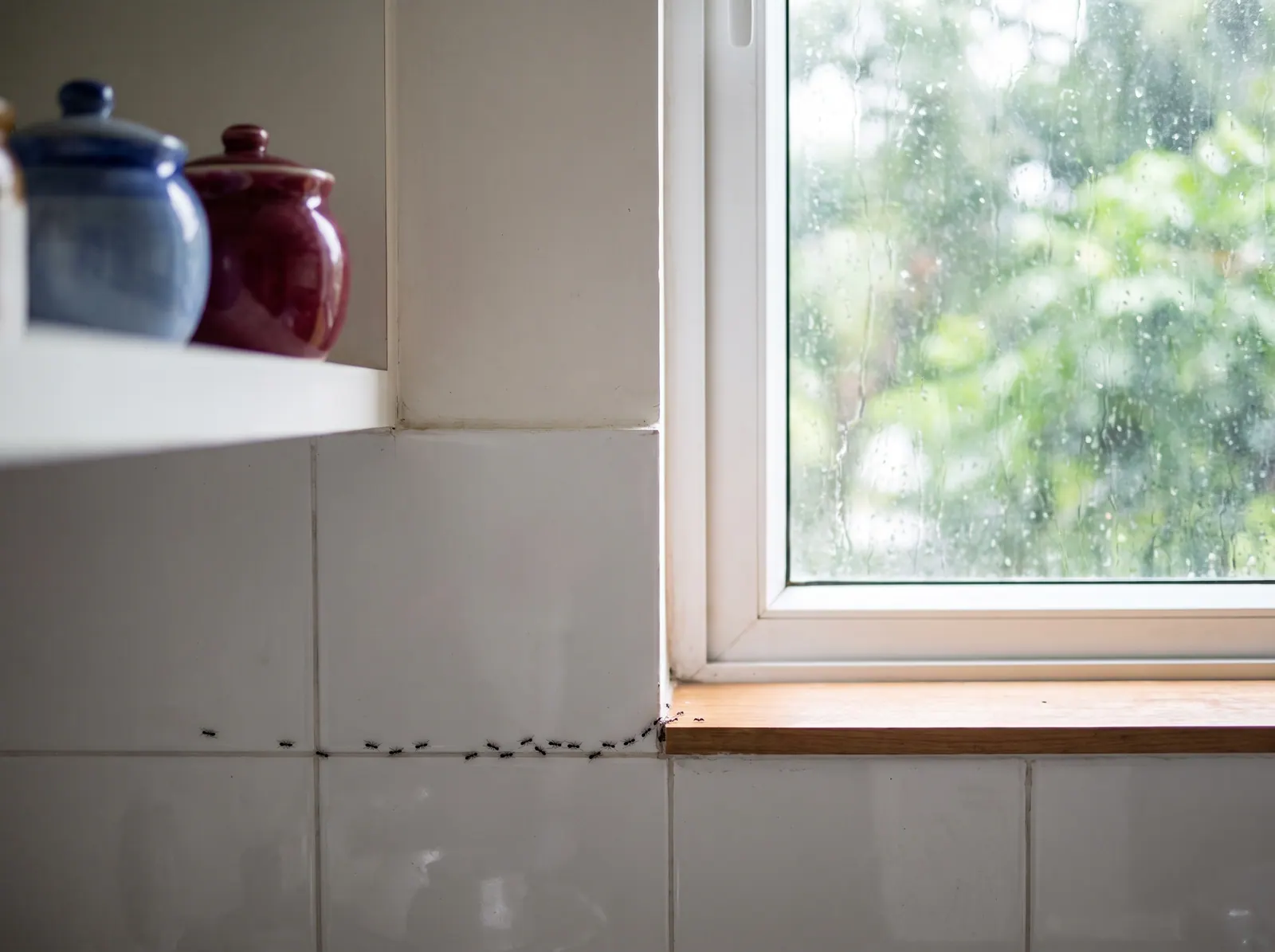
Ants follow trails to sugar, jaggery, sweets, oil and crumbs. Once a scout finds a sugar jar with a loose lid, a trail can follow quickly. Wipe spills straight away and keep sweet items in tightly closed containers.
Rats and mice
Rodents go for stored rice, flour, rava, dal and oil, especially sacks left on the floor overnight. They gnaw through plastic bags and thin containers, contaminate food with droppings and urine, and can chew gas tubing and wiring. Gnaw marks, droppings, torn packets and greasy rub marks along walls are typical signs.
How should you store ingredients to keep pests out?
Ingredient storage is where small operators have the most control, and a good setup does not need to be expensive.
- Use sealed, food-grade containers. Steel or thick plastic with tight lids for rice, dal, rava, flour, sugar, tea powder and spices. Avoid open sacks and thin bags.
- Keep everything off the floor. Raise containers on a shelf or platform with a gap underneath and behind, so you can clean and spot droppings.
- Check deliveries before storing. Look for live insects, webbing, holes or droppings. Cockroaches and egg cases travel in cardboard, so empty items out and discard boxes rather than keeping them.
- First in, first out. Use older stock first and never top up old flour or rava with new.
- Cover prepared food. Batter, chutneys, sambar and cut vegetables should stay covered between uses.
- Avoid leaving stock in a parked cart overnight. A cart full of food is an easy target. If you must, use lockable, sealed containers.
- Keep cleaning materials and any pest control products well away from food.
Food businesses of every size are expected to follow basic hygiene and sanitation practices. FSSAI Schedule 4 sets out general hygiene requirements for food businesses, which include cleaning and pest control. If you are unsure what applies to your registration, check with the food safety authority.
Daily and weekly routines that work for small operators
Steady routines do more than occasional deep cleans. The table below fits an early-start schedule; adjust it to your own hours.
| When | What to do |
|---|---|
| Start of day | Torch check of hotspots before turning on lights; look for droppings or live insects; wipe the counter and stove area before setting out food. |
| During service | Wipe spills straight away; keep bins covered; keep batter, sugar and chutneys covered between uses. |
| End of day | Scrape and wash the stove base and tawa area; remove every food scrap; empty and rinse bins; dry wash buckets and water cans; move stock into sealed storage; leave nothing wet overnight. |
| Weekly | Pull out drawers and clean runners; brush out hollow legs and joints; clean grinder and mixer bases; flush and clean drains and traps; throw away cardboard and old sacks. |
| Monthly | Look for new gaps, rust holes, loose laminate or lifting stickers and get them sealed or repaired; check the parking spot for nearby garbage or standing water. |
Sealing matters as much as cleaning. Capping open tube ends, filling gaps in wooden boards and fixing loose tiles removes the hiding places cockroaches rely on.
How do Hyderabad's seasons change things?
In the hot, dry summer, insects and rodents look for water, so leaking cans, wet cloths and wash areas draw them in. During the monsoon, flies increase around wet waste, and heavy rain can push cockroaches and rats up from drains. The milder winter months are a good time to catch up on repairs and sealing.
Our guide to monsoon pests in Hyderabad and the Hyderabad pest calendar explain what to expect through the year.
When does professional treatment help?
Good routines keep problems small, but they do not always remove an established cockroach population hidden inside a cart frame or a grinder motor. Consider professional help if:
- You see cockroaches during the day, which can be a sign that hiding places are crowded
- Numbers stay the same or rise after two to three weeks of careful cleaning and sealing
- You find signs of rats, such as droppings, gnawing or chewed gas tubing
- A bee or wasp nest has appeared near your stall
- Customers or a food safety inspector have raised a concern
What does a suitable treatment for a food cart look like?
For a food business, the aim is to treat the hiding places, not to spray over food surfaces. Targeted methods such as gel baits placed into cracks and joints, and crack-and-crevice treatment, put the product where cockroaches live and keep it away from food. For rodents, traps or bait stations are combined with blocking entry points.
A professional should inspect first, explain what will be used and where, and tell you how long to wait and what to wash before you start cooking again. Before hiring anyone, ask whether they hold a state pest control licence under the Insecticides Act, 1968, and whether their products are registered with the CIB&RC. You can also ask for the safety data sheet of any product used.
How we work in Goa
At our established Goa branch in Chimbel, we follow an Integrated Pest Management approach: inspection, sanitation and proofing advice, then targeted treatment. For food businesses in Goa, we share service reports after visits and keep documentation aligned with HACCP and FSSAI audit expectations. Even a one-cart operation benefits from simple records; our guide to pest control records for food businesses in Telangana explains what to keep.
Safety tips if you treat anything yourself
- Never use household insecticide sprays on or near food, cooking vessels or lit burners.
- Use only products sold for the purpose, and follow the label directions exactly.
- Cover or remove all food, utensils and drinking water before any treatment, and clean surfaces afterwards as the label advises.
- Keep children and pets away from treated areas until dry or as advised.
- Ventilate the space and wash your hands afterwards.
- Do not mix products or make home-made chemical mixtures.
- If anyone feels unwell after exposure, or is bitten by a rodent, see a doctor.
Our article on the dos and don'ts of pest control covers more ways to make any treatment safer and more effective.
Talking to our Shamshabad branch
Our Shamshabad branch has recently opened — tell us your location and the problem, and we'll confirm whether we can help. You can read more about our Shamshabad office or browse the Shamshabad branch FAQs for answers to common questions.
Frequently asked questions
QWhy do cockroaches keep coming back to my food cart even after cleaning?
Cleaning removes food, but cockroaches can still shelter and breed inside hollow legs, frame joints, drawer runners and motor housings that a cloth never reaches. Egg cases hidden in these gaps hatch later, so numbers seem to bounce back. Brush out joints weekly, cap open tube ends, seal gaps in wooden boards and stop storing cardboard in the cart. If numbers still do not fall after a few weeks, targeted professional treatment of the hiding places may be needed.
QIs it safe to use cockroach spray inside a food cart?
Household sprays are not designed for use on food surfaces, and aerosols near a lit stove are a fire risk. Spraying also tends to scatter cockroaches deeper into the cart. If you use any product, choose one sold for the purpose, follow the label exactly, remove food and utensils first, and clean surfaces as directed. For a persistent problem, a licensed operator using targeted methods such as gel baiting keeps products in cracks rather than on cooking areas.
QCan a cart or tiffin centre be treated without losing a day's business?
Often a treatment can be planned around your hours, for example after closing, so the area has time before the next early start. Targeted methods placed into cracks and joints usually cause less disruption than broad spraying. The operator should tell you what was applied, how long to wait, and what to wash before cooking again. Always follow those instructions, even if it means a slightly later start.
QHow do I reduce flies at a tea or juice stall?
Flies come for sugar, syrup, wet tea leaves and fruit waste, and they breed in moist decaying matter. Use bins with tight lids, empty them several times a day, and rinse away sticky spills immediately. Keep sugar, syrups and cut fruit covered, and dispose of used tea leaves promptly. Clean any drain or wash-water outlet near the stall regularly, since sludge there is a common breeding spot.
QDoes a small tiffin centre need to keep pest control records?
Food businesses are expected to follow basic hygiene and pest control practices, and FSSAI Schedule 4 sets out general hygiene requirements. Even if no one asks to see them, simple records help: dates of cleaning, any sightings, and details of professional visits and products used. They show an inspector you take hygiene seriously and help you notice patterns. Check with the food safety authority about what applies to your registration.
QCan your Shamshabad branch help with my tiffin centre or food cart?
Our Shamshabad branch has recently opened, and we are confirming service coverage area by area. Tell us where your cart or tiffin centre is and what you are seeing, such as cockroaches, rats or flies, and we will confirm whether and how we can help. The contact details shown on this page connect you with our Shamshabad office.
Last updated 13 October 2026. Information on this page is general guidance; your technician will advise on your specific property after inspection.