Quick answer
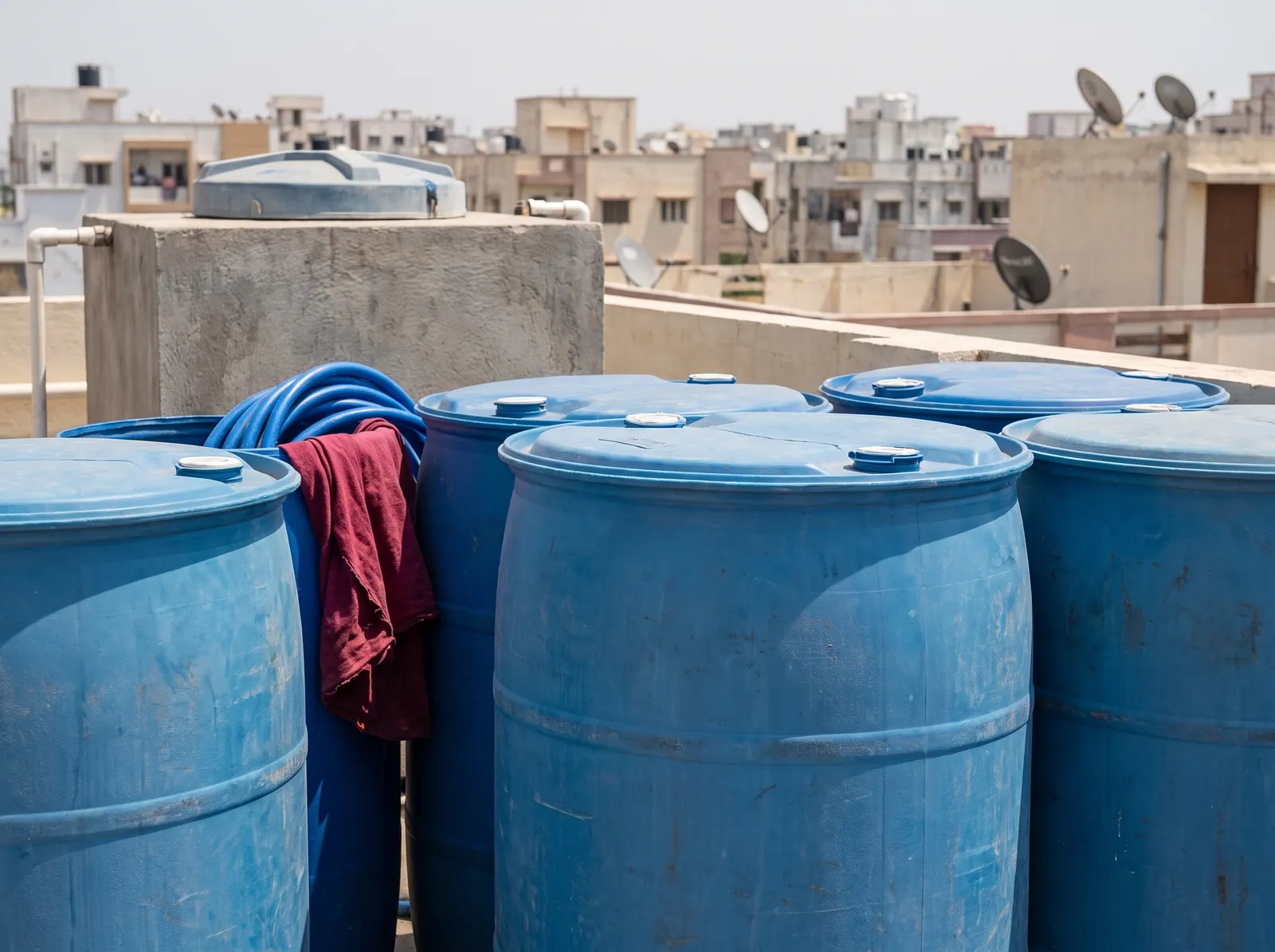
Water stored in drums, buckets, sumps and tanks during Hyderabad's summer can breed Aedes mosquitoes, the daytime biters that can spread dengue. They lay eggs on the inner walls just above the waterline, and those eggs survive drying out. Keep every container tightly covered. Once a week, empty it, scrub the inner walls and refill. Check coolers, plant saucers and overhead tanks too.
Key points
- Aedes mosquitoes breed in clean water stored in drums, buckets, tanks and coolers, even in dry summer weather.
- They lay eggs on inner container walls just above the waterline, and these eggs survive drying out.
- Weekly emptying and scrubbing of containers breaks the cycle, as development to adult can take about a week in hot weather.
- Never add kerosene, oil or insecticides to water used for drinking, cooking or bathing.
- Fever after mosquito exposure should be checked by a doctor; avoid self-medicating.
When summer water supply becomes irregular, many Hyderabad households start storing water in plastic drums, buckets, cement tanks and extra sumps. That is a sensible response to shortages. However, every container of clean, still water is also a place where mosquitoes can breed. This guide explains why a water drum can produce mosquitoes in Hyderabad's summer, and gives a simple covering, scrubbing and weekly checking routine that greatly reduces the risk.
Why does summer water storage matter for mosquitoes?
Hyderabad's summer on the Deccan plateau is hot and dry, so you might expect fewer mosquitoes than in the monsoon. Rain-filled puddles do dry up. Stored water, though, stays put, and the mosquitoes that matter most here do not need puddles or drains.
Aedes mosquitoes, including Aedes aegypti, prefer clean water held in containers in and around homes. A drum on the terrace, a bucket in the bathroom or a cement tank in the yard suits them well. Warm weather also speeds up their development. Container breeding can therefore carry on through the dry months and build up before the rains arrive. Our guide to summer pests in Hyderabad looks at other heat-season problems, from cockroaches to ants seeking water.
How do Aedes mosquitoes use a water drum?
Understanding this life cycle explains why a lid alone, or emptying alone, is often not enough:
- Eggs on the walls: The female lays eggs on the damp inner wall of the container, just above the waterline, not on the water surface.
- Eggs survive drying: These eggs can stay alive on a dry wall for a long time. When the water level rises again, they hatch.
- Larvae in the water: The small wriggling larvae (often called wrigglers) feed in the water, then turn into pupae.
- Adults in about a week: In hot weather the journey from egg to biting adult can take roughly a week.
This is why public health advice in India commonly recommends emptying and cleaning stored water containers at least once a week. Doing it weekly breaks the cycle before a new generation of adults can emerge.
How should you cover drums, buckets and tanks?
A mosquito needs only a small gap to get in and lay eggs. A plate resting loosely on a bucket, or a lid with a cracked rim, still lets them in. Aim for a cover that seals completely.
- Drums and large containers: Use the fitted screw or clamp lid. If the lid is lost or cracked, tie a fine cloth or mosquito mesh tightly over the mouth with a cord or strong elastic.
- Buckets and pots: Use a lid that fits snugly. Keep only the buckets you actually need filled, and turn spare ones upside down.
- Overhead tanks and sumps: Check that the lid sits flush and is not broken. Look at the overflow and vent pipes too; a piece of fine mesh fixed over open pipe ends stops mosquitoes entering.
- Drawing water: Use a tap fitted near the base of the drum, or a clean mug kept only for that purpose, so the lid stays closed most of the time.
Covering reduces new egg-laying. It does not remove eggs already stuck to the walls, which is where scrubbing comes in.
Why is scrubbing more important than just emptying?
If you pour out the water and immediately refill, any eggs on the inner walls simply hatch in the fresh water. The eggs are tiny and cling firmly, so rinsing with water is often not enough to remove them.
To clean a drum or bucket properly:
- Empty the water, ideally onto plants or a dry patch of ground where it will soak away rather than pool.
- Scrub the entire inner surface with a stiff brush or scrubber, paying special attention to the band around the old waterline.
- Rinse thoroughly with clean water.
- Leave the container to dry in the sun for a while if you can.
- Refill and close the lid tightly straight away.
For large fixed tanks and sumps that are difficult to empty every week, keep the lid sealed and openings meshed, and arrange periodic cleaning, for example through the building's maintenance staff.
A weekly routine for homes
Pick one day each week, perhaps the day your water supply comes, and walk through this checklist. It takes little time once it becomes a habit.
| What to check | What to do each week |
|---|---|
| Drums and buckets | Empty, scrub inner walls, rinse, refill and close tightly |
| Desert coolers | Drain the water tray, scrub it and refill; drain fully when not in use |
| Overhead tank and sump | Check that lids are closed and unbroken and that pipe openings are meshed |
| Plant saucers and pots | Empty saucers; wipe them or fill with sand |
| Fridge drip tray and AC drain | Empty and wipe the tray; make sure AC outlets do not drip into a pool |
| Terrace, balcony and yard | Remove or turn over old tyres, tins, coconut shells and discarded containers |
| Bird baths and pet bowls | Change the water and wipe the inside |
What can housing societies and buildings do?
In apartment blocks, shared water storage is usually the biggest container of all. Committees and facility managers can help by inspecting sump and overhead tank lids and vent pipes, keeping terraces free of stagnant water, and making sure under-construction areas and curing tanks are not left with standing water. Sharing a simple weekly checklist with residents also helps, because a single uncovered drum on one balcony can affect neighbours.
What should you never put in drinking water?
Do not add kerosene, oil, household insecticides or any chemical to water you use for drinking, cooking or bathing. These can be harmful, and they are not a substitute for covering and cleaning. Where larvicides are used in water bodies or non-drinking water, it should be done by trained personnel or local health teams, strictly following the product label.
If you use mosquito repellents or sprays at home, follow the label directions, keep children and pets away from treated areas as advised, ventilate the room and wash your hands afterwards.
Health note: when should you see a doctor?
Aedes mosquitoes bite mainly during the day and can transmit dengue, chikungunya and Zika. If anyone in your household develops a fever, especially with body ache, headache, pain behind the eyes, rash or unusual tiredness, see a doctor promptly. Avoid self-medicating, and follow your doctor's advice and any guidance from local health authorities.
Daytime protection matters too: window and door mesh, long sleeves for children playing outdoors, and repellents used as directed on the label. Our guide to dengue season mosquito prevention in Hyderabad covers these personal measures in more detail.
How does summer storage fit into the rest of the year?
Good container habits built in summer pay off when the monsoon arrives and outdoor breeding sites multiply. The Hyderabad pest calendar shows how mosquito pressure changes through the year. If your home is close to a lake or tank, the guide to living near lakes and water bodies explains why those areas need a slightly different approach from container breeding.
Can a pest management team help?
Most container breeding is best controlled by the household itself, with a steady weekly routine. Where a property is large, such as a housing society, school, hotel or construction site, a structured approach can help. Our company follows an Integrated Pest Management (IPM) approach: inspection first, then sanitation and proofing advice, with targeted treatment only where it is appropriate. Material Safety Data Sheets are maintained for the products we use.
Our Shamshabad branch has recently opened, and coverage is being confirmed area by area. Tell us your location and the mosquito problem you are facing, and we'll confirm whether we can help. You can learn more about our Hyderabad branch in Shamshabad or read the Hyderabad branch FAQs.
Frequently asked questions
QCan mosquitoes breed in a covered water drum?
They can if the cover does not seal. A loose plate, a cracked lid or an open overflow pipe leaves enough of a gap for a mosquito to get in and lay eggs. Eggs laid before the drum was covered can also hatch later. Use a tight-fitting lid or fine cloth tied firmly over the mouth, and still empty and scrub the drum once a week.
QHow can I tell if my water drum already has mosquito larvae?
Look into the water in good light. Mosquito larvae are small, thin and wriggle up and down, often hanging just below the surface before diving when disturbed. Pupae look like tiny commas. If you see either, empty the water onto dry ground, scrub the inner walls well, rinse, and refill with a properly sealed lid.
QIs it enough to change the water every few days without scrubbing?
Changing the water helps, but on its own it often fails. Aedes mosquitoes lay eggs on the inner wall just above the waterline, and the eggs cling to the surface and survive drying. When you refill, they can hatch. Scrubbing the walls, especially around the old waterline, removes those eggs and makes the routine effective.
QDo desert coolers breed mosquitoes in summer?
Yes, the water tray of a desert cooler holds still water for long periods and can breed mosquitoes. Drain the tray at least once a week, scrub it, and refill with fresh water. When the cooler is not being used, drain it completely and leave it dry. Check the pump area too, as water can collect there.
QCan I add something to stored drinking water to kill mosquito larvae?
No. Do not add kerosene, oil, household insecticides or any chemical to water used for drinking, cooking or bathing. Covering containers tightly and scrubbing them weekly is the safe approach. Where larvicides are used, it should be done by trained personnel or local health teams following the product label, and not in household drinking water.
QDoes the Shamshabad branch offer mosquito control in Hyderabad?
Our Shamshabad branch has recently opened, and services and localities are being confirmed area by area. Please share your location and describe the mosquito problem, and we'll confirm whether and how we can help. In the meantime, the weekly covering and scrubbing routine on this page is the most effective step any household can take.
Last updated 13 October 2026. Information on this page is general guidance; your technician will advise on your specific property after inspection.