Quick answer
Ants invade Hyderabad homes in the hot, dry months mainly because water and sugary food become scarce outdoors. Foraging workers follow leaks, sinks, purifier trays and spills indoors. Follow the trail to find the entry point. Use slow-acting baits that workers carry back to the nest, rather than sprays that only kill the ants you can see. Then cut off water, sugar and entry gaps to keep them out.
Key points
- In Hyderabad's hot, dry months, ants forage indoors mainly for water and sugar as outdoor sources shrink.
- The ants seen on a trail are a small part of the colony; most of it, including the queens, stays hidden in the nest.
- Slow-acting baits carried back to the nest generally control ant colonies better than sprays, which mainly kill visible foragers.
- Repellent sprays can scatter multi-queen ants such as pharaoh ants into new colonies.
- Airtight food storage, fixing leaks and sealing gaps reduce what draws ants indoors.
An ant problem in Hyderabad often starts the same way. A thin line of tiny ants appears across the kitchen counter, around the water purifier or up the bathroom wall, usually as the weather turns hot and dry. The ants are not there because a home is dirty. They are foraging for two things that become scarce outdoors in the dry months, water and sugar, and a house offers both.
This guide explains why that happens and how to find where the ants are coming from. It also covers why baits usually work better than sprays, and the everyday habits that make a home less attractive to ants.
Why do dry months bring ants indoors?
Hyderabad sits on the Deccan plateau, with a hot, dry summer before the monsoon arrives. As soil dries out and plants come under stress, the outdoor food ants depend on shrinks. This includes nectar and the sweet honeydew produced by sap-feeding insects such as aphids. Worker ants have to travel further, and a building with running water and food is an easy find.
Inside a home, ants are drawn to:
- Water: dripping taps, wet sinks, bathroom floor drains, water purifier trays, AC drain lines, plant saucers and desert-cooler tanks.
- Sugar: spilt tea and juice, sweets and jaggery, honey jars, fruit bowls, soft-drink bottles and offerings left in the pooja area.
- Protein and grease: some species prefer cooking oil, meat scraps, pet food and crumbs.
- Shelter: cooler, shaded spaces in wall voids, under loose tiles, behind skirting and inside cabinets.
Ants are not only a summer issue. Heavy rain can flood outdoor nests and push colonies indoors too, as our guide to monsoon pests in Hyderabad explains. But many households notice the dry-season pattern first, with ants turning up at water points as often as at food. For other pests that follow the heat indoors, see our guide to summer pests in Hyderabad.
Which ants are commonly found inside homes?
Several kinds of ants regularly turn up in Indian homes. It helps to tell them apart, because they behave differently and respond differently to treatment.
- Ghost ants: very small, with a dark head and pale, almost see-through legs and abdomen. They like sweet food and moisture, and are often seen around kitchen sinks and bathrooms.
- Pharaoh ants: tiny and yellowish to light brown. Their colonies have many queens and can split into new colonies when disturbed. This is why spraying them often makes the problem worse.
- Crazy ants: small, dark, long-legged ants that run in fast, erratic paths rather than neat lines.
- Small black ants: a general name people use for several species that form tidy trails to sugar or crumbs.
- Carpenter ants: large black or reddish-black ants. They do not eat wood, but they can hollow out damp or decaying timber to nest, so they may point to a moisture problem.
- Red ants that bite or sting: several species, usually living outdoors in soil, garden beds and trees. Their bites and stings are painful.
You may see winged insects swarming from a wall or floor. If so, check whether they are ants or termites before doing anything else. Our guide on telling flying ants from flying termites shows the differences.
How do you find the ant trail and where it starts?
Ants lay a scent trail that other workers follow. Finding that trail is the most useful thing you can do before choosing any treatment.
- Watch before you wipe. Wiping the line away straight away hides the information you need.
- Set a simple test. Near where you see ants, put a drop of honey or sugar water on a piece of card. Put a small crumb of something oily on a second card. Within an hour you will usually see a trail form, and which food the ants prefer.
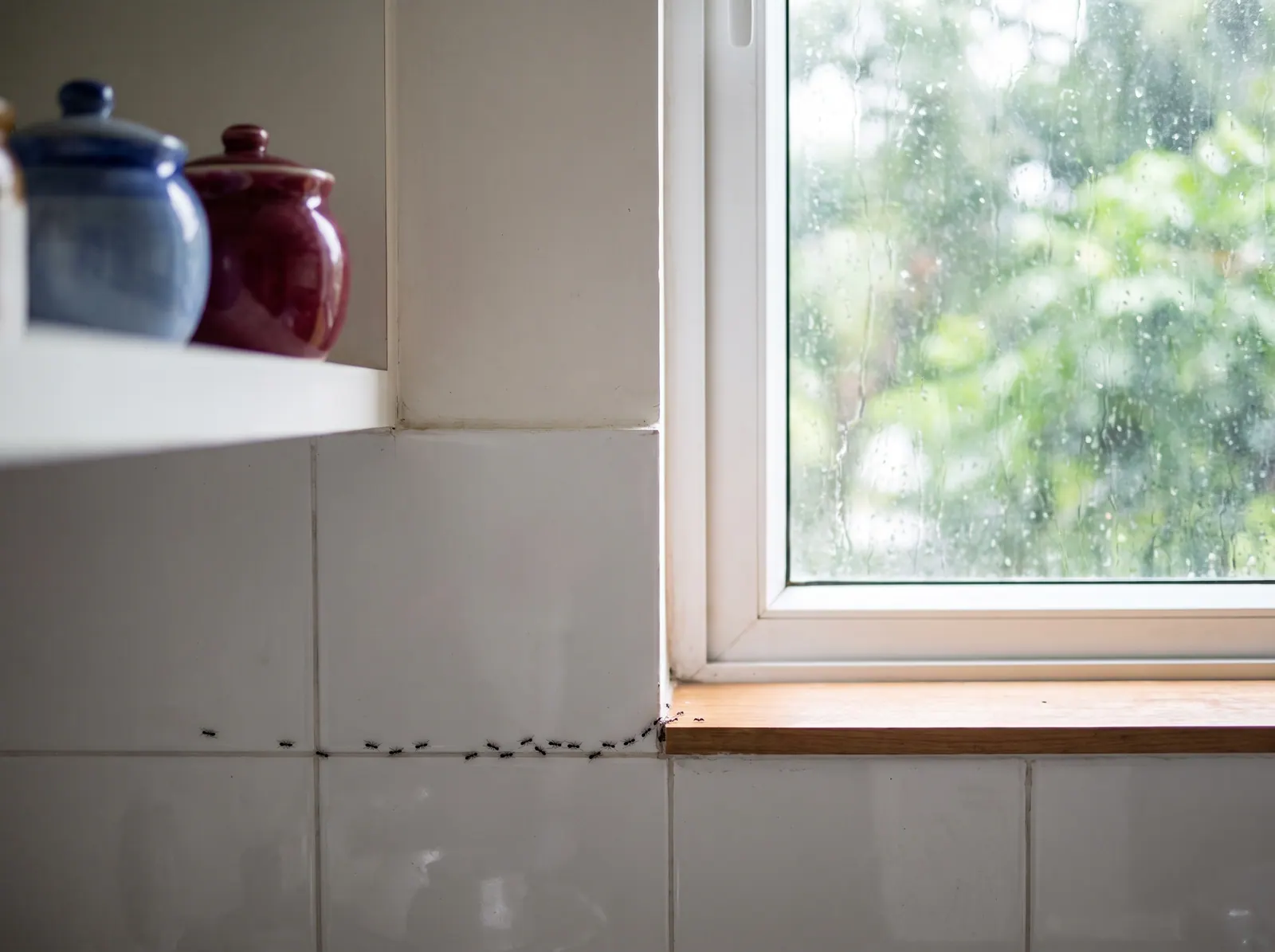
- Follow the line in both directions. One end leads to food or water. The other leads to where the ants enter, or to the nest itself.
- Check typical entry points. Look at gaps between the countertop and wall, tile grout, skirting, and window and door frames. Also check switchboards and sockets, holes around plumbing and gas pipes, and cracks near floor drains.
- Look outside too. Check along the external wall, around potted plants, at the foot of the compound wall and under paving.
- Note when they are busiest. In hot weather, ants often shift their foraging to cooler parts of the day.
In flats, the source may be outside your own home. It could be a shared duct, a neighbouring kitchen or the building's landscaping. That is one reason ant problems in apartment blocks are best tackled together. Our guide to pest control in rented homes covers who is usually responsible for what.
Baits or sprays: which works better for ants?
The ants you see on the counter are a small fraction of the colony. Most of it stays hidden in the nest, including the queen or queens that keep producing new workers. That fact is the key to choosing a method.
| Method | How it works | Where it helps | Limitations |
|---|---|---|---|
| Ant bait (gel or station) | Workers carry a slow-acting bait back to the nest and share it with other workers, brood and queens | Indoor trails, especially small ants nesting in walls or under tiles | Takes days to work; needs the right bait type; must not be sprayed over or wiped away |
| Contact or surface spray | Kills the ants it touches | Quick knock-down of a visible group; some outdoor nest treatments when applied correctly | Rarely reaches the nest; repellent products can scatter ants, and with multi-queen species can lead to more colonies |
| Wiping with soapy water | Removes ants and their scent trail | Cleaning up stray foragers, or once baiting has finished | Does not affect the colony |
How to make baits work
- Match the bait to the ant. Sugar-feeding ants may ignore protein baits, and the reverse is also true. Your card test tells you which they prefer.
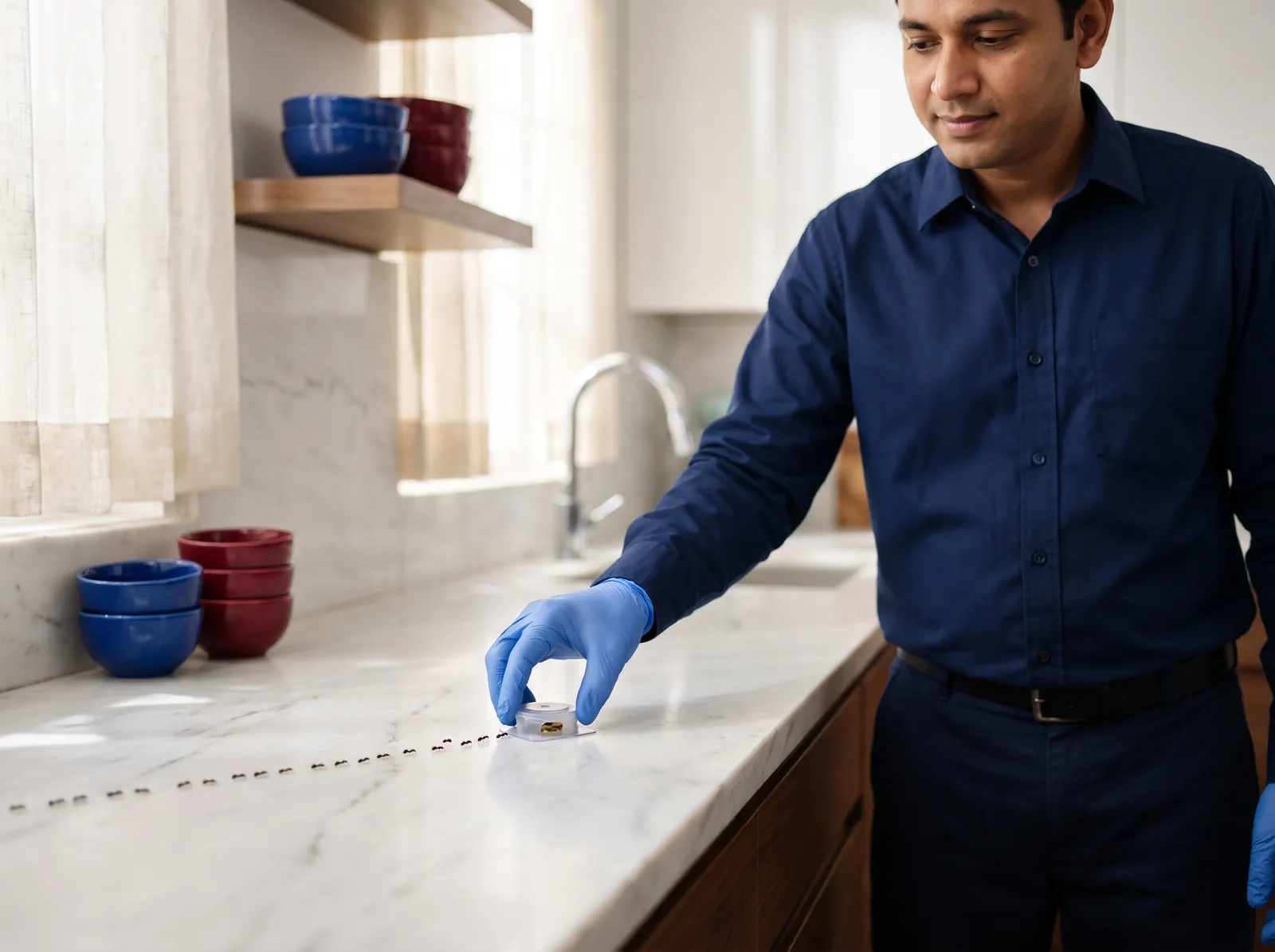
- Place bait on or right beside the active trail, not in places ants never visit.
- Keep sprays and strong cleaners away from baits. They contaminate the bait and stop the ants feeding.
- Expect more ants at first. A busy bait for the first day or two is a sign it is working.
- Remove competing food. Clear crumbs and spills so the bait is the most attractive thing around.
- Use products safely. Keep bait stations out of reach of children and pets, and follow the label directions. Never mix chemicals, ventilate rooms after any treatment, and wash your hands afterwards.
Sprays still have a place, but as a targeted tool rather than the first response. A professional approach usually combines several steps:
- Identify the ant.
- Find the nest or entry points.
- Bait the trails.
- Use spot treatment only where it makes sense, such as an outdoor nest or a void that can be treated directly.
Our general ant control service page describes this trail- and nest-focused method.
Which habits help keep ants out?
Baiting deals with the ants already inside. These habits reduce the water, food and gaps that drew them in.
In the kitchen
- Store sugar, jaggery, honey, sweets, dry fruit and biscuits in airtight containers. A lid that just rests on top will not stop small ants.
- Wipe counters and the stove after cooking. Rinse sticky bottles, glasses and tea cups rather than leaving them out.
- Use a lidded kitchen bin and empty it daily.
- Refrigerate cut fruit and sweets instead of leaving them out overnight.
Around water
- Fix dripping taps and leaking pipes promptly.
- Dry the sink at night and wipe water purifier trays.
- Empty plant saucers and check where AC drain lines discharge.
- Drain and clean desert coolers regularly. Standing water also breeds mosquitoes, as our guide to mosquito prevention in dengue season explains.
Around the building
- Seal gaps around pipes, skirting and window frames with a suitable sealant.
- Trim plants and creepers that touch walls or windows.
- Keep stored items, firewood and garden debris away from external walls.
Pets and the pooja area
- Feed pets at set times and lift the bowls afterwards. Standing a bowl in a shallow dish of water stops ants reaching the food.
- Clear prasad and offerings at the end of the day, or keep them covered.
When is it time to get professional help?
Many small ant problems settle with careful baiting and better habits. Consider professional help in these situations:
- Trails keep returning after a couple of weeks of patient baiting.
- Ants are coming out of switchboards, sockets or appliances. Do not spray into electrical fittings.
- You see several trails in different rooms, which suggests more than one nest.
- Large ants are active around damp or soft wood, which may also mean a moisture or timber problem.
- Winged insects are swarming indoors and you cannot tell what they are.
If anyone has a strong reaction to an ant bite or sting, such as swelling beyond the bite or difficulty breathing, see a doctor promptly.
Efficacy Pest Control follows an Integrated Pest Management approach: inspection, sanitation and proofing advice, then targeted treatment. We bring these practices from our established operation in Goa, and we maintain Material Safety Data Sheets for the products we use.
Dealing with ants at home in the Hyderabad region?
Our Shamshabad branch has recently opened. Tell us your location and the problem, and we’ll confirm whether we can help.
It helps to mention where you see the ants and roughly how big they are. Let us know whether you have already tried sprays or baits. You can read more about the branch on our Hyderabad branch page.
Frequently asked questions
QWhy do ants gather around my water purifier and bathroom sink in summer?
In Hyderabad's hot, dry months, moisture outdoors becomes scarce, and ants need water as much as food. Purifier trays, wet sinks, floor drains and AC drain lines give them a steady supply. Drying these areas at night, fixing drips and wiping trays removes much of the attraction. Combine this with baiting along the trail if the ants keep coming back.
QShould I spray ants as soon as I see them?
It is tempting, but spraying usually kills only the workers you can see while the nest carries on. Repellent sprays can also scatter the colony. With multi-queen ants such as pharaoh ants, they can lead to new colonies forming elsewhere in the home. Watching the trail first and then using a suitable bait is generally more effective.
QHow long do ant baits take to work?
Baits are slow-acting by design, so workers have time to carry them back and share them through the colony. You may see more ants at the bait for a day or two, which is normal. Activity usually drops over the following days. If you see no change after a couple of weeks, the bait type or the placement may be wrong.
QDo ants in the kitchen mean my home is unclean?
Not necessarily. Even very clean homes get ants in the dry season, because a single drip, a sticky bottle or a few grains of sugar is enough to attract foragers. Good housekeeping makes a real difference, but ants are mainly responding to water and food becoming scarce outdoors. They are not a judgement on your cleanliness.
QCould the ants in my flat be coming from a neighbour's home?
Yes, it is possible. In apartment buildings, ants can travel through shared ducts, pipe openings, wall voids and landscaped areas. If you have sealed gaps and baited carefully but ants keep returning from the same direction, speak to your neighbours or the housing society. Coordinated action across flats usually works better than treating one home alone.
QCan ants damage my home or furniture?
Most household ants are a nuisance rather than a structural threat. Carpenter ants are an exception: they do not eat wood, but they can hollow out damp or decaying timber to nest. Large ants around soft or wet wood are worth investigating for moisture. Winged swarms should be checked in case they are termites, which do eat wood.
QCan Efficacy Pest Control help with ants in the Hyderabad region?
Our Shamshabad branch has recently opened, and we are confirming services and coverage area by area. Tell us your location and describe the ant problem, including where you see them, their size and what you have tried. We’ll then confirm whether and how we can help. Branch details are shown on our Hyderabad branch page.
Last updated 13 October 2026. Information on this page is general guidance; your technician will advise on your specific property after inspection.