Quick answer
German cockroaches thrive in restaurant kitchens because they stay close to warmth, moisture and food, and hide in tiny gaps inside equipment. In busy Hyderabad kitchens that cook for long hours, control works best when it combines night-time inspection, monitoring traps, small gel bait placements in cracks and equipment voids, and rotating bait types when uptake drops. Kitchen staff also need a nightly sanitation routine, because sprays alone rarely reach breeding sites.
Key points
- German cockroaches are small, light-brown cockroaches with two dark stripes behind the head, living almost entirely indoors.
- They prefer warm, narrow gaps near food and water, which makes kitchen equipment such as fridge motors, grinders and range frames prime hiding places.
- Gel baiting placed in cracks and equipment voids is the main control method in food areas; rotating bait types helps when cockroaches stop taking it.
- Repellent sprays can scatter German cockroaches and contaminate bait, so they are used only selectively.
- Nightly cleaning under equipment, covered food, dry floors and a sightings log are essential for control to succeed.
Do you run a biryani house, tiffin centre, bakery or busy restaurant in the Hyderabad region? If so, the small brown cockroach you see near the dishwash or behind the stove is very likely the German cockroach. This guide covers restaurant cockroach control in Hyderabad kitchens. It explains why this species settles so easily into commercial kitchens and where it hides in equipment.
It also sets out a practical routine that combines careful gel baiting with daily kitchen hygiene. It is written for owners, kitchen managers and head chefs who want to understand the problem before speaking to anyone about treatment.
How do you recognise a German cockroach?
Adult German cockroaches are small, roughly 1.2 to 1.5 cm long. They are light brown, with two dark parallel stripes on the shield just behind the head. The young (nymphs) are darker and wingless, and are often the first ones staff notice.
They are quite different from the large reddish-brown American cockroach, which usually comes up from drains and sewers. The two species need different approaches. Our guide to German vs American cockroaches and why the species matters explains the difference in more detail.
Common signs of German cockroaches in a kitchen include:
- Tiny dark droppings, like ground pepper or coffee grounds, in corners, hinges and along shelf edges
- Small brown egg cases, or empty cases, in cracks and behind equipment
- Shed skins near hiding places
- A musty, oily smell where there are large numbers
- Cockroaches seen during the day, which usually means their hiding places are crowded
Why do German cockroaches dominate restaurant kitchens?
The German cockroach is an indoor species. It depends on human buildings and rarely lives outdoors. A commercial kitchen gives it almost everything it needs in a small space.
- Warmth: burners, ovens, fridge motors and hot-water lines keep hiding places warm through the day and night.
- Food: grease films, batter splashes, rice grains, flour and crumbs are enough to sustain a population. Spotless surfaces are not enough if the floor under the range is not cleaned.
- Water: sinks, dishwash areas, condensate from chillers, wet floors and leaking taps.
- Tight hiding places: they prefer narrow cracks where their bodies touch surfaces on both sides. Kitchen equipment is full of such gaps.
- Fast breeding: the female carries her egg case until shortly before it hatches, which protects the eggs. Each case holds dozens of eggs, so numbers can build up within weeks.
- Easy arrival: they hitchhike in cartons, vegetable sacks, crates, delivery packaging and second-hand equipment.
Long working hours make this worse. A kitchen may start breakfast tiffin before dawn and close after a late dinner service. That leaves little time when the space is cool, dry and clean.
Hyderabad's hot, dry summer pushes insects towards any reliable water source, and the monsoon brings humidity. Our guide to summer pests in Hyderabad covers how the heat drives pests indoors.
Where do German cockroaches hide in kitchen equipment?
Most German cockroaches in a restaurant are not on open walls. They are inside and underneath equipment. The table below lists the usual hotspots and what to check during an inspection.
| Equipment or area | Why cockroaches like it | What to check |
|---|---|---|
| Gas ranges, bhatti and dum burners | Constant heat, grease build-up, gaps in frames | Under drip trays and burner plates, hollow frame tubes, where gas pipes enter |
| Wet grinders and mixers (tiffin centres) | Warm motors, batter residue | Base of the motor housing, underside, gap between machine and stand |
| Refrigerators and under-counter chillers | Warm compressor, condensate water | Motor compartment, door gaskets, back panel |
| Bakery ovens, proofers and dough mixers | Steady warmth, flour and sugar | Side panels, control boxes, base and wheels of proofers |
| Dishwash area and sinks | Water and food scraps all day | Under sinks, behind splash-backs, drain channels and gratings |
| Steel tables and racks | Hollow legs and tubes | Open tube ends, under-shelf joints, wall gaps behind racks |
| Electrical panels, billing terminals, water heaters | Warmth from electronics | Around casings and cable entry points (only an electrician should open panels) |
| Cardboard, crates and sacks | Corrugations and glue, often arrive already infested | Dry store corners, floor-level stacks, delivery area |
Also check cracked wall and floor tiles, gaps around pipes passing through walls, and the space above false ceilings. Shared walls and service ducts with neighbouring shops are worth checking too.
How do you find out how bad the problem is?
Daytime sightings only show part of the picture. A proper assessment usually follows these steps:
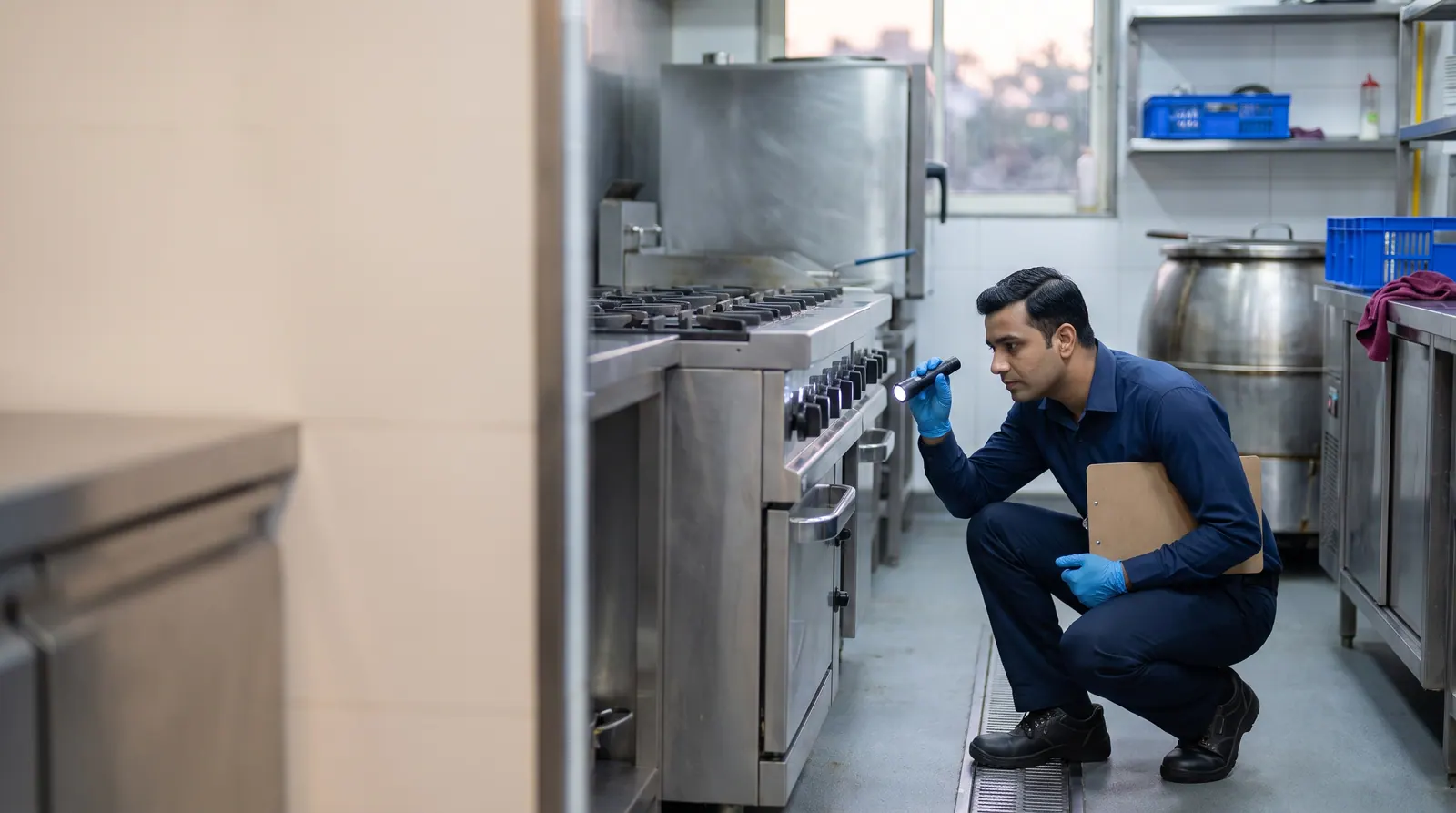
- Night inspection: after closing, switch the lights on suddenly and use a torch to check equipment bases, motor housings and drain areas.
- Monitoring traps: place sticky traps along wall edges, under equipment and near the dishwash. Cockroaches travel along edges, so traps in open floor space catch little.
- Record counts: note how many cockroaches each trap catches, and whether they are adults or nymphs. Repeat this at regular intervals.
- Map hotspots: a simple kitchen sketch marked with trap positions and counts shows where treatment should focus. It also shows whether numbers are falling.
Many nymphs in traps mean the population is breeding on site, not just arriving with deliveries.
How does gel baiting work, and why rotate baits?
Gel bait is the main tool against German cockroaches in food areas. It combines an insecticide with a food base that cockroaches want to eat.
Cockroaches feed on it, return to their hiding places and die there. With many bait formulations, other cockroaches are also affected when they contact or feed on the remains and droppings. This is why baiting can reach cockroaches hidden deep inside equipment.
How well baiting works depends heavily on where and how the bait is placed:
- Many small placements close to hiding places work better than a few large blobs.
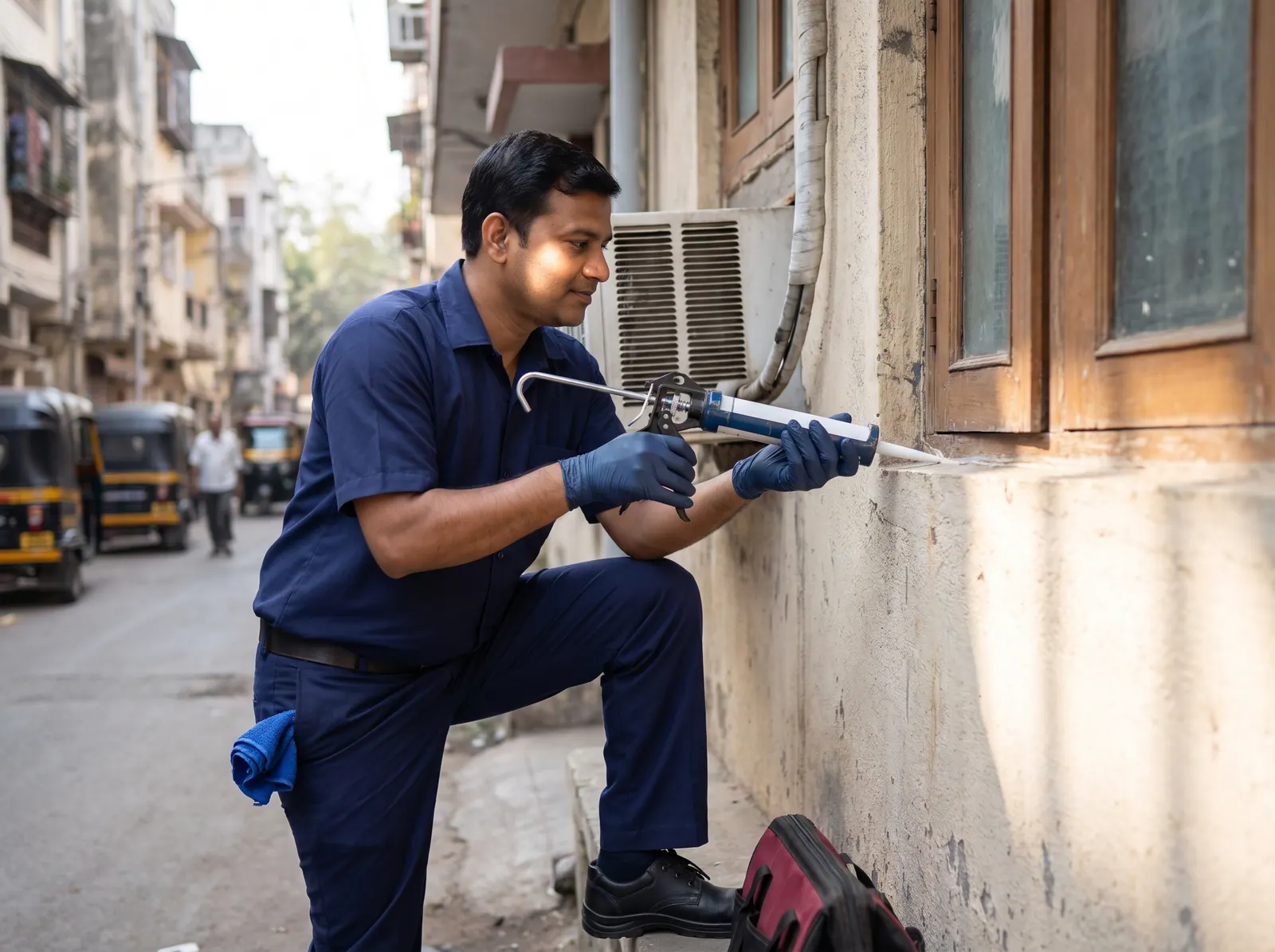
- Bait goes into cracks, hinges, equipment voids and under-shelf joints. It is never placed on food-contact surfaces.
- Sprays, degreasers and cleaning chemicals must be kept off bait, because they can make it unattractive.
- Old, dried or dusty bait should be removed and replaced during follow-up visits.
Why rotation matters
Some German cockroach populations have developed resistance to certain insecticides. Others have learned to avoid particular ingredients in bait food bases.
If monitoring shows cockroaches walking past bait, or trap counts are not falling, the usual answer is to rotate. That means switching to a bait with a different active ingredient class and a different food base. This decision should be based on the monitoring records, not guesswork.
Why sprays and fogging alone often disappoint
Many sprays repel cockroaches, so they can push them deeper into equipment or into neighbouring areas. General space spraying also leaves residues on surfaces near food without reaching the hiding places. Targeted crack-and-crevice treatment has a place in a kitchen programme, but it is used selectively alongside baiting. Our comparison of gel bait and spray for cockroaches explains the trade-offs.
On safety, products used in India should be CIB&RC-registered and applied according to label directions by a licensed operator. During treatment:
- Cover or remove food, utensils and food-contact equipment.
- Keep staff, children and pets away from treated areas until they are dry, or for as long as advised.
- Ventilate the area.
- Wash hands after handling anything in treated zones.
What should kitchen staff do between visits?
Baiting works only when the bait is the most attractive food available. Cockroach control in a restaurant is therefore a partnership between the pest control team and the kitchen team. A simple nightly routine makes a large difference:
- Degrease burners, drip trays and the floor under ranges, grinders and fridges at close of service.
- Leave no food, batter, dough or cooked rice uncovered overnight.
- Empty bins, close lids and take waste out of the kitchen before closing.
- Dry sinks and floors, and report leaking taps and drain blockages promptly.
- Keep drain gratings in place and clean the channels beneath them.
- Unpack cardboard outside the kitchen, and do not store cartons or sacks on the floor.
- Use first-in, first-out stock rotation in the dry store. Our guide to rice and dal pests in Hyderabad kitchens covers stored-grain insects.
- Seal cracks in tiles and gaps around pipes and cables where possible.
- Record sightings in a log with date, time and place.
- Do not use your own sprays near bait placements.
- Tell your pest control provider about new equipment, renovations or menu changes.
How often should a restaurant kitchen be serviced, and what records help?
Frequency depends on the level of infestation and how busy the kitchen is. A heavily infested kitchen usually needs closely spaced follow-up visits at first. Once numbers are under control, it moves to a regular scheduled programme with ongoing monitoring.
Food businesses are expected to keep effective pest control under the hygiene requirements in Schedule 4 of FSSAI regulations. HACCP-based food safety systems treat pest control as a basic prerequisite. Service reports, trap records, bait maps and product safety data sheets help show inspectors and auditors that pests are being managed.
Our guide to pest control records for food businesses in Telangana explains what to keep. Delivery-only operations face particular challenges, covered in pest control for cloud kitchens in Hyderabad.
What practices do we bring from our Goa operation?
Efficacy Pest Control was founded and established in Goa, where our Goa branch in Chimbel works with food businesses. That work follows an Integrated Pest Management approach: inspection, sanitation and proofing advice, then targeted treatment.
In Goa, clients receive service reports after visits. Food businesses there receive documentation aligned with HACCP and FSSAI audit expectations. Material Safety Data Sheets are maintained for the products we use.
Our Shamshabad branch has recently opened. Tell us your location and the cockroach problem in your kitchen, and we will confirm whether we can help. You can find the branch details on our Hyderabad branch page.
Frequently asked questions
QWhy do we still see cockroaches even though the kitchen is cleaned every night?
Surface cleaning rarely reaches where German cockroaches live. They shelter inside motor housings, hollow table legs, door gaskets and wall cracks, where grease and crumbs collect out of sight. A small population in one fridge base or grinder can keep breeding however clean the counters look. Cleaning under and behind equipment, combined with targeted baiting of those hiding places, is what brings numbers down.
QIs gel bait suitable for use in a working restaurant kitchen?
Gel bait is widely used in food areas because it is placed in cracks and equipment voids rather than sprayed over surfaces. It should be a CIB&RC-registered product applied according to label directions, never on food-contact surfaces. Cover or remove food and utensils as advised, and keep staff and children away from treated areas until dry or for as long as advised. Wash hands after handling anything in treated zones.
QHow long does gel baiting take to show results?
Some cockroaches die within a few days of feeding. Clearing a breeding population usually takes longer, because eggs and nymphs keep emerging, and follow-up placements are normally needed. The best guide is the monitoring traps: falling counts, especially of nymphs, show the programme is working. If counts stay flat, the bait placement or bait type may need to change.
QCan German cockroaches come in from neighbouring shops or deliveries?
Yes. In shared buildings they can move through common walls, service ducts, drains and cable routes. They also arrive in cartons, vegetable sacks, crates and second-hand equipment. Unpacking deliveries outside the kitchen, checking incoming goods and sealing gaps around pipes all reduce reinfestation. In a shared building, coordinating with neighbours or building management helps.
QShould we spray the kitchen ourselves between professional visits?
It is better not to. Household sprays can repel cockroaches, scattering them deeper into equipment. They can also contaminate bait placements so cockroaches avoid them. Residues near food surfaces are another concern. Instead, keep up the nightly cleaning routine, record any sightings in a log, and pass that information to your pest control provider so they can adjust the treatment.
QCan your Shamshabad branch help with cockroaches in our restaurant?
Our Shamshabad branch has recently opened, and services and localities in the Hyderabad region are being confirmed area by area. Tell us where your restaurant is and what you are seeing, such as where cockroaches appear and how long the problem has lasted. We will confirm whether and how we can help.
Last updated 13 October 2026. Information on this page is general guidance; your technician will advise on your specific property after inspection.