Quick answer
In Hyderabad apartment complexes, mosquitoes mostly breed in water the building itself holds. Common sources are poorly sealed sumps and overhead tanks, puddles and lift pits in cellar parking, blocked terrace and balcony drains, AC drip trays, plant saucers and leftover construction water. The most effective control is a weekly, building-wide round to empty, cover or drain these points, with clear duties for residents, the association, housekeeping and contractors.
Key points
- Most mosquitoes in apartment complexes breed in water the building holds: tanks, sumps, cellar puddles, lift pits, drains and containers.
- In warm weather mosquitoes can develop from egg to adult in about a week, so breeding points should be checked weekly.
- Aedes mosquito eggs stick to container walls and survive drying, so containers should be scrubbed, not just emptied.
- Fogging kills only adult mosquitoes present at the time; it does not remove breeding sources.
- Clear duties for residents, the association, housekeeping, contractors and builders prevent breeding points from being overlooked.
When a residents' association starts looking at mosquito control for an apartment complex in Hyderabad, the first instinct is often to ask for fogging. Fogging has its place, but the mosquitoes biting residents in the evening were usually larvae in standing water a week or two earlier. Very often that water was inside the complex: in a sump, a cellar puddle, a terrace drain or an AC tray.
This guide is a practical, building-level checklist. It is written for managing committees, facility managers and engaged residents who want to find and remove those breeding points systematically.
Why do apartment complexes breed their own mosquitoes?
Mosquitoes need standing water to complete their life cycle. Eggs hatch into larvae, larvae become pupae, and adults emerge, often within about a week in warm weather. A large complex has dozens of places where water collects quietly and nobody looks.
Different mosquitoes prefer different water:
- Aedes mosquitoes (the day-biting kind linked to dengue and chikungunya) prefer relatively clean water in containers: tanks, drums, plant saucers, AC trays, discarded buckets. Their eggs stick to container walls just above the waterline and can survive drying out, which is why scrubbing matters as much as emptying.
- Culex mosquitoes (the night-time nuisance biters) favour dirtier, stagnant water: blocked drains, cellar sumps with organic matter, septic overflows and sewage-treatment areas.
- Anopheles mosquitoes, which can carry malaria, are known in Indian cities to use clearer stored water such as overhead tanks, wells and construction-site water.
Hyderabad's hot, dry summer, its June-to-September monsoon and its milder winter each change where water stands. Summer often means more stored water. The monsoon brings rain pooling everywhere. Our Hyderabad pest calendar sets out how pest pressure shifts through the year.
The building checklist: a walk-through for associations
Walk the building from the top down, ideally with the facility manager and a plumber or electrician who has access to tanks and service areas. Note each point, who is responsible for it and what fixes it.
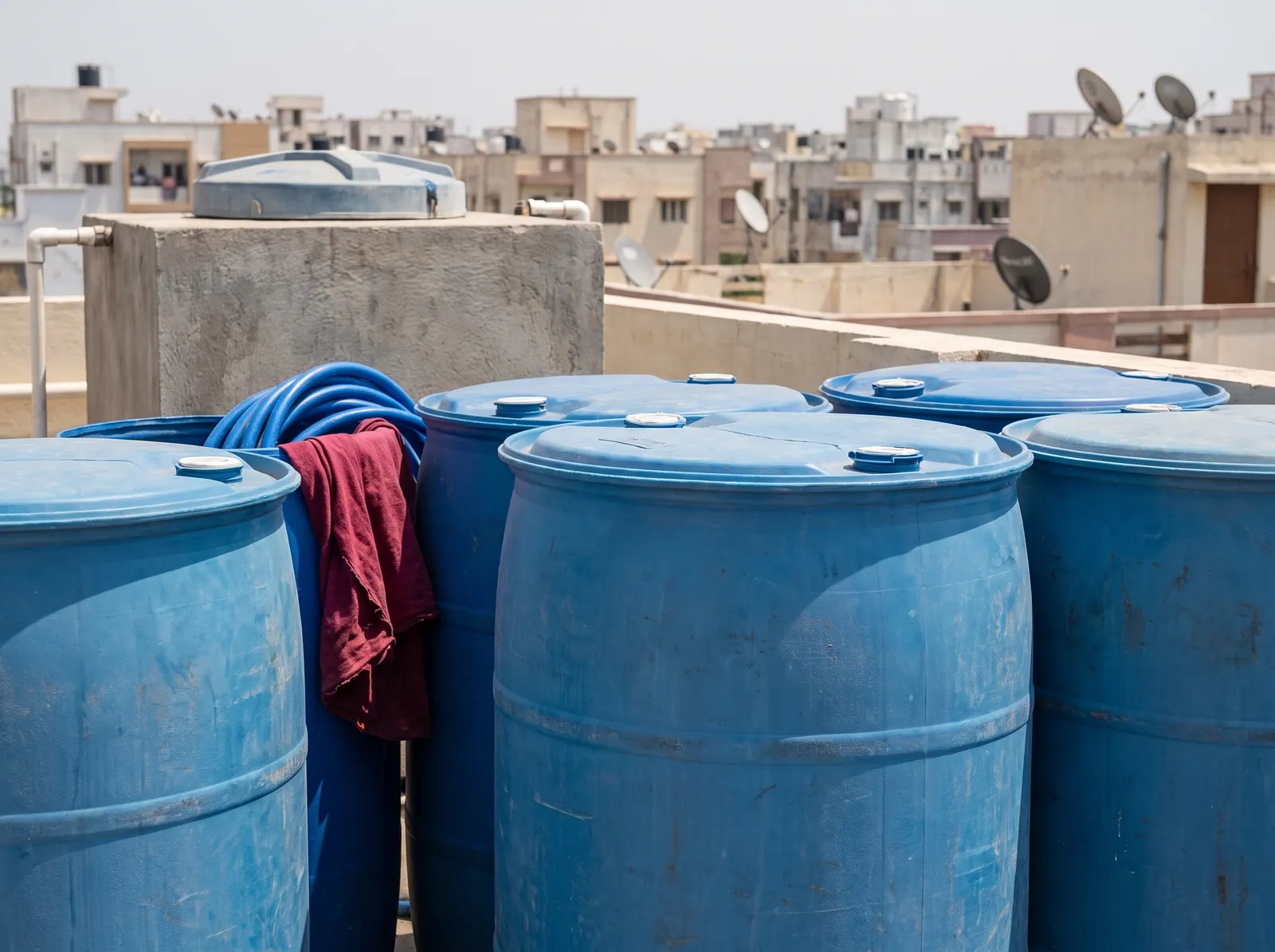
Terrace and overhead tanks
- Overhead tank lids fit tightly and are locked, with no gaps or broken hinges.
- Overflow and vent pipes are covered with fine mesh, which stops mosquitoes entering and leaving.
- Terrace rainwater outlets are clear of leaves, plastic and debris.
- No ponding on the terrace after rain. Low spots in waterproofing should be noted for repair.
- No discarded items such as old tanks, paint buckets, tyres or broken furniture holding water.
- Solar water heater and pipe supports are not forming cups that hold water.
Inside flats and on balconies
- AC outdoor units and indoor drip trays drain freely. Condensate pipes do not end in an open bucket.
- Refrigerator defrost trays are emptied and wiped regularly.
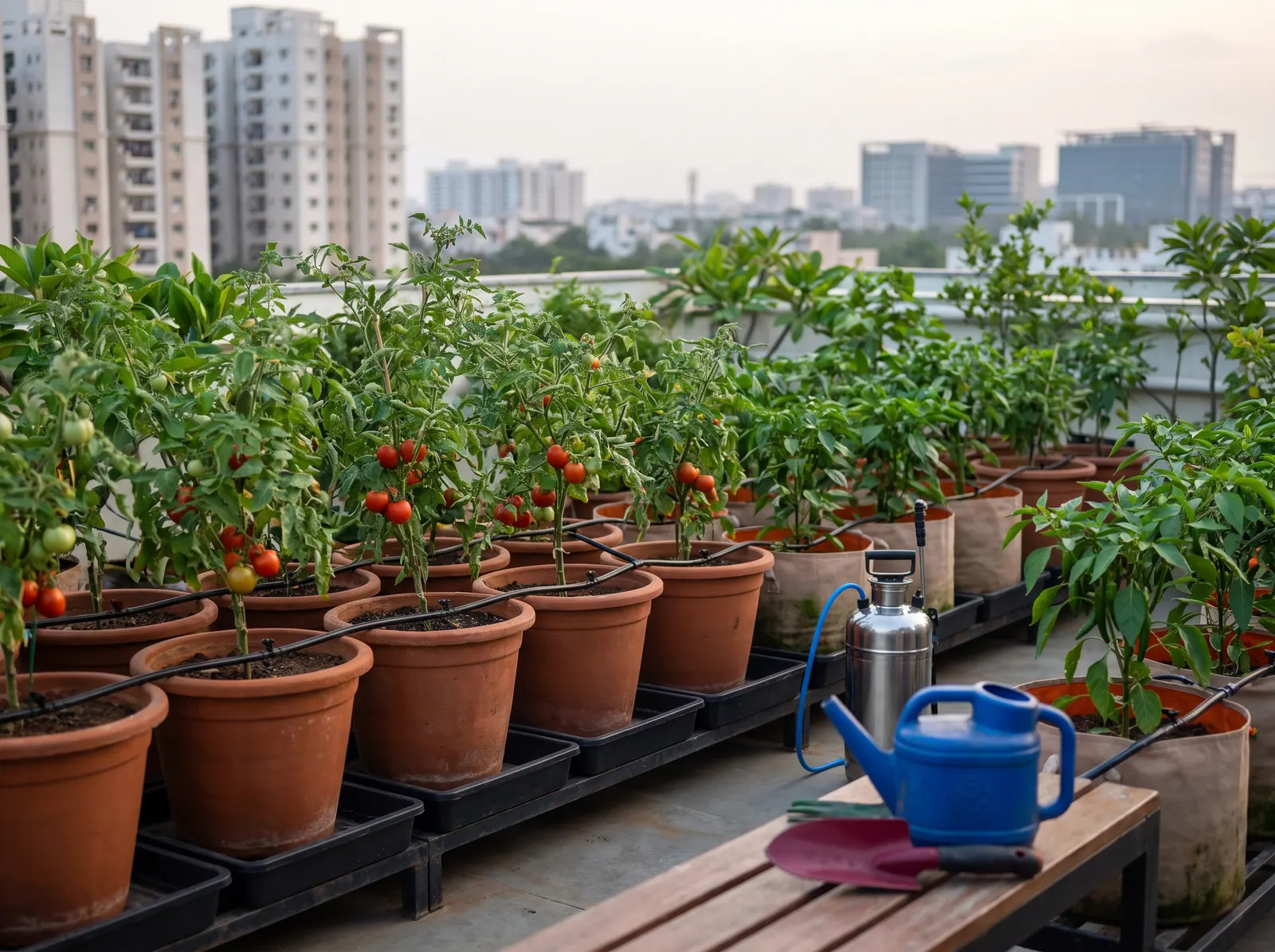
- Plant saucers are emptied weekly, or filled with sand. Money-plant bottles and vases get fresh water and a rinse every few days.
- Stored water in drums or buckets has tight lids. Containers are scrubbed when refilled.
- Balcony floor drains are not blocked, and no unused items collect rainwater.
Common areas and grounds
- Garden pipes, tree holes, decorative pots and landscaping features do not hold water.
- Ornamental fountains and ponds are kept circulating or regularly cleaned.
- Swimming pools are maintained and treated. Pool covers do not hold puddles. Pool balance tanks and drains are checked.
- Storm drains around the compound are clear and flowing.
- Rainwater-harvesting and recharge pits are covered or meshed and are not silted up.
- Security cabins, clubhouse kitchens and housekeeping stores have no forgotten buckets or mop tubs standing full.
Cellars and sumps: the hidden half of the building
Cellar parking is dark, sheltered and humid, and few residents look closely at it. Water from seepage, car washing, leaking pipes and rain run-off at ramps can sit there for days. That makes cellars one of the most important parts of any building check.
- Underground sumps: manhole covers should seal properly. Cracked covers, missing gaskets and gaps around pipe entries let mosquitoes in to breed. Sump vents need mesh just like overhead tanks.
- Lift pits: water often collects at the bottom of lift shafts through seepage. It is out of sight, and access is restricted for safety. Ask the lift maintenance contractor to check and clear pit water as part of routine servicing.
- Floor puddles: mark recurring wet patches. Many come from a blocked floor drain, a slope that runs the wrong way, or residents washing cars in their slots.
- Drainage chambers and collection pits: inspection chambers and dewatering pits should have intact covers and pumps that actually run.
- Sewage-treatment and septic areas: these suit Culex mosquitoes. Covers, vents and overflow points need regular inspection by whoever operates the plant.
- Pipe leaks: a slow drip from a plumbing line onto a ledge or a cable tray can keep a small pool topped up indefinitely.
Never add oil, kerosene or any household chemical to a sump or tank that supplies water to flats. Drinking-water storage should be protected by sealing and covering, not by improvised treatments.
What changes during construction and phased handovers?
Many complexes in the Hyderabad region are handed over in phases. Residents may move into one tower while the next is still being built. Construction sites create a great deal of standing water, and the mosquitoes do not respect the boundary between finished and unfinished blocks.
Points to watch on an active or recently finished site:
- Curing water: ponded water on slabs and in curing bunds, which can stand for days.
- Water drums and temporary tanks: used for mixing and curing and often left uncovered.
- Open sumps and lift pits: dug before covers, pumps or lifts are installed.
- Excavations and foundation pits: these fill during the monsoon.
- Scrap and packaging: tyres, plastic sheets, cement bags, pipe offcuts and broken tiles left in heaps.
- Labour accommodation: stored water at workers' quarters needs the same lids and weekly emptying as any household.
- Unfinished terraces and balconies: these may have no drains connected yet.
Associations in a phased project should agree, in writing, how the builder will manage site water. That can be a weekly inspection, covered containers and prompt pumping of pits. Builders preparing a site may also find our guide to pre-construction anti-termite treatment useful, since both issues come up at the same stage.
Who does what?
Breeding points persist when everyone assumes someone else is checking them. A simple division of responsibility, agreed at a committee meeting and shared with residents, works better than goodwill alone.
| Who | Responsible for | Suggested rhythm |
|---|---|---|
| Each household | Plant saucers, vases, stored water, AC and fridge trays, balcony drains and clutter | Weekly |
| Managing committee / association | Assigning duties, keeping a checklist and log, approving repairs, appointing contractors, communicating with residents | Monthly review; extra review before the monsoon |
| Facility manager / housekeeping | Walk-through of terrace, common areas, cellar and grounds; emptying and scrubbing containers; reporting faults | Weekly, and after heavy rain |
| Plumber / maintenance team | Tank and sump lids, vent and overflow mesh, leaks, blocked drains, terrace outlets | Monthly, and when faults are reported |
| Lift and STP contractors | Lift pit water; sewage-treatment and septic area covers and vents | As part of scheduled servicing |
| Builder / site contractor | All water on active construction areas and labour quarters | Weekly during construction |
| Local municipal body | Public drains, roads and open land outside the compound | Report problems as they arise |
| Pest management professional | Inspection, advice on sources, targeted treatment of water that cannot be removed, adult mosquito control where justified | As agreed with the association |
Keep the log simple: date, area, what was found, what was done, and who did it. Over a season, it shows which points keep recurring and need a permanent fix rather than repeated emptying.
How should the routine change through the year?
- Before the monsoon (around May): clear terrace outlets and storm drains, repair tank and sump covers, replace torn mesh and remove scrap from terraces and cellars.
- During the monsoon (June to September): do weekly rounds without fail, plus an extra cellar and terrace check after each heavy spell. Our guide to monsoon pests in Hyderabad covers what else to expect in these months.
- After the monsoon: look for slow-drying spots, silted pits and seepage in cellars that keep water long after the rain stops.
- Winter and summer: activity usually drops in cooler months but does not stop where water stands, especially in drains and cellars. In summer, watch stored water closely.
Complexes beside a lake or open water face additional pressure from outside the compound. This is covered in living near lakes and water bodies.
Where do fogging and professional treatment fit in?
Fogging kills adult mosquitoes that are flying at the time it is done. It does not remove larvae in a sump or a lift pit, so without source reduction the numbers return. Our explainer on municipal fogging versus private mosquito control sets out what each can realistically achieve. Residents worried about exposure can read is mosquito fogging safe?
A sound professional approach follows Integrated Pest Management. That means inspection first, then removing or covering breeding sites. Treatment is targeted only at water that cannot be drained or covered, and adult control is used where it is justified. Any product should be applied according to its label. Children and pets should be kept away from treated areas until they are dry or for as long as advised, rooms should be ventilated, and hands washed afterwards.
If anyone in the building develops a fever during mosquito season, they should see a doctor promptly rather than wait. Our dengue-season prevention guide has more on protecting households.
Talking to us about your complex
Efficacy Pest Control was founded in Goa, where we follow an inspection-led, IPM approach to mosquito management. We are bringing those practices to the Hyderabad region through our Shamshabad office.
Our Shamshabad branch has recently opened. Tell us your location and the problem, and we'll confirm whether we can help. You can find more about the branch on our Hyderabad branch page.
Frequently asked questions
QCan mosquitoes breed inside a closed underground sump?
Yes, if the sump is not truly sealed. Mosquitoes need only a small gap to get in, such as a cracked manhole cover, a missing gasket, an unmeshed vent or a gap around a pipe entry. Once inside, they can breed out of sight for weeks. Checking that covers sit flush and that every opening is meshed is one of the simplest, most effective fixes a building can make.
QHow long can water stand before it becomes a mosquito problem?
In warm weather, mosquitoes can go from egg to adult in about a week. That is why weekly emptying of containers is the usual recommendation. With Aedes mosquitoes, the eggs stick to container walls and survive drying, so simply tipping out a drum or saucer is not enough. Scrub the inner surface before refilling.
QWe live on a high floor. Why do we still get mosquitoes?
Mosquitoes travel up through lift shafts, stairwells and ducts, and they can also breed at height. Overhead tanks, terrace ponding, balcony plant saucers and AC drip trays are all well above ground level. Before assuming the mosquitoes come from the cellar or the street, check your own balcony and ask the facility team about the terrace.
QShould our association schedule regular fogging?
Fogging only affects adult mosquitoes flying at the time, so on its own it gives short-lived relief. It works best, if used at all, alongside a steady programme of removing and covering breeding sites. Discuss with a professional whether fogging is justified for your building, and give residents notice so they can close windows and keep children and pets indoors.
QWho is responsible for mosquitoes breeding on the construction site next to our tower?
Water on an active site is the builder's or contractor's responsibility. In a phased project, the association should raise the issue with the builder in writing. Ask for weekly site checks, covered drums, and pumping of open pits and lift shafts. For land or drains outside the compound, report the problem to the local municipal body.
QCan we add something to our water tanks to stop mosquito larvae?
Do not add oil, kerosene or any household chemical to tanks or sumps that supply drinking or domestic water. Protect stored water by sealing lids, meshing vents and overflows, and cleaning tanks periodically. If water elsewhere on the property cannot be drained, ask a qualified pest management professional for advice. Any product must be suitable for that use and applied according to its label.
Last updated 13 October 2026. Information on this page is general guidance; your technician will advise on your specific property after inspection.