Quick answer
Most terrace garden pests in Hyderabad come from four things: standing water in drip trays and pots (mosquitoes), moist soil against wood (termites), sap-sucking insects that ants protect (ants and aphids), and easy food and shelter (rodents). Empty and scrub trays every week, keep planters off direct contact with walls, tackle aphids early, close compost bins and harvest promptly. Termite mud tubes or repeated rat activity usually need a professional inspection.
Key points
- Aedes mosquitoes lay eggs just above the waterline on container walls, so drip trays should be emptied and scrubbed weekly, not just tipped out.
- Termites need moisture and cellulose; wooden raised beds on damp soil and planters pressed against walls are higher-risk spots.
- Ants on plants usually signal aphids, mealybugs or scale insects, which produce the honeydew ants collect.
- Rats reach terraces by climbing pipes, cables and trees, and are drawn by fruit, compost and pet or bird food.
- Loose rat poison on a terrace puts pets, birds and children at risk; inspection, proofing and secured baiting are safer approaches.
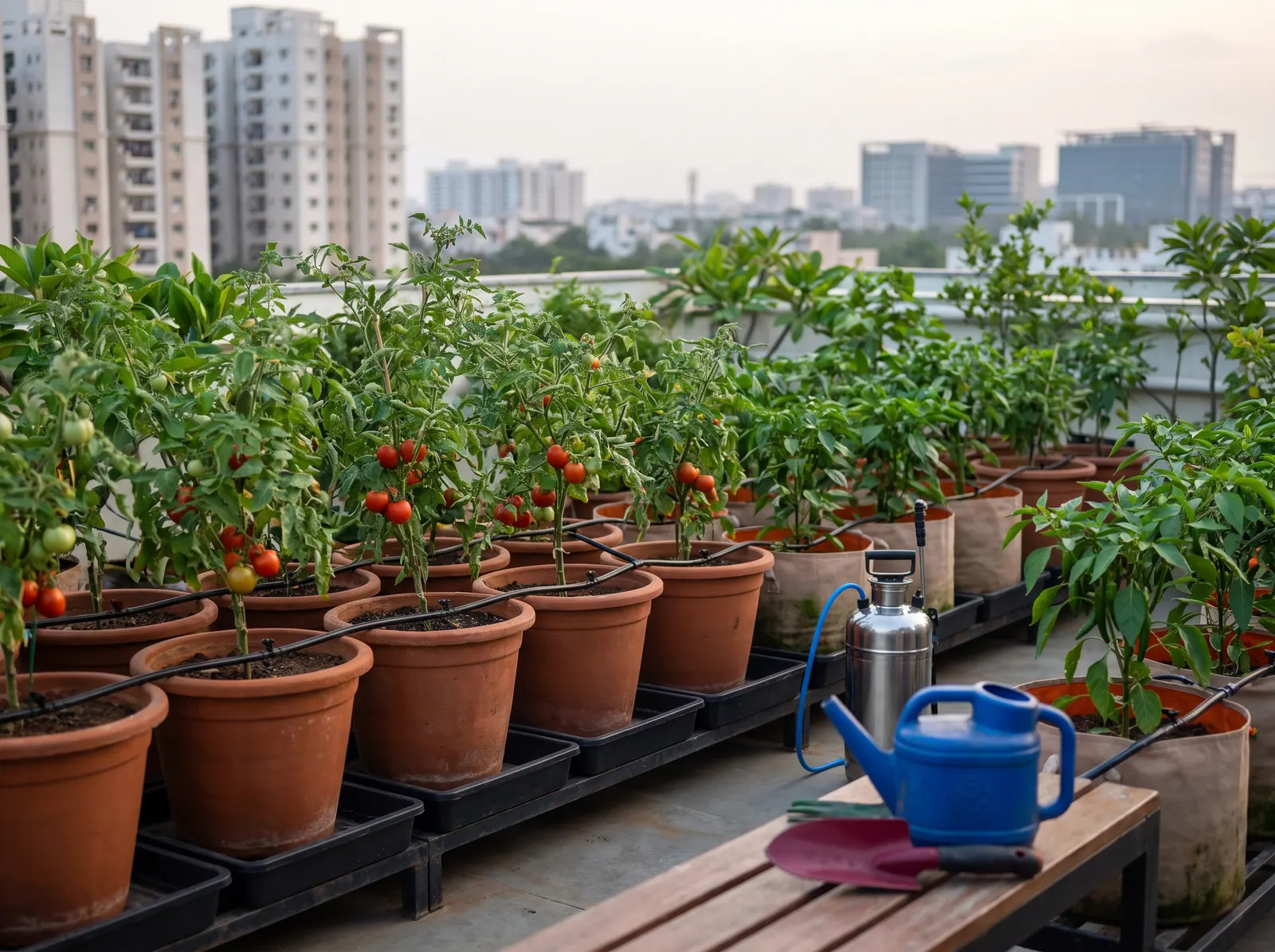
Terrace and balcony gardens are a familiar sight on Hyderabad rooftops, from a few tulsi and chilli pots outside a flat to full vegetable beds on an independent house or a shared society terrace. They bring shade, fresh produce and a cooler roof. They also bring water, soil, organic matter and shelter to a place that was once bare concrete, and pests notice.
This guide explains the terrace garden pests most gardeners in Hyderabad run into: mosquitoes in trays and pots, termites in raised beds, ants with aphids, and rodents. For each, it covers how to recognise the problem, why it happens and what you can do without reaching for strong chemicals.
Why do terrace gardens attract pests?
Every pest needs water, food and a place to hide. A rooftop garden supplies all three in a small space. Drip trays and saucers hold water, grow bags and pots offer damp soil, ripening vegetables and compost provide food, and stacked pots, old planks and gunny bags give shelter.
Hyderabad's climate on the Deccan plateau adds a seasonal rhythm. The hot, dry summer means heavy daily watering, the south-west monsoon fills every container with rainwater, and the mild winter suits soft new growth that sap-sucking insects like. Understanding that rhythm helps you act before a small problem spreads.
Mosquitoes in drip trays, pots and grow bags
Container-breeding mosquitoes, including the Aedes mosquitoes linked with dengue, prefer small amounts of fairly clean, still water. A terrace garden can have dozens of such spots. In warm weather the larvae can develop into biting adults in roughly a week, so a tray that is left alone for one week is enough.
Where mosquitoes breed on a terrace
- Drip trays and saucers under pots, especially ones that are never fully dried
- Plastic sheets, tarpaulins and folded grow bags that hold pockets of rainwater
- Buckets, watering cans, old paint tins and broken pots stored in a corner
- Water features, small ponds and bowls kept for birds
- Blocked terrace drain outlets where leaves and soil collect
- Uncovered or loosely covered overhead tanks and sumps on shared terraces
- Leaf axils of some ornamental plants and cut bamboo supports that trap water
What actually works
Tipping water out is not quite enough. Aedes mosquitoes lay eggs on the inner wall of a container just above the waterline, and those eggs can survive drying out. Once a week, empty trays and scrub the inner surfaces before refilling or putting them back.
Where you can, replace deep saucers with shallow ones, or raise pots on stands so excess water drains away. Store spare buckets and pots upside down or under cover. Keep terrace outlets clear, particularly before and during the rains. In housing societies, ask the committee to check that tank lids fit tightly and that overflow pipes are meshed.
For a fuller look at household mosquito prevention, read our guide to dengue season mosquito prevention in Hyderabad. If anyone in the family develops fever, please see a doctor rather than waiting it out.
Termites in raised beds and wooden planters
Termites feed on cellulose, which means wood, cardboard, dry leaves and other plant material. They also need moisture. A wooden raised bed filled with damp soil and mulch is close to ideal for them.
On upper floors, termites usually arrive in one of two ways: in soil, old wood or planters brought up from ground level, or by building mud tubes up walls, pipes and shafts from the ground. Ground-floor and independent-house terraces with soil contact nearby tend to be at greater risk.
Signs to look for
- Thin, earthen mud tubes running up parapet walls, pipes or planter sides
- Wooden bed frames, stakes or bamboo supports that sound hollow or crumble when pressed
- Soil-coloured patches or tracks on the inner face of wooden planters
- Swarms of small winged insects around lights after the first monsoon showers, followed by discarded wings
Reducing the risk
Choose metal, brick, concrete or plastic frames for raised beds, or keep wooden frames on a non-wood base and away from walls. Leave a gap between planters and the parapet so you can see any mud tubes. Do not store old timber, cardboard or packing boxes on the terrace, and check second-hand wooden planters before you bring them up.
A termite trail on a terrace is often a sign of activity elsewhere in the building, so treat it as a building question, not just a garden one. Please avoid drilling into terrace slabs or waterproofing layers yourself. Our guide to termite risk in Hyderabad's soils and new construction explains how termites move through buildings.
Ants and aphids: why they turn up together
If you see ants streaming up a chilli, brinjal, hibiscus or curry leaf plant, look closely at the tender shoots and undersides of leaves. You will often find aphids, mealybugs or scale insects. These sap-sucking insects release a sweet liquid called honeydew, and ants collect it. In return, the ants guard them from natural enemies such as ladybird beetles.
Honeydew also encourages a black, sooty mould on leaves. So curled leaves, sticky surfaces, black patches and ants are usually one connected problem.
Breaking the partnership
- Check new growth on every plant at least once a week, especially in the cooler months.
- Pinch off or prune heavily affected shoots, and wash small colonies off with a firm spray of plain water.
- Stop ants reaching the plant: keep pots from touching walls, railings or each other, so there is one path you can watch.
- Avoid excess nitrogen-rich fertiliser, which produces the soft growth aphids prefer.
- Let natural predators work; broad sprays tend to kill ladybirds along with pests.
Ants nesting inside dry pots or grow bags usually move out with regular watering. For ants coming indoors from the terrace, baiting along trails generally works better than spraying, because workers carry bait back to the colony.
Rats and other rodents on the terrace
Rats are good climbers and use drain pipes, cable runs and overhanging trees to reach rooftops. A terrace garden offers them ripening tomatoes and fruit, seeds, compost, pet food or bird feed, and shelter under stacked pots and beneath dense planting.
Signs of rodent activity
- Gnawed fruit or vegetables, often eaten partly and left on the plant
- Burrows or loose soil at the base of grow bags and large pots
- Chewed drip-irrigation tubing or hosepipes
- Dark, spindle-shaped droppings near walls and under pots
- Seedlings dug up or disturbed overnight
Making the terrace less inviting
Use closed compost bins with lids, not open heaps. Harvest promptly and pick up fallen fruit. Keep bird feed and pet food in sealed containers and do not leave it out overnight. Trim branches that touch the building and keep stacked materials tidy and off the floor.
Please do not scatter loose rat poison on a terrace. Pets, birds and children can reach it, and poisoned rodents can die inside ducts or false ceilings. Professionals generally rely on inspection, proofing and tamper-resistant bait stations or traps instead. If rats are visiting several flats or a shared terrace, it is worth raising with your society as a building-wide issue.
How do terrace garden pests change through the year?
The table below is a general guide; conditions vary from terrace to terrace and year to year. Our Hyderabad pest calendar covers the wider picture month by month.
| Season | What happens on the terrace | What to watch |
|---|---|---|
| Hot, dry summer | Heavy daily watering; plants stressed by heat | Water left in trays; ants seeking moisture in pots; rodents drawn to watered beds |
| South-west monsoon (June to September) | Rain fills containers; outlets block with debris | Mosquito breeding in every open container; termite swarms after early rains; damp wooden planters |
| Post-monsoon | Water lingers in corners and folds of sheets | Continued mosquito breeding; check frames and walls for mud tubes |
| Cooler months | Mild weather and soft new growth | Aphids and mealybugs on tender shoots, with ants following |
| Year-round | Fruit, compost and shelter remain available | Rodent signs; stored junk; tank lids on shared terraces |
See also our guide to monsoon pests in Hyderabad for what the rains bring indoors.
A simple weekly terrace garden check
- Empty and scrub every drip tray, saucer and open container.
- Clear leaves and soil from terrace drain outlets.
- Look at the undersides of leaves and new shoots for aphids and mealybugs.
- Follow any ant trail to see where it leads.
- Run a hand along wooden frames and check walls behind planters for mud tubes.
- Look for droppings, burrows and chewed tubing.
- Pick ripe produce and remove fallen fruit.
- Put away anything that can collect rainwater.
Using sprays safely around plants, children and pets
Household insect sprays meant for indoor use are not designed for plants, and many are unsuitable for anything you plan to eat. If you use any plant-protection product, choose one labelled for home garden use, follow the label exactly, and respect any waiting period before harvest.
Spray in the early morning or evening when it is calmer, keep children and pets off the terrace until treated surfaces are dry or as the label advises, and wash your hands afterwards. Avoid spraying flowers when bees are visiting. If someone has a reaction to a bite, sting or product exposure, see a doctor.
When is it time for professional help?
Many terrace problems respond to the routine above. Professional advice makes sense when you find termite mud tubes or damaged timber, when rats keep returning despite clean-up, or when mosquitoes persist and you suspect a hidden source such as a tank or shaft.
Efficacy Pest Control follows an Integrated Pest Management approach: inspection first, then sanitation and proofing advice, and targeted treatment only where it is needed. These are practices built up at our established Goa operation. If you also have a ground-level garden, our guide to villa garden pests in the Hyderabad region may help.
Our Shamshabad branch has recently opened. Tell us your location and the problem you are seeing on your terrace, and we'll confirm whether we can help. You can find branch details on our Hyderabad branch page.
Frequently asked questions
QDo I need drip trays under my terrace pots at all?
Drip trays protect terrace waterproofing and stop soil staining the floor, so many gardeners keep them. The issue is water that sits for days. Use shallow trays, raise pots slightly on stands so excess drains, and empty and scrub trays at least once a week. During the monsoon, consider removing trays from pots that stand in the open rain, since they will refill constantly.
QDoes cocopeat or compost in grow bags attract termites?
Termites feed on cellulose and favour moist conditions, so organic-rich media, mulch and wood can interest them where termites are already nearby. The bigger risk factors are wooden frames, stakes and stored timber in contact with damp soil, and planters close to walls where mud tubes can go unnoticed. Check your beds and walls regularly rather than avoiding organic growing media altogether.
QIs it safe to spray mosquito repellent or fogging liquid on my terrace plants?
Products made for indoor mosquito control are not intended for plants and may be unsuitable on vegetables or herbs you plan to eat. The most effective step on a terrace is removing breeding water. If you use any garden product, choose one labelled for that use, follow the directions exactly, and keep children and pets away until treated surfaces are dry.
QI see rats on our shared society terrace. Is it only a garden problem?
Usually not. Rats reaching a rooftop are likely using pipes, cable runs, trees or shafts, and may be nesting elsewhere in the building. Garden clean-up helps, but a rodent problem on a shared terrace is best handled at society level, with an inspection of entry routes, refuse areas and ducts, and proofing where possible.
QWhy do ants keep coming back to my chilli and hibiscus plants?
Ants are usually there for honeydew, the sugary liquid produced by aphids, mealybugs and scale insects on tender shoots. As long as those sap-suckers remain, ants will return. Deal with the aphids by pruning affected tips or washing them off with water, and limit ant access by keeping pots from touching walls, railings and each other.
QCan Efficacy Pest Control treat my terrace garden in Hyderabad?
Our Shamshabad branch has recently opened, and service coverage is being confirmed area by area. Please share your location and describe what you are seeing, such as mud tubes, rat activity or persistent mosquitoes, and we'll confirm whether and how we can help. Our approach starts with inspection and advice before any treatment.
Last updated 13 October 2026. Information on this page is general guidance; your technician will advise on your specific property after inspection.