Quick answer
Pre-construction anti-termite treatment treats the soil in stages while a building goes up. Under IS 6313 (Part 2), this covers foundation trenches and pits, backfill, soil under the plinth before the floor is cast, pipe and wall junctions, and the external perimeter. Each stage should be treated just before it is covered and left undisturbed. Builders in the Hyderabad region should keep dated, signed records of every stage to hand to buyers.
Key points
- IS 6313 (Part 2) covers anti-termite treatment during construction; Part 3 covers existing buildings.
- Treatment is staged: foundation trenches and pits, backfill, soil under the plinth, junctions and pipe entries, and the external perimeter.
- Each stage should be treated just before it is covered, on soil that is not waterlogged, and then left undisturbed.
- Builders should keep dated, signed, stage-wise records with photographs, product details and licence information to hand to buyers.
- Operators should be licensed by the state authority under the Insecticides Act, 1968, and use CIB&RC-registered products.
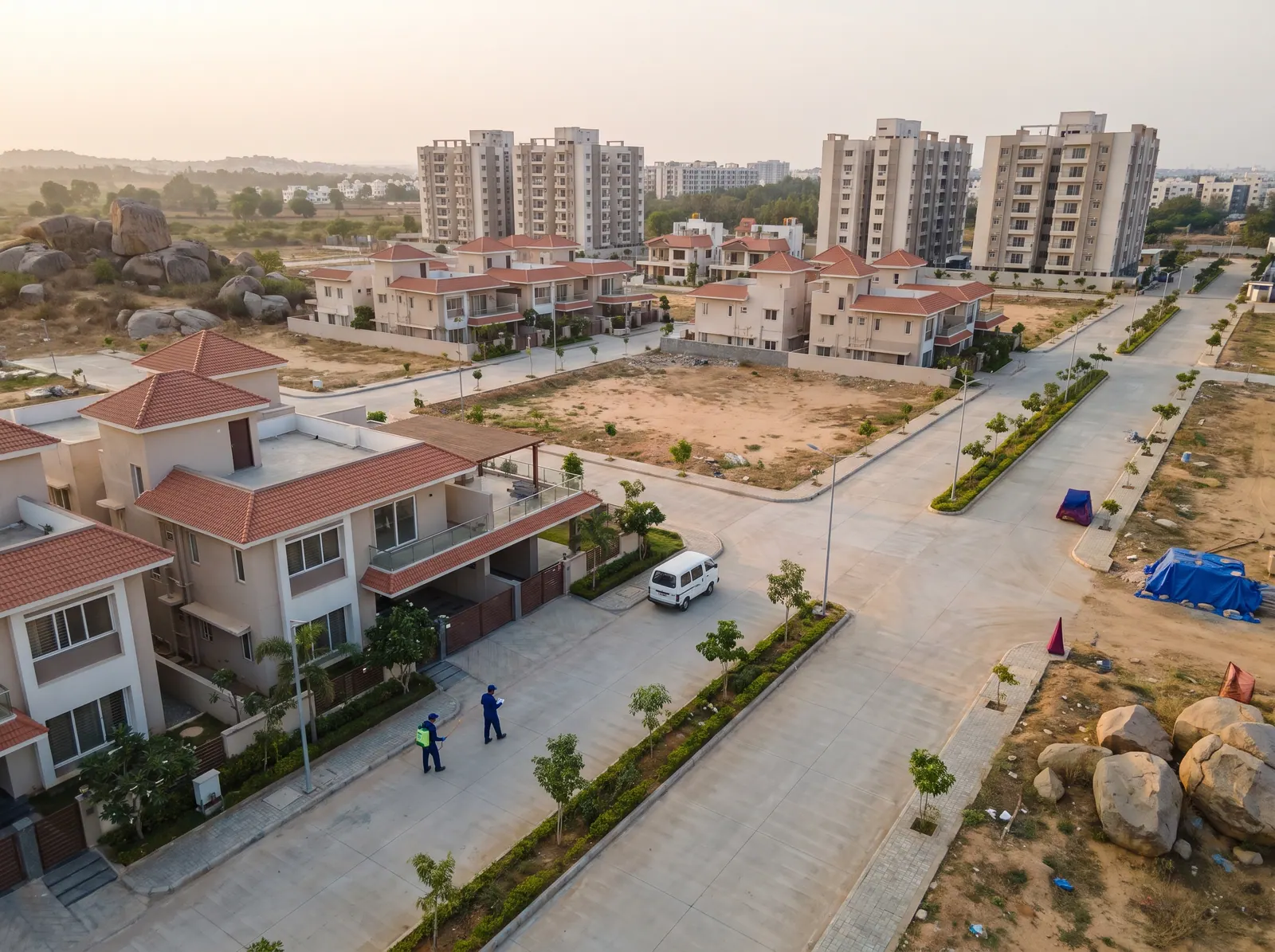
If you are building in Rangareddy district or elsewhere around Hyderabad, termite protection is easiest to do properly while the structure is still going up. Once the plinth and ground floor are cast, the soil beneath is sealed off and can only be reached by drilling. This guide explains how pre-construction anti-termite treatment is normally staged under the Indian Standard IS 6313 (Part 2). It also covers how to fit it into your construction schedule, what records to keep for buyers, and the mistakes that most often undermine it.
It is written for builders, contractors, site engineers and individual house owners building their own home. It is general guidance. Your structural engineer and treatment provider should set the details for your site.
What is pre-construction anti-termite treatment, and why does it matter?
Subterranean termites live in the soil and travel through it to reach timber, paper and other cellulose materials. They enter buildings through cracks, construction joints and gaps around pipes. Pre-construction treatment creates a continuous treated zone in the soil beneath and around the structure. Termites coming up from the ground meet treated soil before they reach the building.
IS 6313 (Part 2) is the Indian Standard for anti-termite treatment during construction. Part 3 covers post-construction treatment of existing buildings. The value of pre-construction work lies in its continuity. A barrier with gaps, such as an untreated perimeter or an untreated pipe entry, gives termites a way in.
For background on why new construction around the city needs attention, see our guide to termite risk in Hyderabad soils and new construction.
What are the treatment stages?
IS 6313 (Part 2) sets out treatment in a sequence that follows the construction itself. Quantities, application methods and product choice should follow the standard and the product label. Your treatment provider should explain these for your site. In broad terms, the stages are:
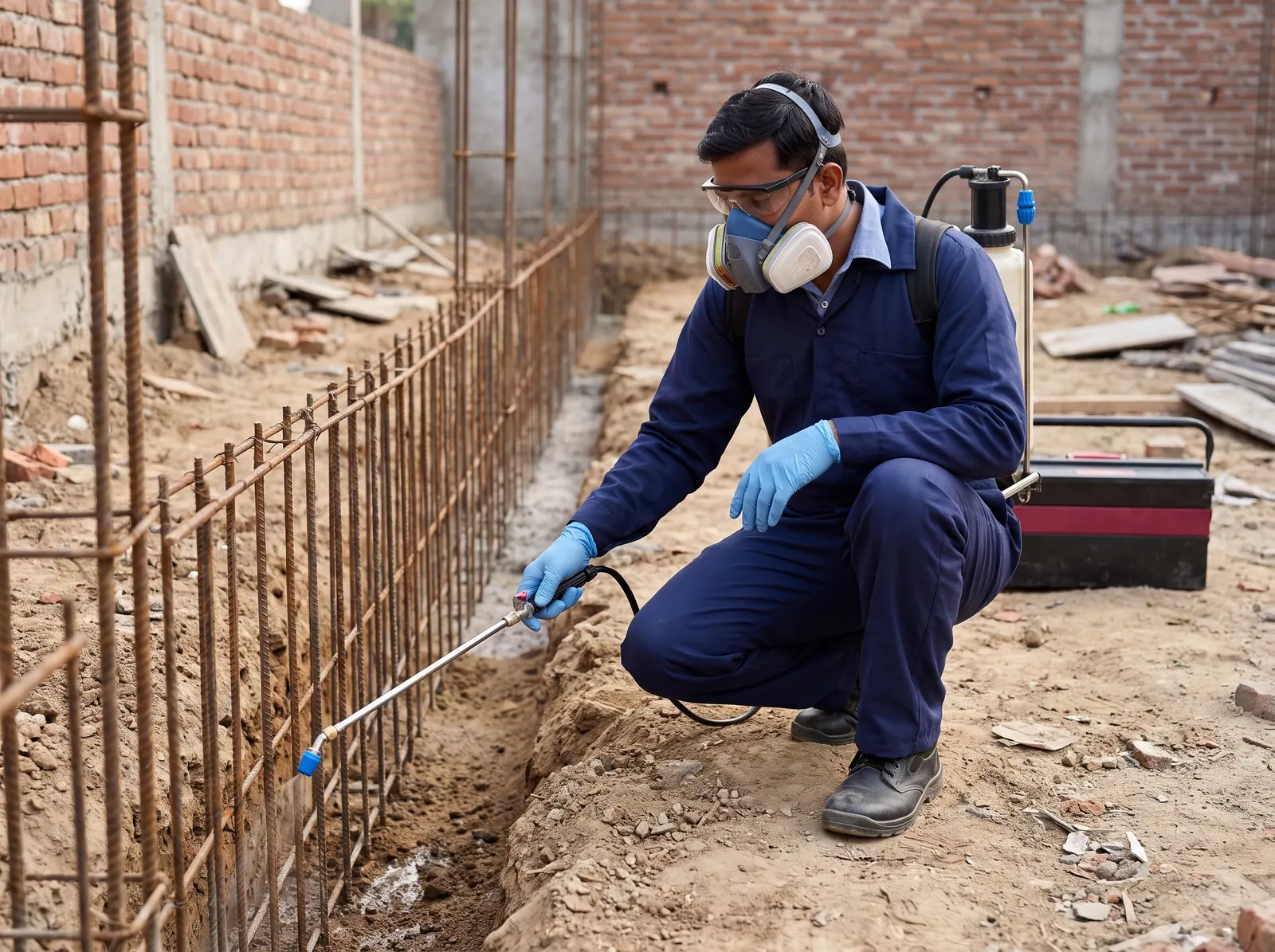
- Foundation trenches and pits. The bottom and sides of excavations for footings, columns and walls are treated after excavation and before the base concrete is laid.
- Backfill around foundations. Soil returned around foundations and columns is treated as it goes back in, rather than only on the surface afterwards.
- Soil under the plinth and ground floor. After the plinth is filled and compacted, the top surface is treated just before the sub-floor concrete is laid.
- Junctions and penetrations. Wall-floor junctions, expansion joints, and the soil around pipes, conduits and drains passing through the ground receive particular attention. These are common termite entry routes.
- External perimeter. Once external backfilling and works next to the plinth are complete, the soil along the outside of the building is treated. This is done before aprons, paving or plinth protection are laid.
| Stage | When it happens on site | What to record |
|---|---|---|
| Foundation trenches and pits | After excavation, before base concrete | Date, block or grid reference, photographs of treated trenches |
| Backfill around foundations | During backfilling | Date, area, confirmation that backfill was treated as placed |
| Under plinth and ground floor | After filling and compaction, before sub-floor concrete | Date, floor area, photographs before the pour |
| Junctions and pipe entries | As services and joints are formed | Locations treated, marked on a drawing |
| External perimeter | After external backfill, before aprons or paving | Date, perimeter length treated, photographs |
How should treatment be timed with construction?
The basic rule is to treat each stage as close as possible to the moment it will be covered. Once treated, the soil should not be disturbed. If the soil sits exposed for weeks, or labour digs through it, the barrier can be broken before the concrete goes on.
Weather matters too. Hyderabad has a hot, dry summer, a south-west monsoon roughly from June to September and a mild winter. Avoid treating waterlogged soil, and avoid treating just before heavy rain. If rain, flooding or site water washes over a treated area before it is covered, ask your provider whether re-treatment is needed. Where possible, plan foundation and plinth work with the monsoon in mind. Our guide to monsoon pests in Hyderabad describes what the rainy months bring.
On multi-block projects or phased villa developments, each block runs to its own schedule. Treat the programme block by block, not as a single site-wide event.
A scheduling checklist for site engineers
- Mark each treatment stage in the construction programme alongside the related concrete pour.
- Give the treatment provider advance notice before each stage, so treatment is not rushed or skipped.
- Make sure trenches and the plinth surface are prepared, levelled and free of standing water before treatment.
- Keep labour not involved in the treatment away from the area while it is applied.
- Protect open wells, borewells, sumps and water storage on site.
- Sign off each stage in writing before the next pour goes ahead.
- Tell plumbers and electricians about treated areas. Any later digging there should be reported so it can be re-treated.
What records should builders keep and hand to buyers?
Flat and villa buyers are increasingly asking what termite protection a building has. Good records answer that clearly. They also help a housing society or owner plan inspections later. A complete file usually includes:
- The treatment provider's name and details of their pest control licence from the relevant state authority.
- The names of the products used and confirmation that they are registered with the CIB&RC.
- The date of each stage, with the block, building or grid reference.
- A drawing marked up to show the areas treated, including perimeter and pipe entries.
- A note that treatment followed IS 6313 (Part 2).
- Dated photographs of each stage before it was covered.
- A signed certificate or report for each stage, not just one at the end.
- Any warranty terms, in writing, including what would void them.
- Material Safety Data Sheets for the products used.
Individual house owners should keep this file with their property documents. Buyers can use it alongside a termite inspection before buying a flat or villa. No soil treatment lasts forever, so records also help owners judge when to check again. Our guide on how long anti-termite treatment lasts explains the factors involved.
What are the most common mistakes?
- Treating only one stage. Treating the plinth surface but skipping the foundations or the external perimeter leaves gaps in the barrier.
- Leaving treated soil exposed or disturbed. Long delays before the pour, or trenches dug later for services, break the barrier.
- Treating wet or waterlogged soil. Treating in standing water, or just before heavy rain, makes it hard to achieve an even treated layer.
- Ignoring pipes, conduits and joints. Gaps around penetrations and expansion joints are among the routes termites use most.
- Burying cellulose in the backfill. Timber offcuts, old formwork, roots and cardboard left in the fill give termites food right next to the building.
- Storing timber directly on the soil. Door frames and shuttering stacked on bare ground on site can attract termites before the building is finished.
- Not checking the provider. Hiring without confirming the licence and product registration, or without asking for stage-wise records.
- Assuming woodwork needs nothing else. Soil treatment does not protect against every wood pest. Frames and furniture may need separate attention, and it helps to know how to tell termites from wood borers.
- Treating it as permanent. Buildings still need periodic checks. If termites appear later, the approach changes to drilling-based treatment, described in our guide to post-construction termite treatment for flat owners.
How do you keep the site safe during treatment?
Anti-termite products should be applied only by trained operators, following the product label. The following precautions apply on any site:
- Keep workers not involved in the treatment, and any children or pets on or near the site, away from treated areas until they are dry or as the operator advises.
- Cover or protect drinking water, wells, borewells and sumps. Do not let run-off reach them.
- Operators should wear suitable protective equipment. Everyone should wash their hands after being near treated areas.
- Store and dispose of product containers as the label directs, never on open ground.
- If anyone feels unwell after exposure, they should see a doctor and take the product details with them.
What should you ask a treatment provider?
- Do you hold a valid pest control licence from the state authority, as required under the Insecticides Act, 1968?
- Are the products you will use registered with the CIB&RC?
- Will you follow IS 6313 (Part 2) stage by stage, and how much notice do you need before each stage?
- Will you give a signed record and photographs for each stage?
- What warranty applies, and what would void it?
- Can you provide Material Safety Data Sheets for the products?
About Efficacy Pest Control and our Shamshabad branch
Efficacy Pest Control was founded in Goa. Our Goa branch in Chimbel is a licensed pest control operator (Directorate of Agriculture, Goa) and uses CIB&RC-registered products. In Goa, our termite control work includes pre-construction soil treatment, and service reports are shared after visits. Across the company we follow an Integrated Pest Management approach: inspection, sanitation and proofing advice, then targeted treatment. We also maintain Material Safety Data Sheets for the products we use.
Our Shamshabad branch has recently opened, and services in the Hyderabad region are being confirmed area by area. This guide does not mean we can carry out treatment at your site. Tell us your location and the problem, and we'll confirm whether we can help.
Frequently asked questions
QIs pre-construction anti-termite treatment compulsory for a new building?
IS 6313 (Part 2) is an Indian Standard describing how the treatment should be done. Whether it is required for your project depends on your building specifications, approvals, contract and any lender or buyer requirements. Ask your architect or structural engineer, and check with the relevant local authority. Even where it is not mandated, treating during construction is usually far simpler than treating an occupied building later.
QCan the treatment still be done if the plinth is already cast?
Once the plinth and ground floor concrete are laid, the soil beneath can no longer be treated directly from above. If some stages were missed, remaining stages such as the external perimeter may still be possible before paving goes down. Soil under finished floors is normally reached by drilling and injecting, which is the post-construction approach covered by IS 6313 (Part 3).
QWhat happens if it rains soon after a stage is treated?
Heavy rain or site flooding over freshly treated soil, before it is covered, can affect the treated layer. Tell your treatment provider straight away and ask whether that area needs re-treatment before the concrete is poured. Where you can, schedule treatment for dry spells and avoid treating waterlogged soil. Record any re-treatment in the stage-wise file.
QHow long does pre-construction treatment protect a building?
There is no fixed answer. It depends on the product used, soil and moisture conditions, how well every stage was done, and whether treated soil was later disturbed by digging or renovation. No treatment is permanent. Any warranty should be set out in writing in the service agreement. Owners should still arrange periodic inspections, especially around entry points, wall-floor junctions and woodwork.
QI am building my own house. What should I ask my contractor?
Ask who will do the anti-termite treatment and whether they hold a valid state pest control licence. Check that they use CIB&RC-registered products and will follow IS 6313 (Part 2) at each stage. Agree in advance that you will receive dated photographs and a signed record for each stage. If possible, be on site, or have someone you trust there, when the foundations and plinth are treated.
QDoes soil treatment protect door frames and furniture?
Soil treatment is designed to stop subterranean termites coming up from the ground. It does not protect timber against other wood pests such as powder-post or furniture beetles. These can arrive in already-infested wood. Check timber when it is delivered, store it off the ground on site, and discuss separate wood treatment for frames and fixed woodwork if needed.
Last updated 13 October 2026. Information on this page is general guidance; your technician will advise on your specific property after inspection.