Quick answer
Municipal fogging is a public operation that kills adult mosquitoes flying in streets and open areas at the time of spraying. It does not reach larvae in your sump, terrace or flower pots, and its effect fades quickly. A private service works inside your property boundary, finding breeding sites, treating water that cannot be emptied and targeting resting areas. The two work best together, alongside a weekly habit of removing standing water.
Key points
- Fogging kills adult mosquitoes flying at the time of spraying and leaves little lasting effect.
- Fogging does not treat larvae developing in sumps, tanks, containers or plant saucers.
- Mosquitoes generally breed close to where they bite, often within the same compound.
- Public teams cover streets, drains and public land; private services work inside property boundaries.
- Emptying and scrubbing water containers every week is the most useful household step.
When the fogging vehicle passes down your lane in Hyderabad, the white cloud is hard to miss. Many residents reasonably assume it has dealt with the mosquitoes. Fogging does have a job, but it is a narrow one. Knowing what it can and cannot do helps you decide what your own household, housing society or business still needs to do.
This guide explains, in general terms, how public anti-mosquito work differs from private mosquito control on a property. It also explains why breeding control on your own premises matters as much as anything sprayed in the street.
What do public anti-mosquito operations usually involve?
Mosquito control in public spaces is the responsibility of local bodies. Depending on where you live, that may be a municipal corporation, a municipality or a gram panchayat. Their work typically covers roads, open drains, public land, nallahs, lakes and other common areas that no single household controls.
In general, public programmes may include:
- Fogging or space spraying along streets and open areas, aimed at adult mosquitoes in flight.
- Larval control in drains, ditches and water bodies, to stop mosquitoes before they emerge.
- Source reduction and awareness, such as clearing blocked drains, removing dumped containers and asking residents to empty stored water.
- Focused activity in areas where mosquito-borne illness is being reported.
The exact schedule and methods vary by area and season. For specifics in your locality, your local civic office is the right source.
What can fogging do, and what are its limits?
Fogging breaks a liquid insecticide into very fine droplets that drift through the air. Adult mosquitoes that are flying and come into contact with the droplets are killed. That can reduce the number of biting mosquitoes in an area quickly, which is useful during an outbreak. For a resident's view of safety, see our guide on whether mosquito fogging is safe.
Why the effect is short-lived
Fog droplets stay in the air only briefly and leave little lasting residue on surfaces. Once the cloud settles or blows away, new mosquitoes that emerge or fly in afterwards are not affected. Wind, heat and the time of day all influence how well it works.
Why larvae are untouched
Mosquitoes spend their early life as eggs, larvae and pupae in water. In warm weather this stage can take around a week. Fog passing overhead does not treat the water in your sump, overhead tank, bucket or flower-pot tray, so a fresh batch of adults can appear within days.
Why indoors and enclosed spaces are hard to reach
Street fogging does not reliably penetrate inside flats, behind furniture, into parking basements, lift pits or duct areas. These are exactly the shaded, still places where mosquitoes rest. The mosquitoes associated with dengue often rest indoors and bite during the day, so street fogging alone may have limited effect on them.
Where do the mosquitoes on your property come from?
Mosquitoes generally do not travel far from where they breed. The ones biting you at home are often breeding very close by, frequently inside the same compound. Common breeding points include:
- Uncovered or loosely covered sumps and overhead tanks
- Drums and buckets of stored water, especially during the dry summer months
- Flower-pot saucers, plant trays and ornamental water features
- Air-conditioner drip trays and refrigerator defrost trays
- Clogged terrace drains, gutters and puddles on flat roofs
- Discarded tyres, coconut shells, plastic containers and construction debris
- Water collecting in lift pits, basements and unused toilets
Some mosquito eggs can survive on dry container walls for long periods and hatch when water returns. That is why scrubbing containers, not just emptying them, matters. Our guide to mosquito breeding points in Hyderabad apartment complexes goes through these one by one.
What can a private mosquito service do on your property?
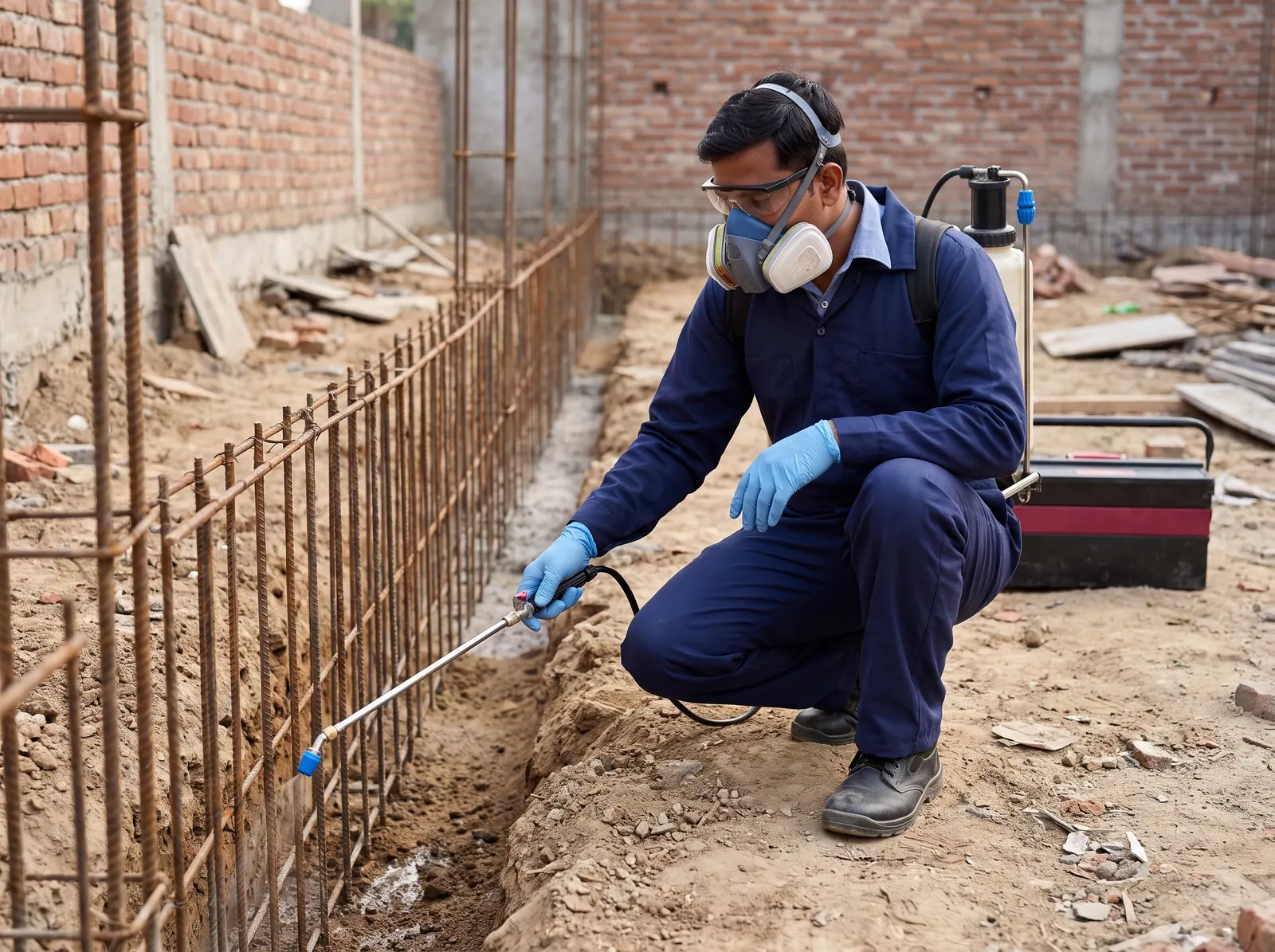
A private pest management service works inside your property boundary, on spaces a public team will not usually enter. Its value lies less in spraying and more in finding and dealing with the sources.
A well-run private programme generally follows an Integrated Pest Management approach: inspect first, reduce breeding sites, advise on sanitation and proofing, then treat in a targeted way. Our company-wide mosquito control service is built on breeding-site reduction, larviciding, indoor residual spraying and fogging, matched to the property and season.
| Public operations | Private service on a property | |
|---|---|---|
| Where it works | Streets, drains, lakes, public land | Inside your compound, building and rooms |
| Main target | Adult mosquitoes in open areas; larvae in public water | Breeding sites and resting areas on your premises |
| Timing | Set by the local body's schedule | Planned around your property and the season |
| Reaches indoors and enclosed spaces | Generally not | Yes, including basements, shafts and service areas where appropriate |
| Advice specific to your building | General public messages | Inspection findings and practical recommendations |
Neither approach replaces the other. A private service cannot treat the open drain across the road, and a public team will not lift the cover off your society's sump.
How can public and private efforts work together?
The best results come when residents, housing societies, businesses and civic teams each cover their own ground:
- Remove breeding sites at home every week. This is the single most useful step and costs nothing.
- Report public problems. Blocked drains, stagnant water on vacant plots and dumped waste are matters for the local body. A society can raise these together.
- Cooperate with public teams. Follow any instructions given during fogging, and keep children, pets, food and fish tanks away from the fog.
- Bring in professional help for what you cannot manage. Large complexes, construction sites, hotels and warehouses have breeding points that need regular inspection.
- Protect yourself regardless. Use window and door screens, mosquito nets and repellents as directed on the label, especially in the monsoon.
If you live close to a lake or nallah, public action matters even more. Our guide on living near lakes and water bodies in Hyderabad covers what residents can realistically do.
A weekly checklist for homes and housing societies
- Empty, scrub and refill water containers, coolers and pet bowls.
- Check that sump and tank lids close fully and that overflow pipes are screened.
- Tip out water from plant saucers, or fill them with sand.
- Clear terrace drains and sweep standing water off flat roofs after rain.
- Look into AC drip trays, lift pits and basement corners.
- Remove tyres, coconut shells and loose containers from open areas.
Mosquito numbers in Hyderabad typically rise with the rains, so start this routine before the monsoon rather than after. Our guides to monsoon pests in Hyderabad and dengue season mosquito prevention explain what to watch for through the year.
If anyone in your household develops a fever during mosquito season, please see a doctor promptly rather than waiting for it to pass.
Talk to us about mosquitoes on your property
Our Shamshabad branch has recently opened, bringing practices from our established operation in Goa. Tell us your location and the problem, and we'll confirm whether we can help.
Frequently asked questions
QShould I open or close my windows when the fogging vehicle passes?
There is no single rule that suits every situation, so follow any instructions given by the team doing the fogging. In general, keep children and pets away from the fog, cover food and drinking water, and move aquariums or cover them. People with asthma or other breathing problems are usually better off staying away from the fog. If anyone feels unwell after exposure, see a doctor.
QWhy are there still mosquitoes a day or two after fogging?
Fogging mainly kills adult mosquitoes that are flying when the fog passes. It leaves little lasting effect and does not reach larvae developing in water. New adults keep emerging from containers, tanks and drains nearby, and mosquitoes resting indoors or in enclosed spaces may not have been reached at all. Removing standing water around your home is what reduces the next generation.
QCan a housing society ask for fogging in its area?
Requests for public fogging or drain cleaning in common streets and public land go to your local civic body, such as the municipal or panchayat office for your area. Inside the society compound, the committee is responsible for areas like sumps, terraces, basements and gardens. Many societies combine both: reporting public problems while organising regular breeding checks within their own premises.
QDoes private mosquito control replace what the municipality does?
No. A private service works within your property boundary and cannot treat public drains, lakes or roads. Public teams, in turn, rarely work inside private buildings. Mosquitoes do not respect boundaries, so the most effective protection comes from residents, societies, businesses and civic bodies each managing the breeding sources on their own ground.
QIs fogging on my own premises useful?
It can be, as one part of a plan, for example in large open compounds or during periods of high mosquito activity. On its own it gives short-lived relief. A sensible programme starts with inspection and breeding-site reduction, treats water that cannot be emptied, and targets places where mosquitoes rest. Fogging is chosen only where it suits the property and season.
QDoes Efficacy Pest Control offer mosquito control in Hyderabad?
Our Shamshabad branch has recently opened, and services are being confirmed area by area. Share your location, the type of property and what you are seeing, and we will confirm whether and how we can help. Mosquito control is offered through our established branch in Goa.
Last updated 13 October 2026. Information on this page is general guidance; your technician will advise on your specific property after inspection.