Quick answer
Most lizards in Hyderabad homes are harmless house geckos that come indoors to hunt insects. Bright lights draw moths and other flying insects, and lizards follow them through gaps around doors, windows, AC pipes and drains. What genuinely reduces them is cutting the insect supply, changing or shielding lights near openings, and sealing entry points. Eggshells, peacock feathers and naphthalene balls do not reliably work.
Key points
- The pale lizards seen on walls indoors in India are house geckos, which eat insects and are not venomous.
- Lizards come indoors for three reasons: insects to eat, lights that gather insects, and gaps that let them in.
- Sealing gaps under doors, around AC pipes, exhaust fans, cables and drains stops new lizards arriving.
- Eggshells, peacock feathers, naphthalene balls and ultrasonic devices are not reliable lizard deterrents.
- Food a lizard has fallen into should be discarded; see a doctor if anyone feels unwell.
A lizard problem in a Hyderabad home usually looks the same: one or two pale lizards near the tube light in the evening, droppings on the windowsill, and the occasional startled shriek when one darts behind a cupboard. The lizard itself is rarely the real problem. It is a sign that your home is offering it food, warmth and an easy way in.
This guide explains why house lizards come indoors, what genuinely reduces them, and which popular remedies are myths. The steps are practical and need no chemicals.
What kind of lizard is in my house?
The small, pale, wall-climbing lizards found indoors across India are house geckos. You may also see garden lizards or skinks near plants and boundary walls, but these rarely settle inside a home.
A few basics explain most of what house geckos do:
- They eat insects. Moths, mosquitoes, flies, small cockroaches and other insects are their food. They do not eat household food or damage furniture.
- They are most active at dusk and night. During the day they hide in cracks, behind frames, picture frames, cupboards and curtain pelmets.
- They depend on warmth. Like all reptiles, they cannot produce their own body heat, so they are more active in warm weather and slow down when it is cool.
- They climb almost anything. Tiny ridges on their toe pads let them grip walls, glass and ceilings.
- They can shed their tail. A dropped tail that keeps wriggling is a defence that distracts predators. The tail grows back over time.
- They lay small, hard-shelled eggs. Eggs are usually laid in pairs and tucked into sheltered gaps such as behind cupboards, inside switchboards, under stored boxes or in window frames.
- They are not venomous. House geckos are harmless to people, though they may nip if grabbed.
Their droppings are small dark pellets with a white tip. Finding these along a windowsill or under a light tells you where a lizard spends its evenings.
Why do lizards come indoors?
Three things bring lizards into a home: insects to eat, lights that gather those insects, and gaps that let them in. Remove any one of these and the home becomes less attractive; deal with all three and most households see a real difference.
How lights and insects draw lizards in
Bright white lights near doors, windows and balconies attract moths, beetles and other flying insects after dark. Lizards learn that these spots are reliable hunting grounds, which is why they gather near tube lights and porch lamps.
Changes that help:
- Switch off balcony, porch and staircase lights when they are not needed.
- Use warm or yellow-toned bulbs outdoors and near openings; these tend to attract fewer flying insects than bright cool-white lights.
- Place outdoor lights a little away from doors and windows, so insects gather there rather than at the entrance.
- Draw curtains or blinds in the evening so indoor light does not pull insects to the glass.
- Keep window mesh closed in lit rooms after sunset.
How Hyderabad's seasons affect lizards
Hyderabad's climate on the Deccan plateau has a hot, dry summer, a monsoon from roughly June to September and a mild winter. Insect activity, and therefore lizard activity, generally rises in the warm months and through the monsoon, when standing water and damp corners support more insects. Our guides to summer pests in Hyderabad and monsoon pests from June to September explain what drives those insect numbers.
In the cooler months lizards become less active and may seem to disappear. They are usually still sheltering in the same gaps, which makes winter a good time to find and seal entry points before warm weather returns. The Hyderabad pest calendar gives a month-by-month view.
How do I cut the insect supply?
Fewer insects means fewer lizards. This is the step most people skip, and it is the one that makes the biggest long-term difference.
- Cover food and clear crumbs, especially in the kitchen and dining area, to reduce cockroaches and ants.
- Empty and clean dustbins regularly and keep lids closed.
- Fix dripping taps and wipe up standing water in bathrooms and balconies.
- Empty water from plant saucers, buckets and coolers often so mosquitoes cannot breed.
- Keep drains covered with mesh or a grating.
If you are seeing ant trails as well as lizards, our guide to ants in Hyderabad homes explains why they invade in the dry season and how to deal with them.
Where do lizards get in, and how do I seal it?
A house gecko can squeeze through surprisingly narrow gaps. Sealing is the step that stops new lizards arriving once the ones inside have moved on.
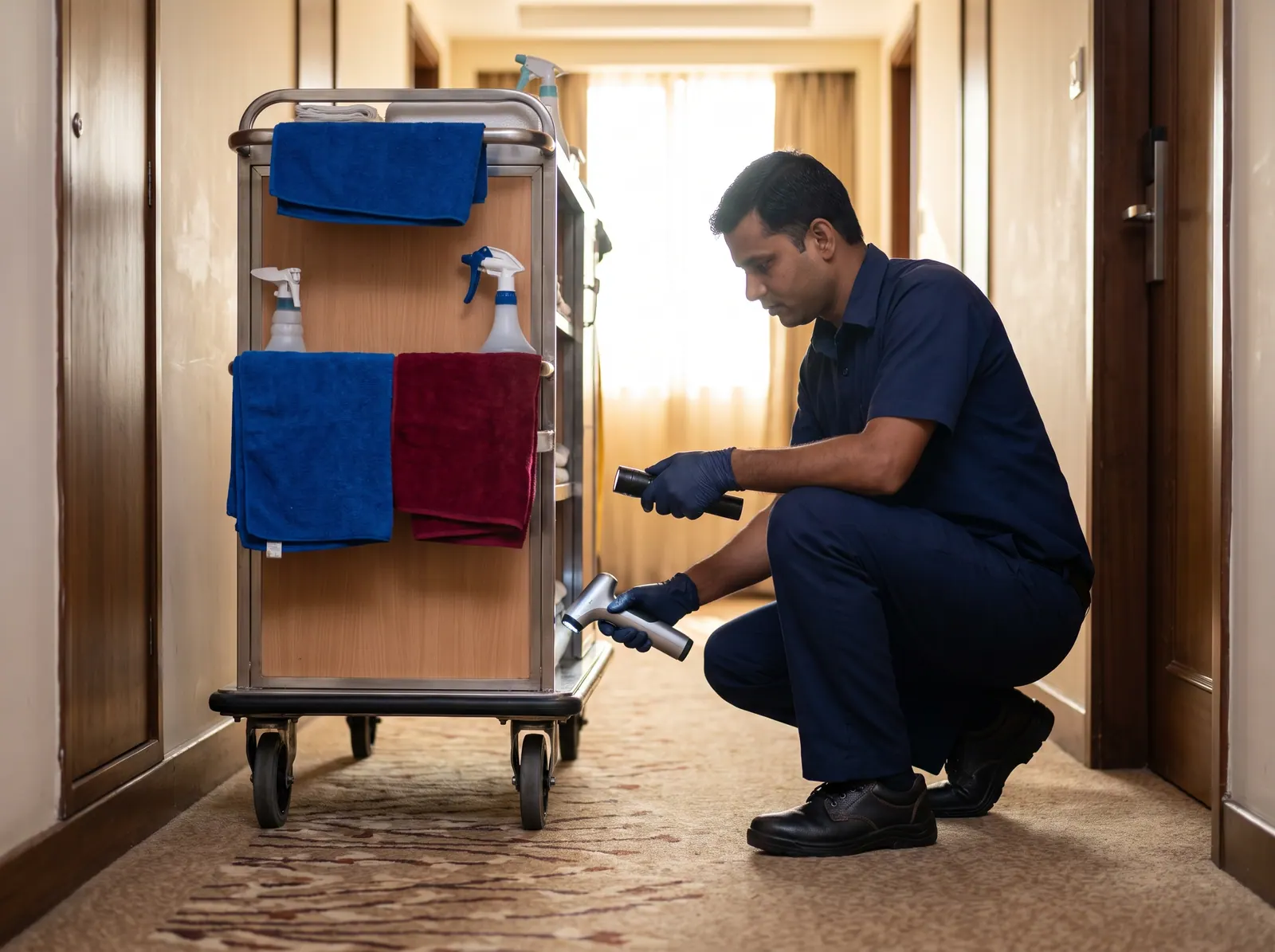
Walk around your home in the evening with a torch and check these common entry points:
- Gaps under doors. Fit a door sweep or rubber strip on main and balcony doors.
- Windows and ventilators. Repair torn mesh and make sure sliding windows close fully.
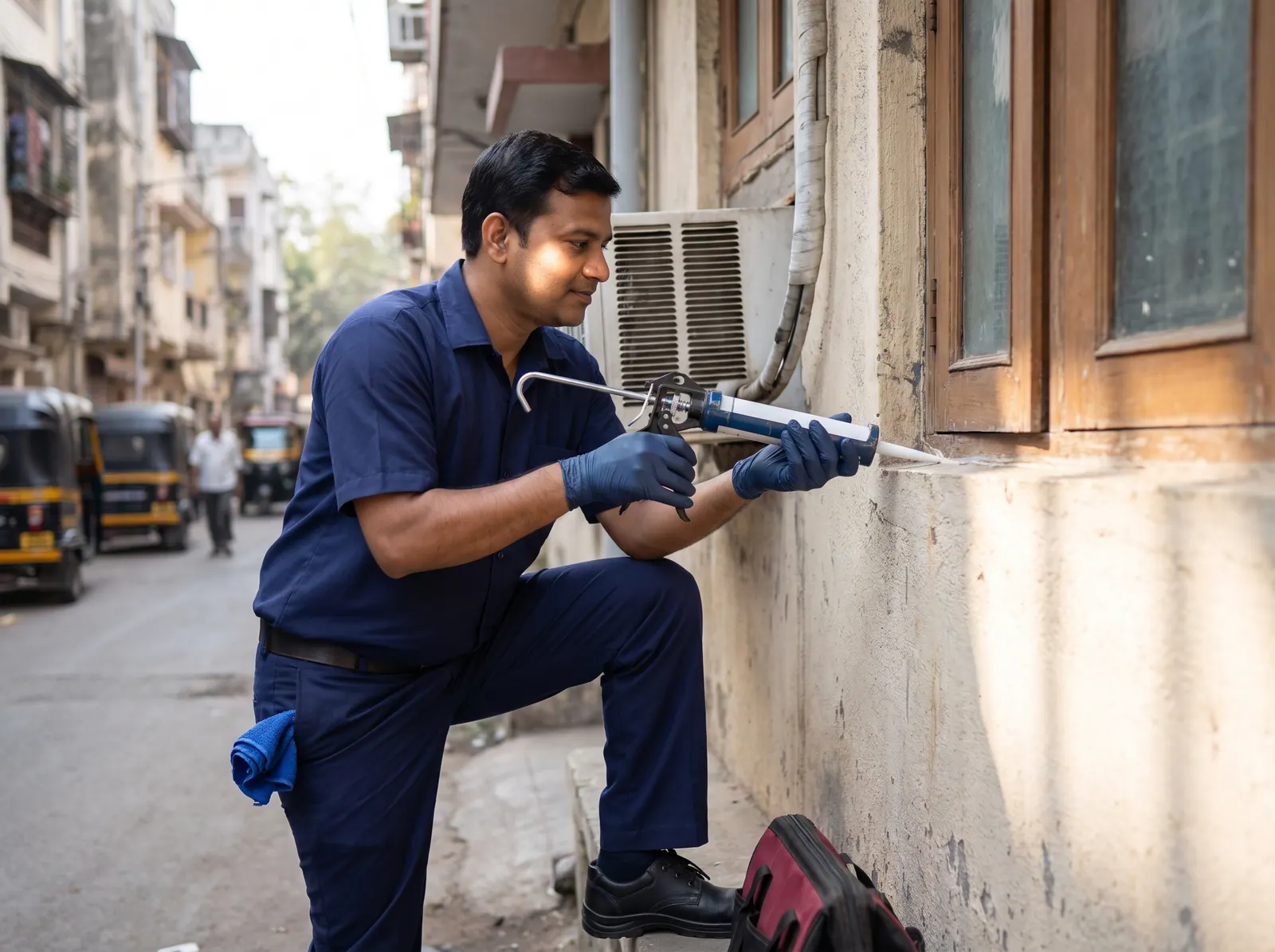
- AC pipe holes. The hole where the AC pipe passes through the wall is often left larger than needed. Seal around it with a suitable sealant or filler.
- Exhaust fans and kitchen chimneys. Check the gap around the fan frame and fit a cover or mesh where possible.
- Cable and plumbing entries. Seal gaps where TV, internet and electrical cables or pipes enter the wall.
- Drain outlets. Use mesh covers on balcony and bathroom drains.
- Cracks in walls and frames. Fill gaps between door or window frames and the wall.
In rented homes, some of these repairs are the owner's responsibility and some are the tenant's. Our guide to pest control in rented homes sets out a sensible way to divide them.
What else genuinely reduces lizards?
- Reduce hiding places. Move cupboards slightly away from walls, clear stacks of newspapers and cartons, and avoid leaving clothes heaped in corners.
- Check for eggs. When cleaning behind furniture, look for small white eggs. Remove them wearing gloves and dispose of them, then wash your hands.
- Move lizards out gently. A lizard can usually be guided into a container with a piece of card and released outdoors. Avoid grabbing it by the tail.
- Keep a routine. A quick evening check of doors, mesh and lights helps more than any one-off remedy.
Spraying household insecticide at lizards is not an effective way to deal with them and adds unnecessary chemicals to your living space. If you do use any product for insects, follow the label directions, keep children and pets away until treated surfaces are dry, ventilate the room and wash your hands afterwards. Our article on the dos and don'ts of pest control covers this in more detail.
Common lizard myths
Many home remedies circulate widely. Some are harmless but ineffective; a few are actually risky.
| Myth | What actually happens |
|---|---|
| Eggshells near the door scare lizards away | There is no reliable evidence for this. Lizards respond to food, shelter and access, not the sight of eggshells. |
| Peacock feathers keep lizards out | Lizards quickly ignore objects that pose no real threat. Feathers do not change the insects, lights or gaps that bring them in. |
| Naphthalene balls repel lizards | Not a dependable deterrent, and naphthalene balls are a poisoning risk for small children and pets. They are best kept out of living areas. |
| Homemade balls of coffee, tobacco or pepper kill or repel lizards | Unproven, and tobacco is toxic to children and pets if swallowed. Such mixtures are not worth the risk. |
| Ultrasonic plug-in devices drive lizards away | There is little reliable evidence that they work against lizards. |
| House lizards are venomous | House geckos are not venomous. The concern is hygiene from droppings and contact, not venom. |
| Once the lizards are gone, they are gone for good | New lizards will arrive as long as insects, lights and gaps remain. Prevention is ongoing. |
What if a lizard falls into food?
House geckos are not poisonous, but like many reptiles they can carry bacteria such as Salmonella on their skin and in their droppings. If a lizard falls into food or drink, throw that food away rather than taking a chance.
Clean the surface with soap and water, and wash your hands after touching lizards, eggs or droppings. If anyone feels unwell after eating food that may have been contaminated, or has any reaction to a bite, please see a doctor.
When is it worth getting professional help?
Most households can manage lizards with the steps above. It may be worth asking for help if you are seeing lizards in large numbers, if the insect problem behind them (cockroaches, mosquitoes or flies) is persistent, or if entry points are hard to find, such as in false ceilings, shafts and service ducts.
At our established Goa branch, lizard control is handled as habitat and entry-point management within an Integrated Pest Management approach: inspection, advice on sanitation and proofing, and targeted treatment of the insects that lizards feed on where that is needed. The aim is to reduce the reasons lizards come in, rather than simply chasing the lizards themselves.
Our Shamshabad branch has recently opened — tell us your location and the problem, and we'll confirm whether we can help. You can read more about the Hyderabad branch in Shamshabad and how to get in touch.
Frequently asked questions
QAre house lizards harmful to my family?
House geckos are not venomous and do not attack people. The main concern is hygiene: their droppings and skin can carry bacteria, so food they touch should be thrown away and hands washed after handling them, their eggs or droppings. If a lizard is grabbed it may nip. If anyone has a reaction to a bite or feels unwell after eating food a lizard may have contaminated, please see a doctor.
QWhy do I see lizards mostly near the tube light?
Bright lights attract moths and other flying insects after dark, and lizards wait nearby to catch them. A light near an open window or door turns that spot into a hunting ground. Switching off unused lights, using warmer-toned bulbs near openings, drawing curtains in the evening and keeping mesh closed in lit rooms all reduce the insects that bring lizards to the light.
QWhy do lizards seem to disappear in winter and return in summer?
Lizards are cold-blooded, so they slow down when temperatures drop in Hyderabad's milder months and there are also fewer insects for them to eat. They usually stay hidden in the same gaps rather than leaving. The cooler season is a good time to check behind furniture for eggs and seal openings around doors, windows and AC pipes before warm weather brings them back out.
QHow do I get a lizard out of my room without hurting it?
Stay calm and move slowly. Place a container or box over the lizard, slide a piece of stiff card underneath, and carry it outside to release it away from the door. Avoid grabbing it, especially by the tail, which it can shed as a defence. Then look at how it got in, such as a gap under the door or torn mesh, and fix that.
QDo I need to spray chemicals to stop a lizard problem?
Usually not. Spraying lizards directly is not an effective approach. Lasting improvement comes from reducing the insects they feed on, changing lighting near openings and sealing entry points. Where an insect problem such as cockroaches or mosquitoes is persistent, that is what may need targeted treatment. Any product you use should be applied strictly according to its label, with children and pets kept away until it is dry.
QI live in a rented flat. Who should fix the gaps lizards use?
It depends on the repair and your agreement. Structural gaps, such as oversized AC pipe holes, damaged frames or missing drain covers, are often the owner's responsibility, while day-to-day cleanliness and keeping mesh closed usually fall to the tenant. It helps to raise the issue in writing with photos so both sides agree on what needs fixing.
Last updated 13 October 2026. Information on this page is general guidance; your technician will advise on your specific property after inspection.