Quick answer
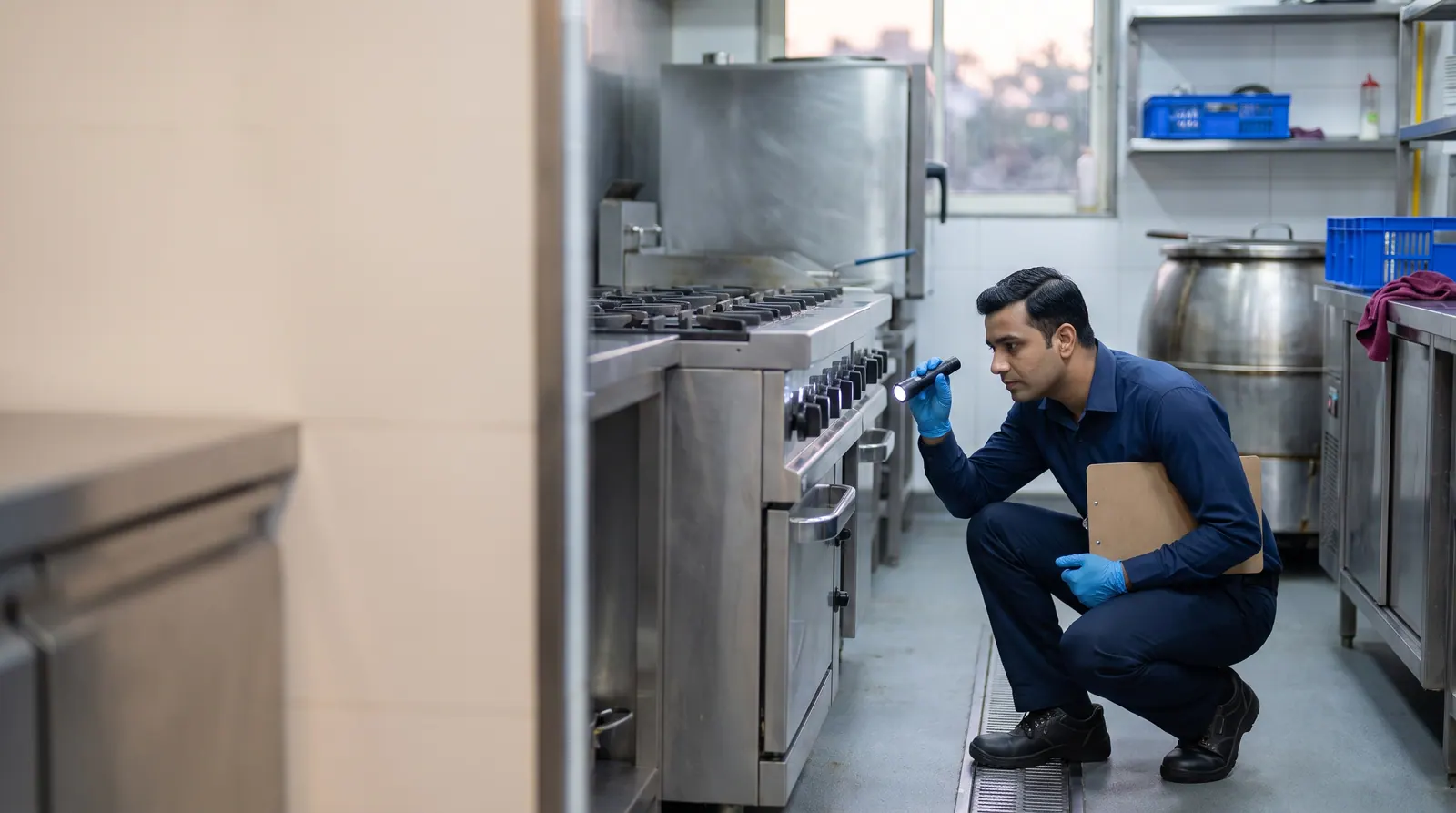
Hotel pest control in Shamshabad and the wider airport corridor works best when the property is divided into zones: guest rooms, kitchens and food stores, laundry and linen, luggage and back-of-house areas, and the exterior. Each zone gets its own inspection routine and methods. Guest-area work should be quiet and timed around room turnover. Every visit, sighting and corrective action should be recorded so the hotel is ready for food-safety audits and guest complaints.
Key points
- Zoning a hotel into guest rooms, kitchens, laundry, luggage and back-of-house, and exterior areas lets each zone get the right inspection routine and methods.
- In high-turnover hotels, bed bugs are often brought in on luggage, so housekeeping checks of mattress seams, headboards and luggage racks are an important early warning.
- Kitchen pest control depends on sanitation and proofing as well as targeted treatment such as gel baiting and crack-and-crevice work.
- Food businesses are expected to maintain pest control under FSSAI Schedule 4 hygiene requirements, and good records support HACCP and audits.
- Pest control operators in India are licensed by state authorities under the Insecticides Act, 1968 framework, and products must be CIB&RC-registered.
Hotels and lodges around the airport at Shamshabad share a pattern that shapes how pests behave. Stays are short, rooms turn over quickly, and guests arrive with luggage from many cities and countries. Kitchens often serve early breakfasts and late arrivals. This guide explains how to plan hotel pest control in Shamshabad and along the airport corridor so that it protects guests, food and reputation without disturbing operations.
It is written for general managers, housekeeping and F&B heads, and owners of smaller lodges. It covers four areas that matter most: zoning, discreet guest-area work, kitchens and laundry, and documentation.
Why do transit hotels need a different approach?
In a transit hotel, the main risk is often what comes in, not what is already there. Bed bugs travel in suitcases, backpacks and laptop bags, and a high-turnover property sees far more luggage per room each month than a holiday resort. A single introduction can spread to neighbouring rooms through housekeeping trolleys, linen and shared walls.
Back-of-house areas carry their own risks. Deliveries arrive daily, waste builds up quickly, and kitchens run long hours. Hotels near logistics parks and open land can also face rodent pressure from outside, a problem covered in our guide to rodent risks in airport-area warehouses and logistics parks.
How should a hotel be zoned for pest management?
Zoning means splitting the property into areas with similar risks and giving each one its own inspection checklist, methods and visit frequency. It stops a programme from becoming a single monthly spray that suits no area well. A typical zoning plan looks like this:
| Zone | Typical pressures | Main focus |
|---|---|---|
| Guest rooms and corridors | Bed bugs arriving on luggage; occasional cockroaches, ants and mosquitoes | Bed and headboard checks, housekeeping reporting, quiet targeted treatment |
| Kitchens, food stores and restaurants | Cockroaches, rodents, flies, stored-product insects | Sanitation, proofing, gel baiting, crack-and-crevice work, fly management |
| Laundry and linen stores | Bed bugs in soiled linen, drain flies, silverfish, rodents in stored stock | Separating soiled and clean linen, drain hygiene, shelving off the floor |
| Lobby, luggage rooms and staff areas | Hitchhiking bed bugs, cockroaches in staff rooms and lockers | Luggage racks off the floor, regular inspection, staff accommodation checks |
| Exterior, waste yard and roof | Rodents, mosquito breeding in standing water, pigeons on ledges | Perimeter bait stations, removing standing water, bird-proofing |
A site map showing each zone, with bait stations and monitoring points numbered, is the backbone of the plan. It lets anyone see where the risks are and what was checked on each visit.
How can guest-area work stay discreet?
Guests should rarely notice pest control. Good practice in occupied hotels includes:
- Working with room turnover. Schedule room inspections and treatment between check-out and check-in, coordinated with housekeeping.
- Choosing low-disturbance methods. Gel baits, targeted crack-and-crevice treatment and physical inspection suit guest floors far better than broad spraying or fogging.
- Taking a room out of sale when needed. If bed bugs are suspected, block the room until it has been inspected and treated. Check the rooms on either side, above and below.
- Handling linen carefully. Strip suspect rooms into sealed bags inside the room, not on the corridor trolley.
- A quiet complaint protocol. Front-desk staff should know how to move a guest calmly, record the complaint and alert the duty manager. If a guest reports bites or a skin reaction, suggest they see a doctor rather than offering a diagnosis.
- Following re-entry advice. Keep rooms closed and ventilated after any treatment until surfaces are dry or for as long as the technician advises.
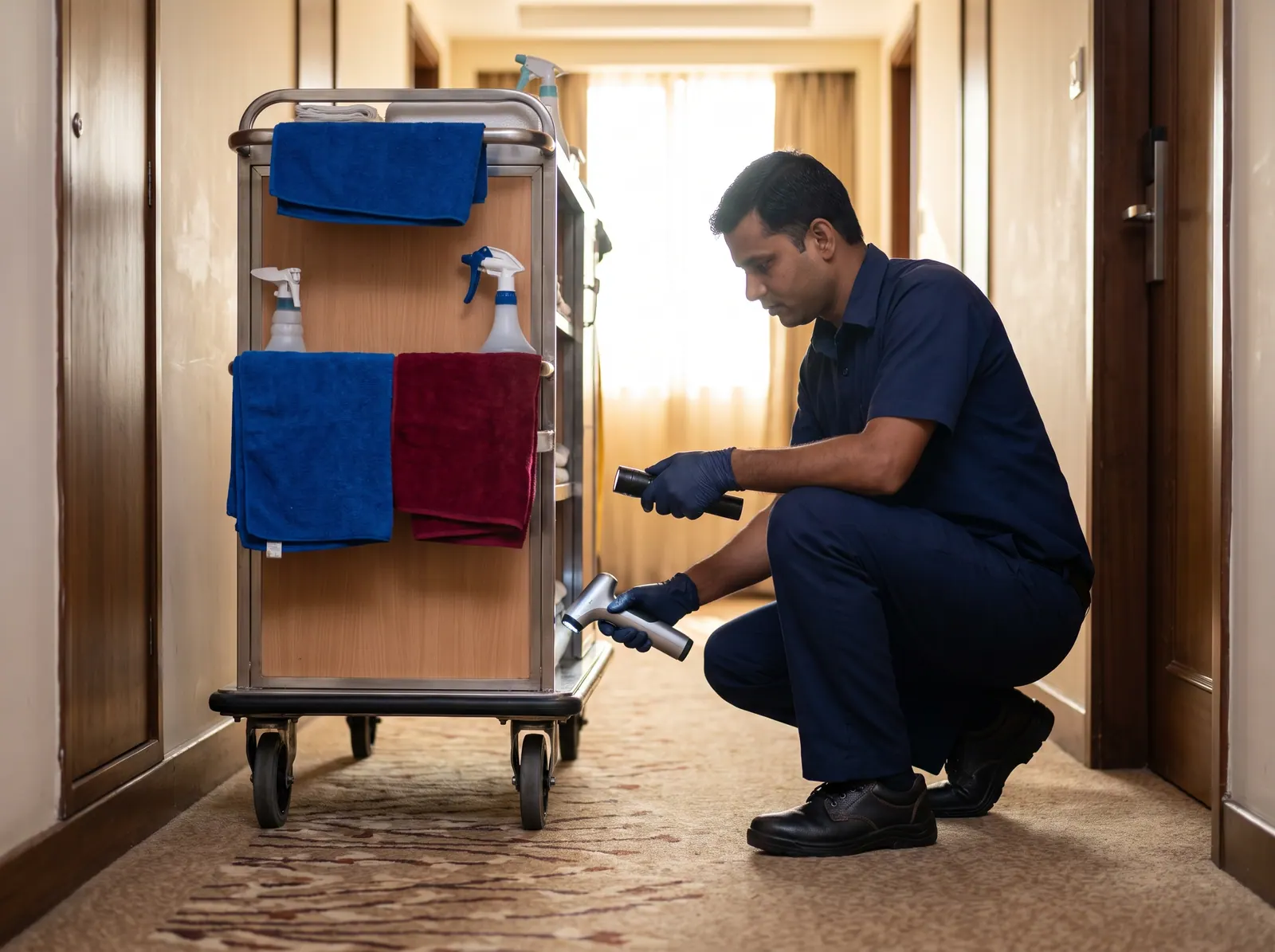
Housekeeping staff are the hotel's best early-warning system. Train them to look at mattress seams, headboards, bed frames and luggage racks during every clean. Our guide to bed bug prevention for hotels near Hyderabad airport sets out a room-check routine in more detail.
What do kitchens and food stores need?
Hotel kitchens give cockroaches warmth, moisture and food around the clock. Small cockroaches hiding in equipment, hinges and electrical boxes are usually the main concern; our article on keeping baby and adult cockroaches away explains why both life stages matter. Control depends on sanitation and proofing as much as treatment:
- Deep-clean behind and under equipment on a fixed schedule, not just visible surfaces.
- Seal gaps around pipes, drains and wall tiles, and fit door sweeps on external doors.
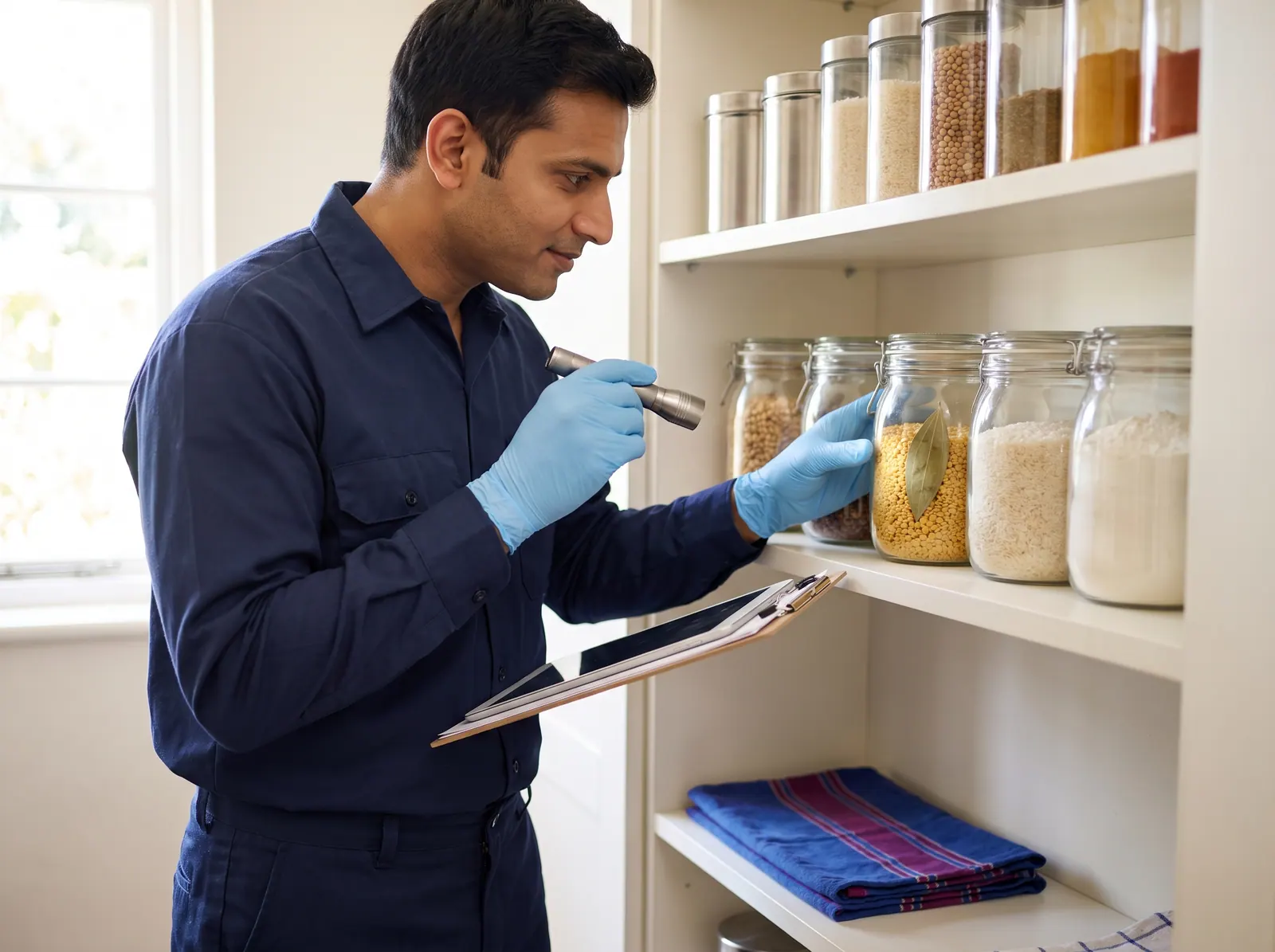
- Keep dry stores off the floor and away from walls, and rotate stock first-in, first-out.
- Cover drains and clean drain channels regularly to cut fly and cockroach breeding.
- Use bait and crack-and-crevice treatment carefully, keeping all products away from food, utensils and preparation surfaces.
- Use tamper-resistant bait stations outside and traps inside food areas, so poisoned rodents do not die in hidden spaces near food.
Any treatment in food areas should follow label directions. Food and utensils should be covered or removed, and surfaces cleaned before preparation resumes.
What about laundry, linen and luggage areas?
Laundry rooms are where pests from guest rooms meet clean stock. Keep soiled and clean linen physically separate, with different trolleys and routes if possible. Bag linen from suspect rooms and wash it promptly on the hottest cycle the fabric allows. Keep shelving off the floor so rodents and silverfish have fewer hiding places, and keep floor drains clean to discourage drain flies.
Luggage storage rooms and bell desks hold bags from many guests together, sometimes for hours. Use metal racks rather than placing bags on carpet, keep the room uncluttered and include it in regular inspections. Guests can also take simple precautions, described in bed bugs after travel.
Do not forget staff accommodation and locker rooms. Shared bedding and personal belongings can let bed bugs and cockroaches establish themselves where guests never go, and spread back into the hotel.
What documentation should a hotel keep?
Records protect the hotel during audits, inspections and guest disputes. Food businesses are expected to maintain pest control under FSSAI Schedule 4 hygiene requirements, and hotels following HACCP will want pest control written into their food-safety plan. A useful file includes:
- The pest control contract, zone map and agreed visit schedule
- A service report for every visit: areas covered, findings, methods and products used
- Bait station and monitoring records, with any activity noted by station number
- A pest sighting log kept by staff, with date, location and action taken
- Corrective actions, such as proofing repairs or cleaning instructions, and when they were completed
- Material Safety Data Sheets for products used on site
- A copy of the operator's pest control licence and confirmation that products are registered with the CIB&RC
In India, pest control operators are licensed by state authorities under the framework of the Insecticides Act, 1968. It is sensible to ask any provider for their licence details before signing. Hotels that also run delivery-only kitchens may find our guide to pest control for cloud kitchens in Hyderabad useful.
How do the seasons change hotel pest pressure?
The Deccan plateau's hot, dry summer pushes insects and rodents towards water and shade, often into kitchens, plant rooms and wet areas. The monsoon brings standing water on roofs, in planters and around construction, along with more flies and mosquitoes. The milder winter is a good time for proofing work and deep cleaning before pressure builds again. Our Hyderabad pest calendar sets out what to watch for month by month.
How does our Goa operation approach hotel work?
Efficacy Pest Control was founded in Goa, where hotel pest management is an established service. It covers guest-room, kitchen, store and staff-accommodation programmes. Our Goa work follows an Integrated Pest Management approach: inspection first, then sanitation and proofing advice, then targeted treatment.
In Goa, we share service reports after visits and give clients updates on WhatsApp. We also provide documentation for food businesses aligned with HACCP and FSSAI audit expectations. Our Goa branch in Chimbel is a licensed pest control operator with the Directorate of Agriculture, Goa, and uses CIB&RC-registered products. We keep Material Safety Data Sheets for the products we use. A published testimonial from a purchase manager in Goa describes bed bugs in staff accommodation being cleared within the first few months of service.
Our Shamshabad office has recently opened, and its services are being confirmed area by area. The branch will confirm what it can help with for your property.
Talk to our Shamshabad branch
Our Shamshabad branch has recently opened. Tell us your hotel's location, its size and the pest problem you are seeing, and we'll confirm whether we can help. You can find branch details on the Hyderabad branch page.
Frequently asked questions
QHow often should a transit hotel near the airport have pest control visits?
There is no single right frequency. It depends on the hotel's size, occupancy, kitchen operations and what an inspection finds. A sensible approach is a scheduled programme with more frequent attention to kitchens and food stores than to guest floors, plus extra checks whenever housekeeping reports a sighting. The schedule should be written into the contract and reviewed after each season, so frequency rises where activity is found and falls where it is not.
QWhat should housekeeping do if they find a bed bug in a room?
Take the room out of sale straight away and inform the duty manager. If possible, keep the insect in a sealed bag or on clear tape so it can be identified. Strip the bed into sealed bags inside the room rather than on the corridor trolley. Avoid moving furniture into other rooms. Arrange a professional inspection of that room and the rooms on either side, above and below. Record everything in the pest sighting log.
QCan pest control be carried out while the hotel is fully occupied?
Usually, yes. Zoning lets work happen in one area while the rest of the hotel runs normally. In guest areas, low-disturbance methods such as inspection, gel baiting and targeted crack-and-crevice treatment can be timed around room turnover. Kitchens are often treated after service closes. Treated rooms should stay closed and ventilated until surfaces are dry or for as long as the technician advises before guests or staff return.
QIs fogging corridors a good way to control pests in a hotel?
Fogging is generally not a routine answer for hotel interiors. It does not reach the cracks, seams and equipment voids where bed bugs and cockroaches hide, and it disturbs guests. Fogging has a place in mosquito control, usually outdoors and matched to the season, alongside removing standing water. Indoors, inspection, sanitation, proofing and targeted treatment tend to give better control with far less disruption.
QWhat will a food safety auditor want to see about pest control?
Auditors typically look for evidence that pest control is planned, carried out and acted on. That means a contract and site map, service reports for each visit, bait station and monitoring records, a sighting log, and records of corrective actions such as proofing repairs. Safety data sheets and proof that the operator is licensed and uses registered products also help. The exact checklist varies, so confirm requirements with your food-safety lead.
QDoes Efficacy Pest Control offer hotel pest management in Shamshabad?
Our Shamshabad branch has recently opened, and services and localities in the Hyderabad region are being confirmed area by area. Hotel pest management is an established service at our Goa branch. If you manage a hotel or lodge in the airport corridor, share your location and the problem you are facing, and we'll confirm whether and how we can help.
Last updated 13 October 2026. Information on this page is general guidance; your technician will advise on your specific property after inspection.