Quick answer
Hotels and lodges near Hyderabad airport see constant guest turnover and luggage from many places, so bed bugs can arrive at any time. Prevention depends on three habits. Housekeeping checks beds, headboards and luggage racks at every turnover. Staff follow a written protocol when a guest complains. Detailed inspections are planned on a rotation so every room is examined regularly. Early detection keeps a problem confined to one room.
Key points
- Bed bugs travel in luggage and clothing; they do not fly or jump, so high guest turnover raises the chance of introduction.
- Signs include live bugs, dark droppings on mattress seams, shed skins, tiny pale eggs and blood spots on linen; bites alone are not proof.
- A room with a suspected case should be blocked at once, and the rooms beside, above and below it should be inspected.
- Market sprays can scatter bed bugs into wall voids and nearby rooms; confirmation and treatment are best left to a licensed professional.
- Bed bugs remain active indoors all year, so planned inspections should run on a rotation through every season.
For hotels and lodges around Hyderabad airport at Shamshabad, hotel bed bugs are less about cleanliness and more about traffic. Every guest arrives with luggage that has been somewhere else, such as another hotel, a flight, a bus or a relative's home. A single hitch-hiking bug can start a problem in one room, and it can spread to others if no one notices.
This guide sets out a practical prevention routine. It explains why turnover raises the risk, what housekeeping should check, how to handle a guest complaint and how to plan regular inspections. It is written for owners, general managers and front-office and housekeeping heads at transit hotels, airport lodges and service apartments. For the wider picture of pests in these properties, see our guide to pest control for hotels and lodges in the airport corridor.
Why do airport-corridor hotels face a higher bed bug risk?
Bed bugs do not fly or jump. They travel by hiding in luggage, clothing, bags and furniture, then settle into seams and crevices close to where people sleep and come out at night to feed. They can survive for long periods without a meal, so a room that has been empty for a while is not automatically clear.
Several features of airport-corridor properties add to the risk:
- High guest turnover: more check-ins mean more bags and more chances for a bug to be carried in.
- Short stays and day-use rooms: rooms may be turned quickly, sometimes more than once a day, which leaves little time for a close look.
- Guests from everywhere: transit passengers, airline crew, drivers and event groups bring luggage from many cities and countries.
- Luggage habits: tired travellers often drop bags straight onto the bed or beside it.
- Shared trolleys and linen: housekeeping carts and linen bags move from room to room and floor to floor.
- Staff accommodation: dormitory-style staff rooms can quietly harbour bed bugs if they are left out of the inspection plan, and staff move between guest rooms every day.
None of this means a property is dirty. Bed bugs turn up in well-kept hotels too. What separates a minor incident from a serious one is how early it is found.
What signs should every staff member recognise?
Training is the cheapest form of prevention. Every room attendant and supervisor should be able to recognise these signs:
- Live bugs: adults are flat, oval and reddish-brown, roughly the size of an apple seed. Young bugs are smaller and paler.
- Dark spots: small black or brown dots of droppings on mattress seams, piping, bed frames or behind headboards. They may smear like ink when wiped.
- Shed skins and eggs: pale, papery casings and tiny whitish eggs tucked into crevices.
- Blood spots: small rust-coloured marks on sheets or pillowcases.
Bites on their own are not reliable evidence. People react differently, and other insects can leave similar marks. Treat a bite report as a reason to inspect, not as proof. If a guest or staff member has a skin reaction, they should see a doctor.
A housekeeping inspection routine for every turnover
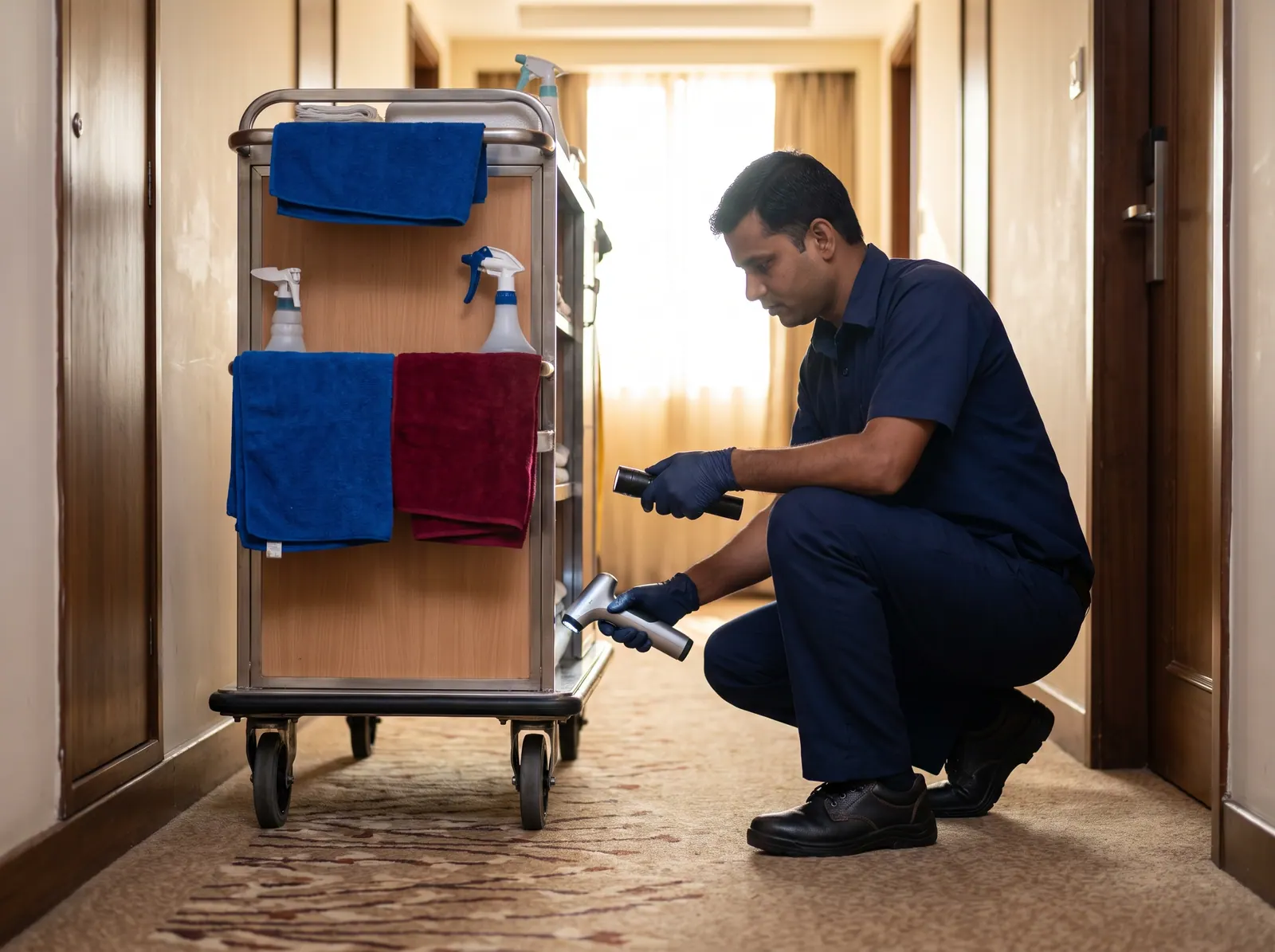
The aim is a short, consistent check that is built into normal room cleaning rather than added on top of it. Give each attendant a small torch, gloves and a thin plastic card to look into seams and gaps.
- Before stripping the bed, look over the sheets and pillowcases for spots.
- Strip the linen into a bag inside the room and tie it closed. Do not drop loose linen on the corridor floor or an open trolley.
- Check the mattress seams, piping, corners and label, especially at the head end. If the mattress is encased, check the encasement for tears and make sure the zip is fully closed.
- Look at the corners and joints of the bed base, and its underside fabric when the schedule calls for it.
- Check the edges of the headboard where it meets the wall. Lift it off if it is designed to come away.
- Check the bedside tables, including drawer joints and undersides.
- Check the luggage rack, sofa seams, cushions and curtain folds near the bed.
- Record the result on the room checklist, either as "checked, nothing found" or "suspect, reported".
If an attendant finds anything suspicious, they should stop cleaning and leave items where they are. They should inform the supervisor straight away so the room can be blocked. Staff should not spray anything, because that can make professional treatment harder.
Room set-up that makes inspection easier
- Bed bug-proof encasements on mattresses and pillows give a smooth, light surface that is quick to check and leaves fewer places to hide.
- Light-coloured linen makes spots easier to see.
- Metal luggage racks should be placed away from the bed and walls. Encourage guests to use them instead of the bed.
- Wall-mounted or simple headboards help, as does sealing cracks in skirting and around fittings near beds.
- Keep clutter and decorative items around beds to a minimum.
- Inspect any second-hand or refurbished furniture before it goes onto guest floors.
What should staff do when a guest reports bed bugs?
How the first few minutes are handled shapes both the guest's experience and how far the problem spreads. Keep a written protocol and rehearse it with front office and housekeeping.
- Respond calmly. Thank the guest and apologise for the inconvenience. Do not argue, dismiss the report or guess where the bugs came from.
- Offer a different room. It should not be next to, above or below the affected room, and it should be checked first.
- Help protect their belongings. Offer to launder and dry clothing on the hottest setting the fabric allows. Inspect luggage carefully before it moves, and bag items where practical.
- Mention medical help if needed. If the guest reports bites or a reaction, suggest they see a doctor. Do not offer treatment advice.
- Block the room immediately. Mark it out of order in the booking system so no one checks in until it is cleared.
- Collect evidence. If possible, capture a specimen on clear tape or in a sealed container. Take photos and note the room number, date and time.
- Handle linen separately. Bag it inside the room and send it to the laundry sealed.
- Check neighbouring rooms. Inspect the rooms on either side, above and below, and the housekeeping trolley used for that room.
- Call a licensed pest professional. Avoid market sprays, which can drive bugs into wall voids and nearby rooms.
- Record everything. Note the complaint, the actions taken and the outcome in a log.
Return the room to service only after treatment and a follow-up inspection confirm it is clear. Bed bug treatment usually needs more than one visit because eggs can hatch after the first round. Our bed bug treatment preparation checklist explains how to get a room ready.
How often should hotels plan bed bug inspections?
Turnover checks catch a lot, but not everything. Planned inspections go deeper, into bed bases, removed headboards and furniture joints that a quick daily check cannot reach.
| Frequency | Who | What is checked |
|---|---|---|
| Every turnover | Room attendant | Bed, headboard edges, bedside tables and luggage rack, with the result recorded |
| Weekly | Housekeeping supervisor | Spot-check of a sample of rooms, review of checklists and condition of encasements |
| Monthly or quarterly, on rotation | Trained inspector or pest professional | Detailed inspection of bed bases, headboards, furniture joints, sofas and staff accommodation |
| After any suspected or confirmed case | Pest professional | Affected room and surrounding rooms, with follow-up visits |
| Before new or second-hand furniture is placed | Housekeeping with professional support | Incoming furniture and the rooms receiving it |
Rotate the detailed inspections so every room, including staff rooms, is covered within a fixed cycle. Bed bugs stay active indoors all year. Hyderabad's hot summer, monsoon and mild winter do not offer a safe season, though busy travel and wedding periods bring more guests and luggage. Our Hyderabad pest calendar covers the seasonal pests that affect hotels alongside bed bugs.
Training and records: making the routine stick
- Induction training: train every new housekeeping staff member, including temporary and contract staff, before they work on guest floors.
- Refreshers: run short refresher sessions with real photos of signs, so staff stay confident.
- A front-desk script: give reception teams agreed wording for complaints, so responses are consistent.
- Maintenance awareness: anyone moving beds or furniture between rooms should check them first.
- Staff accommodation: include staff rooms in the plan. The same issues arise as in shared housing, covered in our guide to bed bugs in Hyderabad PGs and hostels.
- Records: keep turnover checklists, the complaint log and inspection reports together. Patterns, such as repeated finds on one floor, show where to focus.
When choosing a pest control operator, ask about their state licence and whether they use CIB&RC-registered products. Ask too whether they keep Material Safety Data Sheets and provide written service reports. Front-desk staff may also find it useful to share our guide to bed bugs after travel with guests who are worried about what they carry home.
How Efficacy Pest Control approaches hotel bed bug work
Efficacy Pest Control was founded in Goa, where hotel pest management, including guest rooms and staff accommodation, is part of our established work. We follow an Integrated Pest Management approach. That means inspection first, then sanitation and proofing advice, then targeted treatment. We maintain Material Safety Data Sheets for the products we use, and our Goa clients receive service reports after visits.
Our Shamshabad branch has recently opened. Tell us your location and the problem, and we'll confirm whether we can help. You can find branch details on our Hyderabad branch page, and answers to common questions in the Hyderabad branch FAQ.
Frequently asked questions
QCan a clean, well-run hotel still get bed bugs?
Yes. Bed bugs feed on blood, not dirt, and they arrive in guests' luggage and clothing regardless of how clean a room is. A busy transit hotel near the airport receives bags from many places every day. Good housekeeping does not stop bed bugs arriving, but it makes them much easier to spot early, before they spread beyond a single room.
QShould we close a whole floor if one room has bed bugs?
Usually not straight away. Block the affected room and inspect the rooms on either side, above and below, plus the housekeeping trolley used there. If those rooms are clear, the rest of the floor can normally keep operating while the affected room is treated. A pest professional can advise whether a wider inspection is needed based on what they find.
QCan our staff treat a room with a spray bought from the market?
It is better not to. General-purpose sprays rarely reach bugs and eggs hidden deep in seams and joints. They can also drive bed bugs into wall voids and neighbouring rooms, which makes the problem harder to control. Leave items in place, block the room and call a licensed pest professional who uses registered products and follows label directions.
QHow long should an affected room stay out of service?
There is no fixed period. It depends on how established the infestation is, the treatment method and the results of follow-up inspections. Treatment usually needs more than one visit because eggs can hatch after the first round. Keep the room blocked until your pest professional confirms through inspection that it is clear, rather than reopening on a set date.
QAre mattress encasements worth it for a transit hotel?
For high-turnover properties they are often worthwhile. Good bed bug encasements remove many hiding places in mattress seams and give housekeeping a smooth, light surface to check quickly at each turnover. They only help if the zip stays fully closed and torn encasements are replaced promptly. They work best as part of a wider inspection routine, not as a replacement for one.
QDoes your Shamshabad branch handle bed bug problems for hotels?
Our Shamshabad branch has recently opened, and we are confirming services and coverage area by area. Tell us your hotel's location and the problem you are seeing, and we'll confirm whether we can help. In the meantime, the inspection and complaint steps in this guide will help you contain the problem.
Last updated 13 October 2026. Information on this page is general guidance; your technician will advise on your specific property after inspection.