Quick answer
Stored rice, pulses and grain in the Hyderabad region are attacked by weevils, grain borers, pulse beetles, flour beetles and grain moths. Prevention rests on inspecting incoming stock, regular sampling and traps, first-in-first-out rotation and clean, dry stores. Fumigation is used only when insects are inside the commodity and the stock can be sealed gas-tight. Fumigant gases are highly toxic, so a licensed operator must carry it out, with full records.
Key points
- Primary pests such as rice weevils, grain borers and pulse beetles develop inside whole grains; secondary pests such as flour beetles feed on broken grain and flour.
- Inspecting incoming lots, sampling, sieving and traps catch infestations before visible damage spreads.
- First-in-first-out rotation, pallets, wall gaps and daily spillage cleaning remove breeding pockets in stores.
- Fumigation suits established infestations in stock that can be sealed gas-tight; it gives no lasting protection.
- Fumigants are highly toxic: only trained, licensed operators using CIB&RC-registered products should apply them, with full records kept.
Grain fumigation in Hyderabad warehouses, mills, wholesale godowns and food-business stores is sometimes necessary, but it is rarely the first answer. Rice, pulses, wheat, millets and their products are attacked by a small group of stored-product insects. Most losses can be limited by catching them early, rotating stock and keeping stores clean and dry.
This guide covers the insects you are likely to meet, how to monitor a store, when fumigation is the right tool, and the safety and record-keeping that a properly run fumigation needs.
Which insects attack stored rice, pulses and grain?
Stored-product insects fall into two broad groups. Primary pests can attack whole, sound grain, and their young often develop hidden inside the kernel. Secondary pests feed on broken grain, flour, dust and products already damaged by primary pests or by poor handling.
| Insect | What it usually attacks | Signs to look for |
|---|---|---|
| Rice weevil | Whole rice, wheat, maize, sorghum | Small dark beetles with a snout; grains hollowed out; neat exit holes |
| Lesser grain borer | Wheat, rice, paddy | Fine floury dust in the stock; irregular holes in grains |
| Pulse beetles | Chana, moong, cowpea and other pulses | Round exit holes in seeds; small white eggs stuck to the seed surface |
| Khapra beetle | Grain, pulses, oilseeds, cereal products | Hairy larvae and cast skins in cracks, seams of sacks and corners |
| Red flour beetle, saw-toothed grain beetle | Flour, suji, broken grain, processed foods | Small reddish-brown or flat brown beetles; greyish tint or stale smell in flour |
| Rice moth, grain moths, Indian meal moth | Rice, broken grain, flour, millets, dry fruits | Silky webbing; clumped grain; small moths flying around stacks, often at dusk |
Damp stock may also carry psocids (booklice), tiny pale insects that thrive where humidity is high and mould is starting. Grain stores also attract rats, mice and pigeons, whose droppings and urine contaminate food and can make whole lots unfit for sale.
Why do Hyderabad’s seasons matter for stored grain?
Stored-product insects breed faster in warm conditions, so the hot, dry summer on the Deccan plateau can turn a minor problem into a serious one within a few weeks if stock is not checked. Stores with tin or asbestos roofs and poor ventilation tend to trap heat.
During the monsoon, humidity rises and grain can pick up moisture, especially near leaking roofs, damp walls or floors without pallets. Moist grain favours mould, psocids and some beetles. The mild winter slows insect activity but does not stop it. Our month-by-month Hyderabad pest calendar and our guide to monsoon pests in Hyderabad explain how these seasons shift pest pressure more widely.
How do you monitor a grain or pulses store?
Monitoring tells you what is present, where, and whether it is getting worse. It works best as a simple routine that someone owns.
- Inspect every incoming lot. Check sacks and loose samples before they join existing stock. An infested consignment is one of the most common ways insects enter a clean store.
- Sample from several points. Take samples from the top, sides and, where possible, the centre of stacks, because insects are not spread evenly.
- Sieve the samples. Sieving over a pale surface makes adult beetles, larvae, frass and dust easy to see.
- Use traps. Probe or pitfall traps placed in bulk grain, and pheromone traps for moths and some beetles, show activity before damage is obvious.
- Feel and smell the stock. Warm patches, caking, a musty or sour smell and webbing on sack surfaces are all warning signs.
- Write it down. Record date, stack or lot number, what was found and any action taken. Trends matter more than a single reading.
How do stock rotation and store hygiene prevent infestation?
Older stock sitting at the back of a store gives insects time to build up and then spread to fresh lots. Good rotation and housekeeping remove those breeding pockets.
- First in, first out: dispatch older lots first and mark stacks clearly with receipt dates.
- Pallets and gaps: stack on pallets or dunnage, away from walls, with walkways wide enough to inspect all sides.
- Clean spillage daily: spilt grain, sweepings and dust in corners feed secondary pests and rodents.
- Clean empty stores: before new stock arrives, sweep, remove old residues, and seal cracks and crevices where khapra beetle and other insects hide.
- Separate suspect lots: keep infested or returned stock apart until it has been assessed.
- Keep it dry: repair roof leaks, improve ventilation and avoid stacking against damp walls.
- Proof the building: fit door sweeps, mesh vents and netting where rodents or birds get in.
Households storing rice and dal in bulk face the same insects on a smaller scale; our guide to rice and dal pests in Hyderabad kitchens covers practical steps at home.
When is fumigation the right step?
Fumigation uses a gas that penetrates sacks and bulk grain, reaching insect eggs and larvae developing inside kernels, which surface treatments cannot reach. It is generally considered when:
- monitoring shows an established infestation within the commodity, especially of internal feeders such as weevils, grain borers or pulse beetles;
- a consignment must be free of live insects before dispatch, or an importing country or buyer requires treatment;
- the stack, container or store can be sealed gas-tight for the full exposure period.
Fumigation is not suitable as routine prevention without evidence of infestation, in stores that cannot be sealed, in buildings attached to homes or occupied rooms, or for small household quantities. It also leaves no lasting protection: once the gas clears, the stock can be re-infested, so hygiene, rotation and monitoring must continue. You can read more about how the company approaches this work on our fumigation services page.
What does a properly run fumigation involve?
- Inspection to confirm the pest, the extent of infestation and whether fumigation is appropriate.
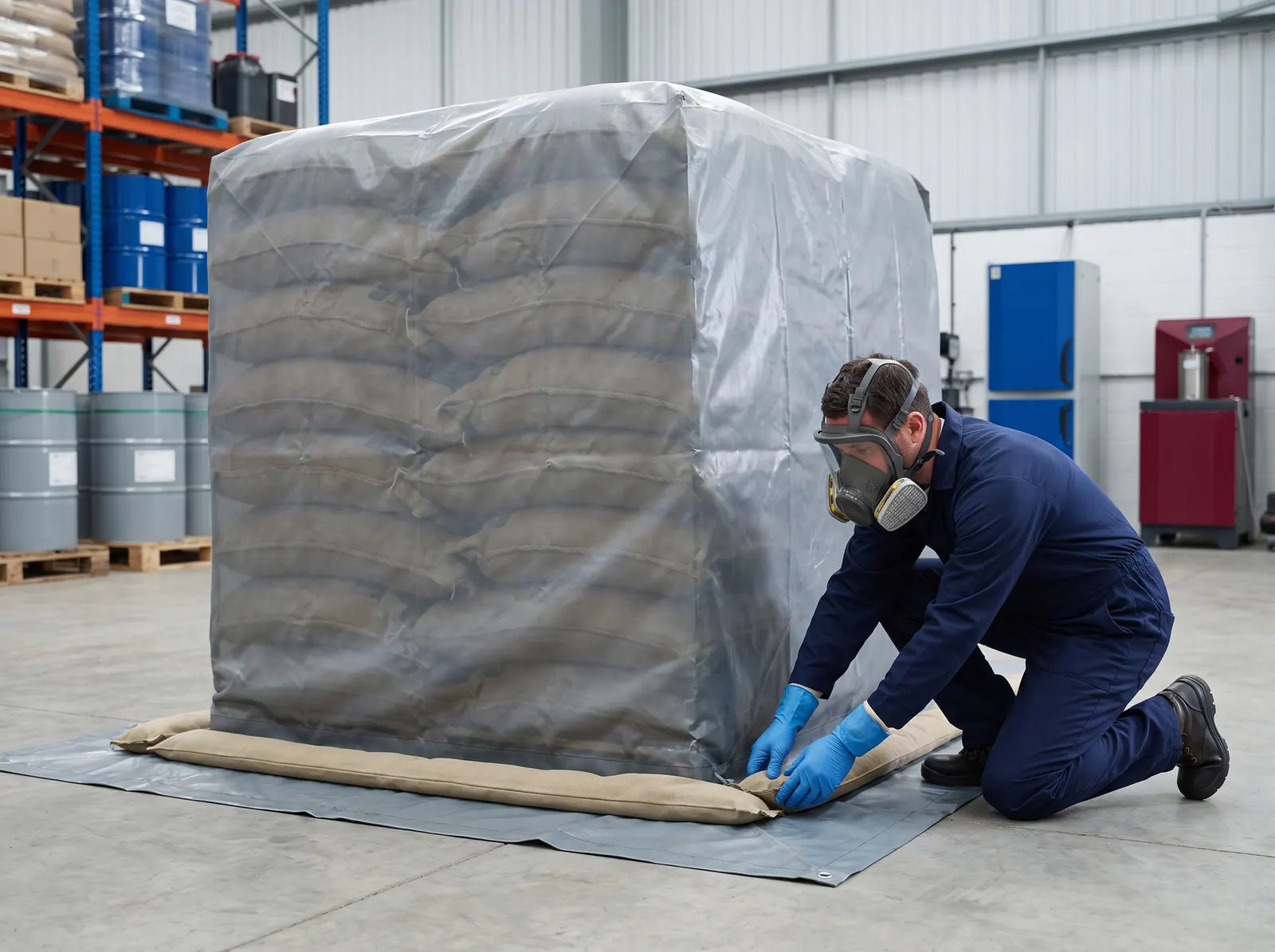
- Sealing the stack or space, typically with gas-proof covers weighted down at the edges, and closing gaps.
- Putting up warning signs and setting an exclusion zone around the treated area.
- Application by trained, licensed operators using a registered product, strictly as the label directs.
- Holding the seal for the full exposure period, with gas levels checked where required.
- Aeration and gas testing before anyone re-enters, then removal of covers and residues.
- A follow-up check of the stock to confirm the result.
Why is fumigation a regulated specialist activity?
Fumigants are among the most hazardous pest-control products in use. In broad terms, pesticides in India are regulated under the Insecticides Act, 1968, products need registration with the CIB&RC, and pest control operators are licensed by state authorities. Fumigation for export or quarantine purposes is also covered by a separate accreditation scheme under the Directorate of Plant Protection, Quarantine & Storage, so exporters should check which accreditation their buyer or importing country expects. In every case, fumigation should only be carried out by trained, licensed people using registered products.
For food businesses, the FSSAI Schedule 4 hygiene requirements include pest control among their general expectations, and HACCP-based systems expect it to be planned and documented. Safety basics everyone on site should know:
- Never attempt fumigation yourself or keep fumigant products in a home or a godown next to living quarters.
- Stay out of the exclusion zone and never lift covers or open a sealed store early.
- Keep children, pets and unauthorised staff well away until the operator declares the area clear.
- Ventilate as instructed before normal work resumes, and wash hands after handling treated sacks.
- If anyone feels dizzy, nauseous, breathless or unwell near a treated area, get medical help immediately and tell the doctor about the possible exposure.
Our article on the dos and don’ts of pest control covers general safety around treatments.
What records should a warehouse keep?
Good records protect your stock, your staff and your audits. For each monitoring round and treatment, keep:
- stack or lot identification, commodity and quantity;
- monitoring results and the pest identified;
- treatment date, product used (as registered), exposure period and any gas readings;
- time the area was cleared for re-entry, and by whom;
- operator name and licence details;
- Material Safety Data Sheets for products used;
- follow-up inspection results and corrective actions.
Our company follows an Integrated Pest Management approach of inspection, sanitation and proofing advice, and targeted treatment, and maintains Material Safety Data Sheets for products used. In Goa, where we are a licensed pest control operator (Directorate of Agriculture, Goa) using CIB&RC-registered products, we share service reports after visits and prepare documentation for food businesses aligned with HACCP and FSSAI audit expectations. You can see more on how we work.
Can Efficacy help with stored-grain pests in the Hyderabad region?
In Goa, fumigation and commercial pest management are part of our established operation. Our Shamshabad office has recently opened and no services are confirmed there yet; the branch is confirming services and localities area by area and will tell you what it can help with.
Our Shamshabad branch has recently opened — tell us your location, the commodity you store and the problem you are seeing, and we’ll confirm whether we can help. Answers to other common questions are on our Hyderabad branch FAQ.
Frequently asked questions
QCan I fumigate stored grain myself?
No. Fumigant gases are highly toxic to people and animals, and their use is restricted to trained, licensed operators using registered products. Home or do-it-yourself fumigation, especially in houses or godowns attached to living quarters, has caused serious harm. For small household stocks, cleaning, sieving, airtight containers and buying smaller quantities are safer and usually enough. For warehouses, ask a licensed operator to assess whether fumigation is needed at all.
QIs grain safe to use after fumigation?
When a registered fumigant is applied by a licensed operator exactly as the label directs, and the stock is properly aerated, the gas disperses. Do not move, sell or use the stock until the operator has confirmed the area is clear and any waiting period on the label has passed. Dead insects and dust should be removed by cleaning or sieving before use, and food businesses should follow their own food-safety procedures.
QHow can I tell weevil damage from moth damage?
Weevils and grain borers leave hollowed grains, small round exit holes and fine powdery dust, and you will usually see small dark beetles when you sieve a sample. Moths leave silky webbing that binds grains into clumps, often on the surface of sacks or bins, and you may see small moths flying near the stock. Pulse beetles leave round holes in seeds and tiny white eggs stuck to the seed coat.
QDoes fumigation stop grain from getting infested again?
No. Fumigation kills insects present at the time of treatment, including those inside grains, but it leaves no lasting protection. Once the gas clears, insects from nearby stacks, incoming lots or the building itself can re-infest the stock. That is why cleaning, crack sealing, first-in-first-out rotation and regular sampling and trapping need to continue after any fumigation.
QShould an empty warehouse be treated before new stock arrives?
An empty store is the best chance to break the cycle. Thorough cleaning, removal of old grain residues and dust, and sealing of cracks and crevices remove the places where insects such as khapra beetle survive between lots. Whether any treatment is also needed depends on what an inspection finds. A licensed operator can advise on the appropriate method for the structure.
QDoes the Shamshabad branch offer grain fumigation?
In Goa, fumigation is part of our established operation. Our Shamshabad branch in Rangareddy has recently opened, and fumigation has not yet been confirmed as a service there. Tell us your location, what you store and the problem you are seeing, and the branch will confirm whether it can help.
Last updated 13 October 2026. Information on this page is general guidance; your technician will advise on your specific property after inspection.