Quick answer
Bed bugs spread easily in Hyderabad PGs and hostels because residents share rooms, move in and out often, and travel home with luggage. Catch them early by checking mattress seams, bed-frame joints and nearby cracks for dark spots, shed skins and live bugs. Treat the affected room and its neighbours together, plan a follow-up visit, and get every resident to prepare their belongings. Otherwise bugs survive in untreated rooms and return.
Key points
- Bed bugs are not a sign of poor hygiene; they travel in luggage, bedding and furniture.
- Check mattress seams, bed-frame joints and nearby cracks for dark spots, shed skins, eggs and live bugs.
- Bites alone do not confirm bed bugs, because people react very differently.
- Treating only one room in shared accommodation often fails; neighbouring rooms and common areas need inspection.
- Eggs can survive a first treatment, so a timed follow-up visit is usually part of the plan.
If you run or live in a paying-guest home or hostel, bed bugs are one of the most frustrating problems you can face. The question behind most searches for bed bugs in a PG in Hyderabad is the same: why do they keep coming back, even after a room has been sprayed? This guide explains how bed bugs move through shared accommodation, how to spot them early, and why a coordinated, floor-wide approach with full resident cooperation works better than treating one room at a time.
Bed bugs are small, flat, wingless insects, reddish-brown in colour, with adults roughly the size of an apple seed. They feed on human blood, mostly at night, and spend the day hidden in cracks close to where people sleep. They do not depend on dirt. A clean, well-kept PG can still get them, so an infestation is not a sign of poor hygiene.
Why do bed bugs keep coming back in shared rooms?
Shared accommodation gives bed bugs almost everything they need: many sleepers close together, frequent movement of people and belongings, and plenty of furniture to hide in. Several things make re-infestation common in PGs and hostels.
- Constant turnover. New residents arrive with suitcases, backpacks and sometimes their own mattresses or bedding. One infested bag is enough to start a new problem.
- Travel home and back. Students and young professionals often travel on overnight buses and trains, or stay with friends and relatives. Bed bugs can hitch a ride back in luggage. Our guide to bed bugs after travel on hotels, buses and trains covers what to check when you return.
- Neighbouring rooms. Bed bugs crawl through gaps around pipes, wiring, skirting, door frames and shared walls. If only one room is treated, bugs in the next room are untouched and can move back.
- Shared furniture and common areas. Sofas in TV rooms, chairs, second-hand cots and stored mattresses can all hold bed bugs.
- Partial or DIY treatment. Over-the-counter sprays often fail to reach hiding places and can push bugs into new cracks or neighbouring rooms, making the problem harder to treat.
- Eggs that survive. Bed bug eggs are tiny, pale and glued into crevices. Many treatments do not reliably kill eggs, so newly hatched bugs can appear after a single visit.
- They can wait. Bed bugs can go a long time without feeding. A room left empty for a short while is not automatically clear.
Bed bugs live indoors, close to people, so they are not a purely seasonal pest. Hyderabad's warm conditions for much of the year suit their development indoors. For a wider view of what changes through the year, see our Hyderabad pest calendar.
What are the early signs of bed bugs in a PG room?
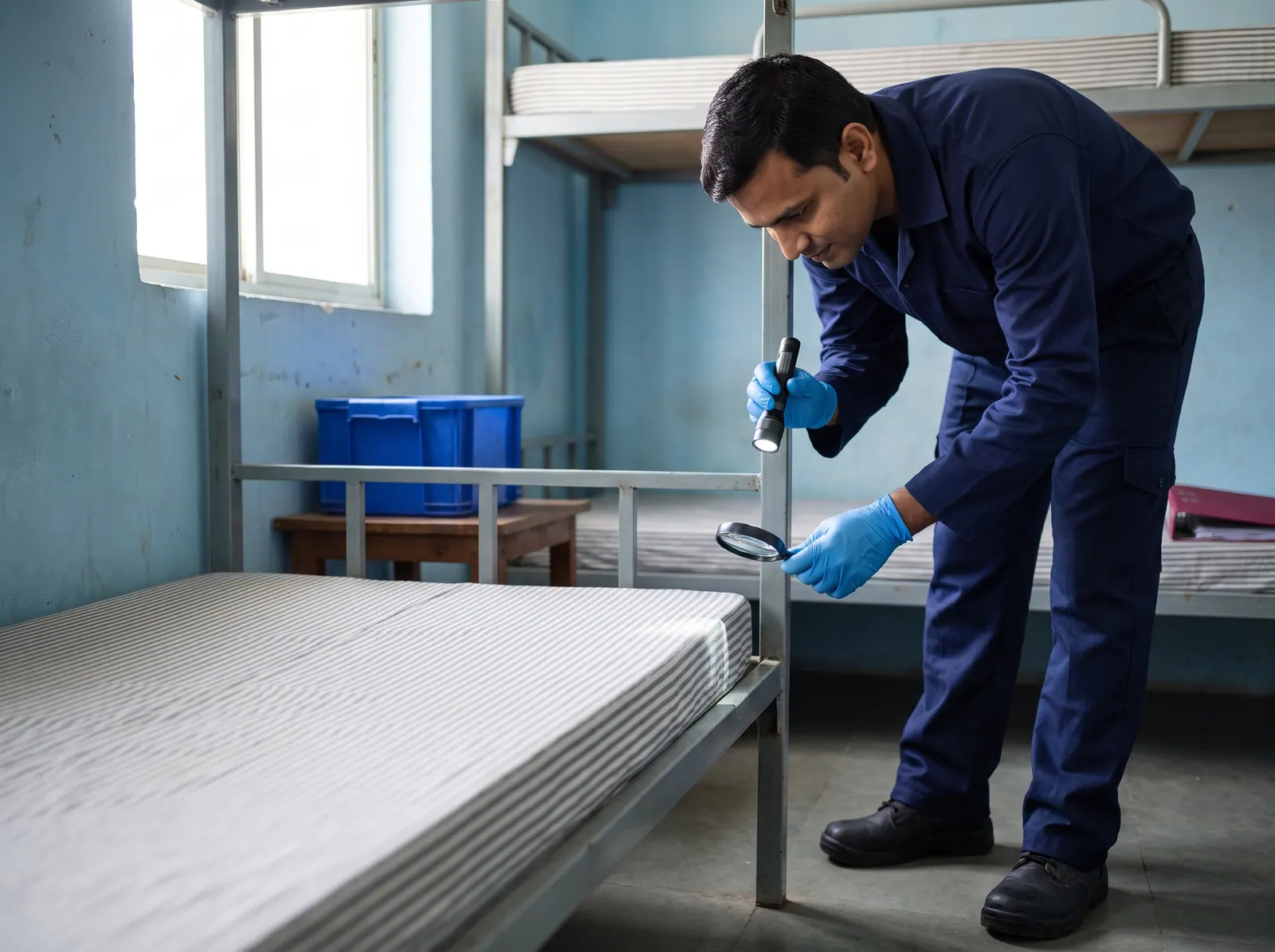
The earlier bed bugs are found, the fewer rooms they will have reached. A quick weekly check by residents, plus a check by the manager whenever a bed changes hands, makes a real difference.
What to look for
- Small dark spots or smears on mattress seams, sheets or the bed frame. These are droppings and look like ink dots from a felt pen.
- Tiny rust-coloured blood marks on pillowcases or sheets.
- Pale, empty shed skins left behind as young bugs grow.
- Clusters of tiny white eggs in seams, joints or cracks.
- Live bugs, often in groups, in the places listed below.
- In heavier infestations, a sweetish, musty smell near the bed.
Where to check
- Mattress seams, piping, labels and the underside of the mattress.
- Joints, screw holes and cracks in bed frames, especially wooden cots.
- Headboards, the gap between the bed and the wall, and skirting near the bed.
- Bedside tables, drawers, cupboard corners and luggage kept under the bed.
- Curtain folds, wall cracks, loose wallpaper or posters, and around switchboards near beds.
- Sofas and chairs in common rooms.
Why bites alone are not proof
People react to bites very differently. One roommate may wake up with itchy marks while another has no reaction at all, and other insects or skin conditions can look similar. Treat bites as a reason to inspect, not as a diagnosis. If anyone has a strong reaction, signs of infection or is worried about their skin, they should see a doctor.
Why treat the whole floor, not just one room?
When a resident reports bed bugs, the natural response is to treat that one room. In shared accommodation this often fails, because the rooms on either side, the room above or below, and shared furniture may already have bugs. A floor-wide or building-wide plan stops them simply moving next door and coming back later.
A coordinated treatment usually follows these steps:
- Inspect every room on the affected floor, plus rooms directly above and below and any common areas, and record which rooms show signs.
- Agree a single treatment date for the affected rooms and their neighbours, so no room is left as a hiding place.
- Notify residents in advance with clear preparation instructions and a time by which rooms must be ready.
- Prepare the rooms: bag and launder bedding and clothes, clear floors and under-bed areas, and pull beds slightly away from walls.
- Carry out the treatment room by room. A trained technician focuses on cracks, seams and joints using registered products, alongside non-chemical steps such as vacuuming and attention to bedding and mattresses.
- Keep rooms empty until they are dry or for as long as the technician advises, with windows open for ventilation.
- Schedule a follow-up visit, timed to deal with bugs hatching from eggs that survived the first round.
- Keep monitoring after the follow-up, and ask residents to report any new signs straight away.
This is how our bed bug treatment is designed for hostels and staff accommodation: room-by-room inspection and treatment, with follow-up visits. It sits within our wider Integrated Pest Management approach of inspection, sanitation and proofing advice, and targeted treatment. You can read more about that approach on our how we work page. These are practices from our established Goa operation, where our work includes bed bug treatment in staff accommodation.
How can residents help the treatment work?
In a PG or hostel, resident cooperation is often what decides whether a treatment succeeds. If one person refuses access, or moves an infested bag into a friend's room, the whole effort can be undone. Managers should explain this plainly, and residents should understand that reporting bed bugs early helps everyone and is nothing to be embarrassed about.
What residents can do:
- Report any signs to the manager quickly, even if you are not sure.
- Do not carry bedding, clothes or bags into other rooms to escape the problem. This spreads bed bugs.
- Before treatment, bag clothes and bedding in sealed plastic bags and wash them on the hottest setting the fabric allows. Use a dryer on high heat where one is available.
- Clear the floor, empty the space under the bed and keep belongings off the bed.
- Keep cleaned items sealed until the room has been treated and is ready to use.
- Avoid using your own sprays or foggers. They can scatter bugs and create safety risks in a shared space.
- Stay out of the room until it is dry or for as long as advised, and wash your hands after handling anything in the room.
- Check your luggage after every trip home, before bringing it back inside.
Our bed bug treatment preparation checklist can be printed and shared with residents before a treatment day.
Who does what during a PG or hostel treatment?
| Stage | PG or hostel manager | Residents | Pest control technician |
|---|---|---|---|
| First report | Logs the room and date, arranges an inspection | Reports signs early and honestly | Inspects the room, its neighbours and common areas |
| Planning | Fixes one treatment date, informs everyone in writing | Plans to be away from the room during treatment | Recommends which rooms to treat and how to prepare |
| Preparation | Arranges access to every room, laundry and storage | Bags, washes and seals belongings, clears floors | Confirms rooms are ready before starting |
| Treatment day | Keeps residents out of treated rooms until dry | Follows re-entry advice, does not move items between rooms | Treats seams, joints and cracks room by room |
| Follow-up | Books the follow-up and keeps the complaints log going | Keeps reporting any new signs | Re-inspects and treats where needed |
How can managers keep bed bugs out after treatment?
Once rooms are clear, a few routines make it much harder for bed bugs to settle in again.
- Inspect mattresses and bed frames each time a bed changes hands, before the new resident moves in.
- Ask new residents to keep luggage off beds until it has been checked, and give them a place to unpack.
- Avoid bringing in second-hand mattresses, cots or sofas without inspecting them closely.
- Fill or seal cracks in bed frames, walls and skirting, and repair loose fittings near beds.
- Consider beds with fewer joints and crevices, and mattress encasements that make inspection easier.
- Keep a simple log of complaints by room and date, so patterns show up early.
- Include common-room furniture in routine checks.
Is bed bug treatment safe in shared accommodation?
Treatment in a building full of residents needs care. Products should be applied only by trained technicians, following label directions. Rooms should be ventilated and kept empty until dry or for the time advised. Keep pets out of treated areas, and residents should wash their hands after touching treated surfaces. You are entitled to ask any provider what is being used. We maintain Material Safety Data Sheets for the products we use.
Bed bug bites can be itchy and distressing, and losing sleep in a shared room affects studies and work. Anyone with a skin reaction, signs of infection or concerns about their health should consult a doctor rather than relying on home remedies.
Talk to our Shamshabad branch
Our Shamshabad branch has recently opened. Tell us your location and the problem, whether that is a single room or several floors of a PG or hostel, and we'll confirm whether we can help. You can find the branch details on our Hyderabad branch page, and common questions are answered in the Hyderabad branch FAQ.
Frequently asked questions
QCan one resident's luggage really infest a whole PG?
Yes, it can. A few bed bugs or eggs in a bag can settle into a bed frame or mattress, multiply, and then spread to neighbouring rooms through wall gaps, shared furniture and people moving belongings around. That is why checking luggage when residents arrive, and after trips home, is one of the simplest and most useful habits for any PG or hostel.
QWhy did bed bugs come back after only my room was sprayed?
Common reasons are that neighbouring rooms were never treated, eggs survived the first treatment, belongings were not prepared, or someone brought infested items back in. In shared accommodation, bed bugs move easily between rooms. A plan that covers the affected room, the rooms around it and common areas, followed by a timed follow-up visit, gives a far better chance of clearing them.
QShould a PG manager treat rooms where no one has complained?
Not automatically, but those rooms should be inspected. Rooms next to, above and below an infested room are the most likely to have bugs, even if residents have not noticed bites, because people react differently. A technician can advise which rooms need treatment based on what the inspection finds, so effort goes where it is actually needed.
QDo I need to throw away my mattress if it has bed bugs?
Usually not. Many mattresses can be inspected and treated, and an encasement can make later checks easier. Throwing out a mattress without treating the room rarely solves the problem, and carrying it through corridors can spread bugs. A mattress that is badly torn or heavily infested may be a different case, so ask the technician during the inspection.
QIs it safe to sleep in the room on the night of treatment?
Follow the technician's re-entry advice for your room. As a general rule, treated areas should be ventilated and left until dry or for the time advised, and you should wash your hands after handling items in the room. Managers should plan alternative arrangements for residents on treatment day, without moving bedding or bags between rooms.
QCan your Shamshabad branch treat bed bugs in my hostel?
Our Shamshabad branch has recently opened, and we are confirming services and coverage area by area. Share your hostel or PG's location, the number of rooms affected and what you have noticed, and we'll confirm whether we can help. Branch details are on our Hyderabad branch page.
Last updated 13 October 2026. Information on this page is general guidance; your technician will advise on your specific property after inspection.