Quick answer
Efficacy Pest Control's Goa branch provides restaurant pest management for restaurants, cafés and beach shacks in its covered areas of Goa. Visits focus on kitchens, stores, bars and drains, and target cockroaches, rodents and flies with inspection-led, targeted treatment. Where possible, we plan visits around your service hours. We help shacks prepare for the season and the monsoon closure, and we share service reports aligned with HACCP and FSSAI audit expectations.
Key points
- Restaurant pest management from the Goa branch focuses on cockroaches, rodents and flies in kitchens, stores, bars and drains.
- Visits are planned around service hours where possible, subject to availability.
- The Goa branch is a licensed pest control operator (Directorate of Agriculture, Goa) using CIB&RC-registered products.
- Service reports are shared after visits, with documentation aligned with HACCP and FSSAI audit expectations.
- Beach shacks benefit from checks before the season opens and before the monsoon closure.
A busy kitchen gives pests everything they need: warmth, water, food and plenty of places to hide. Our restaurant pest control service in Goa is built around that reality. From our Goa branch in Chimbel, we work with restaurants, cafés, bakeries, bars and beach shacks on kitchen-focused cockroach, rodent and fly management. Visits are planned around your service and backed by records you can show a food-safety inspector.
This page explains how we approach food premises in Goa. For the general outline of the service, see our restaurant pest management service.
How do we approach pest control in a food business?
We follow an Integrated Pest Management (IPM) approach. We start with an inspection and look at sanitation and proofing as well as treatment. Treatment is applied only where it is needed, rather than spraying a working kitchen wholesale.
Our Goa branch is a licensed pest control operator with the Directorate of Agriculture, Goa, and uses CIB&RC-registered products. We maintain Material Safety Data Sheets for the products we use.
A typical restaurant programme follows these steps:
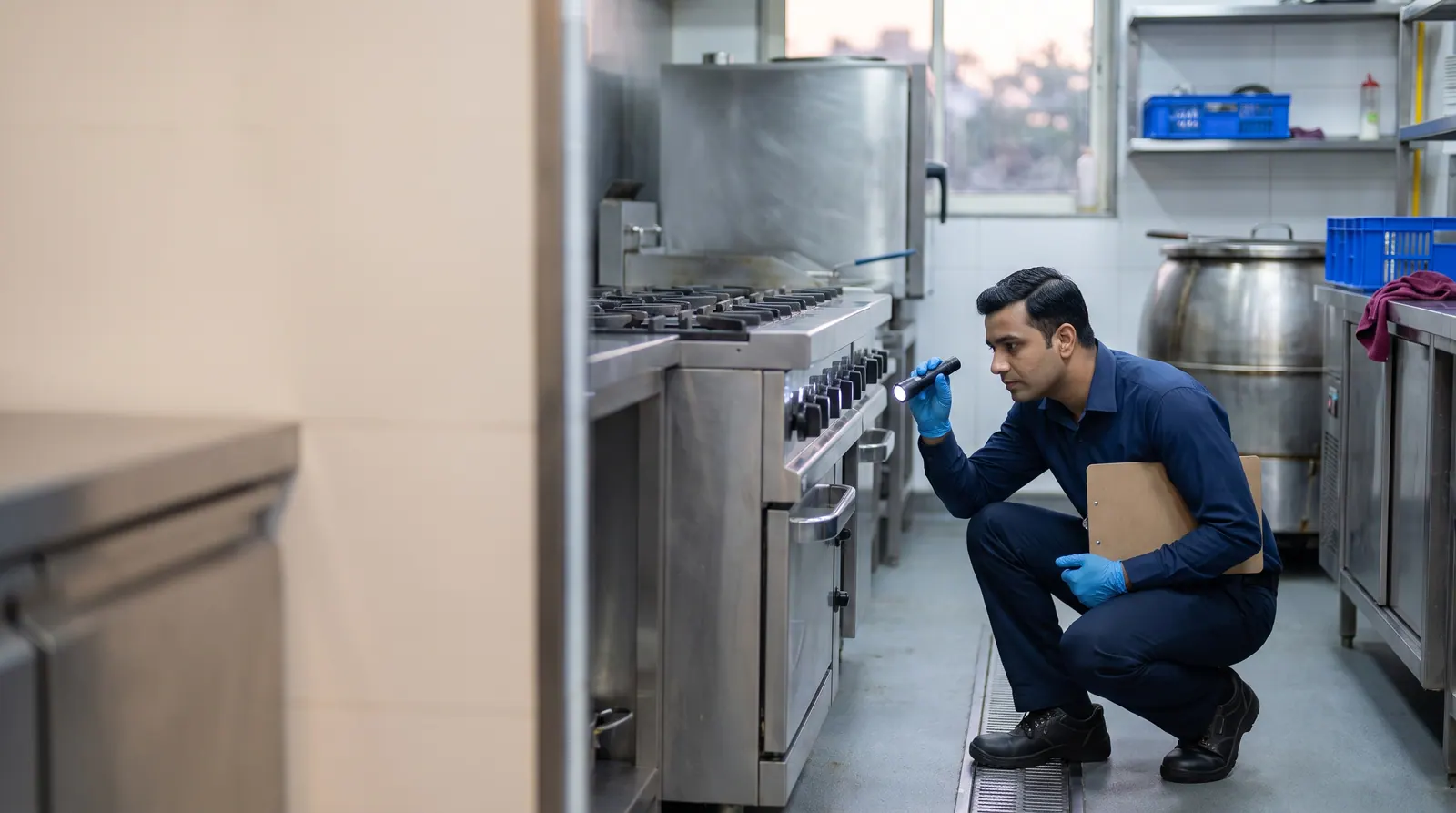
- Inspect the kitchen, stores, bar, waste area, drains and entry points.
- Identify which pests are present, how many, and what is attracting or sheltering them.
- Treat the specific harbourage sites using methods suited to a food area.
- Advise on proofing, cleaning and storage changes that stop pests coming back.
- Record what was found, what was done and what needs attention.
- Review progress on the next visit and adjust the plan.
Where do pests hide in a restaurant kitchen?
Most kitchen infestations start in a handful of predictable places. During an inspection we check these first.
| Area | What we look for | Pests usually involved |
|---|---|---|
| Under and behind cooking ranges, tandoors and fryers | Grease build-up, food debris, warm voids | Cockroaches |
| Refrigerator and freezer motor housings, door gaskets | Warmth, condensation, hidden gaps | Cockroaches |
| Dishwashing area and under sinks | Constant moisture, gaps around pipes | Cockroaches, drain flies |
| Floor drains, grease traps and gully traps | Organic film, missing or broken grates | Drain flies, cockroaches, rodents |
| Dry stores and sack storage | Gnawed packaging, droppings, spilt grain or flour | Rodents, stored-product insects |
| Waste bins and garbage area | Open lids, overflow, liquid residue | House flies, rodents |
| Bar counters, juice stations, fruit and bottle storage | Sugary spills, overripe fruit, empty bottles | Fruit flies, ants |
| Hollow table legs, shelving, electrical boxes, false ceilings | Cracks, voids and cable runs | Cockroaches, rodents |
| Back doors, service entries, pipe and cable openings | Gaps under doors, damaged mesh | Rodents, flies |
Deliveries matter too. Cardboard cartons, vegetable crates and sacks can carry cockroaches or show signs of rodent activity. We look at how goods are received and stored as well as where they are cooked.
How do we deal with cockroaches, rodents and flies?
Cockroaches
Gel baiting and targeted crack-and-crevice treatment are central to cockroach control in kitchens. Bait is placed into the gaps and voids where cockroaches shelter, away from food-contact surfaces. In open or semi-open premises such as cafés and shacks, we also check gaps in counters, storage and the structure itself. Our guide to cockroach control for beach shacks and cafés goes into more detail.
Rats and mice
For rodents we combine inspection, tamper-resistant bait stations and, where appropriate, traps. We also give proofing advice, such as sealing gaps around pipes, fitting door sweeps and repairing mesh. Stations are placed to suit the site so that each one can be checked and recorded. Read more about our approach to rodent control in Goa.
Flies
Fly control in food premises starts with source reduction, which means finding and removing what the flies are breeding in. Each type has its own sources:
- House flies usually point to waste handling.
- Fruit flies point to fermenting fruit, bar spills and bottle bins.
- Drain flies point to the organic film inside drains and traps.
We combine sanitation advice with targeted treatment. See our page on house fly control in Goa.
Can treatment be scheduled around service?
Yes, and this is how we plan restaurant work. Kitchens are busiest during lunch and dinner service. Treatment is easier, and safer, when food is put away and staff are not cooking. Where possible, we arrange visits before you open, after you close or during a quiet afternoon gap, depending on your hours and our availability.
To make a visit go smoothly:
- Tell us your service hours and weekly off day when you book.
- Store or cover food, utensils and open ingredients in the areas to be treated.
- Clear access to the spaces under counters, behind equipment and inside store rooms.
- Have a member of your team accompany the technician. This is part of our service terms, and it helps your staff understand the findings.
- Follow the technician's advice on when areas can be used again and which surfaces to clean before food preparation resumes.
Bookings are subject to availability, so it helps to plan routine visits in advance.
Beach shacks: season openings and monsoon closures
Many beach shacks in Goa operate through the tourist season and then close or are taken down before the south-west monsoon. That cycle brings its own pest risks. Equipment, furniture and stock packed away for months in humid conditions can shelter cockroaches and rodents. A shack that reopens without checks may carry them straight back into its kitchen.
| Stage | Typical pest risks | What helps |
|---|---|---|
| Before setting up for the season | Cockroaches in stored crates, furniture and equipment; rodents in storage | Inspect and clean stored items before they return to the kitchen; treat the kitchen area before opening; set up rodent bait stations |
| During the season | Heavy footfall, food waste and open structures; flies around bins; cockroaches in counters | Scheduled visits, tight waste handling, fly source control, regular checks of counters and stores |
| Closing for the monsoon | Leftover food and packaging attracting rodents and cockroaches | Deep clean, remove all food, store equipment clean, dry and off the floor; carry out a final visit and keep the record |
| During the monsoon closure | Heavy rain driving rodents and insects towards dry, sheltered storage | Periodic checks of storage areas where practical |
Restaurants and cafés that stay open through the monsoon face a version of the same challenge. Humid conditions suit cockroaches, and rodents look for dry shelter. If you are opening a new outlet, our pre-opening pest checklist for Goa restaurants covers what to check before the first service.
What records will you have for a food-safety inspection?
FSSAI Schedule 4 hygiene requirements expect food businesses to keep their premises free of pests and to run an effective pest control programme. HACCP-based systems also treat pests as a hazard to be controlled and documented. Inspectors and auditors generally want to see evidence, not just assurances.
After each visit we share a service report as proof of service, and we keep clients updated on WhatsApp. For food businesses, our documentation is aligned with HACCP and FSSAI audit expectations. Good pest control records generally show:
- The date of the visit and the areas inspected and treated
- Pests or signs of pests found, and where
- The treatment method and products used
- Checks of bait stations and traps
- Recommendations on proofing, cleaning and storage
- Follow-up actions and when they are due
You are welcome to ask us to walk you through our report format before your first visit.
Closing the loop with corrective actions
A record is only useful if its findings lead somewhere. A report might note a gap under the back door, a leaking pipe, a drain without a grate or sacks stored on the floor. Fixing these usually falls to the restaurant rather than the pest control team.
Keep a simple corrective-action log beside your service reports. For each finding, note:
- What was found
- Who is responsible for fixing it
- What was done, and when
Mark the item as closed once it has been checked on the next visit. This shows an auditor that problems are being found and fixed, not just recorded. Our guide to pest control records for restaurant food-safety audits explains how to organise this file.
How do we keep treatment safe in a working kitchen?
Treatments are applied according to label directions. Baits and targeted crack-and-crevice methods reduce the need for broad spraying in food areas. Keep staff, children and pets away from treated areas until they are dry, or for as long as the technician advises.
Ventilate treated spaces, wash hands after handling anything in a treated area, and clean food-contact surfaces as advised before cooking resumes. If anyone feels unwell after a treatment, they should see a doctor.
Which parts of Goa do we serve?
Our Goa branch serves restaurants, cafés and shacks in the areas listed in our records:
- Panaji (Panjim), including Miramar, Caranzalem, Dona Paula, Campal and Taleigao
- Calangute, Candolim (including Sinquerim) and Baga
- Margao, Vasco da Gama (including Bogmalo and Dabolim) and Mapusa
- Porvorim and Ponda
You can find more about the branch on our Goa branch page.
Restaurants that want regular visits through the year can choose an annual maintenance contract with scheduled service reports. For specific services, a warranty applies to the treated area, as set out in your service agreement.
To get started, contact our Goa branch in Chimbel. Tell us where your outlet is, what kind of premises it is, your service hours and the pests you are seeing, and we will plan an inspection around your kitchen's schedule.
Frequently asked questions
QHow often should a restaurant in Goa have pest control visits?
It depends on the pests involved, the level of activity and how the premises are used. Most food businesses benefit from a regular schedule rather than one-off treatments. That might mean weekly, monthly or quarterly visits, with closer attention after an infestation or ahead of the season. An annual maintenance contract builds these visits and their service reports into one plan. We recommend a frequency after inspecting your kitchen.
QDo we need to close the restaurant for a treatment?
Usually not for long. Kitchen treatments rely mainly on gel baits, crack-and-crevice application and bait stations rather than broad spraying. Where possible, we schedule visits before opening, after closing or during a quiet gap in the day. Your technician will tell you when each treated area can be used again and which surfaces to clean before you start preparing food.
QIs pest treatment safe in a kitchen where food is prepared?
Our Goa branch is a licensed pest control operator and uses CIB&RC-registered products, applied according to label directions. Baits and targeted treatments are placed in cracks, voids and equipment gaps, away from food-contact surfaces. Food and utensils should be stored or covered beforehand. Keep people and pets out of treated areas until they are dry or for as long as advised. We maintain Material Safety Data Sheets for the products we use.
QCan you prepare our beach shack before the season starts?
Yes, for shacks in the areas our Goa branch covers, such as Calangute, Candolim, Baga and the Panaji beach stretches. A pre-season visit typically involves inspecting stored equipment and the kitchen area, treating harbourage sites and setting up rodent bait stations before you start serving. It also helps to plan an end-of-season visit before the monsoon closure.
QWill your service reports satisfy an FSSAI inspector?
We share a service report after each visit, and our documentation for food businesses is aligned with HACCP and FSSAI audit expectations. No pest control company can guarantee an inspection outcome. Inspectors also look at cleanliness, storage and whether the issues raised in reports have been fixed. Keeping a corrective-action log alongside our reports gives you the strongest evidence.
QWhat if pests come in from a neighbouring outlet or the street?
In market areas and shared buildings, pests can move in from next door, drains or outside. For specific services, our warranty applies to the treated area as set out in your service agreement. It does not cover premises outside your control. Proofing helps a great deal, such as door sweeps, sealed pipe openings, intact mesh and closed bins. Your technician can advise on the entry points specific to your building.
Last updated 13 October 2026. Information on this page is general guidance; your technician will advise on your specific property after inspection.