Quick answer
Efficacy Pest Control's Goa branch in Chimbel treats house fly problems in homes, restaurants, hotels and offices across the Goa towns we cover. We first find where the flies are breeding, usually wet waste, drains or food residue. We then help remove those sources, treat the spots where flies rest and feed, and advise on screens and waste handling. Spraying alone rarely lasts. Dealing with the source is what keeps numbers down.
Key points
- House flies breed in moist, decaying organic matter such as wet garbage, food waste, compost and drain sludge.
- Goa's humid climate and heavy south-west monsoon keep waste moist, which helps flies keep breeding.
- Removing breeding sources does more to control flies than spraying adult flies alone.
- Fogging kills flying adults briefly but does not reach maggots.
- Efficacy's Goa branch is a licensed pest control operator (Directorate of Agriculture, Goa) using CIB&RC-registered products.
If house flies are gathering in your kitchen, dining area or around your bins, a stronger spray is rarely the answer. Our pest control service for house flies in Goa starts by finding where the flies are breeding. We then help remove those sources and treat the places where flies rest and feed. This page explains what that involves for homes and businesses, and what you can do between visits.
Why do house flies build up so quickly in Goa?
House flies lay their eggs in moist, decaying organic matter. Typical sites are kitchen waste, wet garbage, compost, animal dung, spilt food and sludge in drains. The maggots feed there, and in warm weather they can become adult flies within a week or two. A single neglected bin can keep producing flies for as long as it stays wet and dirty.
Goa's humid coastal climate keeps that waste moist for much of the year. The heavy south-west monsoon also makes it harder for bins, drains and open yards to dry out. Busy kitchens, fish and meat handling, garden waste and shared garbage points in housing societies all add breeding sites. This is why flies often return quickly when only the adults are treated.
Why does a house fly problem matter?
House flies move between waste and food. They can carry germs on their legs and bodies and leave them on food and surfaces. For this reason they are associated with food poisoning and with diarrhoeal illnesses such as typhoid, cholera and dysentery. If anyone in your household or staff falls ill, please see a doctor.
Signs that fly numbers are building:
- Flies settling on food, counters and around bins through the day
- Small dark fly spots on walls, ceilings, light fittings and window frames
- Maggots in garbage bins, compost, drains or waste chutes
- Flies clustering near one door, drain or yard, which often points to the source
Is it house flies, fruit flies or drain flies?
Different flies breed in different places, so identifying them changes what needs treating.
| Fly | What it looks like | Where it usually breeds |
|---|---|---|
| House fly | Medium-sized grey fly with dark stripes on its back | Wet garbage, food waste, dung, compost |
| Fruit fly | Tiny, tan-coloured, often with red eyes | Overripe fruit, fermenting liquids, bar drip trays, sticky residues |
| Drain fly | Small, fuzzy and moth-like | Organic film inside drains, floor traps and sewage lines |
If small flies are the issue in a bar or restaurant, our guide to fruit flies and drain flies in Goa bars and restaurants goes into more detail.
How do we treat a house fly problem?
Our fly control service follows an Integrated Pest Management (IPM) approach. This means inspection, sanitation and proofing advice, and targeted treatment, in that order of importance.
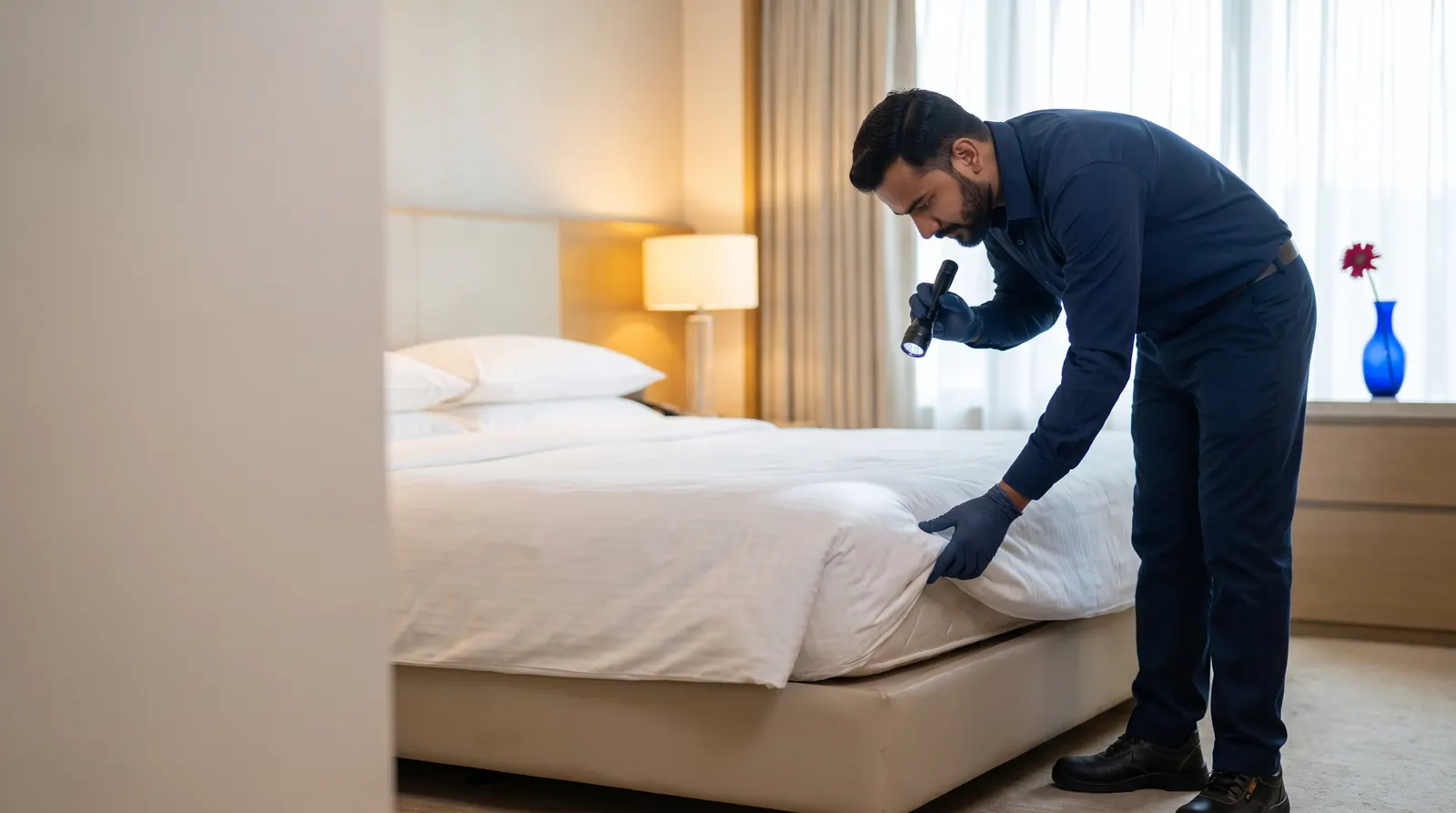
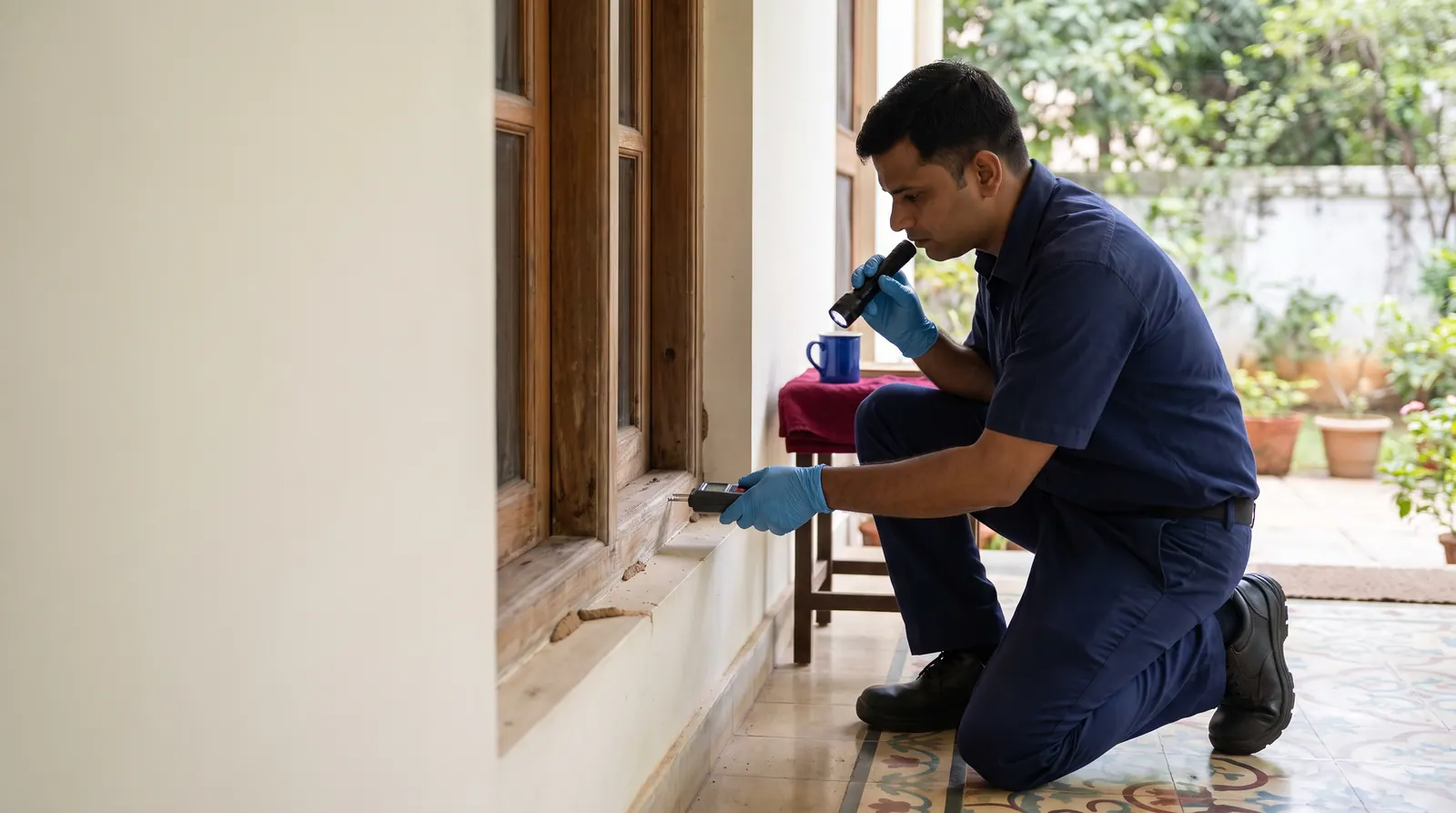
- Inspection: We walk the property to find breeding sites and see where flies enter and rest. This includes bins, drains, yards, store rooms and nearby open areas.
- Source reduction: We show you which sources need cleaning, draining, covering or moving, and how often. This step has the biggest effect.
- Targeted treatment: Depending on the site, this may include treating surfaces where flies rest, baits placed out of reach of children and pets, and traps. Treatment goes where flies gather. It is not sprayed across living or food areas.
- Proofing advice: We advise on screens, self-closing doors, door strips and sealed bins to cut entry.
- Review: For ongoing problems or commercial premises, scheduled visits check whether the sources are under control. We adjust the plan as needed.
Fogging can knock down flying adults for a short time, but it does not reach the maggots. We treat it as an occasional add-on rather than the solution.
Fly control for homes, restaurants, hotels and offices
Homes and housing societies
In flats and villas, flies usually come from kitchen waste, overripe fruit, pet areas or a shared garbage point. In housing societies, the common bin area and drains often matter more than any single flat. We can advise the committee on managing these shared areas.
Restaurants, cafés and bars
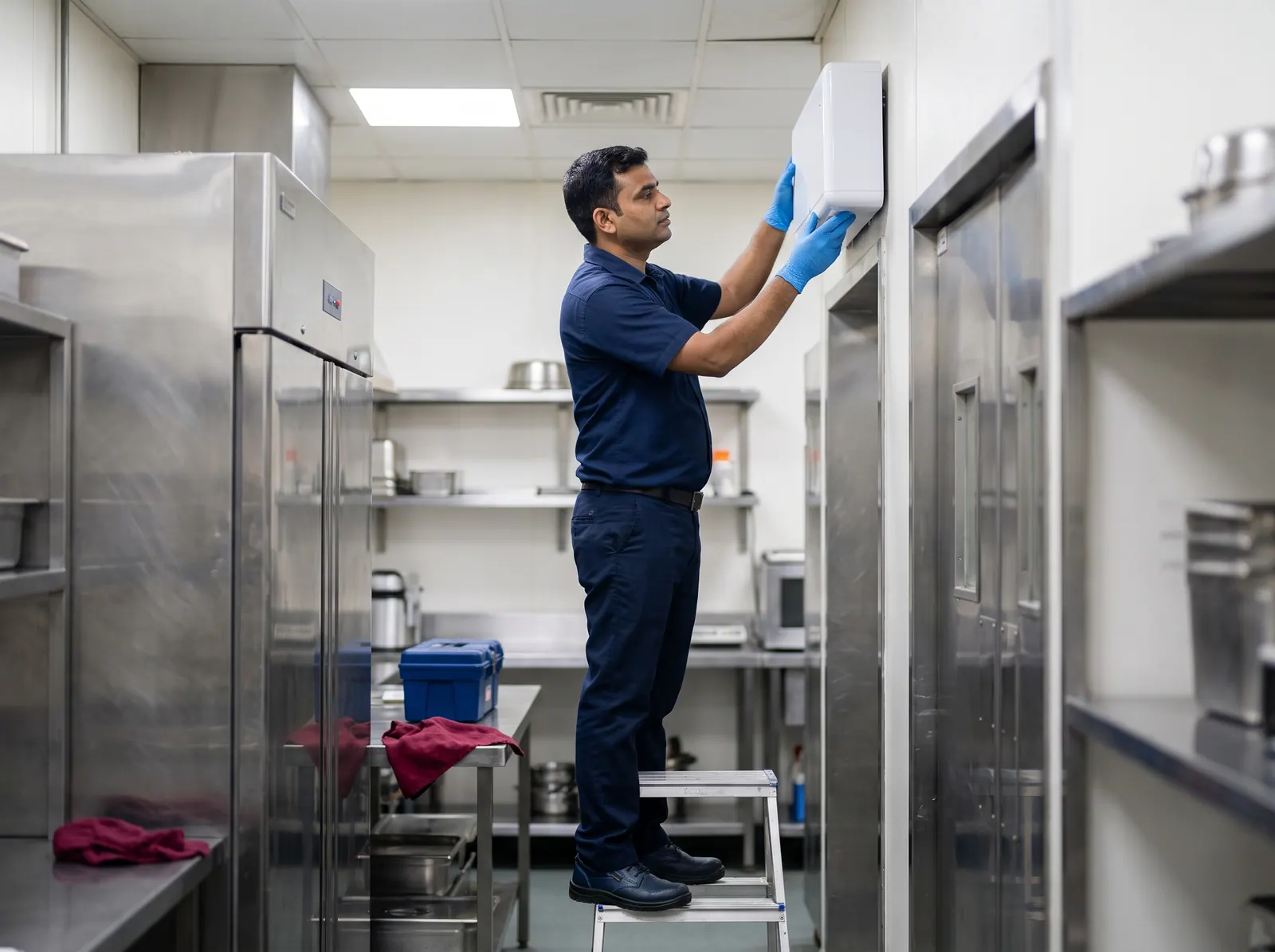
Kitchens need regular, recorded work around waste areas, drains, receiving doors and dishwashing areas. For food businesses, we provide documentation aligned with HACCP and FSSAI audit expectations. This helps when an inspector asks how pests are being controlled.
Hotels and resorts
Hotels have to manage back-of-house waste, kitchens and staff areas while keeping guest areas, pool decks and dining terraces comfortable. We plan treatment around guest movement.
Offices, shops and warehouses
Pantries, canteen waste and loading bays are the usual sources. An annual maintenance contract with scheduled visits suits premises that want a regular record.
After each visit we share a service report, and clients receive updates on WhatsApp. Our guide on how to read a pest control service report explains what to look for.
What can you do between visits?
- Empty kitchen bins daily and keep the lids tightly closed. Rinse bins so no liquid collects at the bottom.
- Keep wet and dry waste separate, and store wet waste away from doors and windows.
- Clean drain covers and floor traps regularly, especially during the monsoon.
- Fix leaks and clear standing water near waste areas.
- Cover food, and do not leave overripe fruit or used dishes out.
- Fit fly screens on kitchen windows and keep service doors closed.
- Clean up after pets, and keep compost covered and well turned.
Is fly treatment safe for my family and pets?
We are a licensed pest control operator (Directorate of Agriculture, Goa) and use CIB&RC-registered products. We also maintain Material Safety Data Sheets for the products we use, and we apply every product according to its label directions.
After treatment, keep children and pets away from treated areas until they are dry, or for as long as the technician advises. Ventilate the rooms and wash your hands after touching treated surfaces. Whether you need to step out during treatment depends on the method used. The technician will tell you beforehand.
Where in Goa do we provide fly control?
Our Goa branch in Chimbel covers Panaji (Panjim), Margao, Vasco da Gama, Mapusa, Calangute, Candolim, Baga, Ponda and Porvorim, along with the surrounding localities in our records. Town pages cover local detail, for example fly control in Panaji, fly control in Margao and fly control in Calangute.
To arrange an inspection, contact our Goa branch in Chimbel. Tell us your location, the type of property and where you are seeing the flies, and we will plan the visit around that.
Frequently asked questions
QHow soon will I see fewer flies after treatment?
Adult flies that land on treated surfaces or baits usually start dropping within a day or two. Lasting improvement depends on whether the breeding sources are removed. If a wet bin or blocked drain keeps producing maggots, new flies will keep appearing. Most homes and kitchens see a clear difference once waste handling is corrected alongside treatment. Our technician will explain what to expect for your property.
QWill fogging alone get rid of house flies?
No. Fogging kills flies that are flying at the time it is applied. It does not reach eggs or maggots in garbage, compost or drains, so numbers usually rebound within days. We may use it occasionally, for example before an outdoor event. The lasting results come from source reduction, proofing and targeted treatment where flies rest.
QHow often does a restaurant or hotel kitchen need fly control visits?
It depends on the volume of food waste, the layout and how well sources are managed. Commercial kitchens are usually placed on a regular schedule, which may be weekly, monthly or quarterly. Each visit is recorded in a service report. After the first inspection we recommend a frequency, and an annual maintenance contract can set out the visits for the year.
QWhat if flies are coming from a neighbour's garbage or a nearby market?
Treatment can reduce flies on your property, but it cannot remove a source we cannot reach. In that case we focus on screening, door management and baits or traps at entry points. We can also help you explain the problem to your society or neighbour. For specific services, any warranty applies to the treated area, as set out in your service agreement.
QCan you provide records for an FSSAI inspection?
Yes. For food businesses in Goa, we provide documentation aligned with HACCP and FSSAI audit expectations. After each visit you receive a service report showing what was inspected, what was found and what was treated. Keep these reports together so you can show an inspector how fly and other pest activity is being monitored and controlled over time.
QDo I need to prepare my home or kitchen before the visit?
Cover or put away food, utensils and open containers. Keep pets in a separate room, and make bins, drains and the yard accessible so the technician can inspect them. A household member or staff representative should be present during the service. The technician will give any treatment-specific instructions, and following them helps the treatment work as intended.
Last updated 13 October 2026. Information on this page is general guidance; your technician will advise on your specific property after inspection.