Quick answer
Flies gather around seafood because fish waste, wash water and drain sludge give off strong odours and offer moist, protein-rich places to lay eggs. In Goa's warm, humid climate they breed quickly. Control starts at the source: sealed bins emptied daily, scrubbed drains and gully traps, screened entrances and covered fish. Light traps with glue boards, placed away from food and out of sight from outside, then catch the flies that still get in.
Key points
- Fish waste, wash water and drain residue provide breeding and feeding material for house flies and blow flies.
- In warm weather, fly eggs laid on fish waste can hatch within about a day.
- Drains need physical scrubbing; pouring water or sanitiser does not remove the film where flies breed.
- Glue-board light traps are generally preferred over grid zappers in food areas and should not be visible from outside.
- FSSAI Schedule 4 hygiene requirements expect food businesses to keep premises free of pests.
If you run a seafood restaurant, beach shack kitchen or fish stall in Goa, you will know that flies arrive with the catch. Fish strongly attracts flies, and the warm, humid coastal climate lets them breed fast. This guide explains why flies gather around seafood and what actually keeps them down: source control, waste and drainage, the right devices in the right places, and a cleaning routine your staff can stick to.
Why does seafood attract so many flies?
As fish begins to break down, it releases strong-smelling compounds that flies can detect from a distance. Guts, gills, scales, heads, blood and the water used to wash them all carry that smell. They are also exactly the moist, protein-rich material many flies look for to lay their eggs.
Flies don't need much. A handful of scraps behind a chopping board, a film of residue in a floor drain or a bin lid left open is enough. In warm weather, eggs laid on fish waste can hatch within about a day, and the cycle from egg to breeding adult can take little more than a week. That is why a small lapse can turn into a noticeable problem quickly.
Flies matter in a food business because they move between waste, drains, food and surfaces, carrying germs on their legs and mouthparts. If staff or customers feel unwell, they should see a doctor. The job of the business is to stop flies reaching food in the first place.
Which flies are you likely to see?
- House flies — medium-sized grey flies that breed in wet garbage and decaying organic matter, and settle on counters, food and walls.
- Blow flies — shiny metallic blue or green flies (bluebottles and greenbottles) that are strongly drawn to fish and meat and lay eggs directly on it.
- Flesh flies — larger grey flies with dark stripes on the back, also attracted to decaying animal matter.
- Drain flies — small, fuzzy, moth-like flies that breed in the slimy film inside drains and gully traps.
- Fruit flies — tiny flies around fruit, juice and the bar; common in restaurants but less linked to fish itself.
The small flies are covered in more detail in our guide to fruit flies and drain flies in Goa bars and restaurants.
Why can flies be harder to manage in Goa?
Goa's humid coastal climate keeps waste and surfaces damp, and warmth speeds up both decay and fly breeding. During the heavy south-west monsoon, drains can back up and bin areas and back yards may stay wet for long spells, giving flies more places to breed. After the rains, the busy tourist season brings more covers, more fish and more waste through the kitchen.
Many seafood kitchens also have open back areas where fish is cleaned, with outside drains, crows, cats and dogs nearby. Scattered waste in these areas feeds flies and rats alike. If you are also seeing droppings or gnaw marks, our page on rodent control in Goa explains how bait stations and proofing fit alongside fly control.
How should fish waste be handled?
- Collect waste at the point of cleaning. Keep a lidded container right beside the fish-cleaning station so guts, scales and heads go straight in rather than onto the floor or into the drain.
- Use bins with tight-fitting lids and liners. Foot-pedal bins help staff keep lids closed. Replace damaged lids promptly.
- Empty fish waste at least daily, and more often on busy days or in hot weather. Avoid leaving bags of fish waste in the kitchen or yard overnight.
- Keep the bin store away from doors and windows, on a hard surface that can be washed down, with its own drain kept clean.
- Wash the bins themselves. Residue at the bottom of an empty bin is a breeding site, so clean bins on a set schedule.
- Deal with delivery crates and boxes. Rinse fish crates and move used thermocol boxes and cartons out of the kitchen quickly; meltwater and fish drip collect in them.
Why are drains so important?
In many seafood kitchens, the drains are the main hidden breeding site. Every time fish is washed, blood, slime, scales and small fragments go down the floor drain. Combined with grease from frying, this builds a sticky film on drain walls and in gully traps, which suits drain flies and attracts house flies.
Pouring water or sanitiser down the drain does not remove that film. It needs to be physically scrubbed out.
- Fit fine grates or strainers so scales and fragments are caught before they enter the drain, and empty them into the waste bin, not the yard.
- Lift grates and scrub drain channels and gully traps with a long-handled brush on a regular schedule.
- Keep grease traps serviced so fat does not build up and back up.
- Fix leaks, broken tiles and low spots where wash water pools. Standing water behind equipment is easily missed.
- Check outside drains and open channels near the kitchen; a blocked drain outside the back door can supply flies to the whole kitchen.
Use food-safe detergents and drain-cleaning products only as directed on their labels, and never mix cleaning chemicals.
Which fly-control devices work, and where should they go?
Devices catch the flies that still get in, but they cannot keep up with an active breeding site. Fix the source first, then use devices to reduce what remains and to show you where flies are coming from.
| Device | Where it helps | Placement and upkeep |
|---|---|---|
| UV light trap with glue board | Kitchens, prep areas, stores, service corridors | Inside entrances and along routes from waste areas; not directly above food or prep surfaces; not visible from outside doors or windows; away from bright competing light |
| Insect screens and mesh | Windows, vents, exhaust openings | Fit tightly to the frame; clean regularly; repair tears quickly |
| Strip curtains or air curtains | Delivery doors and back doors | Strips should overlap and reach the floor; air curtains must cover the full door width and be switched on when the door is in use |
| Self-closing doors | Between kitchen and bin store or back yard | Check closers and door seals; never prop doors open |
| Mesh food covers and covered displays | Fish counters, stalls, buffet and pass areas | Keep clean; cover fish whenever it is not being handled |
| Outdoor bait points (professional use) | Around bin stores and outside drains | Placed by a licensed operator, well away from food and food-contact surfaces |
Light traps that kill flies on an electric grid are best kept away from food areas, because they can scatter insect fragments. Glue-board models are generally preferred in kitchens. Mount traps at the height the manufacturer recommends, usually lower rather than close to a high ceiling. UV tubes gradually lose their attraction even while they still light up, so replace them on the manufacturer's schedule, and change glue boards before they fill up or get dusty.
A full glue board is useful information. If one trap always catches more than the others, look around it for the source: a drain, a bin, a gap around a door.
What about sprays and fogging?
Fogging may knock down adult flies for a short while, but it does nothing about eggs and maggots in waste and drains, so numbers soon recover. In a kitchen it also risks contaminating food and surfaces. Any insecticide treatment in a food business should be targeted and carried out by a licensed operator using registered products, with food removed or covered, the area ventilated, and staff kept out until surfaces are dry or as advised.
What does a practical cleaning routine look like?
| When | Tasks |
|---|---|
| During service | Put waste into lidded bins immediately; rinse cleaning stations between batches; keep fish covered, on ice or in the chiller; wipe spills as they happen |
| End of each day | Empty fish waste bins; clean and sanitise cutting boards, tables and knives; scrub floors including under equipment; empty drain strainers; wash down the bin store |
| Weekly | Lift grates and scrub drains and gully traps; wash bins inside and out; clean behind and under equipment; check screens and door seals |
| Monthly | Check grease trap servicing; look for damaged screens, broken tiles and gaps around pipes; review light trap catches and replace glue boards as needed |
Write the routine down, assign each task to a named role, and keep a simple sign-off sheet. It keeps staff consistent and is useful if you are asked to show your cleaning and pest records.
Tips for fish stalls and market counters
Fish vendors in markets often have less control than a restaurant kitchen, because drains, waste points and roofing are shared. Focus on what you can manage at your own stall.
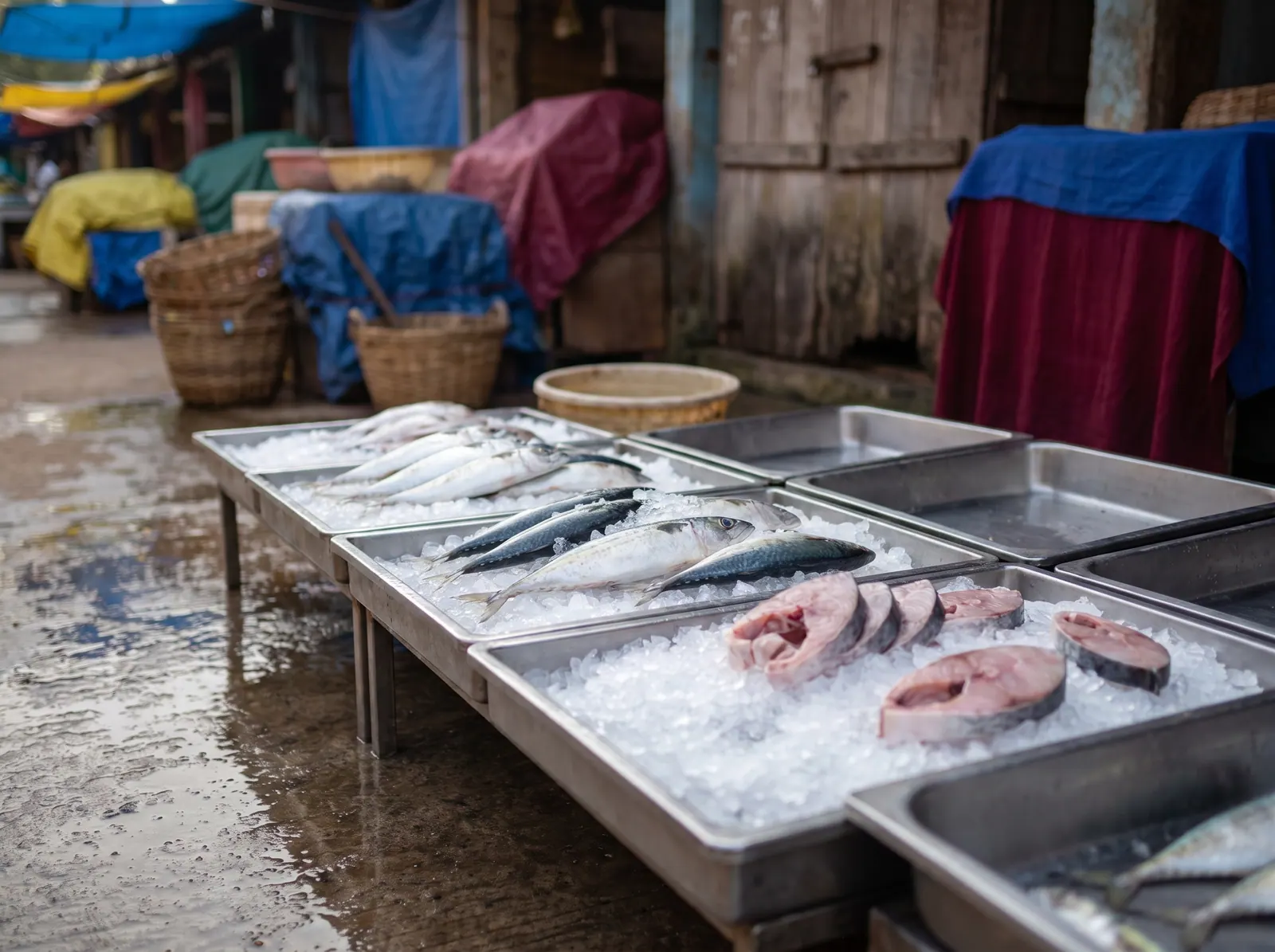
- Keep fish on plenty of ice and out of direct sun; cover display fish with clean mesh covers when you are not serving.
- Clean fish on a non-porous surface that can be scrubbed, and rinse it often through the day.
- Put guts and scales into a lidded bucket under the counter, not onto the floor or into an open drain.
- At the end of the day, take waste to the designated disposal point, wash the counter, knives and boxes, and leave the stall dry.
- Raise blocked drains and overflowing waste points with the market management or local authority — one neglected corner affects every stall.
Hanging water bags, fans and smoke are sometimes used to keep flies off displays. None of these replaces good waste handling and covered fish.
Where do flies fit into food safety rules?
Food businesses registered or licensed with FSSAI are expected to meet the hygiene requirements in Schedule 4, which include keeping premises free from pests and having pest control measures in place. HACCP-based systems treat pests as a hazard to be controlled and recorded. In practice, inspectors and auditors look for clean waste and drain areas, proofed entrances, working fly-control devices and records showing that pest control is planned and carried out.
When should you bring in a pest control professional?
If flies keep returning despite a solid cleaning routine, there is usually a source you haven't found — a broken drain line, a void under a counter, a neighbouring waste point — or the premises need better proofing. A professional inspection helps pinpoint it.
Our Goa branch follows an Integrated Pest Management approach: inspection first, then sanitation and proofing advice, then targeted treatment where it is needed. We are a licensed pest control operator (Directorate of Agriculture, Goa) using CIB&RC-registered products, and we maintain Material Safety Data Sheets for the products we use. After visits we share service reports, with WhatsApp updates, and for food businesses we provide documentation aligned with HACCP and FSSAI audit expectations.
You can read more about our approach to house fly control in Goa. The same warm, damp drains and voids that suit flies also suit cockroaches, so our page on cockroach control in Goa may also be useful.
If you manage a seafood restaurant, hotel kitchen or fish business in Goa, contact our Goa branch in Chimbel and tell us about your premises and the flies you are seeing. We will talk through what is driving the problem and how a scheduled programme could work for you.
Frequently asked questions
QWhy do flies get worse in our seafood kitchen during the monsoon?
Heavy rain keeps bin areas, back yards and outside drains wet, and drains can back up into floor gullies. Wet waste breaks down faster and gives flies more places to lay eggs. Before the rains, check that screens and strip curtains are in good repair, then tighten up bin emptying and inspect outside drains after heavy downpours so blockages are cleared quickly.
QIs an electric fly zapper safe to use in a restaurant kitchen?
Grid-type zappers kill flies with an electric charge and can scatter insect fragments, so they should be kept well away from food, prep surfaces and open containers. In kitchens, light traps that catch flies on a glue board are generally preferred. Whichever type you use, mount it where it cannot be seen from outside, keep it clean, and replace tubes and boards on schedule.
QCan we just fog the kitchen to get rid of flies?
Fogging may knock down adult flies briefly, but it does not reach the eggs and maggots breeding in fish waste and drains, so numbers return within days. It also risks leaving residues on food-contact surfaces. Better results come from removing breeding sites, proofing entrances and using light traps, with any insecticide treatment kept targeted and applied by a licensed operator.
QHow often should fish waste be removed from the kitchen?
At least once a day, and more often during busy service or hot weather. Fish waste starts to smell and attract flies within hours, and in warm conditions eggs laid on it can hatch within about a day. Keep it in lidded, lined bins, avoid leaving bags in the kitchen or yard overnight, and clean the bins themselves on a regular schedule.
QWhat are the tiny fuzzy flies near our fish-washing sink?
Small, fuzzy, moth-like flies resting on walls near sinks and floor drains are usually drain flies. They breed in the slimy film inside drains and gully traps rather than in the fish itself. Sprays and poured liquids rarely solve the problem; the main fix is lifting grates and physically scrubbing drain channels and traps regularly, and repairing any leaks where water pools.
QWill a pest control programme help with FSSAI inspections?
Food businesses are expected to keep premises free of pests and to have pest control measures in place, and good records help show this. For food businesses, our Goa branch provides service reports and documentation aligned with HACCP and FSSAI audit expectations. That supports your records, but an inspection outcome also depends on your own hygiene, cleaning, waste handling and maintenance.
QWe have a fish stall in a shared market. What can we realistically do?
Concentrate on your own counter: keep fish on ice and covered when not serving, clean fish on a scrubbable surface, put waste into a lidded bucket rather than the floor or drain, and wash down and dry the stall at the end of each day. For shared drains and waste points, raise problems with the market management or local authority, since neglected common areas affect every vendor.
Last updated 13 October 2026. Information on this page is general guidance; your technician will advise on your specific property after inspection.