Quick answer
Pest control for a new restaurant in Goa should start before the first service, not after the first sighting. While builders are still on site, seal gaps around pipes and drains, fit screens and door sweeps, and plan storage off the floor. Then clear construction debris, check every delivery and second-hand appliance, arrange a baseline inspection before stock arrives, and start a pest file and sighting log.
Key points
- Proofing such as sealing pipe gaps, fitting door sweeps and meshing vents is easiest before kitchen equipment is installed.
- Construction debris, cardboard and standing water left after a fit-out give pests shelter and breeding sites.
- Second-hand equipment and supplier deliveries can carry cockroaches and stored-product insects into a new kitchen.
- A baseline inspection after construction but before stock arrives gives a documented starting point.
- FSSAI Schedule 4 hygiene requirements and HACCP systems expect pest control to be planned and recorded.
The easiest time to deal with pests in a restaurant is before it opens. Once the kitchen is running, every gap behind a counter and every drain is in daily use. Fixing them then means closing sections or working around service. If you are planning new restaurant pest control in Goa, the most useful work happens while the builders, plumbers and suppliers are still on site.
This checklist covers what to get right before your first service: design and proofing, construction debris and drains, deliveries and equipment, a baseline inspection, and the records to start on day one. It applies to restaurants, cafés, bakeries and cloud kitchens, and to beach shacks setting up for a new season.
Why does pest prevention matter before opening day?
A fit-out disturbs a site. Breaking floors, opening walls and moving soil can push rodents and cockroaches out of neighbouring drains and voids. The new kitchen then offers them warmth, water and shelter, and leftover cardboard, packing foam and timber offcuts give them places to hide.
Goa's humid coastal climate and very heavy south-west monsoon add to this. Damp walls, blocked gutters and standing water suit cockroaches, flies, mosquitoes and termites. A restaurant that opens with sealed gaps, clean drains and an inspection on record starts in a far stronger position than one that waits for the first complaint.
Design and proofing: what to fix while the builders are still there
Proofing means physically denying pests entry and shelter. It is much easier to specify now than to retrofit later. Walk the site with your contractor and check the following.
Walls, floors and ceilings
- Seal gaps where pipes, cables and gas lines pass through walls and floors, using materials rodents cannot easily chew through.
- Finish the junction between floor and wall with a smooth, sealed edge so food debris and insects cannot collect in the corner.
- Avoid hollow boxing-in behind counters where possible. If voids are unavoidable, keep them sealed and inspectable.
- Give false ceilings inspection panels, and close gaps around light fittings and ducts.
- Fill cracks in tiles and plaster before the kitchen equipment goes in.
Doors, windows and vents
- Fit self-closing doors on kitchen and store entrances, with door sweeps or brush strips to close the gap at the bottom.
- Use fine insect mesh on openable windows and ventilation openings.
- Cover exhaust and air-intake openings with screens that can be removed for cleaning.
- Plan where any fly-control units will go: away from food preparation surfaces and not visible from outside doorways, where they can draw insects in.
Drains and water
- Fit floor drains with removable gratings and, where your plumber advises, water-sealed traps that block access from the drain line.
- Make sure floors slope towards drains so water does not pool under equipment.
- Place the grease trap where it can be opened and cleaned easily.
- Check that roof gutters and terrace outlets flow freely before the rains.
Storage and waste design
- Choose shelving that keeps dry stores off the floor and slightly away from walls, so you can clean and inspect behind and underneath.
- Keep a dedicated dry store, separate from chemicals and cleaning supplies.
- Locate the waste area away from the kitchen door, on a washable surface, with lidded bins.
- Leave space to clean under and behind heavy equipment; units on castors help.
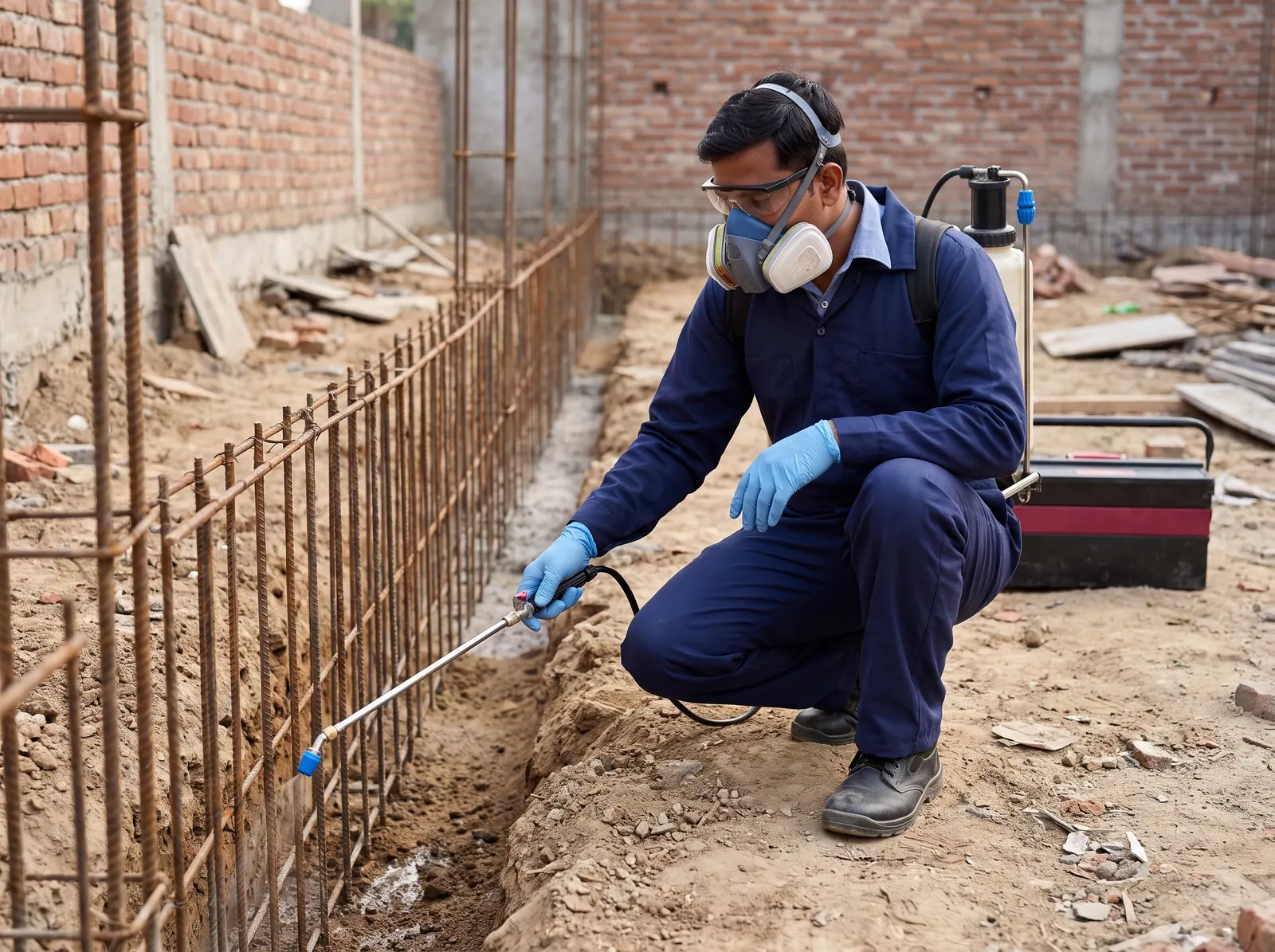
If you are building new rather than fitting out an existing shell, anti-termite soil treatment belongs at the foundation and plinth stage, in line with the Indian Standard IS 6313 guidance on pre-construction treatment. Our page on pre-construction anti-termite treatment in Goa explains where it fits in the building schedule, and the builder's guide to anti-termite treatment for new construction goes into more detail.
Clearing construction debris and drains before handover
Builders' debris is one of the most overlooked pest sources in a new restaurant. Before you accept handover:
- Remove cardboard, packing material, sacks, timber offcuts and broken tiles, including from the terrace, back lane and any room the contractors used for storage.
- Check that no cement bags, sand or rubble remain under stairs or in ducts.
- Flush and inspect all drains. Construction slurry can block them and leave stagnant water behind.
- Empty curing water, paint buckets and any container holding water. Water left standing for about a week can be enough for mosquitoes to breed; our mosquito breeding checklist for terraces and gardens lists the places people tend to miss.
- Look for signs of rodents from the construction period: droppings, gnaw marks, and burrows along boundary walls or in loose soil.
- Check new timber frames, doors and furniture for termite mud tubes or the fine powder that wood borers leave.
Deliveries and equipment: check what comes through the door
A new restaurant receives a lot of equipment and stock in a short time. Cockroaches travel readily in corrugated cardboard, the motor compartments of refrigeration units and the hollow bases of equipment. Stored-product insects can arrive in dry goods.
Equipment and furniture
- Inspect second-hand fridges, ovens, dishwashers and display counters before they enter the kitchen. Look in motor housings, door seals, behind panels and under feet.
- Clean second-hand units thoroughly outside the kitchen first.
- Check used furniture and upholstered seating for bed bugs, especially in seams and joints.
- Unpack new equipment in a receiving area or outside, and remove the cardboard from site promptly.
First stock deliveries
- Set up a receiving point near the entrance, away from food preparation.
- Check sacks and packets of rice, flour, pulses and spices for holes, webbing, live insects or damaged packaging, and reject anything doubtful.
- Transfer dry goods into sealed, labelled containers.
- Do not store stock directly on the floor or in delivery boxes.
- Note the supplier and date of any rejected delivery; this becomes part of your records.
Make these checks part of your everyday receiving routine, not just something you do during setup.
What does a pre-opening baseline inspection cover?
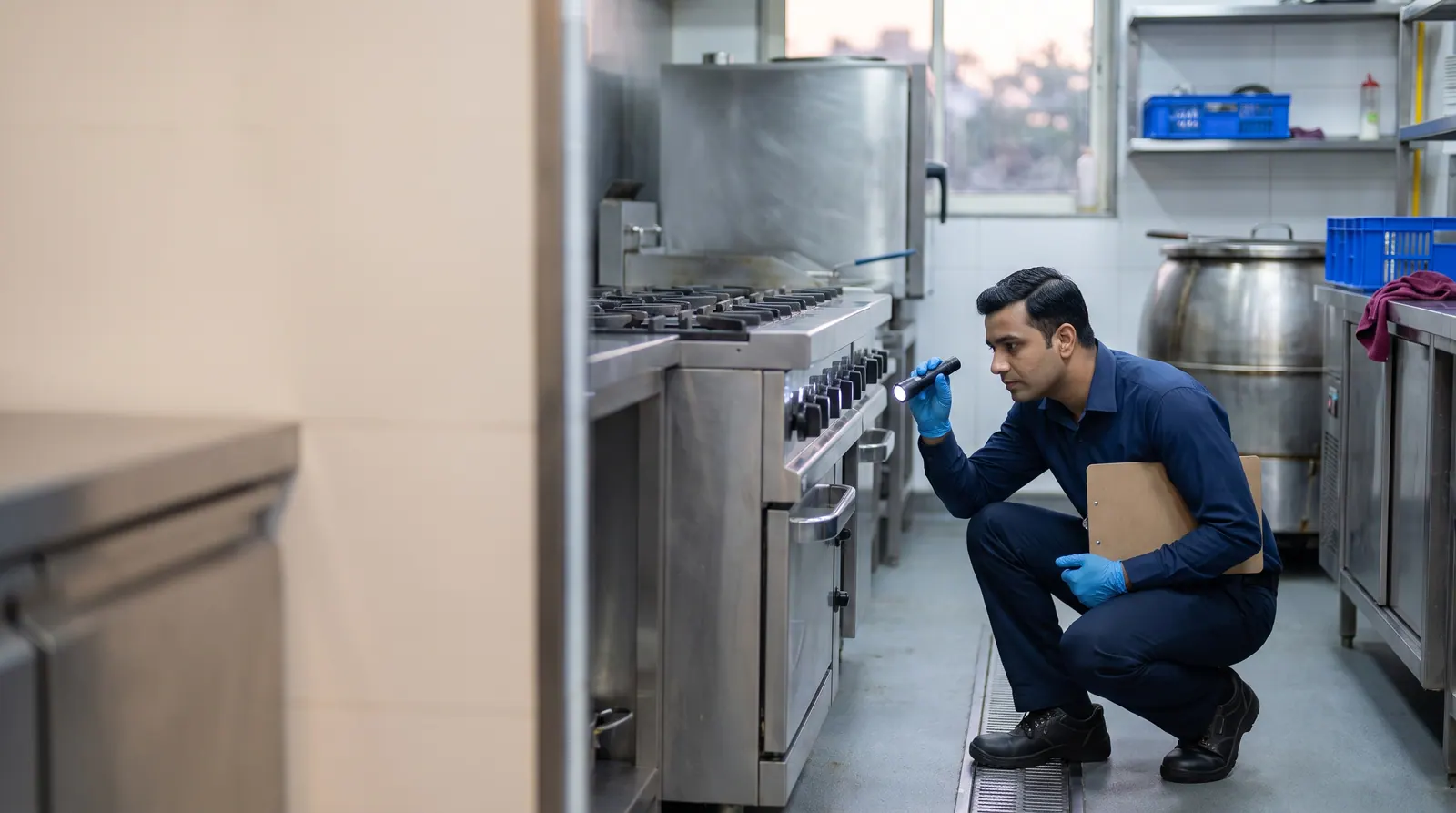
A baseline inspection records the condition of the premises before trading starts, so any later problem can be compared with a known starting point. The best time is after construction is complete and the main equipment is in place, but before food stock is loaded into the stores. Under an Integrated Pest Management (IPM) approach, the inspection looks first at conditions and entry points, and recommends treatment only where it is needed.
| Area | What is checked |
|---|---|
| Kitchen and wash area | Gaps behind and under equipment, drains, floor-wall junctions, signs of cockroaches |
| Dry and cold stores | Shelving clearance, door seals, evidence of rodents or stored-product insects |
| Dining area and bar | Furniture, false ceilings, bar sinks and drains, window and door screens |
| Waste area and back lane | Bin storage, drainage, rodent burrows and runways |
| Roof, terrace and exterior | Gutters, standing water, bird access, vegetation touching walls, termite activity |
| Staff areas and accommodation | Lockers, changing rooms and any staff rooms, including checks for bed bugs |
The outcome should be a short written report: what was found, any proofing still needed, what treatment (if any) is recommended, and where monitoring points will go. In a restaurant kitchen, cockroach work is usually targeted gel baiting and crack-and-crevice treatment rather than broad spraying. Rodent control is built around proofing, tamper-resistant bait stations and traps positioned to suit each area.
If any treatment is carried out before opening, follow the technician's advice and the product label. Keep staff out of treated areas until they are dry or as advised, ventilate well, and wash and sanitise food-contact surfaces before use.
Starting records: set up your pest file before the first customer
Food businesses are expected to keep premises free of pests under the FSSAI Schedule 4 hygiene requirements, and HACCP-based food safety systems expect pest control to be planned and documented. An auditor or food safety officer will want evidence, not assurances. It is much easier to start a tidy file now than to rebuild one later.
Your pest control file should include:
- A site plan marking each numbered monitoring point, such as bait stations, traps and fly-control units.
- The baseline inspection report and a note of proofing work completed.
- A copy of your pest control operator's licence and the list of products used, with Material Safety Data Sheets.
- The service agreement, setting out visit frequency and the areas covered.
- Service reports from every visit, with findings and recommendations.
- A pest sighting log where staff note the date, time, location and what they saw.
- A corrective-action record showing what was done about each sighting or recommendation, and when.
- Notes of any stock deliveries rejected because of pest damage.
Our guide to pest control records for restaurant food-safety audits in Goa explains what each document is for and how to keep it audit-ready. Show staff how to use the sighting log in the first week; a log that only the manager knows about tends to stay empty.
Timing your opening around Goa's seasons
Many Goa restaurants and shacks open after the monsoon, ahead of the tourist season. Others open just before or during the rains. If the monsoon is approaching, check roofs, gutters, drains and wall cracks before it arrives: heavy rain pushes rodents and crawling insects towards dry, sheltered buildings and leaves standing water everywhere. Our pre-monsoon pest checklist is written for homes, but the same building checks apply to a restaurant.
Seasonal premises that stay closed for months need a fresh baseline each time they reopen. Clear accumulated debris, check stored furniture and equipment, flush the drains and inspect before restocking.
Your pre-opening pest checklist at a glance
- Gaps around pipes, cables and ducts sealed
- Floor-wall junctions finished smooth; cracks filled
- Self-closing doors, door sweeps and window and vent mesh fitted
- Drains fitted with gratings, flushed and flowing
- Shelving off the floor and away from walls; waste area planned
- Construction debris, cardboard and standing water removed
- Second-hand equipment and furniture inspected and cleaned
- Receiving routine set up for stock deliveries
- Baseline inspection done and report on file
- Monitoring points mapped; pest file and sighting log started
- Service schedule agreed before opening day
Planning a restaurant opening in Goa?
Efficacy Pest Control is a licensed pest control operator with the Directorate of Agriculture, Goa, and uses CIB&RC-registered products. For food businesses, our Goa team provides documentation aligned with HACCP and FSSAI audit expectations and shares service reports after visits. You can read more about our restaurant, café and shack pest control in Goa.
If you are fitting out or building a restaurant, contact our Goa branch in Chimbel with your location, the stage your project has reached and your planned opening date, and we will talk you through the sensible next step.
Frequently asked questions
QWhen should a new restaurant book its first pest inspection?
Ideally once construction is finished and the main kitchen equipment is installed, but before food stock is moved into the stores. At that stage the inspector can see gaps behind fixed equipment, test drains and spot leftover debris, and any proofing or treatment can be done without handling food. If you are still at the design stage, it also helps to discuss proofing details with your contractor early, before walls and counters are closed up.
QDo I need anti-termite treatment if I am fitting out a rented space?
Pre-construction soil treatment is done at the foundation stage, so it only applies if the building itself is new. In an existing building, the right step is an inspection for termite activity in door frames, skirting, wooden fittings and wall cracks. If termites are found, post-construction treatment for occupied buildings is a separate method. It is also worth asking the landlord whether any earlier anti-termite work was carried out and documented.
QCan second-hand kitchen equipment bring pests into a new restaurant?
Yes. Used fridges, display counters, ovens and dishwashers can carry cockroaches and their egg cases in motor compartments, door seals and hollow bases, and used upholstered seating can carry bed bugs. Inspect and clean second-hand items outside the kitchen before installing them, and remove any cardboard packaging from the site quickly. Mention any second-hand equipment at your baseline inspection so it can be checked closely.
QWhat pest records will a food-safety auditor expect from a new restaurant?
Expect to show a site plan of monitoring points, the service agreement, service reports from each visit, the operator's licence, product details with Material Safety Data Sheets, a pest sighting log and a record of corrective actions. Starting this file before opening means your first audit has a clear history from day one, rather than a gap covering the period when the business was set up.
QShould treatment be done before or after kitchen equipment is installed?
Proofing such as sealing gaps and filling cracks is best done before heavy equipment goes in, while every wall and floor junction is reachable. Inspection and any targeted treatment usually make more sense afterwards, because equipment creates new hiding places that need checking. Whatever is done, allow treated areas to dry, ventilate, and clean and sanitise food-contact surfaces before use, following the technician's advice and label directions.
QDoes a beach shack that reopens every season need a fresh pre-opening check?
It is a good idea. Structures and stored furniture left closed through the monsoon can collect debris, damp, standing water and pests such as rodents, cockroaches and termites. Before restocking, clear the site, flush drains, check stored equipment and furniture, and arrange an inspection. Update your pest file with the new season's baseline so your records stay continuous.
Last updated 13 October 2026. Information on this page is general guidance; your technician will advise on your specific property after inspection.