Quick answer
Efficacy Pest Control's Goa branch in Chimbel runs hotel pest management programmes for guest rooms, kitchens and F&B outlets, stores, gardens and staff accommodation. We use an Integrated Pest Management approach and CIB&RC-registered products. Work is scheduled around occupancy, service reports are shared after visits, and documentation is aligned with HACCP and FSSAI audit expectations. We serve hotels in towns including Panaji, Margao, Calangute, Candolim, Baga and Vasco da Gama.
Key points
- Hotel programmes from our Goa branch cover guest rooms, kitchens and outlets, stores, gardens and staff accommodation.
- Licensed pest control operator with the Directorate of Agriculture, Goa, using CIB&RC-registered products.
- Service reports and proof of service are shared after visits, with documentation aligned to HACCP and FSSAI audit expectations.
- Warranty applies to the treated area for specific services, as set out in the service agreement.
- Goa's heavy south-west monsoon and humid climate change pest pressure through the year, so programmes are adjusted by season.
Hotel pest control in Goa has to work around three things: guests who are rarely away from their rooms for long, kitchens that run from early breakfast to late dinner, and a climate that moves from busy dry months into a very heavy south-west monsoon. Our Goa branch in Chimbel builds programmes for hotels and resorts that treat the property as a set of connected zones rather than as a single job.
We follow an Integrated Pest Management (IPM) approach. That means inspection first, then sanitation and proofing advice, then targeted treatment where it is actually needed. We are a licensed pest control operator with the Directorate of Agriculture, Goa, and we use CIB&RC-registered products.
What does a hotel programme cover, zone by zone?
Pests do not respect department boundaries. Rodents in a receiving bay can reach the kitchen, and bed bugs that arrive in guest luggage can travel on linen to the laundry and on to staff rooms. A hotel programme therefore looks at every zone and at the routes between them.
| Zone | Pests we look for | What the programme focuses on |
|---|---|---|
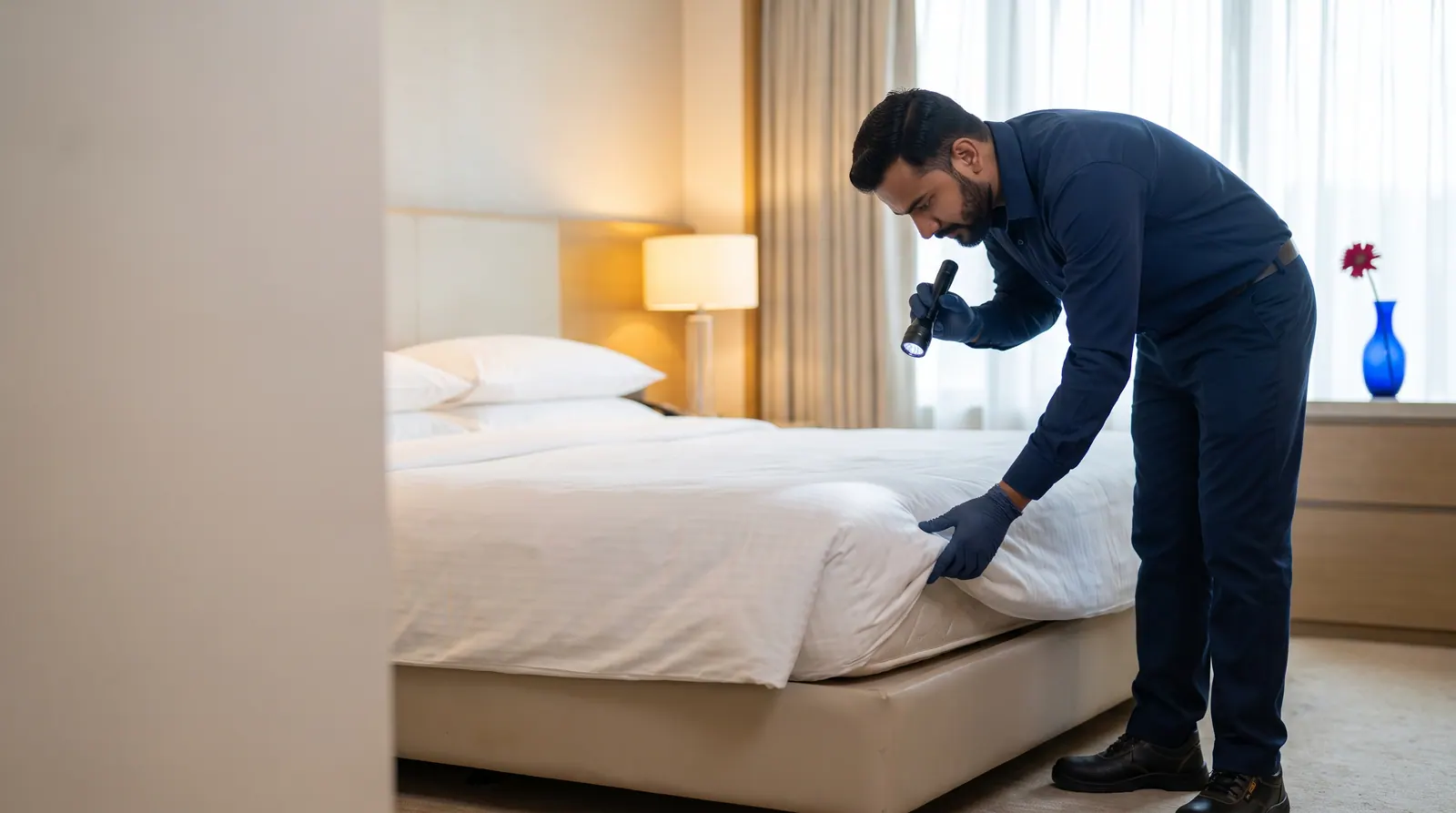
| Guest rooms and corridors | Bed bugs, cockroaches, ants, lizards | Room-by-room inspection, bed bug treatment with follow-up visits, discreet crack-and-crevice work |
| Kitchens, restaurants and bars | Cockroaches, rodents, flies, ants | Gel baiting, targeted crack-and-crevice treatment, drains, fly source reduction, tamper-resistant bait stations |
| Stores and receiving areas | Rodents, cockroaches, insects in stored goods | Bait stations and traps, proofing advice, fumigation of stored goods where it is the appropriate method |
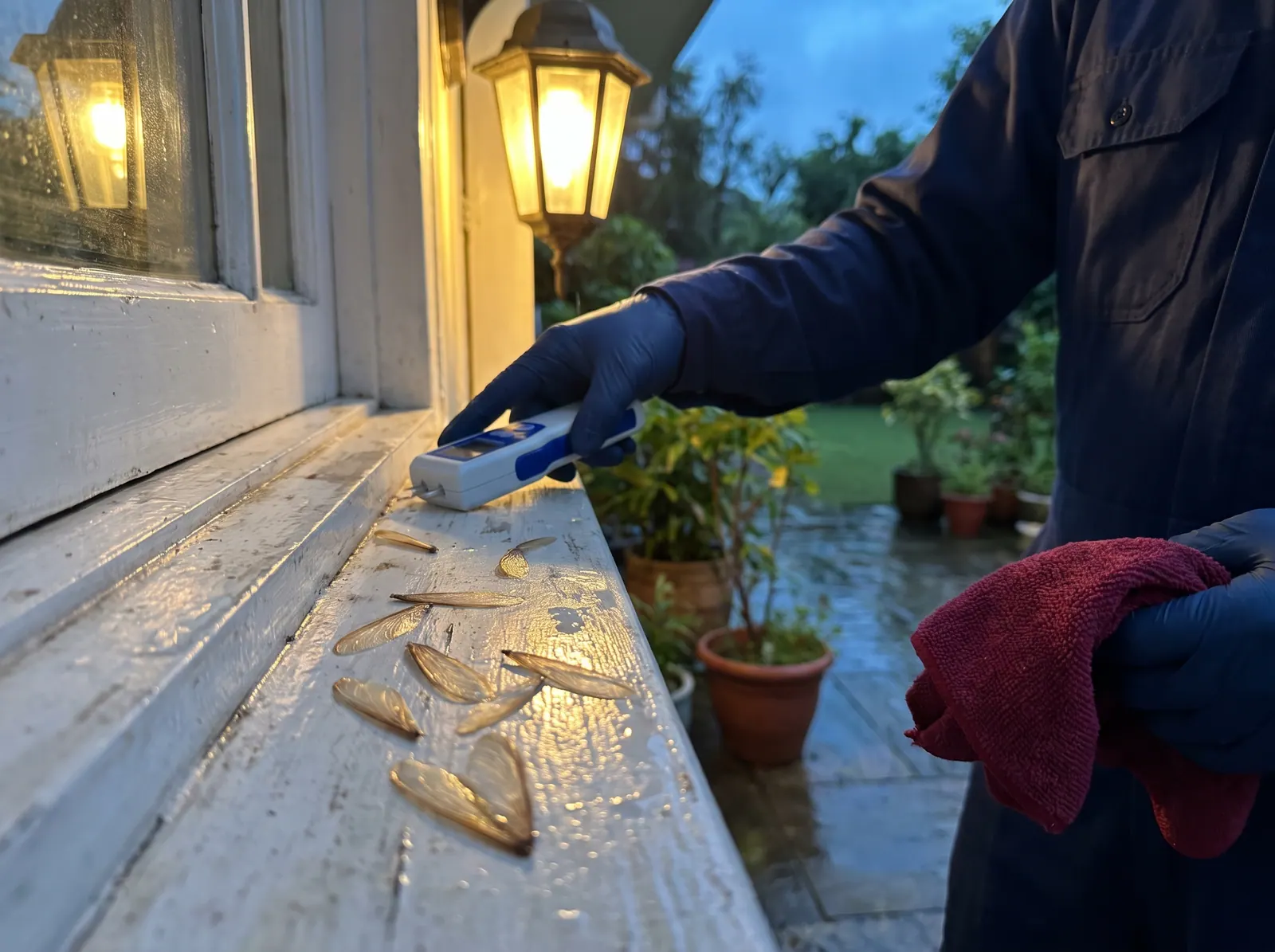
| Gardens, lawns and pool areas | Mosquitoes, ants, termites, bee and wasp nests | Breeding-site reduction, larviciding, safe handling of nests near occupied areas, termite treatment |
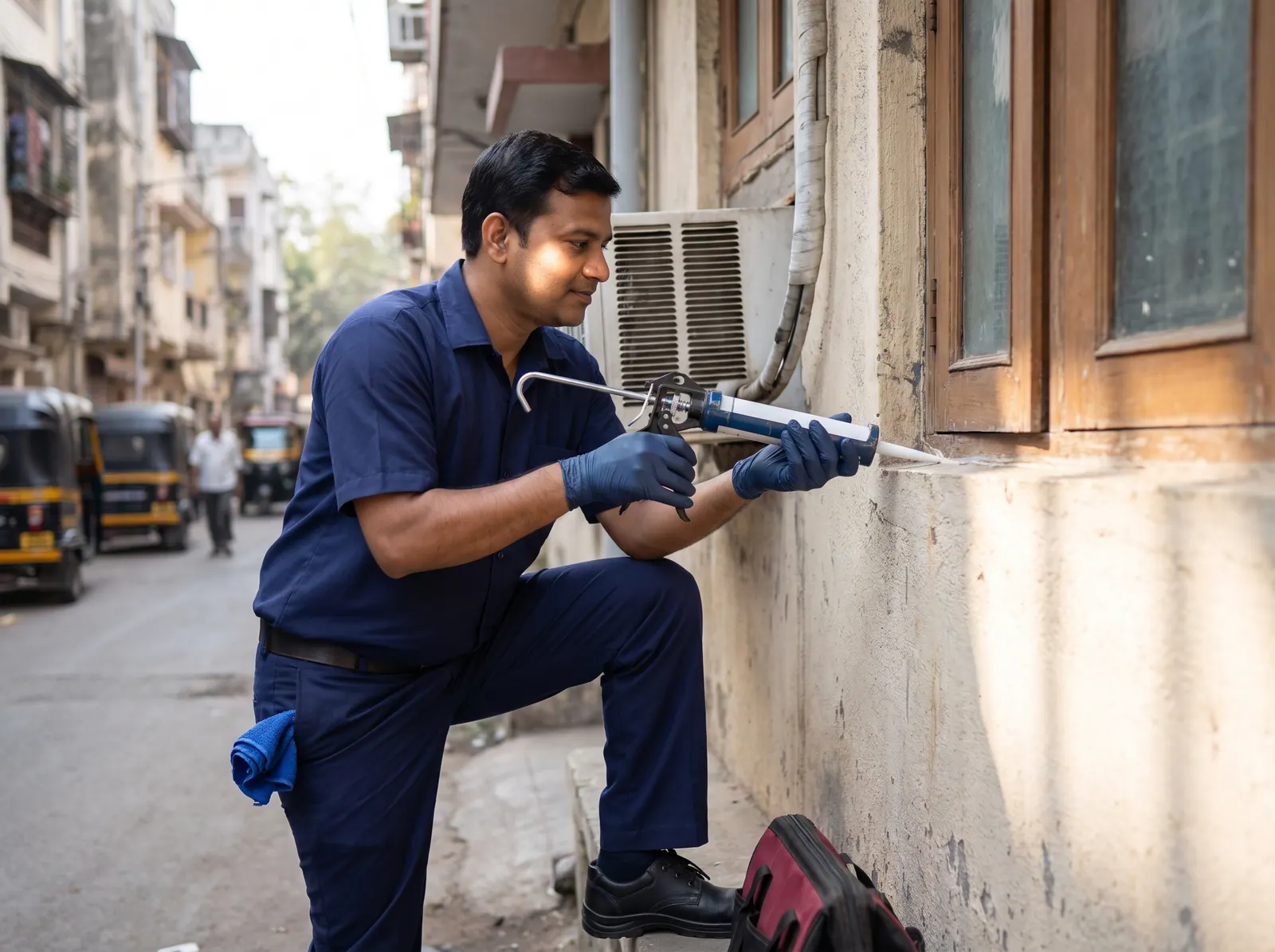
| Timber and building fabric | Termites, wood borers, birds | Checks on furniture, doors and frames; wood borer treatment; bird netting for balconies, ducts and ledges |
| Staff accommodation | Bed bugs, cockroaches, rodents | Room-by-room treatment with follow-ups and practical hygiene guidance for residents |
Staff accommodation is often the zone that gets least attention, yet it is closely linked to the rest of the property through uniforms, linen and shared kitchens. We include it in the plan from the start rather than treating it as an afterthought.
How do we work discreetly around guests?
Good hotel pest management should be almost invisible to guests. We agree a schedule with your housekeeping, front office and F&B teams, and adjust it as occupancy changes.
- Guest rooms: treated when vacant, for example between check-out and check-in, or when a room is blocked for the purpose.
- Kitchens and outlets: serviced after service closes or during an agreed quiet period, with food and utensils covered or removed beforehand.
- Gardens and pool areas: outdoor mosquito work timed for when guests are not using lawns, decks or pool surrounds, with areas kept clear until dry or for as long as the product label advises.
- Back-of-house routes: technicians move through service corridors wherever possible, keeping equipment out of public areas.
- Accompanied visits: a member of your team accompanies our technicians, so access, keys and sensitive areas are handled your way.
If your occupancy plan changes, tell us as early as you can; under our terms, cancellations should be made at least 48 hours before a scheduled service. For guidance on handling a complaint at the front desk, see our guide to responding to a pest sighting in a hotel guest room.
How does Goa's climate shape a hotel programme?
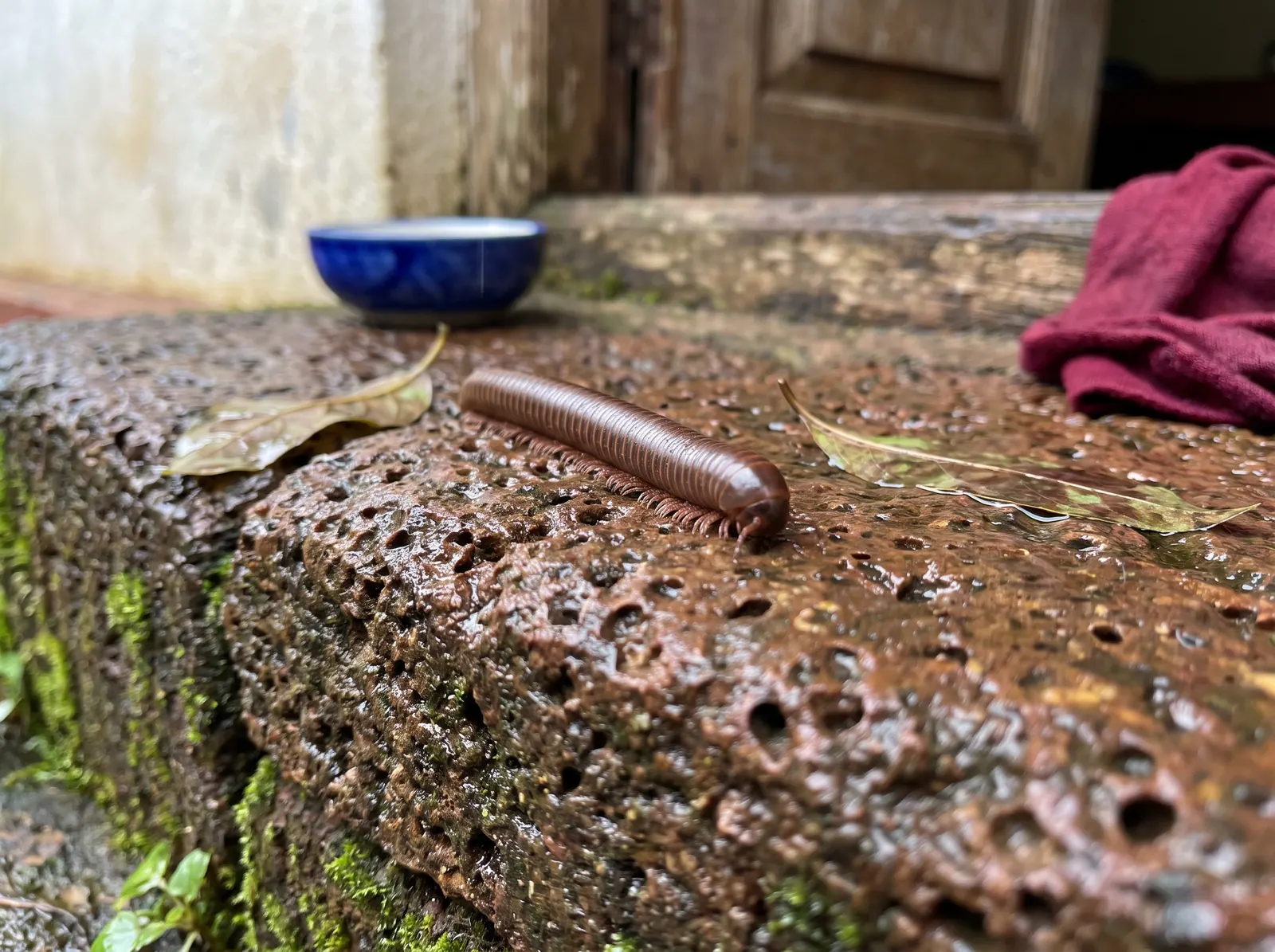
Goa's humid coastal climate and heavy south-west monsoon change the pest picture through the year. During the rains, standing water in gutters, planters, drains and construction areas gives mosquitoes places to breed. Damp timber and soil also suit termites and wood borers, and rodents and cockroaches may move further indoors to find dry shelter.
In the busy dry months, the pressure shifts. More guest turnover means more chances for bed bugs to arrive in luggage, and higher F&B volumes mean more waste to manage. For many coastal properties, quieter months are a practical window for deeper work such as timber treatment or proofing.
Our guides on how often a Goa hotel should schedule pest control and mosquito control for resort gardens and pools go into this in more detail.
Documentation, service reports and corrective actions
Auditors, brand teams and your own management will want evidence that pest control is planned, carried out and followed up. We support this in several ways:
- Service reports: we share service reports and proof of service after visits, with WhatsApp updates for clients.
- Food safety documentation: for kitchens and outlets, our documentation is aligned with HACCP and FSSAI audit expectations. FSSAI hygiene requirements for food businesses include keeping pests out of food premises, and a documented programme helps show how you do that.
- Safety information: we maintain Material Safety Data Sheets for the products we use, which your safety team or an auditor may ask about.
Treatment alone rarely solves a recurring problem. Where we see a cause, such as a gap under a store door, a poorly sealed drain or waste held too close to a kitchen entrance, we point it out so your engineering or F&B team can act on it. We then check the area again on the next visit. For outlets with a heavy kitchen focus, our restaurant pest management service follows the same approach.
What should a hotel share with us at the start?
The first inspection is far more useful when we have the right information. Before we begin, it helps if you can share:
- A layout of the property: blocks, number of rooms, outlets, stores, laundry, staff accommodation and grounds.
- Recent pest sightings and guest complaints, with dates and locations if you have them.
- Previous service records and any recurring problem areas.
- Your audit requirements, including any report format your brand or auditor expects.
- Your occupancy calendar, peak periods and times when certain areas cannot be accessed.
- Sensitive areas such as the pool, spa, children's play areas or rooms where guests may stay with pets.
- Waste collection, delivery and receiving arrangements.
- Contacts in housekeeping, engineering, F&B and security.
- Any planned renovation or construction, since structural changes can affect treatment and warranty.
Contracts, warranty and what clients have told us
Hotels can arrange their programme as an Annual Maintenance Contract, with year-round scheduled visits and service reports. Visit frequency depends on the pests involved, the level of activity and your audit needs, and is agreed after inspection.
For specific services, a warranty applies to the treated area as set out in the service agreement. It varies by pest and treatment, and does not cover structural changes, new construction or cases where post-service instructions have not been followed. Pests can also arrive from neighbouring properties or from outside, so prevention on your side matters too.
One purchase manager in Goa wrote that bed bugs in their staff accommodation, which had been a real headache, were resolved, and that they were also happy with our cockroach, lizard and rodent treatment. A hotel client in Goa also features in a video on our earlier website. In 2026, the company received the Indian Eminence Award (Goa), Certificate of Excellence, accepted by our director Hasan Raza.
Which parts of Goa do we serve for hotels?
Our Goa branch covers hotels, resorts and guest houses in Panaji (Panjim), including Miramar, Caranzalem and Dona Paula; Margao, including Fatorda and Navelim; Vasco da Gama, including Dabolim and Bogmalo; Mapusa; Calangute; Candolim, including Sinquerim and Nerul; Baga; Ponda; and Porvorim. You can read more about our Goa branch in Chimbel. If your property is elsewhere in Goa, tell us the location and we will let you know whether we can help.
How to get started
Share your property details and the problems you are seeing, and our Goa branch in Chimbel will arrange an inspection and propose a programme that fits your zones and occupancy. You can reach us through our contact page. Throughout any treatment, keep guests, children and pets away from treated areas until they are dry or for as long as advised, ventilate rooms before reopening them, and make sure staff wash their hands after handling treated items. If anyone feels unwell or has a reaction to a bite or sting, they should see a doctor.
Frequently asked questions
QCan you treat guest rooms without disturbing guests?
Yes, in most cases. We plan room treatments with housekeeping so they happen when a room is vacant, such as between check-out and check-in or when a room is blocked. Re-entry follows the product label and our technician's advice. Kitchens are usually serviced after service closes, and outdoor work is timed for when lawns and pool areas are not in use.
QDo you provide records for FSSAI or HACCP audits?
Our Goa branch provides documentation for food businesses that is aligned with HACCP and FSSAI audit expectations, and we share service reports and proof of service after visits. If your brand or auditor needs a particular format or extra detail, tell us at the start so we can plan how records are kept and shared.
QHow often should a hotel schedule pest control in Goa?
It depends on the pests involved, how active they are and what your audits require. Some areas, such as kitchens, may need more frequent visits than others, and schedules can be weekly, monthly or quarterly. We recommend a frequency after the first inspection and review it through the year, especially around the monsoon.
QWhat should we do if a guest reports bed bugs?
Move the guest calmly, take the room out of use and avoid carrying linen or luggage from that room into other rooms without bagging it. Then contact our Goa branch. We carry out a room-by-room inspection, usually including neighbouring rooms, followed by treatment and follow-up visits, since bed bugs are rarely solved in a single visit.
QIs there a warranty on hotel treatments?
For specific services, a warranty applies to the treated area as set out in your service agreement. Terms vary by pest and treatment. The warranty does not cover structural changes, new construction or cases where post-service instructions have not been followed, so it is worth reviewing the agreement with your engineering team.
QAre treatments safe around pools, gardens and children's areas?
We use CIB&RC-registered products, apply them according to label directions and maintain safety data sheets. Around pools, lawns and play areas, we time treatments for when guests are not present and keep areas clear until dry or as advised. Tell us about sensitive areas when we plan your programme so we can choose suitable methods.
QDo you serve resorts outside the towns listed on this page?
Our Goa branch currently covers Panaji, Margao, Vasco da Gama, Mapusa, Calangute, Candolim, Baga, Ponda and Porvorim, including several surrounding localities. If your hotel is somewhere else in Goa, share the location and the pest problem, and we will tell you honestly whether we can take it on.
Last updated 13 October 2026. Information on this page is general guidance; your technician will advise on your specific property after inspection.