Quick answer
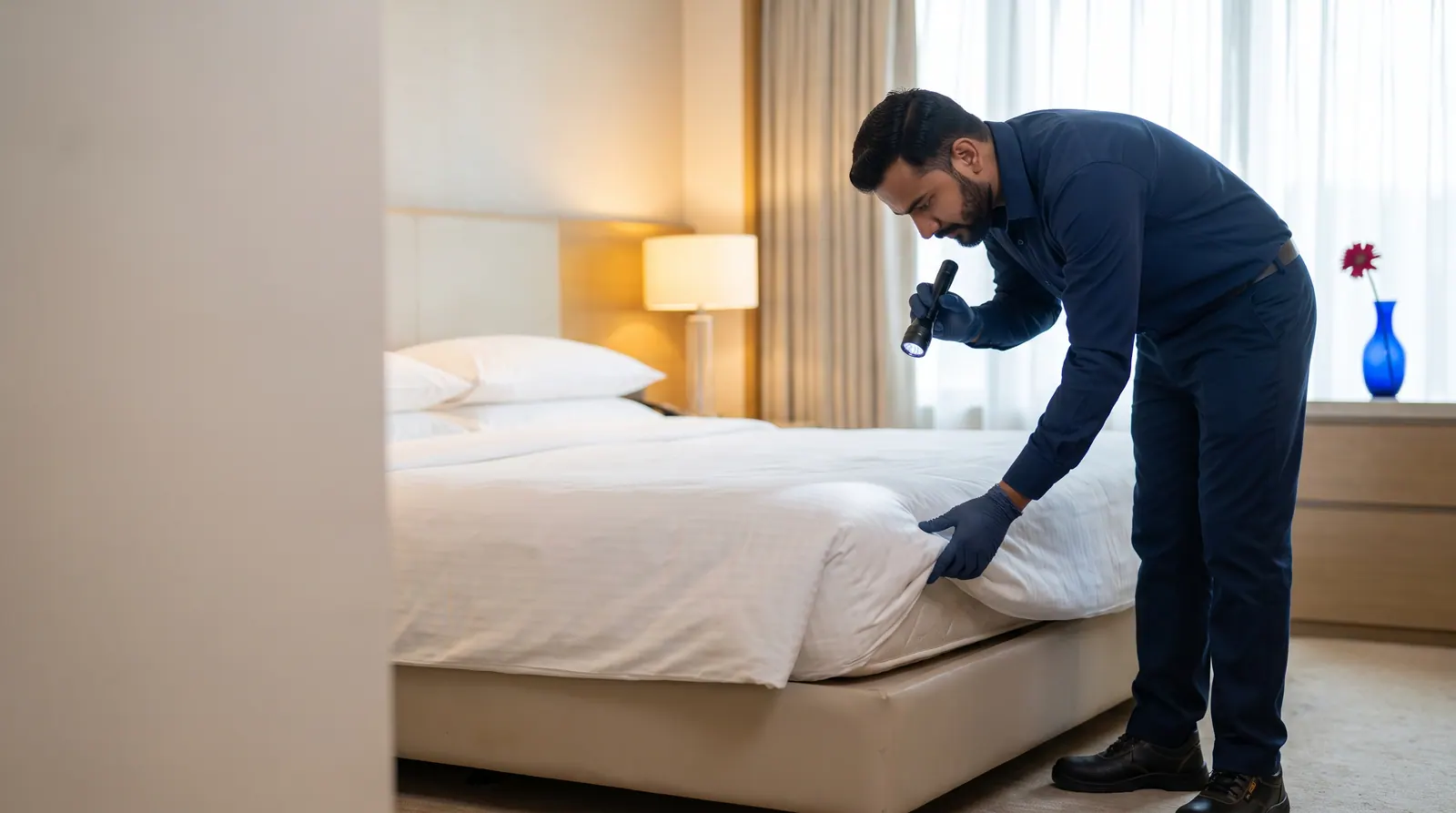
Before unpacking in any Goa hotel, guesthouse or rental, put your bag in the bathroom or on a luggage rack. Then spend two minutes checking mattress seams, the headboard and bedside furniture for live bugs, dark spots and shed skins. Keep luggage closed and off the bed. If you see signs, ask for a room away from the first. At home, unpack away from bedrooms and launder clothes on high heat.
Key points
- Adult bed bugs are flat, oval, reddish-brown and about the size of an apple seed; they crawl but cannot fly or jump.
- A quick check of mattress seams, bed frame, headboard and bedside furniture before unpacking catches most problems early.
- Bites alone do not confirm bed bugs; look for dark spots, rusty smears, shed skins and live bugs.
- A hot tumble-dry cycle of at least 30 minutes is a reliable household way to kill bed bugs in clothing.
- Foggers or bug bombs rarely reach bed bug hiding places and can scatter them further.
Goa welcomes holidaymakers and business travellers all year round, and bed bugs travel too, tucked into suitcases, backpacks and clothing. Finding them says little about how clean a place is. They can turn up in a simple guesthouse or a well-run hotel, because guests carry them in from elsewhere.
This guide to avoiding bed bugs when travelling in Goa covers four calm, practical habits: checking your room quickly, packing sensibly, knowing what to do if you spot signs, and unpacking safely once you are home.
What do bed bugs and their signs look like?
Adult bed bugs are flat, oval and reddish-brown, roughly the size of an apple seed. They swell and darken after feeding. Young bugs are smaller and paler, and the eggs are tiny, white and about the size of a pinhead.
Bed bugs cannot fly or jump. They crawl, hide in narrow gaps close to where people sleep or sit, and are mostly active at night. That is why you rarely see them during the day and need to look for the traces they leave:
- Dark spots like dots from a marker pen on mattress seams, sheets or wooden joints. These are droppings.
- Small rusty or reddish smears on sheets and pillowcases.
- Pale, empty shed skins in seams and crevices.
- Live bugs, often clustered in folds, seams and cracks.
- In heavier infestations, a musty, sweetish smell.
Bites on their own are not a reliable sign. Many insects bite, bite marks vary, and some people do not react to bed bug bites at all. Look for the physical evidence above.
How do I check a hotel room in two minutes?
Do this before you unpack, and ideally before your luggage goes anywhere near the bed. The torch on your phone is all you need.
- Park your luggage safely. Stand it on the tiled bathroom floor, or on a luggage rack pulled away from the wall and the bed.
- Check the mattress. Pull back the sheets at the head-end corners and look along the seams, piping, labels and any buttons or tufts.
- Look underneath. If you can, lift a corner of the mattress and check the bed base, frame joints and slats.
- Inspect the headboard. Run the torch along its edges and the gap where it meets the wall. Wall-mounted headboards are a common hiding place.
- Check bedside furniture. Look into drawer corners and joints, and behind and under bedside tables.
- Glance at upholstery. If there is a sofa or padded chair, check the seams and under the cushions.
Most rooms will be perfectly clear. The point of the check is simply to catch a problem before your belongings have spent a night beside it.
| Where to look | What you are looking for |
|---|---|
| Mattress seams and piping | Dark spots, shed skins, live bugs |
| Bed frame and base joints | Clusters of dark spots, tiny white eggs in cracks |
| Headboard edges and the gap behind | Spots and bugs along the edges |
| Bedside tables and drawers | Spots in corners and joints |
| Sofas and upholstered chairs | Spots along seams and under cushions |
| Sheets and pillowcases | Small rusty smears |
Which luggage habits help most?
Good luggage habits matter more than any single check, because they limit where bed bugs could hide if a room does have them.
- Keep bags off the bed and off upholstered furniture. A luggage rack away from the wall, or a hard floor, is better.
- Keep your case zipped when you are not using it. Hard-shell cases have fewer seams and pockets than soft fabric bags.
- Pack in sealable bags or packing cubes inside the suitcase, so clothes are not loose.
- Use a separate, sealed bag for worn clothes and keep it closed until you can wash them.
- Think about drawers. If you have any doubt about a room, live out of your case rather than using drawers beside the bed.
- Check before you leave. Look over your bag's seams and pockets before packing up, and shake out anything that was left on the bed.
The same habits apply on overnight sleeper buses and trains, which many visitors use to reach Goa. Our guide to bed bugs after travel on hotels, buses and trains covers those journeys in more detail.
What should I do if I find signs of bed bugs?
Stay calm. Bed bugs are unpleasant, but they are not generally known to spread disease. Your aim now is to avoid carrying them with you.
- Take clear photos of what you found, ideally with something for scale.
- Tell the front desk or your host straight away and show them the photos.
- Ask for a different room that is not next to, above or below the first. Bed bugs can move between adjoining rooms.
- Check the new room the same way before bringing your luggage in.
- Look over your belongings before moving. Shake items out over a hard floor, and bag anything that touched the bed separately so it can be washed and dried on high heat.
- Do not spray insecticide you have bought yourself. Leave treatment to the property and its pest control provider.
If you are staying in a villa, flat or homestay, let the host know promptly. Hosts may find our guide to bed bugs in Goa holiday rentals useful. If bites are very itchy or swollen, or you feel unwell, please see a doctor.
What should I do after returning home?
Even if you saw nothing during your trip, a few simple steps on arrival lower the chance of bringing hitchhikers into your home.
- Unpack away from bedrooms. A balcony, utility area or tiled bathroom floor works well.
- Wash clothes promptly. Use water as hot as the fabric allows. If you have a dryer, tumble dry on high heat for at least 30 minutes. Heat is what kills bed bugs and their eggs, and a hot dryer cycle is the most reliable household step.
- Keep unwashed items sealed. Anything you cannot wash straight away should stay in a closed bag until you can deal with it.
- Inspect the suitcase. Use a torch on the seams, zips, pockets and wheel housings. Vacuum it, then empty the vacuum contents into a sealed bag and put it in an outside bin.
- Store luggage away from bedrooms, in a store room or loft rather than under the bed.
- Keep an eye out for a few weeks. Check mattress seams and the headboard now and then, since bed bugs can go a long time without feeding.
What if bed bugs have already come home with you?
If you start seeing spots on the mattress, or bites that keep appearing night after night, act early. Small infestations are much easier to deal with than established ones. A few things tend to make matters worse:
- Foggers or "bug bombs" rarely reach the cracks where bed bugs hide and can scatter them further.
- Sleeping in another room can spread bugs to a second bed.
- Throwing out a mattress in a hurry can drop bugs through the home on the way out, and a new mattress can be reinfested.
- Spraying household insecticide on bedding is not suitable and can be unsafe.
Professional bed bug treatment starts with a room-by-room inspection, followed by targeted treatment and follow-up visits, because eggs can hatch after the first treatment. We use an Integrated Pest Management approach: inspection, practical advice on clutter and hiding places, and treatment aimed only where it is needed. Preparing the room properly makes a real difference, so see our bed bug treatment preparation checklist before any visit.
If your home is outside Goa, contact a licensed pest control operator where you live.
Running a hotel, guesthouse or staff accommodation in Goa?
Guest rooms and staff quarters see a steady turnover of people and luggage, so regular inspection matters. Our Goa branch is a licensed pest control operator (Directorate of Agriculture, Goa) using CIB&RC-registered products, and service reports are shared after visits. For shared housing, see our page on bed bug control for staff accommodation in Goa.
Need advice on bed bugs in Goa?
If you live in Goa and suspect bed bugs at home, or you manage a hotel, rental or staff accommodation here, contact our Goa branch in Chimbel. Tell us your location and what you have found, and we will talk you through the sensible next steps.
Frequently asked questions
QDoes finding bed bugs mean a Goa hotel is dirty?
Not necessarily. Bed bugs feed on blood, not dirt or food waste, so they can appear in spotless rooms at any price level. They usually arrive in guests' luggage and clothing. What matters is how a property responds: a well-run hotel or rental will move you to a room away from the affected one and arrange treatment promptly.
QCan bed bugs survive in my suitcase on the journey home?
Yes. Bed bugs can go a long time without feeding, and luggage is one of the main ways they spread. That is why unpacking away from bedrooms, washing and hot-drying clothes, and inspecting and vacuuming your suitcase on arrival are worth doing, even if you saw nothing during your stay.
QDo itchy bites after my holiday mean I have bed bugs?
Not on their own. Mosquitoes and other insects also bite, bite marks look different on different people, and some people do not react to bed bug bites at all. Check your mattress seams, bed frame and headboard for dark spots, shed skins or live bugs. If the bites are very itchy or swollen, or you feel unwell, see a doctor.
QCan I put my suitcase in the sun to kill bed bugs?
Sunlight is not a reliable method. A suitcase does not heat evenly, and bugs can shelter in seams, pockets and wheel housings where the heat never builds up enough. Wash and hot-dry the fabric items instead, then inspect the case with a torch and vacuum it carefully, disposing of the vacuum contents in a sealed bag outside.
QI live in Goa and travel often for work. How often should I check at home?
Follow the unpacking routine after every trip, then glance at your mattress seams and headboard every week or two for a few weeks afterwards. Frequent travellers benefit from keeping luggage stored away from bedrooms permanently. If you spot signs, contact our Goa branch early, because smaller infestations are far easier to deal with.
QWhat should I tell the hotel or host if I find signs?
Show them clear photos and point out exactly where you found the signs, such as a particular mattress seam or headboard edge. Ask for a room that is not next to, above or below the original. Calm, specific information helps the property act quickly and arrange proper inspection and treatment for that room.
Last updated 13 October 2026. Information on this page is general guidance; your technician will advise on your specific property after inspection.