Quick answer
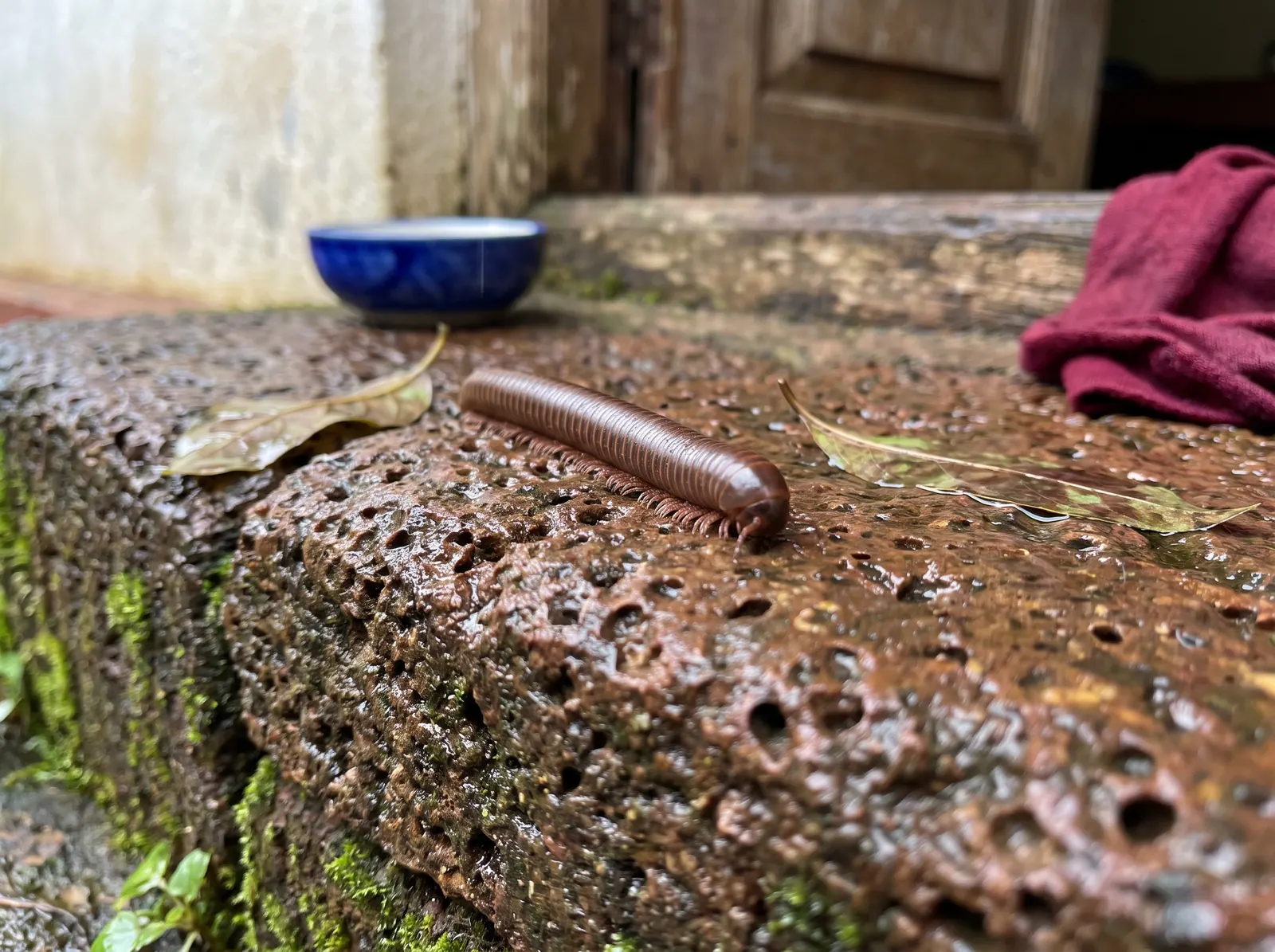
Millipedes swarm into Goan homes in the monsoon because heavy rain floods the soil and leaf litter they live in, so they climb out looking for damp shelter. They do not bite. Centipedes can give a painful bite and should not be handled. The most effective defence is sealing gaps under doors and around drains, and drying out the area around your walls. Where crawlers still arrive in large numbers, a well-timed perimeter treatment can help.
Key points
- Millipedes move into Goan homes in the monsoon because heavy rain floods the soil and leaf litter they live in.
- Millipedes do not bite or sting; centipedes can give a painful bite and should never be handled.
- Sealing gaps under doors, around pipes and at drains is the most effective first step against monsoon crawlers.
- Most millipedes, woodlice and earwigs die quickly in dry rooms, so reducing damp inside and outside matters.
- Perimeter treatment targets the outer base of a building and works best when timed before or early in the monsoon and combined with sealing and drying.
Within days of the south-west monsoon breaking over Goa, many households find millipedes on verandahs, climbing compound walls and slipping under doors. Centipedes, earwigs, woodlice and crickets often appear at the same time. This guide explains why millipedes and other crawlers move in during the monsoon in Goa, which of them can bite, and what keeps them out: sealing, drying and, where needed, a properly timed perimeter treatment.
Why do millipedes and other crawlers come indoors in the monsoon?
Millipedes live in soil, leaf litter, compost and under stones, where they feed on decaying plant material. When heavy rain soaks the ground, their shelters become waterlogged and they move up and out in search of somewhere damp but not flooded. The early monsoon is also a period of activity and breeding for many species, so the numbers you see above ground can rise sharply over a few weeks.
Goa's humid coastal climate and very heavy monsoon suit these creatures well. Homes surrounded by gardens, coconut or cashew plantations, paddy fields or hillside vegetation usually see more crawlers simply because there is more leaf litter nearby. Ground-floor flats and houses with garden beds right against the walls tend to notice them first.
Once crawlers reach a building, they follow the walls and get in through:
- Gaps under main doors, kitchen doors and balcony doors
- Drain outlets, bathroom floor traps and weep holes
- Gaps around pipes, cables and AC lines entering the walls
- Cracks in plinths, steps and the base of compound walls
- Open ventilators and unscreened windows at ground level
Centipedes arrive for a different reason. They are predators, so they follow the insects, spiders and other small creatures that are also sheltering from the rain. For a wider picture of what June to September brings, see our guide to monsoon pests in Goa.
Which monsoon crawlers are harmless and which can bite?
Most crawlers that come in during the rains are a nuisance rather than a danger. The most important thing is to tell millipedes and centipedes apart.
| Crawler | How to recognise it | Bites or stings? | What to know |
|---|---|---|---|
| Millipede | Rounded body, slow-moving, two pairs of legs on most segments; often curls into a coil when disturbed | No | Some release a strong-smelling fluid that can stain skin and floors and irritate eyes. Wash hands after contact. |
| Centipede | Flattened body, fast-moving, one pair of legs per segment, long antennae, claw-like front legs | Yes, can give a painful bite | Hides in dark, damp corners, bathrooms and under stored items. Never pick one up by hand. |
| Earwig | Small, brown, with pincers at the tail end | Pincers can nip but are not dangerous | Shelters in damp crevices, pot plants and drains. |
| Woodlice (pill bugs) | Grey, oval and armoured; some roll into a ball | No | Need constant moisture and die quickly in dry rooms. |
| Silverfish | Silvery, wingless, tapering body | No | Can damage paper, books and some fabrics in humid rooms. |
| Crickets | Jumping insects that chirp at night | Not a concern | Drawn to outdoor lights and damp areas. |
Millipedes do not bite or sting. The real problems are their numbers, the smell when they are crushed, and the stains they can leave on tiles and walls.
If someone is bitten by a centipede
A centipede bite is usually painful and may cause local swelling. Anyone who is bitten, especially a child, an elderly person or someone with a history of allergic reactions, should see a doctor. Seek urgent medical help if swelling spreads, breathing becomes difficult or the person feels unwell. If a pet is bitten, contact a vet.
How do you seal a Goan home against monsoon crawlers?
Sealing is the single most useful step, because it works no matter how many millipedes are outside. Ideally do it in May, before the rains, as part of a wider pre-monsoon pest checklist for Goa homes.
- Close the gap under doors. Fit door sweeps or rubber seals to the bottom of main, kitchen and balcony doors so there is no gap a crawler can slip through.
- Cover floor traps and drains. Use fine-mesh covers on bathroom and balcony floor traps, and check courtyard drain outlets.
- Seal service openings. Fill gaps around pipes, cables and AC lines where they pass through walls.
- Repair cracks. Fix cracks in the plinth, steps and the base of compound walls, particularly laterite walls where the mortar has weathered.
- Screen low openings. Fit insect mesh on ground-floor windows and ventilators.
- Shut doors in the evening. Most crawlers are active at night, so keep ground-floor doors closed after dark.
The same work also helps keep out other monsoon visitors, including the trails described in our guide to ants in Goa kitchens during the monsoon.
Why does keeping things dry matter so much?
Millipedes, woodlice and earwigs lose moisture quickly and cannot survive long in a dry room. Most that wander indoors die within a day or two unless they find a damp spot, such as under a bathroom mat, behind a washing machine or in a store room. Drying the outside makes your walls less inviting; drying the inside means anything that gets in will not last.
Around the outside
- Keep a clear strip along the base of the walls, free of leaf litter, mulch and dense planting.
- Trim plants and creepers so they do not touch the walls.
- Rake leaves regularly and remove fallen coconut fronds and husks.
- Stack firewood, coconut husk, bricks and building material away from the house and off the ground.
- Make sure gutters and downpipes discharge away from the foundation and that rainwater does not pool against the plinth.
- Lift pot plants off the verandah floor and empty water from saucers.
- Keep compost heaps well away from the walls.
Inside the house
- Fix leaking taps, pipes and wall seepage promptly.
- Ventilate bathrooms, kitchens and store rooms, and use exhaust fans where you have them.
- Consider a dehumidifier for rooms that stay closed for long periods.
- Do not leave wet mops, mats or cloths lying on the floor.
- Lift stored boxes and bags off the floor.
Damp gardens also draw snails, which we cover in giant African snails in Goan gardens. If your house will be closed for the season, see our advice on looking after an empty Goa villa during the monsoon.
How should you remove crawlers that are already inside?
- Millipedes: sweep or vacuum them up and dispose of them outdoors, well away from the house. Use a dustpan or gloves, and avoid crushing them on floors, where their fluid can stain.
- Centipedes: trap one under a jar, slide a stiff card underneath and release it outside away from the house. Never pick one up by hand.
- Check before use: in ground-floor rooms, shake out shoes, folded clothes and bedding during the monsoon.
- Avoid repeated indoor spraying: household sprays rarely stop a mass ingress, and spraying living areas again and again exposes your family to more chemicals than necessary.
What is perimeter treatment and when does it make sense?
Perimeter treatment is a targeted application to the outside of a building: along the base of external walls, the plinth, door thresholds, drain points and other entry routes. It creates a treated band that crawlers must cross to get in. It is carried out by a trained technician and is not meant to cover the whole garden.
It is worth considering when a property sees repeated, heavy ingress despite sealing and drying. Typical examples are homes next to plantations, fields or hillsides, ground-floor flats in housing societies with large landscaped areas, and hotels or resorts with garden-facing rooms.
What a good perimeter treatment involves
- Inspection first: finding where crawlers are breeding and exactly how they are getting in.
- Habitat changes alongside treatment: treatment works best when leaf litter, damp and gaps are dealt with too. This is the Integrated Pest Management (IPM) approach we follow: inspection, sanitation and proofing advice, then targeted treatment.
- Sensible timing: just before or early in the monsoon. Heavy rain can wash off or break down treatments on exposed surfaces, so the technician should advise on timing and whether a repeat visit may be needed.
- Registered products, applied correctly: products registered with the CIB&RC, applied by a licensed operator according to label directions.
- Outdoors, not living spaces: the focus is the building's outer edge, not bedrooms and kitchens.
Safety during and after treatment
- Keep children and pets away from treated areas until they are dry, or for as long as the technician advises.
- Ventilate the home and move pet bowls, toys and footwear away from treated surfaces.
- Wash hands after any contact with treated areas.
- Ask for product safety information. We maintain Material Safety Data Sheets for the products we use.
Our Goa operation is a licensed pest control operator (Directorate of Agriculture, Goa) using CIB&RC-registered products. You can read more about our inspection-led approach on how we work.
A simple monsoon crawler calendar for Goa
| Period | What usually happens | What to do |
|---|---|---|
| Before the rains (May) | Crawlers stay hidden in soil and leaf litter | Seal gaps, fit door sweeps, clear the strip around walls, check gutters and downpipes |
| Early monsoon (June) | First rains often trigger mass movements of millipedes | Keep doors shut in the evening; consider perimeter treatment if past years have been heavy |
| Peak monsoon (July–August) | Damp conditions keep crawlers active | Keep drying and ventilating; remove any that get in; check damp corners and store rooms |
| Late monsoon (September) | Numbers usually ease as the rain reduces | Repair whatever let them in this year so next season is easier |
Still finding crawlers despite sealing and drying?
If millipedes, centipedes or other crawlers keep getting into your home, society or premises after you have sealed and dried things out, contact our Goa branch in Chimbel. Tell us where you are and what you are seeing, and we will talk you through whether an inspection or perimeter treatment would help.
Frequently asked questions
QAre millipedes dangerous to children or pets?
Millipedes do not bite or sting, so they are not dangerous in the way centipedes can be. Some release a strong-smelling fluid when handled or crushed, which can stain skin and irritate eyes, so children should wash their hands after touching one and avoid rubbing their eyes. If a pet chews a millipede it may drool or seem uncomfortable; contact a vet if you are concerned.
QWhy do millipedes climb my walls and then die on the verandah?
Heavy rain floods the soil and leaf litter where millipedes live, so they climb up and out looking for damp shelter. Walls and verandahs are simply in their path. Millipedes need moisture to survive, so once they are on dry tiles or concrete they dry out and die within a day or two. Sweeping them up regularly and drying the surroundings reduces the problem.
QShould I spray insecticide inside the house when millipedes come in?
Usually not. Most millipedes that come indoors die on their own in dry rooms, and repeated indoor spraying rarely stops a mass ingress while adding to chemical exposure in living spaces. It is better to sweep them out, seal the gaps they use, reduce damp, and, if numbers stay high, have the outside of the building assessed for a targeted perimeter treatment.
QHow long does the millipede season last in Goa?
Millipede movements are usually most noticeable in the early part of the south-west monsoon, after the first heavy rains soak the ground. They can continue through the wet months wherever conditions stay damp, and generally ease as the rains reduce towards the end of the season. Properties near plantations, fields or dense gardens may see them for longer.
QIs a centipede in the bathroom a sign of a bigger problem?
A single centipede often means it has found the damp conditions and small insects it likes. Bathrooms with floor traps, leaks or poor ventilation are common hiding spots. Cover floor traps with mesh, fix leaks and improve ventilation. If you keep finding centipedes, it is worth checking for other insects they may be feeding on and for gaps letting them in.
QWill perimeter treatment stop every crawler from getting in?
No treatment can promise that. Perimeter treatment reduces the number of crawlers that cross into the building, but it works best alongside sealing gaps and keeping the surroundings dry. Heavy monsoon rain can also wear down treatments on exposed surfaces, so timing matters and a technician may advise a repeat visit. Any warranty would be set out in the service agreement.
Last updated 13 October 2026. Information on this page is general guidance; your technician will advise on your specific property after inspection.