Quick answer
Resort mosquito control in Goa works best as a layered programme. First, remove or treat standing water in water features, drains and planting. Next, manage the dense, shaded vegetation where adult mosquitoes rest. Then time any fogging or residual treatment for before guests gather outdoors in the evening. Clear, calm guest communication completes the plan. Fogging alone gives only short-lived relief if breeding sites remain.
Key points
- In warm weather, many mosquito species can develop from egg to flying adult in around a week.
- Fogging and ULV act only on mosquitoes flying at the time and have little lasting effect if breeding continues.
- Well-maintained, circulating pools are rarely breeding sites; pool covers, overflow channels and part-drained pools often are.
- Adult mosquitoes rest by day in shaded, humid vegetation, so dense planting beside guest seating keeps them close to people.
- Our Goa branch is a licensed pest control operator (Directorate of Agriculture, Goa) using CIB&RC-registered products.
Resort mosquito control in Goa is rarely about one product or one visit. Gardens, pools and guest areas bring together three things mosquitoes need: still water to breed in, shade and humidity to rest in, and people sitting outdoors in the evening. This guide explains how resort managers, landscape teams and maintenance staff can work together to reduce mosquitoes. The order matters: deal with water first, then planting, then carefully timed adult control.
It follows the Integrated Pest Management (IPM) approach used by our Goa branch. We inspect first, address the conditions that favour pests, and use targeted treatment only where it adds real value.
Why do resort gardens and pools attract mosquitoes?
Mosquitoes spend their early life as larvae and pupae in water. In warm weather, many species can go from egg to flying adult in around a week. A single neglected container or blocked drain can therefore keep producing mosquitoes all season.
Different mosquitoes favour different water:
- Aedes mosquitoes breed in small collections of fairly clean water, such as plant saucers, coconut shells and tarpaulin folds. They bite mainly during the day.
- Culex mosquitoes are the common night-time biters. They prefer water rich in organic matter, such as blocked drains and soak pits.
- Anopheles mosquitoes generally breed in cleaner standing water and bite from dusk onwards.
Goa's humid coastal climate and very heavy south-west monsoon mean water collects easily and vegetation grows fast. Resort guests also tend to dine and relax outdoors after sunset. The result is that mosquito activity and guest activity overlap on resort grounds.
Which water features and drains need attention?
Water is where control has the biggest and longest-lasting effect. Stopping larvae before they emerge prevents bites that no amount of evening fogging can fully stop.
| Feature | Typical breeding risk | What to do |
|---|---|---|
| Swimming pools in regular use | Low when filtered and chlorinated correctly | Keep circulation and water treatment steady. Check covers, overflow channels and skimmer areas for trapped water. |
| Pools closed, part-drained or under repair | High | Drain fully, or keep the water treated and circulating. Never leave a shallow layer of green water standing. |
| Ornamental ponds and lily pools | Moderate to high, especially at still, planted edges | Keep water moving, skim debris and thin floating plants. Consider larvivorous fish where appropriate. |
| Fountains and water walls | Low when running, high when switched off | Run them regularly, and drain basins during long shutdowns. |
| Storm drains, channels and gully traps | High, especially when blocked with leaves or silt | Clear them regularly, maintain the flow, and screen or cover where practical. |
| Gutters, flat roofs and AC condensate trays | Often overlooked | Check after rain, clear blockages and empty trays. |
Pools and pool surrounds
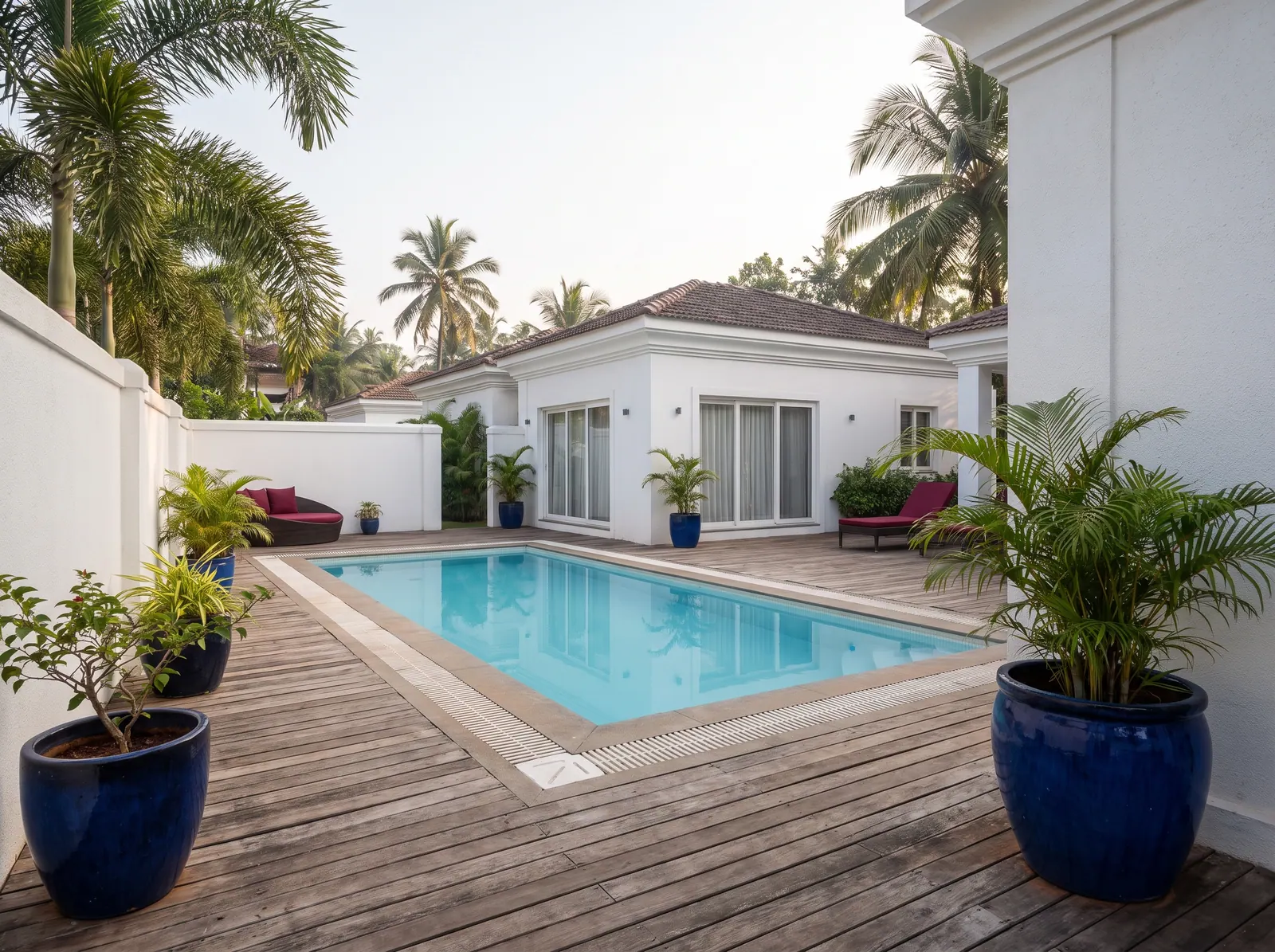
A correctly maintained, circulating pool is not usually a breeding site. Problems tend to come from the edges. Look at covers that hold rainwater, blocked overflow grates, deck planters, and balance tanks or plant rooms with stagnant water.
Take particular care during off-season repairs. A half-drained pool can become one of the largest breeding sites on the property within days.
Ornamental ponds and natural water bodies
Still margins, dense floating plants and decaying leaves give larvae shelter. Gentle circulation, regular skimming and thinning of plants all help. Larvivorous fish can be useful in permanent ponds, so discuss species choice with your landscape team.
Some water cannot be emptied or managed physically. In those cases, a licensed pest control operator can apply a larvicide registered for that use, following the label directions. This needs particular care in ponds with fish or other wildlife.
Drains and back-of-house areas
Guests never see the back of house, but these areas often produce more mosquitoes than the garden itself. Include kitchen drains, laundry outlets, sewage chambers, staff quarters, stores and material stacks in every inspection round.
For a simple walk-round list your team can use, see our mosquito breeding checklist for Goan gardens and terraces.
How do planting and shade affect mosquito numbers?
Adult mosquitoes rest during the day in cool, shaded, humid places. Typical spots are under dense shrubs, in hedges, among ground cover, under decks and beneath broad-leaved plants. Thick planting right next to dining terraces and villa sit-outs keeps a resting population close to guests.
Planting can also hold water. Watch for:
- Plants with leaf bases or cups that trap rain, such as bromeliads
- Cut bamboo stems, tree holes and hollow stumps
- Fallen coconut shells, husks and curled fronds
- Plant saucers, decorative urns and pots without drainage holes
- Over-watered beds and low spots that stay waterlogged after irrigation
Practical landscape steps that help:
- Thin shrubs near guest seating and lift their lower branches to let in light and air.
- Keep a clear strip between dense beds and dining or lounging areas where the design allows.
- Trim grass and ground cover regularly, especially through the monsoon.
- Remove green waste promptly instead of leaving piles in corners.
- Adjust irrigation so beds drain within a day, and water in the morning rather than the evening.
When should adult mosquito control be timed?
Adult control has a place in a resort programme, but it works best as the last layer, not the first. It includes space treatments such as fogging and ULV (ultra-low-volume) misting, and targeted residual treatment of resting surfaces.
What fogging and ULV can and cannot do
Space treatments act on the mosquitoes that are flying when the treatment is applied. They give relief for a while but have little lasting effect. If breeding continues, new adults soon replace those killed, so any fogging plan should run alongside continued breeding-site work.
You can read more about our approach to mosquito fogging and ULV treatment in Goa. Common safety concerns are covered in is mosquito fogging safe?
Timing treatments around guest evenings
- Schedule treatment when guest areas are empty, often late afternoon before guests come out, or early morning.
- Choose calm, dry conditions, because wind disperses space treatments and rain washes them out.
- Keep treatment away from pool water, fish ponds, food service areas, and uncovered drinks or cutlery.
- Avoid treating flowering plants while bees and other pollinators are active.
- Agree re-entry times for each area in advance and follow the product label. Keep guests, children and pets out of treated areas until surfaces are dry or as advised.
- Plan extra attention before poolside dinners, weddings and other outdoor events. Our guide to mosquito control for weddings and outdoor events covers event-day timing in more detail.
Residual treatment of resting sites
Targeted residual treatment can reduce adults over a longer period than fogging, where it is suitable and the product label permits it. Typical surfaces are the undersides of decks, walls behind dense planting and drain surrounds. Trained technicians should apply it, away from water bodies and food areas.
How should resorts communicate with guests about mosquito control?
Guests notice both the mosquitoes and the fogging machine. Calm, honest communication helps on both counts.
- Let guests know in advance, through the front desk or in-room information, when and where treatment is planned and how long to stay away.
- Put simple signage on treated areas until re-entry is allowed.
- Brief front-desk, housekeeping and food-and-beverage staff so they answer questions consistently.
- Share practical bite-prevention tips: light, long-sleeved clothing in the evening, repellent used as directed, and closing doors and screens at dusk.
- Check window and door screens in rooms and villas regularly, and repair gaps quickly.
- Give staff an easy way to report standing water or spots where guests are being bitten.
- If a guest or staff member develops a fever or feels unwell after mosquito bites, encourage them to see a doctor promptly.
Avoid alarming language and avoid promising a mosquito-free stay. A line such as we check the grounds for standing water every week and treat on a planned schedule is both reassuring and accurate.
How does the work change through Goa's seasons?
| Season | What tends to happen | Where to focus |
|---|---|---|
| Pre-monsoon (hot and humid) | Water is stored for gardens and repairs, and the first showers fill containers | Clear gutters and drains, remove debris, and check tanks and covers before the rains |
| South-west monsoon | Very heavy rain, waterlogging and fast plant growth | Check drains and containers after heavy spells, trim vegetation, and treat larvae where water cannot be removed |
| Post-monsoon | Rain eases but standing water remains while temperatures stay warm | Search thoroughly for leftover water, as adult numbers are often noticeable now |
| Cooler, drier months | More guests outdoors in the evening, and irrigation keeps beds wet | Manage irrigation and water features, and time adult control before guest evenings and events |
For more on the period just after the rains, see our guide to the post-monsoon mosquito season in Goa.
What does a practical resort routine look like?
- Map the property. Mark water features, drains, planting zones, guest areas and back-of-house spaces.
- Assign owners. Decide who checks pools, who checks gardens and who checks drains and service areas.
- Walk the grounds weekly. Use a checklist, and walk more often during the monsoon.
- Log what you find. Record standing water, the action taken and the date.
- Plan treatment with your pest control provider. Match larval and adult treatment to the season and your events calendar.
- Use guest feedback. Bite complaints often point straight to a hotspot that needs attention.
How can our Goa branch help?
Our Goa branch in Chimbel provides mosquito control and hotel pest management. We are a licensed pest control operator (Directorate of Agriculture, Goa) and use CIB&RC-registered products. Material Safety Data Sheets are maintained for the products we use.
After each visit we share service reports and send updates on WhatsApp, so your team can track what was done and where. For a wider programme covering guest rooms, kitchens, stores and staff accommodation, see hotel and resort pest management in Goa.
If you manage a resort, hotel or villa property, get in touch with our Goa branch. Tell us where the property is and describe the grounds and the mosquito problem, and we will let you know how we can help.
Frequently asked questions
QCan a resort swimming pool breed mosquitoes?
A pool that is filtered, circulating and correctly chlorinated is rarely a breeding site. The risk comes from what surrounds it: rainwater sitting on pool covers, blocked overflow channels, deck planters and stagnant balance tanks. Pools that are closed or part-drained for repairs carry the highest risk, because shallow, untreated water can produce mosquitoes within days. Either drain fully or keep the water treated and moving.
QHow often should resort grounds be fogged?
There is no single right frequency. Fogging only affects mosquitoes flying at the time, so how often it helps depends on how much breeding remains on and around the property, the season, and your events calendar. A sensible schedule is set after an inspection and adjusted through the year. Removing standing water usually reduces how often space treatment is needed.
QIs it safe to fog near guests and the pool?
Fogging should be done by trained technicians when guest areas are empty, in calm weather, following the product label. Treatment should be kept away from pool water, food service areas and fish ponds. Guests, children and pets should stay out of treated areas until surfaces are dry or for the time advised. Anyone who feels unwell afterwards should see a doctor.
QWill mosquito treatment harm the fish in our ornamental ponds?
Many insecticides are harmful to fish, so space treatments and residual sprays should be kept well away from ponds. In fish ponds, physical measures usually come first: circulation, skimming, thinning dense plants, and the fish themselves feeding on larvae. If larval treatment is needed, a licensed operator should choose a product registered for that use and apply it strictly as the label directs.
QCan a resort ever be completely mosquito-free?
Realistically, no. Mosquitoes can fly in from neighbouring land, paddy fields, drains and construction sites that a resort does not control. A good programme aims to reduce numbers noticeably, especially in guest areas at the times guests use them. It does this by removing breeding sites on the property, managing shaded resting areas and timing adult control well. Honest guest messaging should reflect that.
QWhat records will we get for audits and guest complaints?
Our Goa branch shares service reports after each visit, along with WhatsApp updates. These show what was treated and where, which helps when you review guest feedback or plan the next round. For resorts with restaurants and kitchens, we provide documentation aligned with HACCP and FSSAI audit expectations as part of food-business pest management.
Last updated 13 October 2026. Information on this page is general guidance; your technician will advise on your specific property after inspection.