Quick answer
Most Goa hotels need a schedule set zone by zone, not a single frequency. As an indicative starting point, kitchens and food outlets are often serviced every two to four weeks. Guest rooms and public areas are often treated monthly to quarterly, with housekeeping checks in between. Rodent stations should be checked at least monthly, and outdoor mosquito work increased through the monsoon. Occupancy, F&B volume, gardens and past infestations then adjust the plan.
Key points
- Hotel pest control frequency works best when set zone by zone rather than as one schedule for the whole property.
- Kitchens, stores and garbage areas typically need visits every two to four weeks; guest rooms often monthly to quarterly, backed by housekeeping checks.
- Goa's heavy south-west monsoon raises pressure from mosquitoes, flies, rodents and termites, so outdoor and food-area work should be stepped up rather than paused.
- Monitoring between visits, such as sighting logs, bed bug checks and recorded bait station checks, decides how quickly problems are caught.
- FSSAI Schedule 4 and HACCP-based systems expect pest control to be planned and recorded.
There is no single right answer to how often a hotel in Goa should schedule pest control. A hotel is really several different environments under one roof. A busy kitchen, a quiet guest corridor, a staff hostel and a landscaped garden each face different pests at different times of year.
This guide sets out an indicative hotel pest control frequency for each zone. It also explains the factors that should push that frequency up or down, and how to adjust for Goa's monsoon and peak tourist season. The figures are common starting points in hospitality pest management, not fixed rules. A sound schedule should follow an inspection of your actual property.
Why does one frequency rarely work for a whole hotel?
Many properties sign up for "monthly pest control" and treat every area the same way. This usually gives too little attention to kitchens and stores, where cockroaches and rodents can build up within weeks. It can also mean unnecessary treatment in areas that only need regular inspection.
We follow an Integrated Pest Management (IPM) approach. It starts with inspection, adds sanitation and proofing advice, and uses targeted treatment where it is actually needed. In practice, each zone gets its own rhythm of inspections, monitoring checks and treatments.
What factors change how often a hotel needs pest control?
- Occupancy and guest turnover. More check-ins mean more luggage moving between rooms, which raises the chance of bed bugs being carried in. Higher occupancy also means more food and waste overall.
- F&B volume and hours. An all-day restaurant, bar, banquets and room service create far more food residue, moisture and waste than a breakfast-only operation. Kitchens running long hours also have less time for thorough cleaning between services.
- Gardens, water features and landscaping. Lawns, dense planting, ponds, pools and open drains favour mosquitoes, ants and termites. They can also give rodents cover close to buildings.
- Building age and timber. Older buildings, and properties with wooden ceilings, frames, doors and furniture, need closer watching for termites and wood borer.
- Infestation history. A property recovering from a cockroach, rodent or bed bug problem needs more frequent visits for a while. It can step back down once monitoring shows the problem is under control.
- Surroundings. Neighbouring eateries, open plots, construction sites or fields can be a steady source of pests. These keep arriving however well your own property is run.
- Audit and documentation needs. Food businesses are expected to meet FSSAI Schedule 4 hygiene requirements, and many hotels also run HACCP-based food safety systems. Both expect pest control to be planned, regular and recorded.
Zone-by-zone guidance (indicative)
The table below gives typical starting points. "Service" means a scheduled technician visit. "Monitoring" means checks carried out between visits by your own team, or by the technician during routine rounds.
| Zone | Main pests to watch | Indicative service frequency | Monitoring between visits |
|---|---|---|---|
| Main kitchen, bakery and F&B outlets | Cockroaches, rodents, flies, ants | Every 2–4 weeks; more often while a problem is being brought under control | Closing-shift checks; sighting log reviewed weekly |
| Dry stores, cold-room surrounds and receiving bay | Rodents, cockroaches, stored-product insects | Every 2–4 weeks, aligned with the kitchen | Bait stations and traps checked at least monthly; incoming goods inspected at delivery |
| Guest rooms and corridors | Bed bugs, cockroaches, ants, lizards | Monthly to quarterly, rotated floor by floor | Bed bug checks by housekeeping at room changeovers and deep cleans |
| Staff accommodation and staff canteen | Bed bugs, cockroaches, rodents | Often monthly; frequently needs more attention than guest rooms | Regular room inspections; residents encouraged to report early |
| Laundry, linen stores and housekeeping rooms | Cockroaches, silverfish, bed bugs carried on linen | Monthly to quarterly | Linen trolleys and shelving checked during routine cleaning |
| Garbage area, drains and service yards | Rodents, flies, cockroaches | Every 2–4 weeks | Daily cleaning; lids, drain covers and bait stations checked |
| Gardens, lawns, pool and water features | Mosquitoes, ants, termites | Monthly in drier months; stepped up during and after the monsoon | Weekly walk to empty, cover or report standing water |
| Lobby, banquet halls and public areas | Cockroaches, ants, flies, lizards | Monthly to quarterly, plus before large events | Checks after events, especially where food was served |
| Building structure and timber | Termites, wood borer | At least an annual inspection; treatment as needed | Report mud tubes, fine wood dust or hollow-sounding timber |
Why kitchens sit at the top of the list
Kitchens combine food, warmth, moisture and hiding places in equipment and drains. That is exactly what cockroaches and rodents need. Small numbers can multiply quickly, so a gap of a month or more between visits is often too long for a busy hotel kitchen.
Why guest rooms rely on monitoring
Guest rooms rarely need frequent spraying. They do need constant vigilance for bed bugs, which arrive in luggage and spread quietly from room to room. Housekeeping checks catch problems early, and a clear plan for responding to a pest sighting in a guest room makes the difference when one is found.
How should the schedule change through Goa's seasons?
Goa's very heavy south-west monsoon and humid coastal climate shape pest pressure more than almost anything else. Occupancy follows its own cycle, and for many properties the busiest months fall after the rains. A good annual plan anticipates both.
| Period | What tends to happen | Suggested adjustment |
|---|---|---|
| Pre-monsoon (hot months before the rains) | Ants and cockroaches are active. Winged termites often appear with the first rains. | Inspect for termites and timber damage. Clear drains and gutters. Check roofs, ducts and bird-proofing, and complete rodent proofing before the rains. |
| Monsoon | Standing water breeds mosquitoes and flies increase. Rodents and ants move indoors, and damp favours termites and timber pests. | Step up mosquito source reduction and treatment. Tighten kitchen, store and garbage-area visits. Watch closely for termite activity. |
| Post-monsoon | Water lingers in planters, gutters and unused areas while the property prepares for the season. | Continue mosquito work until breeding sites dry out. Schedule deep treatments of kitchens and rooms before peak occupancy. |
| Peak tourist season (cooler months) | Occupancy and F&B volume are highest, with more luggage moving through rooms. | Keep kitchen frequency high and increase bed bug vigilance. Plan treatments around occupancy, and add visits before major events. |
If your property closes or runs at low occupancy during the monsoon, use the quiet period for deeper work in rooms and timber. Do not pause kitchen, drain and mosquito work, because pest pressure is often at its highest at this time.
How do you monitor for pests between visits?
Scheduled visits are only part of the picture. What happens between them decides whether a problem is caught in days or first noticed by a guest.
- Keep a sighting log in the kitchen, housekeeping, front office and maintenance. Record the date, exact location, type of pest and action taken, and share it with your pest control provider.
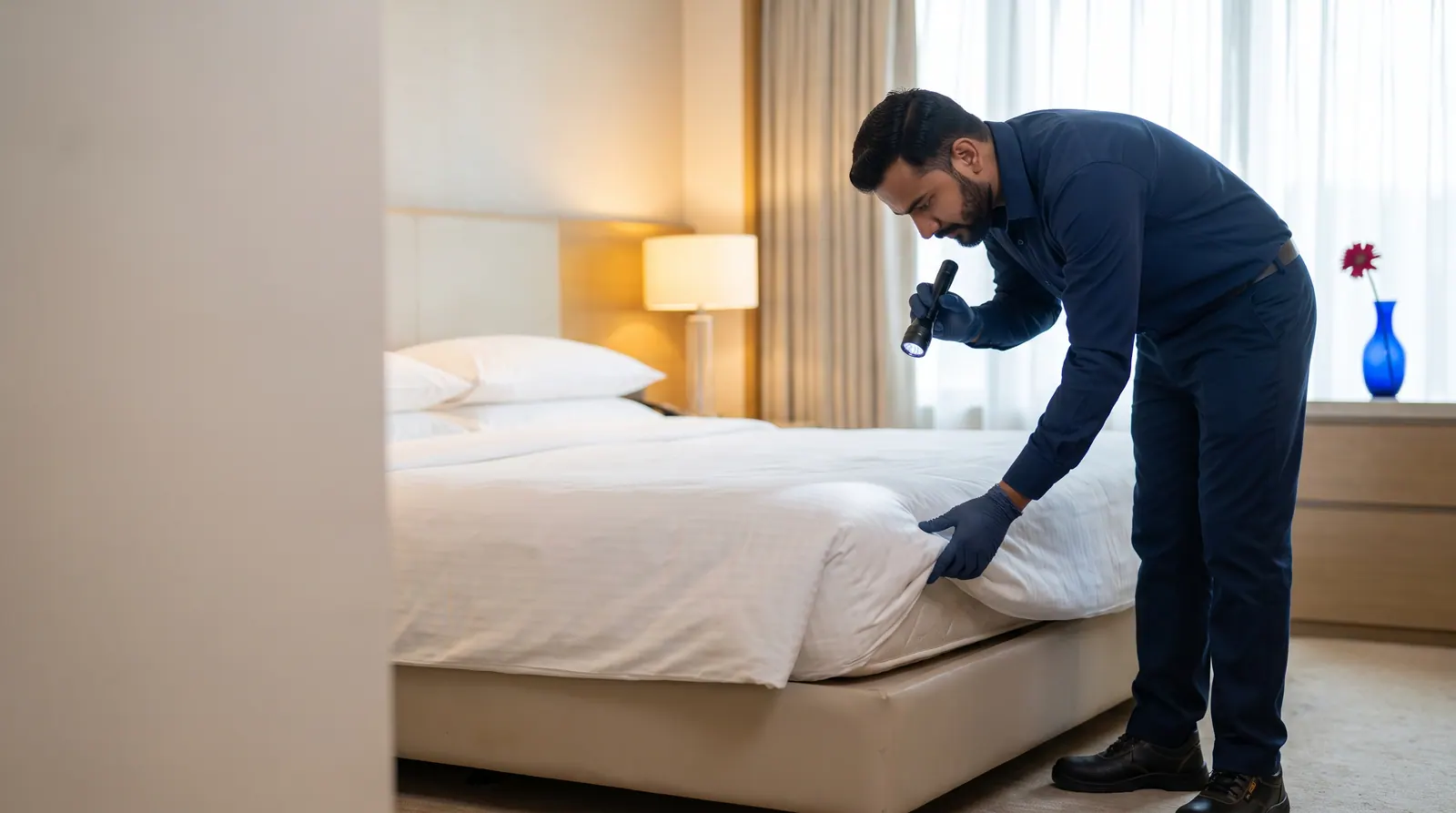
- Train housekeeping to check for bed bugs along mattress seams, headboards, bed frames and luggage racks. Look for live insects, small dark spots or shed skins.
- Check monitoring devices. Rodent bait stations and traps should be numbered, mapped and recorded at each check. Sticky monitors in kitchens and stores show whether cockroach activity is rising or falling.
- Walk the grounds weekly for standing water in planters, trays, blocked gutters, tyres, tarpaulins and construction areas. This matters most in and after the monsoon.
- Inspect deliveries at the receiving bay for droppings, gnawed packaging, insects and damaged cartons before goods go into stores.
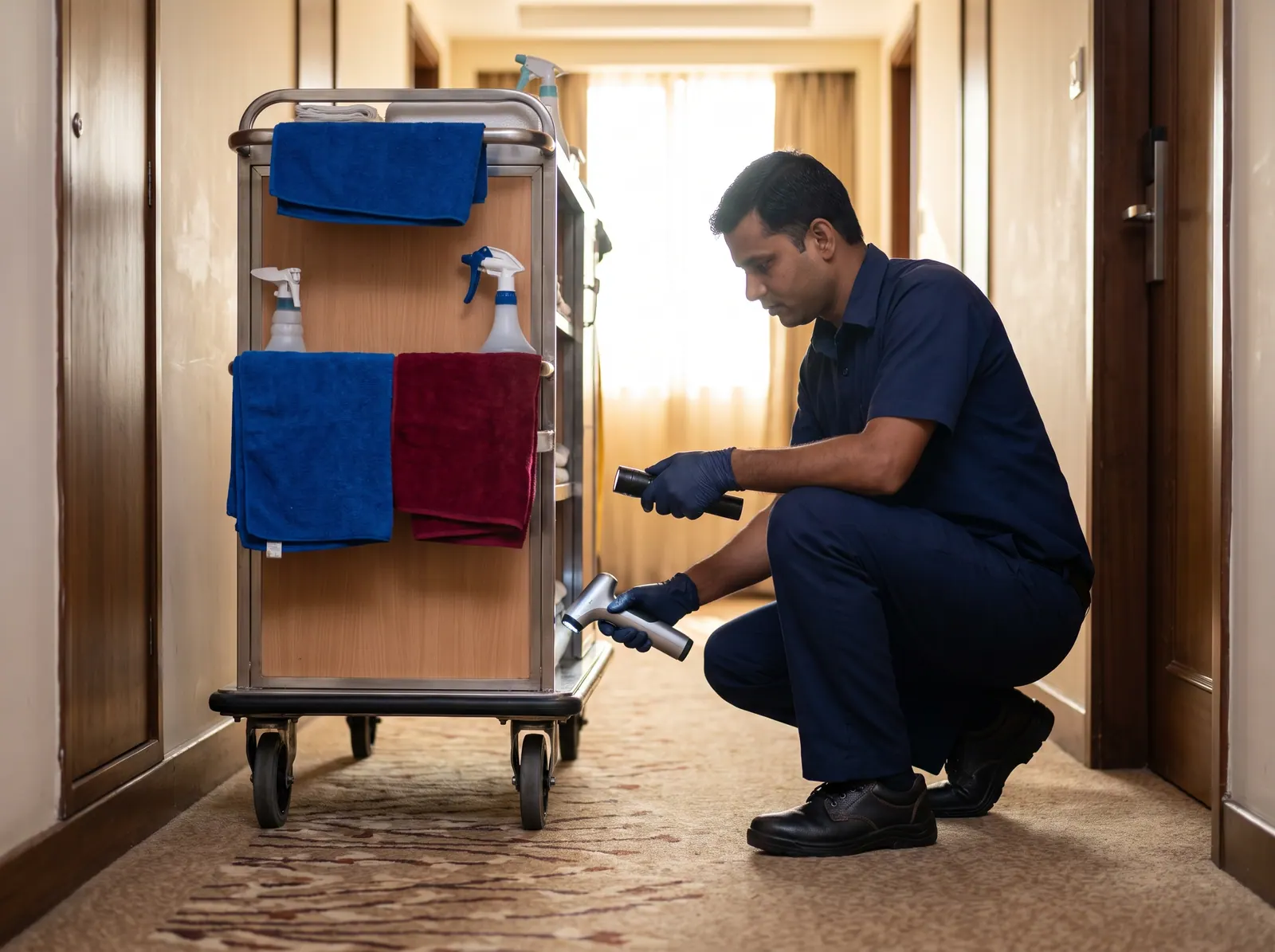
- Do an occasional night check of the kitchen with a torch after closing. Cockroaches and rodents are most active when the kitchen is quiet.
When should you ask for an extra visit?
Arrange an interim visit rather than waiting for the next scheduled one if you see:
- a steady rise in cockroach sightings in the log or on monitors
- any confirmed bed bug in a guest room or staff room
- rodent droppings, gnaw marks or bait being taken in food areas
- mud tubes, swarming termites or fresh wood dust
Acting early is usually far less disruptive than dealing with an established infestation. For bed bugs, a room-by-room approach with follow-up visits, as described on our bed bug control page for Goa, is the norm.
Planning treatments around guests and food service
Frequency only works if treatments can actually happen. Kitchen treatments such as gel baiting and crack-and-crevice work are usually scheduled after closing or between services. Food, utensils and food-contact surfaces are protected or cleared beforehand.
Guest rooms are best treated when vacant and ventilated before reoccupancy. With any treatment, products should be used according to label directions. Guests, children and pets should be kept away from treated areas until surfaces are dry, or for as long as the technician advises. Staff should wash their hands after handling anything in treated areas.
Outdoor mosquito fogging should be timed for when guests are not using gardens, pool decks or walkways. Our guide on whether mosquito fogging is safe explains the precautions in more detail. If a guest or staff member has a reaction to a bite or sting, they should see a doctor.
What records should a hotel keep?
Auditors and quality teams generally want to see that pest control is planned and that problems are followed up. A practical file includes:
- the agreed schedule for each zone
- a service report for every visit
- the sighting log and the actions taken
- a map of bait stations, traps and monitors
- safety information for products used
- records of proofing or hygiene corrections made
For clients of our Goa branch, we share service reports after visits along with WhatsApp updates. We maintain Material Safety Data Sheets for the products we use. For food businesses, we provide documentation aligned with HACCP and FSSAI audit expectations. Our Goa operation is a licensed pest control operator under the Directorate of Agriculture, Goa, and uses CIB&RC-registered products.
Getting a schedule that fits your property
The right frequency is the one that matches your zones, your season and your history. It should be reviewed whenever monitoring shows a change. Many hotels formalise this through an annual maintenance contract with scheduled visits and service reports. Our hotel and resort pest management service in Goa covers guest rooms, kitchens, stores and staff accommodation.
One purchase manager in Goa has published a testimonial about our work. It describes bed bugs in their staff accommodation being resolved within the first three months, alongside ongoing cockroach, lizard and rodent treatment.
If you manage a hotel, resort or guest house in areas such as Calangute or Candolim, contact our Goa branch in Chimbel. Tell us where your property is, its size and outlets, and the pest problems you have seen. We will then confirm how we can help and discuss a zone-by-zone schedule after an inspection.
Frequently asked questions
QIs monthly pest control enough for a hotel in Goa?
For guest rooms, corridors and public areas, a monthly or even quarterly treatment cycle is often adequate if housekeeping monitors well between visits. Kitchens, stores, garbage areas and drains usually need more frequent attention. Every two to four weeks is a common starting point, with more visits while an active problem is being controlled. A single monthly visit covering the whole property tends to under-serve the food areas.
QShould we pause pest control while the hotel is quiet during the monsoon?
It is better not to. The monsoon brings standing water, damp and pests moving indoors, so kitchens, drains, gardens and stores face high pressure even when occupancy is low. Many properties keep core visits running and use the quieter weeks for deeper work in guest rooms, timber and fixtures. That way the property goes into peak season in good condition.
QHow often should housekeeping check rooms for bed bugs?
Bed bug checks work best as part of normal housekeeping. Check the room at each changeover and during every deep clean, looking along mattress seams, headboards, bed frames and luggage racks. Staff should know what live bugs, dark spots and shed skins look like, and report anything at once so the room can be inspected and treated before bugs spread.
QCan a hotel kitchen be treated without closing the restaurant?
Usually, yes. Most kitchen work, such as gel baiting, crack-and-crevice treatment and checking rodent stations, is scheduled after closing or between services. Food, utensils and food-contact surfaces are cleared or protected first. Your kitchen team should follow the technician's advice on when areas can be cleaned and used again.
QDoes FSSAI set a fixed pest control frequency for hotel kitchens?
FSSAI Schedule 4 hygiene requirements expect food businesses to keep premises free of pests and to run an effective pest control programme. In practice, auditors look for a planned schedule, records of each visit, and evidence that sightings were followed up. Rather than relying on a single number, set frequencies by risk for each food area and keep the documentation that shows the programme is working.
QHow often should a resort be checked for termites and wood borer?
An inspection at least once a year is a sensible baseline, ideally before the monsoon, when termite activity and damp increase. Properties with a lot of timber, older buildings, or past termite problems may need more frequent checks. Between inspections, maintenance staff should report mud tubes on walls, fine wood dust below furniture or frames, and timber that sounds hollow.
Last updated 13 October 2026. Information on this page is general guidance; your technician will advise on your specific property after inspection.