Quick answer
To close a Goa hotel or shack for the monsoon without reopening to pests, remove all food and waste, deep-clean kitchens and drains, seal rodent entry points, check timber for termites and borers, and arrange a treatment before you lock up. Have someone check the property regularly while it is closed. Store shack timber dry and off the ground. Inspect and treat again a few weeks before reopening.
Key points
- Closed, quiet and damp buildings give rodents, cockroaches and termites food, water and shelter without disturbance.
- Bed bugs can survive for months without feeding, so guest rooms should be inspected before closing and again before reopening.
- Shack timber, bamboo and furniture should be stored dry, off the ground and away from walls, with no food in the store.
- Plan reopening inspection and treatment about two to three weeks before the first guests, after the heaviest rain.
- Food businesses need hygiene and pest control records that support FSSAI Schedule 4 requirements and HACCP-based audits.
Many hotels, guesthouses, restaurants and beach shacks in Goa close or slow down when the south-west monsoon arrives. A building left quiet, damp and dark for several months suits rodents, cockroaches and termites, and the damage is often found only on reopening day.
This guide sets out a practical monsoon closure plan for Goa hotel and shack pests. It covers what to do before you shut, how to check the property while it is closed, how to dismantle and store a shack, and what to do before guests return.
Why does a monsoon closure invite pests?
Pests look for food, water and shelter where they will not be disturbed. During a closure, the people, noise and daily cleaning that normally keep pests in check disappear. Meanwhile, Goa's very heavy rain and humid coastal air supply plenty of moisture.
- Rodents move indoors to escape flooded burrows and drains, and they explore freely when nobody is around. They gnaw wiring, upholstery and stored linen, and they contaminate surfaces with droppings and urine.
- Cockroaches breed in drains, grease traps, behind kitchen equipment and inside electrical panels. A few survivors left in a closed kitchen can become a large population by reopening.
- Termites thrive in damp soil and timber. Leaks, wet walls and stacked wooden furniture give them easy access that nobody notices. Our guide to why termites thrive in Goa explains the role of laterite soil and humidity.
- Wood borers, ants and silverfish also take advantage of an empty, humid building, as do millipedes and other monsoon crawlers.
What should you do before closing for the monsoon?
Start two to three weeks before your closing date. That leaves time to clean, repair and treat. Give one person ownership of the checklist, and have them sign off each area.
Kitchens, bars and food stores
- Remove all food, including dry goods, spices, sugar, beverages and staff snacks. Do not leave opened packets "for next season".
- Empty, defrost and clean refrigerators and freezers. If they are switched off, prop the doors open so mould does not develop.
- Pull out cooking ranges, fryers and dishwashers and degrease behind them. Clean exhaust hoods and accessible ducts.
- Clean grease traps, drain gratings and floor drains thoroughly. Cover or mesh drains that will not be used.
- Remove all garbage and wash the bins. Leave no waste on site.
Guest rooms, linen and soft furnishings
- Launder all linen and dry it completely before storing it in sealed containers. Damp linen invites mould and silverfish.
- Inspect mattresses, bed frames and headboards for bed bugs before closing. Bed bugs can survive for months without feeding, so any present at closure may still be there when guests arrive.
- Clear minibars, and remove any guest amenities that contain food.
The building envelope
- Seal gaps where pipes, cables and air-conditioning lines enter walls. Rodents need only a small opening.
- Fit or repair door sweeps, and add mesh to drains and vents. Close any open service ducts.
- Fix roof leaks and clear gutters now. Water entering walls during the monsoon creates the conditions termites and borers favour.
- Trim vegetation touching walls and roofs. Move stacked timber, cartons and debris away from the building.
Timber and termite checks
Inspect door frames, wooden furniture, cupboards, panelling and roof timber. Look for mud tubes, hollow-sounding wood, fine powdery dust (frass) or small exit holes. Have anything suspicious inspected and treated before closing rather than leaving it through the monsoon. Older buildings with original timber need particular care.
A pre-closure treatment and a written record
A professional treatment shortly before closing reduces the number of pests left to breed. Depending on the inspection, this may include:
- targeted cockroach baiting in kitchens and drains
- rodent bait stations and traps at entry points
- termite or wood treatment where needed
Ask for a written service report showing what was done and where bait stations were placed. The person checking during closure will then know what to look at. For more on back-of-house risks, see our guide to rodent control in hotels, from guest areas to back of house.
While closed: who checks the property, and what do they look for?
A closed property often reopens with a serious problem simply because nobody looked inside for months. Before closing, decide who will check the property and how often. This could be a caretaker, security staff or a manager. Weekly is a sensible rhythm, with an extra check after spells of particularly heavy rain.
Access matters as much as frequency. Leave keys, access instructions and a simple floor plan with the caretaker. Also make sure your pest control provider can get in for any scheduled visits during closure. If the property is locked and the key holder is away, a small problem in June can become a large one by September.
| Area | What to check | Warning signs |
|---|---|---|
| Kitchen and stores | Floors, behind equipment, drains | Droppings, gnaw marks, live or dead cockroaches, musty smell |
| Guest rooms | Under beds, wardrobes, bathrooms | Droppings, damaged linen, damp patches, smells from drains |
| Timber and frames | Doors, windows, furniture, stairs | Mud tubes, powdery dust, soft or hollow wood |
| Roof, walls and ceilings | Inside, after heavy rain | Leaks, stains, seepage that could attract termites |
| Bait stations and traps | Each station listed on the service report | Bait eaten, station moved or damaged, catches |
| Grounds and drains | Gutters, low spots, water tanks | Standing water, blocked drains, burrows |
Ask the caretaker to photograph anything unusual and send the photos to the manager and the pest control provider. They should also run taps and flush toilets now and then. This keeps drain traps from drying out, which would let odours and drain pests in.
If you also manage private villas, our guide to looking after an empty Goa villa during the monsoon covers similar checks for smaller properties.
How should beach shacks be dismantled and stored?
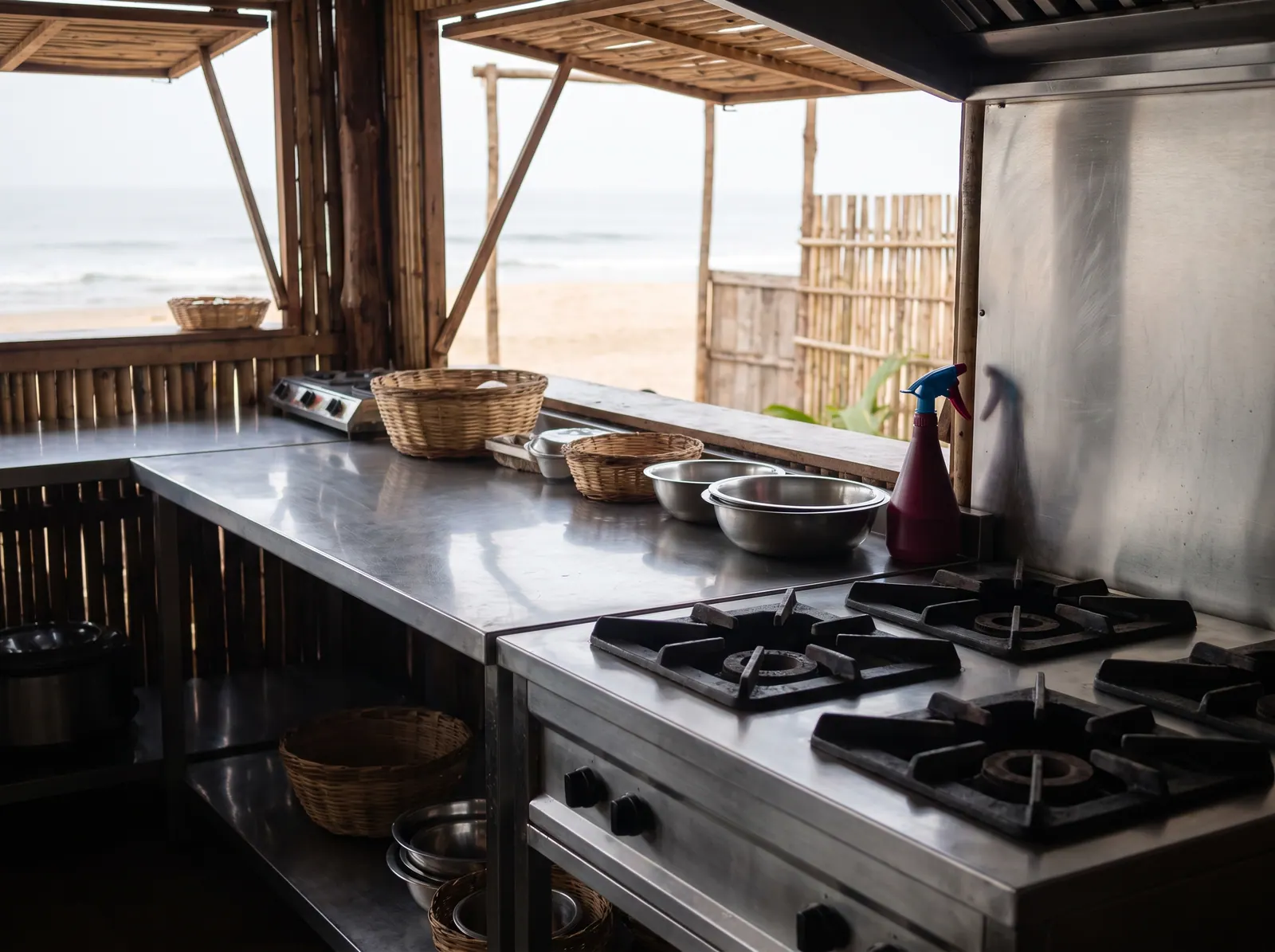
Beach shacks are usually temporary structures that come down before the monsoon and go up again for the season. The way they are packed away largely decides whether the timber, bamboo and furniture come out sound or damaged by termites, borers and rodents.
- Clean before dismantling. Scrape and degrease kitchen surfaces, equipment and storage boxes. Food residue packed away with equipment draws cockroaches and rodents into the store.
- Inspect every piece. Check timber, bamboo, cane chairs and wooden tables for mud tubes, powdery frass and pinholes. Set aside anything infested so it does not spread to sound material.
- Dry everything thoroughly. Pack only dry timber, thatch, cushions and fabric. Damp material in a closed store invites mould, termites and borers.
- Store off the ground and away from walls. Use racks, pallets or raised platforms, and leave a gap from the walls so you can inspect. Keep the store dry and ventilated. Use breathable covers rather than airtight plastic, which traps moisture.
- Keep no food in the store. This includes sealed packets. Clean and dry utensils, coolers and kitchen equipment before storing them.
- Check the store during the monsoon. A rented godown or back room needs the same periodic checks as a closed hotel, including rodent bait stations where appropriate.
Before reassembly, inspect everything again, and treat or replace damaged timber. Our guide to cockroach control for beach shacks and cafés explains how to keep the kitchen clean once the season starts.
What should you do before reopening?
Plan the reopening pest work for two to three weeks before your first guests, after the heaviest rain has passed. That leaves time to treat, ventilate, clean up and fix anything you find.
- Full inspection. Check kitchens, stores, guest rooms, timber and grounds, and compare what you find with the notes from closure-period checks.
- Deep clean. Clean kitchens, drains and grease traps, and re-launder any linen that has been in storage for months.
- Targeted treatment. Base the treatment on what the inspection finds. This may mean cockroach baiting, rodent control, termite or wood borer treatment, and a bed bug inspection of rooms and mattresses.
- Water and mosquito checks. Clean water tanks. Empty water that has collected in gutters, planters, discarded containers and old shack sites, because standing water left after the rains can breed mosquitoes.
- Repairs and proofing. Seal any new gaps and repair any damage found.
- Restart your records. For food areas, have a dated pest control report, a bait station map and a sanitation log in place. These support FSSAI Schedule 4 hygiene requirements and any HACCP-based audit.
Our guides on tourist-season pest readiness for Goa hotels and HACCP pest control documentation for hotels explain what to keep in place once the season is under way.
How do you treat an empty property safely?
A closure is a convenient time for treatment because rooms are empty, but the usual safety rules still apply.
- Apply treatments according to label directions.
- Ventilate treated areas, and let them dry before staff work in them again.
- Keep pets, including guard dogs, away from treated areas for as long as the technician advises.
- Clean kitchen equipment and food-contact surfaces before food preparation resumes.
- Ask anyone handling stored items afterwards to wash their hands.
If anyone feels unwell after being in a treated area, they should see a doctor.
How does Efficacy Pest Control approach a closure in Goa?
Our Goa branch follows an Integrated Pest Management approach. We inspect first, give sanitation and proofing advice, and use targeted treatment only where it is needed. We are a licensed pest control operator with the Directorate of Agriculture, Goa. We use CIB&RC-registered products and maintain Material Safety Data Sheets for them.
After each visit we share a service report as proof of service, along with WhatsApp updates. This helps when the owner or manager is away during the monsoon. For hotels and restaurants, we prepare documentation aligned with HACCP and FSSAI audit expectations. Our Goa branch offers hotel pest management, restaurant pest management and annual maintenance contracts.
If you are planning a monsoon closure or a reopening, contact our Goa branch in Chimbel. Tell us where your property is, what kind of business it is and your closing or reopening dates. We will advise on a plan and confirm whether we can help.
Frequently asked questions
QHow close to our closing date should the pre-closure pest treatment be done?
Ideally, schedule it after the final deep clean and food removal, shortly before you lock up. Cleaning first removes the food residue that competes with baits, and the treatment then works against whatever pests remain. Leave enough time for treated areas to dry and be ventilated before staff complete their last walk-through. Ask for a written report so your caretaker knows where bait stations are.
QDo we really need pest checks while the hotel is closed?
Yes. Leaving a property unchecked for the whole monsoon is risky. Regular caretaker walk-throughs catch leaks, droppings and damaged bait stations early, when they are still easy to deal with. Some properties also arrange a professional visit during closure to service rodent stations and check timber. Make sure whoever holds the keys can let the technician in.
QCan bed bugs survive in guest rooms that are closed all monsoon?
They can. Bed bugs can survive for months without feeding, so an empty room does not starve them out within a single monsoon. Inspect mattresses, bed frames, headboards and nearby furniture before closing. Inspect them again before reopening, and treat any rooms where you find signs. Washing and fully drying linen before storage also helps.
QShould we wrap shack furniture and bamboo in plastic for storage?
Airtight plastic usually does more harm than good in Goa's humid monsoon, because it traps moisture against timber and fabric. That encourages mould, termites and borers. Dry everything thoroughly first, store it on racks or pallets away from walls, and use breathable covers. Keep the store ventilated and check it periodically during the rains.
QWhat pest control records should a restaurant have ready when it reopens?
Keep a dated pest control service report from the reopening treatment and a map of bait station locations. You will also need cleaning and sanitation logs and a note of any corrective action taken, such as sealing gaps. These records support FSSAI Schedule 4 hygiene requirements and HACCP-based audits, and they give inspectors a clear picture of how pests are managed.
QHow soon can staff clean and set up after a reopening treatment?
Follow the technician's instructions for the specific treatment used. As a general rule, ventilate treated areas and let them dry before staff go back in. Wash food-contact surfaces and kitchen equipment before cooking resumes, and keep pets away for as long as advised. Anyone who feels unwell after exposure should see a doctor.
Last updated 13 October 2026. Information on this page is general guidance; your technician will advise on your specific property after inspection.