Quick answer
Construction site mosquito control in Goa starts with removing standing water: curing ponds, open tanks and drums, lift pits, basements, tyres and debris that collect rain. Mosquitoes can go from egg to adult in about a week in warm weather, so sites need a weekly check-empty-cover routine, clean and screened labour camps, and larviciding by a licensed operator where water cannot be removed. Check current requirements with local health authorities.
Key points
- Mosquito larvae can become flying adults in about a week in warm weather, so weekly removal of standing water breaks the cycle.
- Common site breeding points include curing water, open tanks and drums, lift pits, basements, tyres and water-holding debris.
- Labour camps need covered water storage, proper drainage, waste removal and bed nets.
- Fogging affects only adult mosquitoes in flight and supplements, rather than replaces, source reduction.
- Local health authority requirements can change, so builders should check current rules before work starts and before each monsoon.
Construction site mosquito control in Goa is mostly about water. A building site uses and stores a great deal of it, and Goa's heavy south-west monsoon and humid coastal climate keep adding more. Every drum, pit and puddle that holds water for a week can produce a new batch of mosquitoes, both for your workers and for the neighbourhood around the site.
This guide is written for builders, site engineers, contractors and supervisors. It covers where mosquitoes breed on a site, a weekly routine your team can follow, how to keep labour camps hygienic, and how to work with local health authorities.
Why do construction sites breed so many mosquitoes?
Mosquitoes lay eggs on or near still water. The larvae (the wriggling stage) live in the water and, in warm conditions, can become flying adults in roughly a week. That timing is the reason a weekly routine matters: if every water-holding point is emptied, scrubbed or covered at least once a week, the cycle is broken before adults emerge.
Different mosquitoes prefer different water. Container-breeding mosquitoes such as Aedes favour small amounts of fairly clean water in drums, tyres and discarded containers, and their eggs can stay alive on a dry container wall until the next rain. Some Anopheles mosquitoes breed in clean stored water in tanks and sumps. Culex mosquitoes prefer dirty water in blocked drains, soak pits and wastewater. A typical site has all three kinds of water.
Where do mosquitoes breed on a building site?
Walk the site with this list. Most breeding points are small and easy to miss.
Construction works
- Curing water ponded on slabs, roofs and sunken areas, and water left in curing bunds after the curing period.
- Excavations: foundation trenches, footing pits, lift pits and basements that collect rain or seepage.
- Sumps and underground tanks under construction, often left open or partly covered.
- Unfinished terraces, chajjas and sunken toilet slabs where water pools before waterproofing and drainage are complete.
- Hollow blocks, pipes and scaffolding tubes stored upright or open-ended, which trap rainwater.
Storage and yard
- Water drums, barrels and open storage tanks used for mixing and curing.
- Mixer washing pits and slurry pits.
- Old tyres, tarpaulin and plastic sheet folds, upturned helmets, buckets and paint tins.
- Debris heaps with broken containers, coconut shells and bottles.
Labour camp
- Water stored in buckets, pots and drums for bathing and cooking.
- Wash areas and bathing spots with poor drainage.
- Blocked drains, soak pits and septic tank vents without mesh.
Many of the same points appear in homes too; our guide to the post-monsoon mosquito season in Goa explains why breeding often stays high after the heaviest rains ease.
A weekly anti-larval routine for site supervisors
Pick one fixed day each week, assign a named person, and keep a simple written log. A routine that is followed every week does far more than an occasional large treatment.
- Walk the full site, including basements, terraces, the yard and the labour camp.
- Empty and scrub drums, buckets and containers that are not needed, scrubbing the inside walls to remove eggs.
- Cover tanks and drums that must stay full, using tight lids or fine mesh tied down.
- Pump out or drain water from pits, trenches, lift pits and basements.
- Finish curing on schedule: keep ponding no longer than the engineer specifies, then drain fully and sweep away puddles.
- Clear debris, stack hollow blocks and pipes so they cannot hold water, and store tyres and sheets under cover.
- Check drains for blockages and clear them.
- Record what was found, what was done, and anything that needs professional treatment.
| Area | What to check | Action |
|---|---|---|
| Slabs and terraces | Ponded curing water, puddles | Drain after curing, sweep, fix slope |
| Excavations and basements | Rain or seepage water | Pump out; refer to operator if water persists |
| Tanks, sumps, drums | Larvae, missing lids | Cover, empty and scrub unused drums |
| Yard and debris | Tyres, containers, sheets | Remove, stack, or cover |
| Labour camp | Stored water, drains, waste | Cover water, clear drains, remove waste |
How should the routine change through the monsoon?
Before the monsoon, fix site drainage, finish waterproofing on exposed slabs where possible, and clear the yard of anything that will collect rain. During the monsoon, rain refills containers constantly, so a twice-weekly check of high-risk points such as basements and lift pits is sensible. After the rains, puddles and partly filled containers linger, and this period needs as much attention as the monsoon itself.
If a site stops work for holidays or a monsoon pause, do a full clean-out before closing and arrange for someone to carry out the weekly check while the site is idle. Closed sites are often where breeding is worst.
Keeping labour camps hygienic and bite-free
Workers who live on site are exposed to mosquitoes every evening and night. Good camp hygiene protects their health and reduces breeding across the whole site.
- Water storage: provide containers with lids and encourage workers to keep them closed. Empty and scrub open buckets and pots at least weekly.
- Drainage: give bathing and washing areas a proper drain so water does not pool.
- Waste: provide covered bins and remove waste regularly, so containers and food scraps do not collect.
- Bed nets and screens: provide mosquito nets for sleeping, and fit mesh on windows and vents where the structure allows.
- Personal protection: encourage full sleeves in the early morning and evening. Any repellent should be used as the label directs.
- Fever: ask workers to report fever early, and help them see a doctor or visit the nearest government health centre promptly. Discourage self-medication.
For families living nearby, our guide on protecting your family from mosquito bites in Goa covers everyday precautions at home.
Working with health authorities in Goa
Health and civic authorities in Goa carry out anti-mosquito work, particularly around the monsoon, and construction sites and labour camps are places they may inspect. Depending on the area and the time, requirements may cover keeping sites free of breeding, the condition of labour camps, and responding to notices. These rules and practices can change, so builders should check what currently applies.
- Before work starts, and again before each monsoon, ask your local health centre, municipal council or village panchayat what is expected of construction sites.
- Keep your weekly log on site so you can show what checks have been done.
- Keep service reports from any pest control operator you use alongside the log.
- If an inspector finds breeding, correct it straight away and record the action taken.
Where does professional treatment fit in?
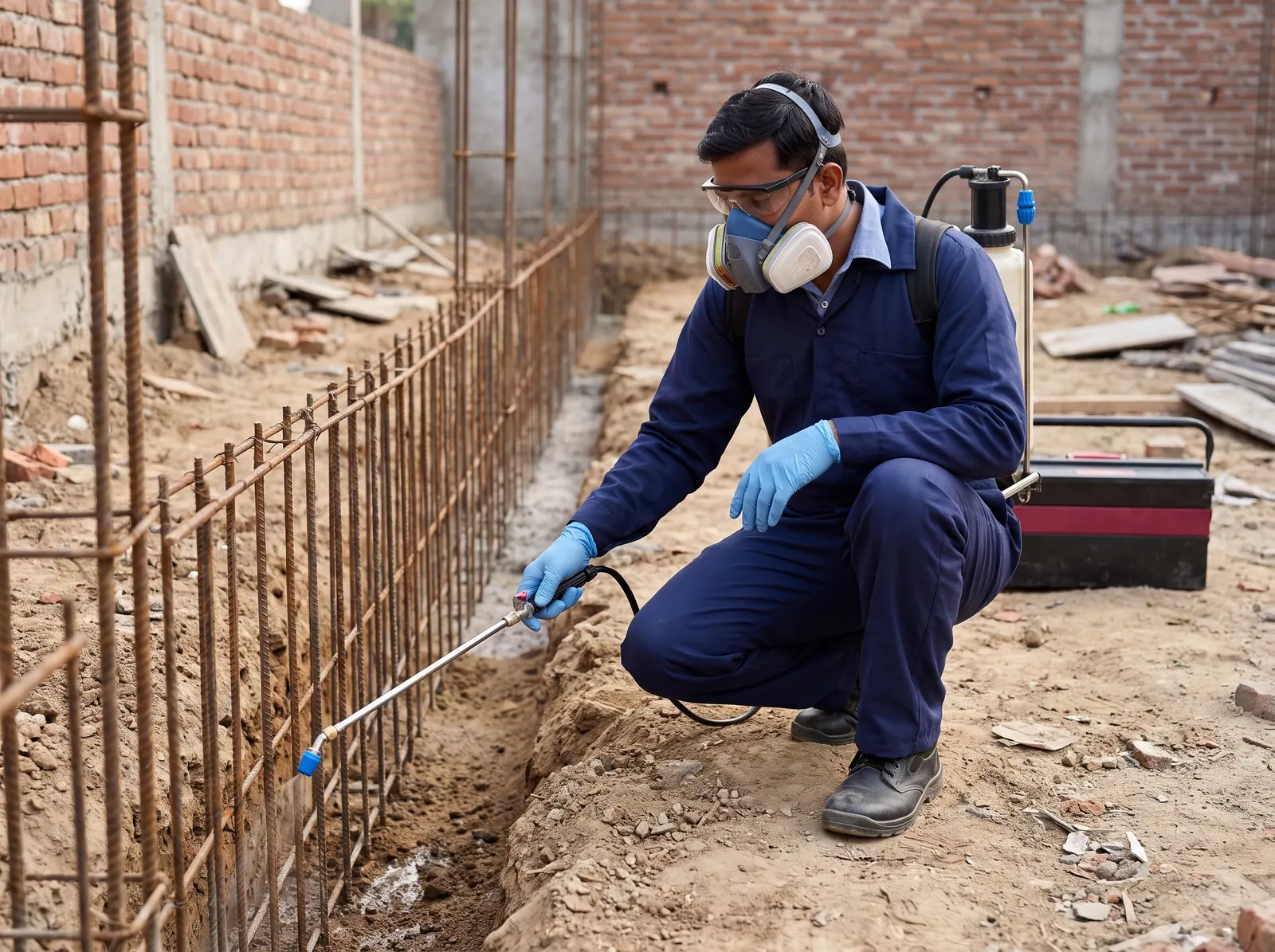
Source reduction by the site team is the foundation. Professional treatment supports it where water cannot be removed or where adult mosquitoes are already a problem. Under an Integrated Pest Management (IPM) approach, a licensed operator inspects the site, advises on sanitation and proofing, and then targets treatment where it is needed.
Typical options include larviciding of water that must stay in place, such as sumps or pits that cannot be drained, indoor residual spraying in labour camp rooms, and fogging or ULV treatment to knock down adult mosquitoes. Fogging only affects mosquitoes flying at the time, so it supplements the weekly routine rather than replacing it. Our pages on mosquito fogging and ULV treatment in Goa and whether mosquito fogging is safe explain what to expect. Do not apply chemicals yourself; during and after any treatment, keep workers and children away from treated areas until they are dry or as advised, ventilate rooms, and wash hands.
Our Goa branch is a licensed pest control operator (Directorate of Agriculture, Goa), uses CIB&RC-registered products and keeps Material Safety Data Sheets for the products used. Service reports are shared after visits, which helps with your site records. You can read more about our approach to mosquito control. If you are also planning foundation work, our builder's guide to anti-termite treatment for new construction covers another treatment that is best planned early.
Talk to our Goa branch about your site
Every site is different in size, stage of work and number of workers. Contact our Goa branch in Chimbel, tell us where the site is, what stage construction has reached and whether there is a labour camp, and we will discuss a practical mosquito control plan with you.
Frequently asked questions
QWho is responsible for mosquito breeding on a construction site?
In practice, responsibility usually sits with whoever controls the site, typically the builder or main contractor, although contracts may divide duties with subcontractors. It is sensible to name one person to run the weekly check and keep the log. Because local requirements can change, check with your local health centre, municipal council or village panchayat what they expect from site operators before work begins.
QCan larvicide be added to curing water on slabs?
This should not be decided on site without advice. Curing water is part of the concrete process, so the site engineer should be consulted, and any larvicide must be chosen and applied by a licensed operator according to the label. Usually the simpler answer is to keep ponding only as long as the engineer specifies, then drain fully and sweep away puddles.
QIs fogging enough to control mosquitoes on a building site?
No. Fogging or ULV treatment affects adult mosquitoes flying at the time, but larvae in drums, pits and tanks keep developing and new adults emerge within days. Fogging can help when adults are already a nuisance, but it only works well alongside a weekly routine of emptying, covering and draining water, with larviciding where water cannot be removed.
QHow often should a pest control operator visit a construction site?
It depends on the size of the site, its stage, the season and whether there is a labour camp. Many sites benefit from more frequent visits during and just after the monsoon, with fewer in the drier months. The site team's own weekly check matters most; an operator can advise a schedule after inspecting the site.
QWhat should we do if a worker in the labour camp has a fever?
Help the worker see a doctor or visit the nearest government health centre promptly, and discourage self-medication. Fever has many causes, and only a doctor can advise on testing and treatment. At the same time, recheck the camp and surrounding site for breeding points and make sure bed nets are being used.
QDoes the site need attention when work stops for the monsoon or holidays?
Yes. Idle sites often breed more mosquitoes because nobody is emptying containers or pumping out pits. Before closing, clear debris, empty and cover drums, drain pits and basements, and stack materials so they cannot hold water. Arrange for someone to carry out a weekly check while the site is closed.
Last updated 13 October 2026. Information on this page is general guidance; your technician will advise on your specific property after inspection.