Quick answer
Bed bugs usually reach Goa holiday rentals in guests' luggage and clothing, not because a property is dirty. Hosts can catch them early by checking mattress seams, bed frames, headboards and nearby furniture at every changeover. If a guest complains, close the room, bag linen in place, avoid DIY spraying and arrange a professional inspection. Treatment is room by room, with follow-up visits to deal with bugs hatching from eggs.
Key points
- Bed bugs usually reach holiday rentals in guests' luggage and clothing, and through second-hand furniture or shared linen handling.
- A short check of mattress seams, bed frames, headboards and bedside furniture at every changeover is the most practical early warning.
- After a complaint, close the room, bag linen inside it and check neighbouring rooms. Avoid household sprays, which can scatter bugs.
- Bed bug treatment is done room by room, and follow-up visits are needed because eggs can hatch after the first treatment.
- Treated areas should be kept clear of people and pets until dry or as advised, and ventilated before reuse.
If you run a villa, apartment or guesthouse in Goa, bed bugs can arrive without warning. Finding bed bugs in a holiday rental is rarely a sign of poor housekeeping. They travel with people and their belongings, and a busy calendar of short stays gives them plenty of chances to move in.
This guide explains how they get in and how to check for them between bookings. It also covers what to do if a guest complains, and how treatment and follow-up visits fit around your calendar.
How do bed bugs get into a holiday rental?
Bed bugs are small, flat, wingless insects that feed on blood, mostly at night. Adults are reddish-brown and roughly the size of an apple seed. Young bugs and eggs are much smaller and paler. They do not fly or jump, so they rely on being carried.
In a rental, the usual routes are:
- Guest luggage and clothing. Bags placed on or beside beds in hotels, trains, buses or other rentals on the way to Goa can pick up bugs, which then drop off in your room.
- Shared laundry and linen. Bugs can move between rooms or properties in a few ways:
- soiled linen carried on the same trolley as clean stock;
- soiled and clean linen kept in the same bag;
- linen sent to a shared laundry.
- Second-hand furniture. Beds, sofas and headboards bought used, or moved from another property, can bring an existing infestation with them.
- Neighbouring units. In apartment buildings and joined guesthouse rooms, bed bugs can move between adjacent rooms along wall gaps, wiring and pipe runs.
Goa's busy tourist months after the monsoon tend to mean back-to-back stays and quick changeovers. That is when a new introduction is most likely, and when there is least time to look for it. A short, consistent routine matters more than an occasional deep check.
What does a turnover inspection between bookings look like?
You do not need special equipment. These are enough:
- a bright torch;
- disposable gloves;
- an old plastic card for running along seams;
- clear sticky tape for collecting anything suspicious.
Once staff are used to the routine, checking the bed area at each changeover takes only a few minutes per bed.
Step-by-step check at each changeover
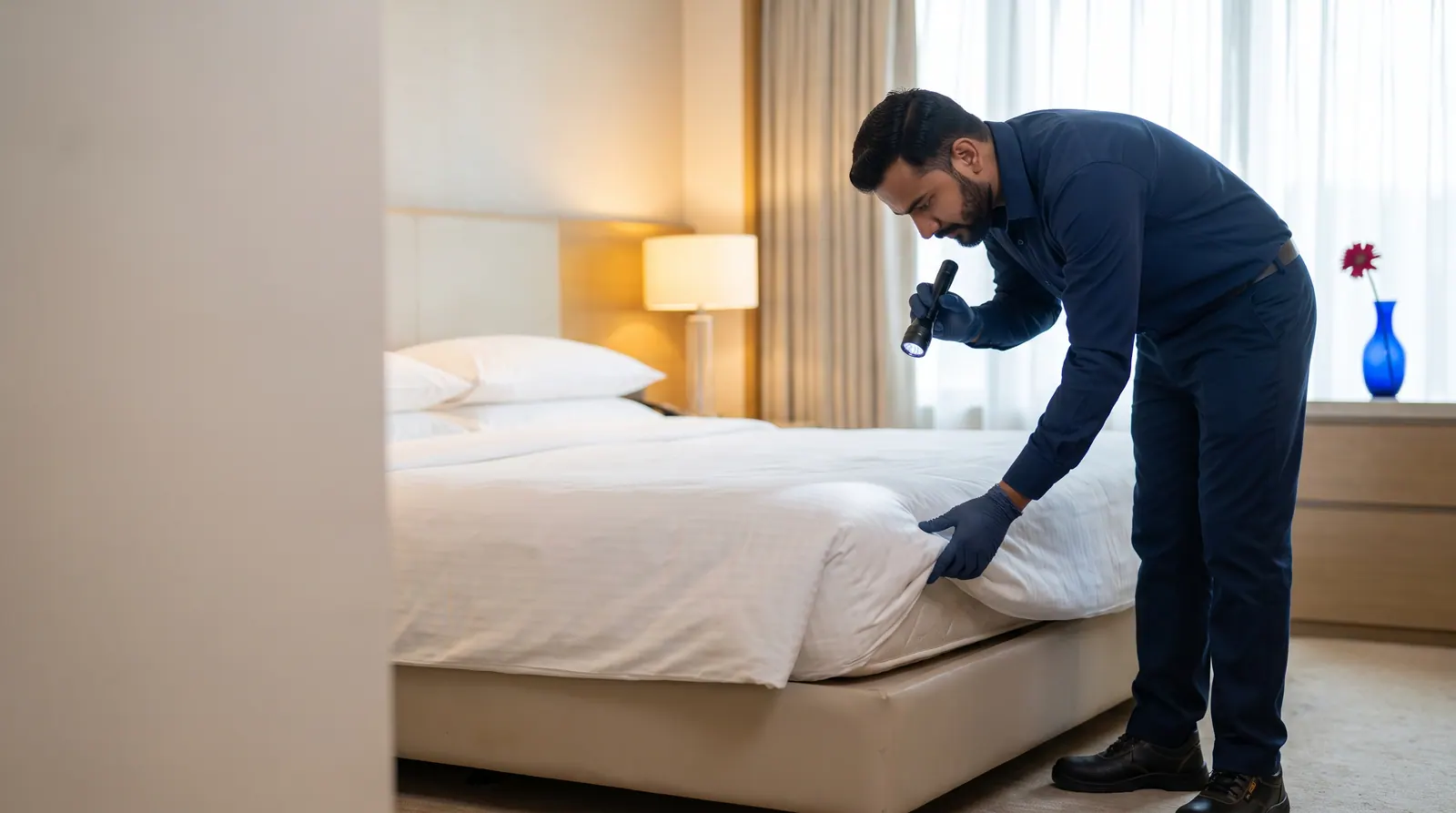
- Strip the bed. Before the sheets and pillowcases go in the laundry bag, look them over for small rusty or dark spots.
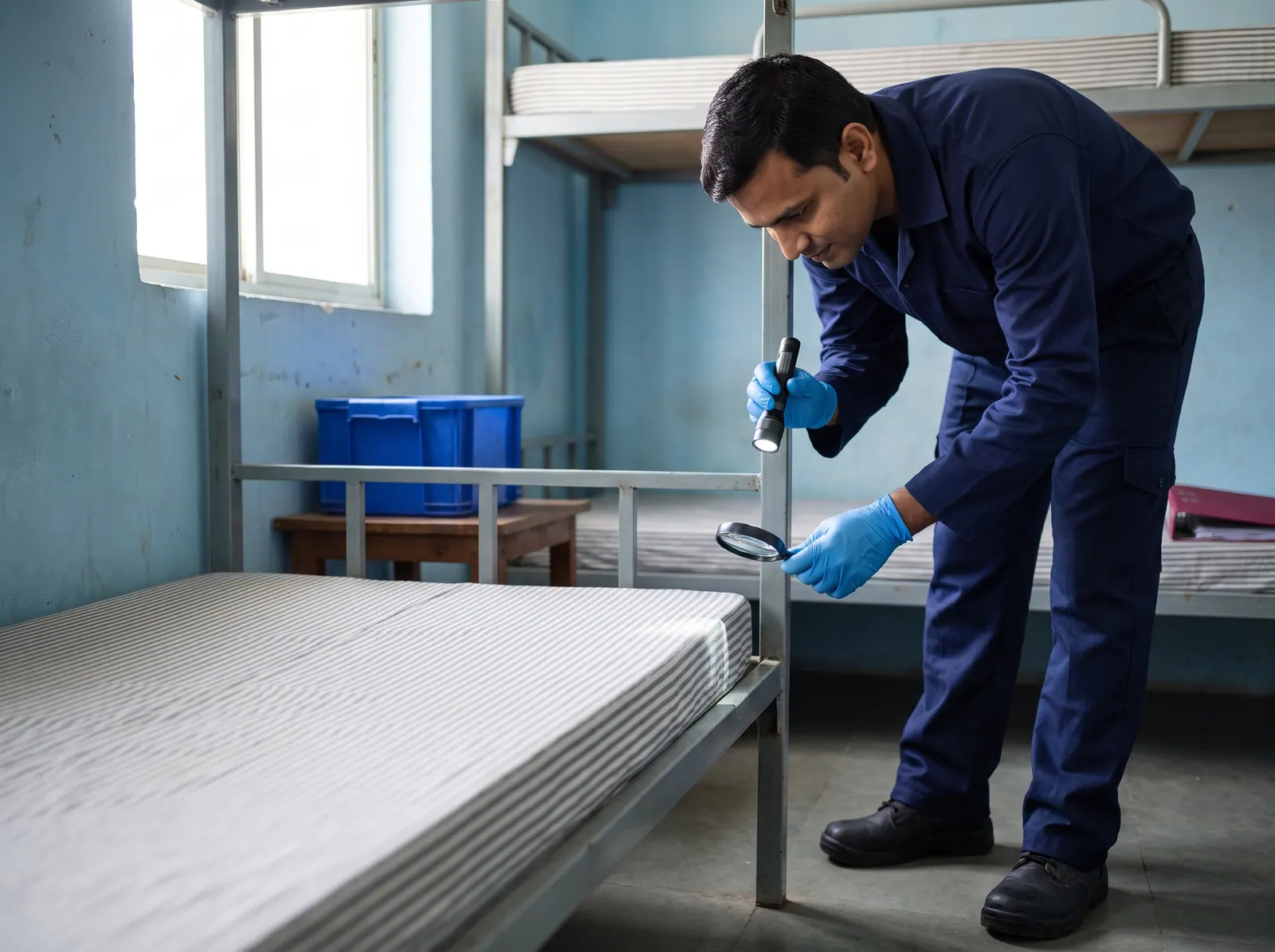
- Run the torch and card along the mattress seams, piping, labels and corners on both sides.
- Check the bed base or box, the slats and the joints of the bed frame.
- Look behind and around the headboard, especially where it meets the wall.
- Check the bedside tables: drawer joints, undersides and the back panel.
- Look at the luggage rack, the seams of any sofa or upholstered chair, and curtain folds near the bed.
- Look along the skirting and any cracks in the wall or wooden panelling close to the bed.
- Note the result in a simple room log, even when nothing is found.
What counts as a warning sign?
- Live bugs, or pale shed skins in seams and crevices.
- Clusters of small dark spots (droppings) that smear when wiped with a damp cloth.
- Tiny white eggs, about pinhead size, tucked into seams or joints.
- Small blood spots on sheets.
- In heavier infestations, a musty, sweetish smell around the bed.
If you find any of these, do not reset the room for the next guest. Seal the linen in a bag inside the room and treat it as a possible infestation, following the steps below.
A simple inspection calendar
| When | What to do |
|---|---|
| Every changeover | Bed-area check as above; record the result in the room log. |
| Weekly in busy months, or during long stays | Check sofas, chairs and curtain folds in more detail. Pay extra attention to rooms that share walls with any room that has had a complaint. |
| Before the season opens | Check every bed, frame and headboard in full, moving furniture away from walls. Inspect any new or second-hand furniture before it goes into a room. |
| After a complaint or positive finding | Close the room. Check the rooms on either side, and above and below in apartment buildings. |
How can you set up rooms so bed bugs are easier to spot?
Small choices in how a room is furnished make inspection quicker and give bed bugs fewer places to hide.
- Mattress and pillow encasements designed for bed bugs zip the whole mattress in. That leaves fewer seams to search, and any bugs on the outside are easy to see.
- Light-coloured linen and mattress covers show spots far more clearly than dark or patterned fabric.
- Metal or hard-surfaced luggage racks placed away from the bed encourage guests to keep bags off the bed and upholstery.
- Simple bed frames and headboards are easier to inspect than heavily upholstered or carved ones, because they have fewer joints and no fabric padding.
- Less clutter under beds and in bedside storage leaves fewer hiding places.
- Separate handling of dirty and clean linen means bagging dirty linen in the room and keeping it apart from clean stock.
If you manage villas and want a broader plan that covers other pests too, read about our pest control for villas and holiday homes in Goa. If you also house staff on site, our page on bed bug control for staff accommodation covers that setting.
What should you do when a guest reports bed bugs?
A complaint is stressful, but how you respond in the first hour decides whether the problem stays in one room or spreads. Take it seriously and stay calm. Avoid arguing about whether it is “really” bed bugs until the room has been checked.
- Listen and gather details. Ask which room and which bed, when the guest noticed the problem, and whether they saw an insect. A photo, or an insect caught on clear tape, is very helpful for identification.
- Suggest a doctor for any skin reaction. Reactions to bites vary widely between people, and only a doctor should advise on them.
- Think before moving the guest. If you offer another room, ask the guest to keep luggage off beds and upholstery. Where the fabric allows, suggest clothes are washed and dried on a hot setting. Moving unchecked luggage into a clean room can start a second problem.
- Close the affected room. Block it in your booking calendar until it has been inspected and, if needed, treated.
- Bag linen inside the room. Seal sheets, pillowcases and towels in plastic bags before carrying them out. Wash and dry them on the hottest setting the fabric allows.
- Check neighbouring rooms. Inspect any room that shares a wall, floor or ceiling with the affected one.
- Write it down. Record the date, the room, what was found and what you did. This helps the technician and gives you a clear record if questions come up later.
- Arrange a professional inspection. Confirm whether bed bugs are present, and how far they have spread, before deciding on treatment.
What not to do
- Do not spray household insect sprays on the bed. They rarely reach bugs and eggs hidden in crevices. They can also scatter bugs into nearby furniture and rooms, making them harder to find and treat.
- Do not drag an unwrapped mattress or piece of furniture through corridors to throw it out, as bugs can drop off along the way. If you decide to discard an item, seal it in plastic and mark it so nobody picks it up.
- Do not move furniture from the affected room into other rooms.
- Do not re-let the room after a quick clean and hope for the best.
Guests who are worried about taking bed bugs home may find our bed bug tips for travellers staying in Goa helpful. It is a useful link to share with them.
How is a holiday rental treated, and why are follow-up visits needed?
Professional bed bug treatment starts with inspection. We follow an Integrated Pest Management (IPM) approach. That means finding out where the bugs are, dealing with conditions that help them, and treating the places they actually hide rather than spraying a whole property.
For bed bugs, the work goes room by room. It covers beds, frames, headboards, furniture joints, and cracks and crevices close to where people sleep or sit.
A single visit is rarely the end of it. Bed bug eggs are well protected and can hatch after the first treatment. Follow-up visits are therefore planned to inspect again and treat newly hatched bugs before they mature. The number of visits and the gap between them depend on how widespread the problem is and what the inspection finds. Your technician will explain the plan before work starts.
Planning treatment around your bookings
- Block the dates. Keep the treated room off the calendar until you are told it can be used again. Allow for follow-up visits when you plan bookings.
- Prepare the room as instructed. Laundering linen, emptying bedside drawers and clearing clutter all help treatment reach hiding places. Our bed bug treatment preparation checklist sets out the usual steps.
- Keep people and pets out of treated areas until surfaces are dry, or for as long as the technician advises. Ventilate the room before it is used again.
- Have someone present. A host, caretaker or manager should be on site to give access and receive the post-service instructions.
- Keep up the turnover checks afterwards. They are your early warning if anything survives or a new guest brings bugs in.
Records, products and warranty
In Goa we are a licensed pest control operator with the Directorate of Agriculture, Goa. We use CIB&RC-registered products and apply them according to label directions. We also maintain Material Safety Data Sheets for the products we use.
After each visit we share a service report, and clients can receive updates on WhatsApp. These records are useful when you need to show what was done and when.
For specific services, a warranty applies to the treated area, as set out in the service agreement. Bed bugs in rentals often arrive with new guests, so ask at the outset how the warranty applies to your property. Ask, too, which post-service steps you need to follow.
Can you stop bed bugs reaching a rental altogether?
Honestly, no. You cannot check every guest's bag, and even well-run hotels deal with occasional introductions. What you can control is how quickly a problem is noticed and how well it is contained.
Regular checks, rooms that are easy to inspect, careful linen handling and a clear plan for complaints all help. Together, they can turn a potential crisis into a contained, one-room job.
If you have several units or year-round bookings, a scheduled programme such as an annual maintenance contract can build regular professional inspections into your calendar. You can read more about our approach to bed bug control services in Goa.
Talking to our Goa branch
If you host guests in Goa and have found signs of bed bugs or received a complaint, contact our Goa branch in Chimbel. Please tell us:
- the type of property;
- how many rooms or beds are involved;
- where the property is;
- when the problem was noticed.
We will then explain how an inspection would work and what the next steps could be. Branch details are on our Goa branch page.
Frequently asked questions
QCan I keep taking bookings for other rooms while one room is being treated?
Often you can, but check the neighbouring rooms first. Inspect any room that shares a wall, floor or ceiling with the affected one. Keep housekeeping trolleys and linen for the affected room separate. Only re-let other rooms once they have been checked and found clear. Your technician can advise which rooms should stay closed, based on what the inspection finds.
QShould I throw away the mattress after a bed bug complaint?
Not automatically. Many mattresses can be inspected and treated, and encasements can seal in any bugs that remain. Throwing a mattress out in a hurry can actually spread bugs if it is carried unwrapped through corridors or stairwells. If you do decide to discard one, wrap it fully in plastic first and mark it so nobody takes it. Ideally, wait until after a professional inspection before deciding.
QDo bed bugs mean my villa or guesthouse is unclean?
No. Bed bugs feed on blood, not on food waste or dirt, so a spotless room can still have them. In holiday rentals they usually arrive in a guest's luggage or clothing. Cleanliness still matters, because clutter gives bugs more places to hide and makes inspection slower. But a bed bug finding is not, by itself, a sign of poor housekeeping.
QAre bite marks on a guest proof of bed bugs?
Not on their own. Bite reactions differ greatly from person to person: some people react strongly and others show no marks at all. Other insects and skin conditions can also cause similar marks. The reliable evidence is physical: live bugs, shed skins, eggs or dark droppings in seams and crevices. Any guest with a skin reaction should see a doctor for advice.
QDoes leaving a property empty during the monsoon get rid of bed bugs?
It does not reliably work. Bed bugs can survive long periods without feeding, so bugs left in a closed villa may still be there when the season reopens. Use the quieter months for a thorough pre-season check of every bed and upholstered item. If anything is found, arrange treatment then, so it does not clash with busy booking periods.
QWill a warranty cover bed bugs brought in by a later guest?
For specific services, a warranty applies to the treated area, as set out in the service agreement. Warranties vary by pest and treatment. They exclude cases where post-service instructions were not followed, among other conditions. Because rentals keep receiving new guests and luggage, discuss before treatment how the warranty would apply to your property. Agree which preventive steps you will keep up.
QAre bed bug mattress encasements worth buying for a rental?
For many hosts, yes. Encasements made for bed bugs zip the whole mattress or pillow inside a sealed cover. That removes most of the seams and folds where bugs hide, and makes any bugs on the surface easy to see during a changeover check. They do not protect bed frames, headboards or furniture, so routine inspection of those is still needed.
Last updated 13 October 2026. Information on this page is general guidance; your technician will advise on your specific property after inspection.