Quick answer
Efficacy Pest Control's Goa branch in Chimbel provides commercial pest control in Porvorim, including Alto Porvorim, Socorro, Sangolda and Penha de França. Programmes for offices, shops, restaurants, hotels and warehouses start with a site inspection, follow an Integrated Pest Management approach and run on a scheduled plan. After each visit you receive a service report. Food businesses also get documentation aligned with HACCP and FSSAI audit expectations.
Key points
- Commercial pest control in Porvorim is provided by Efficacy Pest Control's Goa branch in Chimbel.
- Covered localities in company records include Alto Porvorim, Socorro, Sangolda and Penha de França.
- Programmes follow an IPM approach: inspection, sanitation and proofing advice, then targeted treatment.
- Service reports are shared after visits, and food businesses get documentation aligned with HACCP and FSSAI audit expectations.
- The Goa operation is a licensed pest control operator (Directorate of Agriculture, Goa) using CIB&RC-registered products.
If you run an office, shop, restaurant, clinic or godown in Porvorim, pests are a business risk as much as a nuisance. They contaminate stock, chew cables and packaging, and put off customers. Our commercial pest control in Porvorim, Goa is a scheduled, documented programme run from our Goa branch in Chimbel. It is built around your premises rather than a one-off spray.
This page explains what the programme involves for Porvorim businesses, what records you receive and what affects the cost. For an overview of how we approach business premises across Goa, see our commercial pest control service.
What kinds of Porvorim premises does a commercial plan suit?
Porvorim sits on the highway between Panaji and Mapusa, and its commercial life is mixed. You will find offices and showrooms along the main road, shops and eateries on the ground floors of residential buildings, clinics, and stores and godowns serving local trade. Each needs a different emphasis.
- Offices: pantries, washrooms, electrical and server rooms, and false ceilings where rodents can travel unseen.
- Shops and showrooms: stock rooms, back-of-house areas and cardboard packaging, which cockroaches and rodents use for shelter.
- Restaurants, cafés and bakeries: kitchens, dry stores, drains and waste areas, where cockroaches, rodents and flies need close control and records matter for audits.
- Hotels and guest houses: guest rooms, kitchens, stores and staff accommodation, each treated as a separate zone.
- Clinics: waiting areas, stores and pantries, where treatment methods and timing need particular care.
- Warehouses and godowns: perimeter rodent control, stacking practice and loading areas. Our page on warehouse and godown pest control in Goa covers this in more depth.
Which pests do commercial programmes usually deal with?
Most business premises face a combination of pests rather than just one. A single plan can cover several, with methods chosen for each.
| Pest | Where it shows up in a business | What the programme focuses on |
|---|---|---|
| Cockroaches | Kitchens, pantries, drains, behind equipment | Gel baiting and crack-and-crevice treatment, plus sanitation advice |
| Rats and mice | Stores, false ceilings, cable ducts, waste areas | Tamper-resistant bait stations, traps and proofing advice |
| Ants | Tea and sugar stations, display counters, pantries | Trail- and nest-focused baiting and spot treatment |
| Flies | Bins, wet waste, drains, food preparation areas | Source reduction, sanitation advice and targeted treatment |
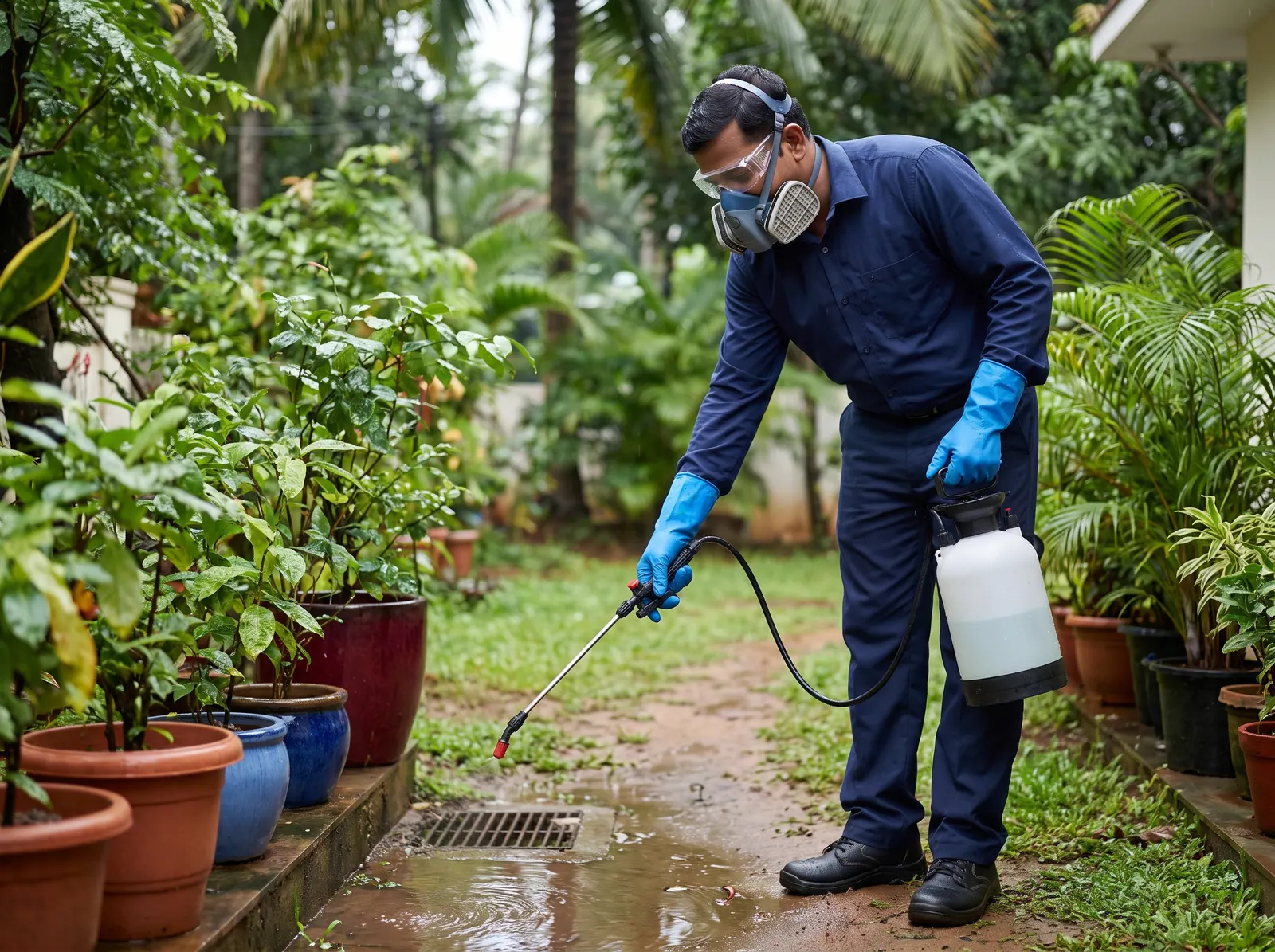
| Mosquitoes | Water collected on terraces, in ducts, AC trays and planters | Breeding-site reduction, larviciding and targeted spraying |
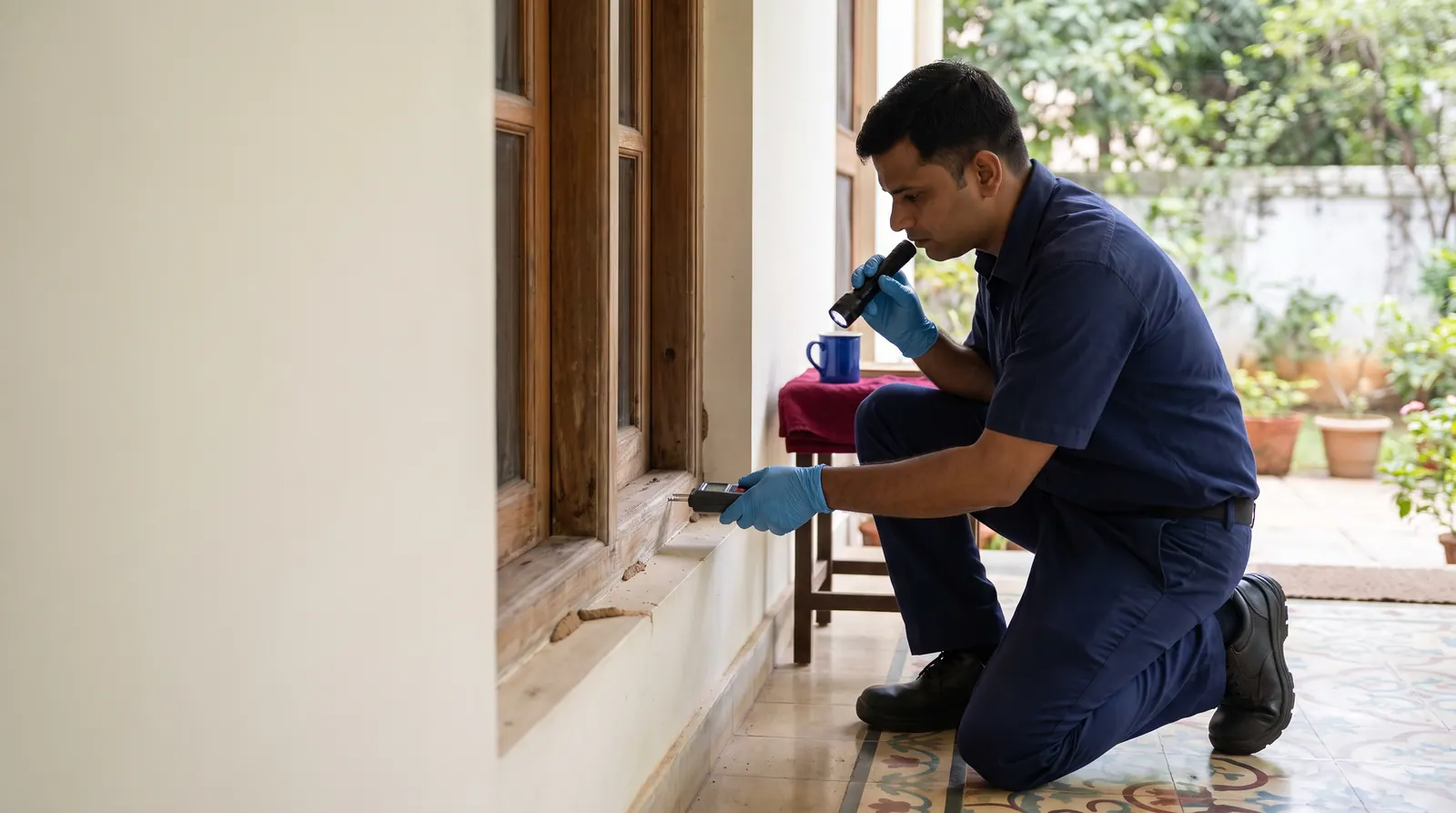
| Termites and wood borers | Wooden fixtures, door frames, furniture, stored timber | Inspection-led treatment of affected wood and structure |
If cockroaches or rats are your main concern, our pages on cockroach treatment in Porvorim and rodent control in Porvorim go into those pests in detail.
How does a commercial programme work, step by step?
We follow an Integrated Pest Management (IPM) approach. That means inspection, sanitation and proofing advice come first, and treatment is targeted where it is actually needed.
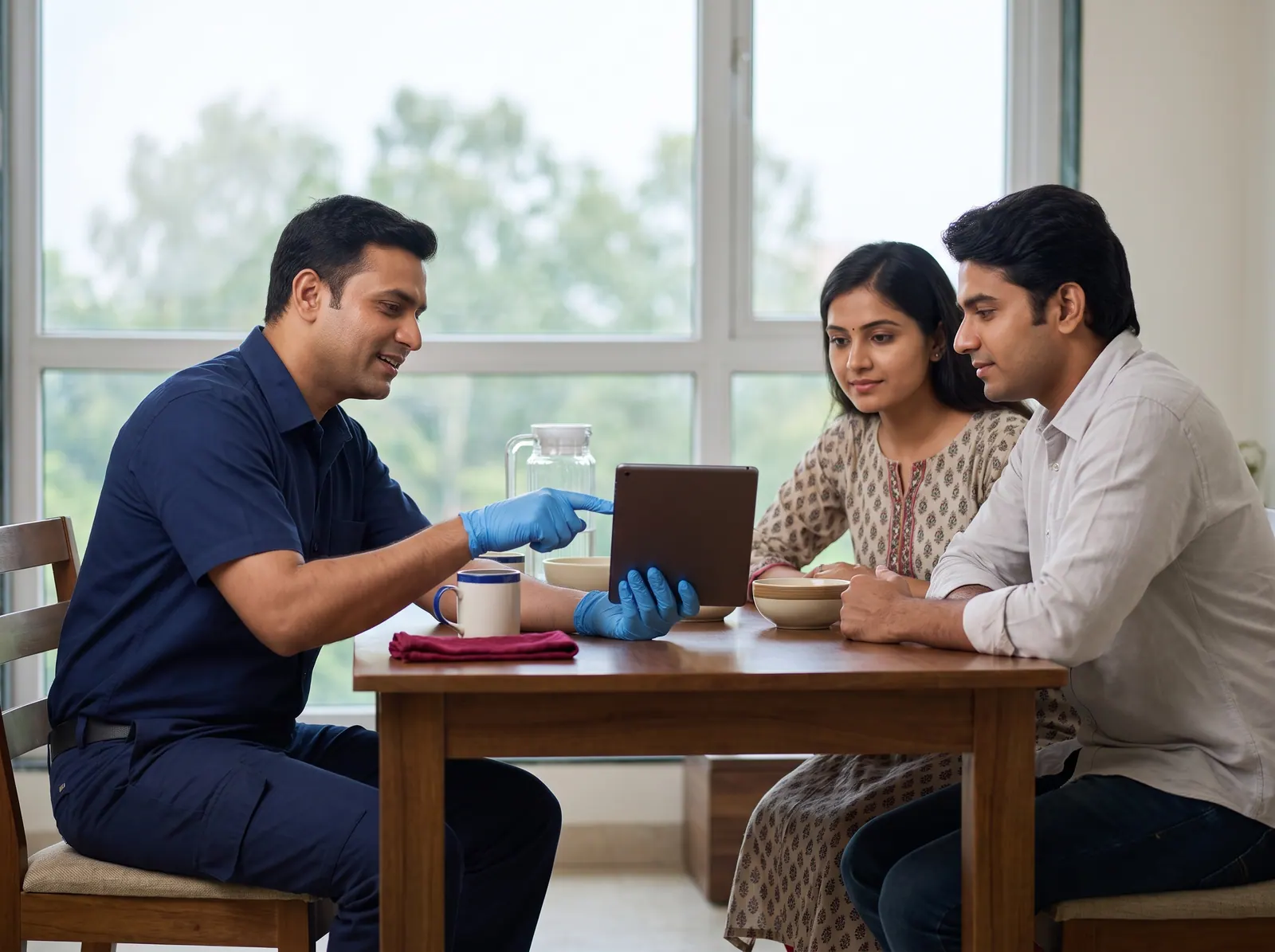
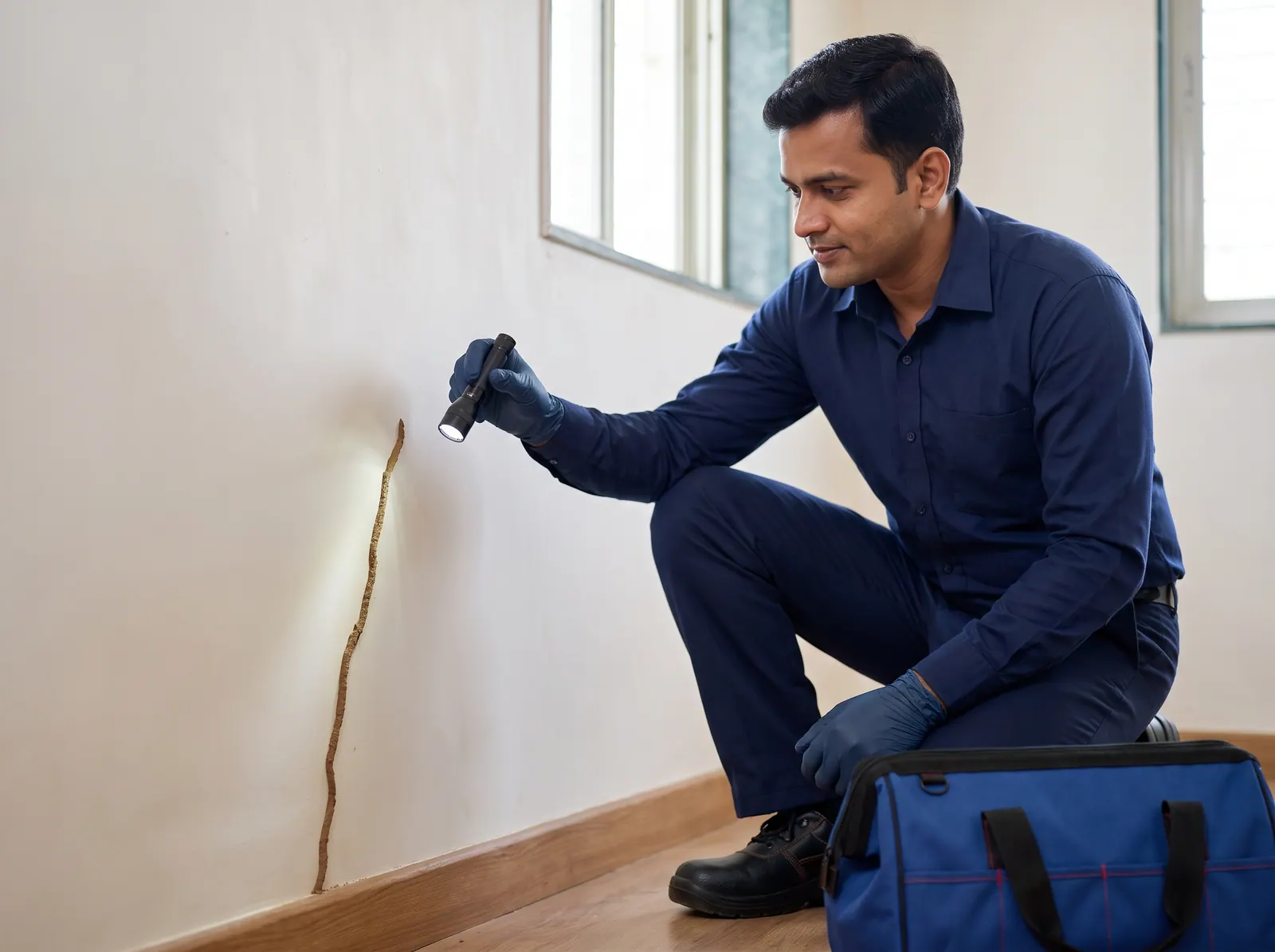
- Site inspection. We walk the premises with your representative, looking for droppings, gnaw marks, live or dead insects, damp spots and gaps around pipes, doors and shutters. Risk zones such as stores, waste areas and drains are noted.
- A written plan. The plan sets out which pests are covered, which methods will be used, which areas are treated and how often. Visit timing is discussed with you so that it fits around your operations as far as possible.
- Targeted treatment. Baits go into cracks and crevices, bait stations are placed where rodents travel, and spot treatments are used instead of blanket spraying.
- Proofing and hygiene advice. We point out simple fixes: closed bins, dry floors, sealed gaps, and stock stacked off the floor and away from walls.
- A report after each visit. You receive a record of what was done, where, and what our technician observed.
- Review and adjustment. Reports are compared over time. If activity rises in one area, the plan changes to match.
For safety, food and utensils are covered or removed before treatment. Staff and customers should keep away from treated areas until they are dry or for as long as our technician advises, and rooms should be ventilated afterwards.
Why do Porvorim's climate and buildings matter?
Goa's very heavy south-west monsoon and humid coastal air keep stores, drains and basements damp for months. Damp cardboard, leaking pipes and blocked drains attract cockroaches and drain flies. Rodents move indoors looking for dry shelter, and rainwater collecting on flat roofs or around building materials gives mosquitoes places to breed. A check before the rains is worth building into any annual plan.
Many Porvorim businesses also share buildings with flats or other shops. Pests travel through shared drains, ducts and garbage areas, so treating one unit alone can leave you exposed to your neighbours. Our inspection notes these routes, and we advise on proofing your side of them.
If you are fitting out a new commercial unit or putting up a new building, pre-construction anti-termite soil treatment is best done before the floor is laid. Our page on termite control in Porvorim explains both pre- and post-construction options.
What records and assurances do you receive?
- Service reports after visits, with updates shared on WhatsApp.
- Material Safety Data Sheets for the products we use, which are useful for your safety and admin teams.
- Documentation for food businesses aligned with HACCP and FSSAI audit expectations, supporting the hygiene and pest-control records food businesses keep under FSSAI Schedule 4.
- Licensed operation: we are a licensed pest control operator (Directorate of Agriculture, Goa) and use CIB&RC-registered products.
- Warranty on the treated area for specific services, as set out in your service agreement. It varies by pest and treatment, and it excludes structural changes, new construction and cases where post-service instructions are not followed.
In 2026 the company received the Indian Eminence Award (Goa), Certificate of Excellence.
What affects the cost of commercial pest control in Porvorim?
We do not publish fixed prices, because two premises of the same size can need very different work. Your quotation depends on:
- floor area, number of floors and layout;
- type of business, since food handling usually needs more frequent visits;
- which pests are present and how established they are;
- the number of scheduled visits per year;
- documentation needs for audits;
- any one-off work, such as termite treatment or fumigation.
Many businesses choose an Annual Maintenance Contract, with scheduled visits and service reports through the year. Payment is as per the quotation or invoice. The simplest way to get an accurate figure is to request a site inspection.
Which parts of Porvorim do we cover?
Our company records list Porvorim as a covered area, including Alto Porvorim, Socorro, Sangolda and Penha de França. If your premises are just outside these localities, share the exact location and we will confirm whether we can help. You can see the other services we offer in the area on our pest control in Porvorim page.
How do you arrange a visit?
Contact our Goa branch in Chimbel with your business type, approximate floor area, the main pest problem and your trading hours. We will arrange an inspection and then propose a plan and visit schedule suited to your premises.
Frequently asked questions
QCan visits be scheduled around our business hours?
Tell us your trading hours when you get in touch. Visit timing is agreed at the planning stage so that treatment disturbs your work as little as possible. Some treatments need an area to be empty until it is dry, so we will explain which parts of the premises need to be cleared and for roughly how long before the visit is confirmed.
QIs a monthly visit enough for an office in Porvorim?
It depends on what the inspection finds. An office with a small pantry and little sign of pests may need fewer visits than a building with a staff canteen, shared drains or a history of rodents. The frequency is set in your plan and reviewed as service reports build up, so it can increase or decrease to match the activity found.
QWill we get records we can show during an FSSAI or HACCP audit?
Yes. For food businesses, we provide documentation aligned with HACCP and FSSAI audit expectations, along with service reports after each visit and Material Safety Data Sheets for the products used. These records support your own hygiene files. Passing an audit also depends on your premises, cleaning and food-handling practices, so we point out issues we notice during visits.
QWhat happens if pests come in from a neighbouring shop or flat?
Our warranty applies to the treated area for specific services, as set out in the service agreement. In shared buildings, pests can move in through common drains, ducts and garbage areas. We note these routes during inspection and advise on sealing gaps on your side. Where the source is a neighbouring unit, the building management may need to act too.
QWhat do we need to do before the technician arrives?
Clear the areas to be treated, store or cover food and utensils, and keep stock away from walls where possible. A member of your team should accompany the technician during the service so they can show problem spots and receive the post-service instructions. Following those instructions matters, because the warranty excludes cases where they are not followed.
QHow can we pay, and can we reschedule a visit?
Payment is as per your quotation or invoice. Cash, UPI transfer, card, net banking and bank transfer are accepted. If you need to cancel or move a scheduled service, please let us know at least 48 hours in advance, because a late-cancellation fee may apply.
Last updated 13 October 2026. Information on this page is general guidance; your technician will advise on your specific property after inspection.