Quick answer
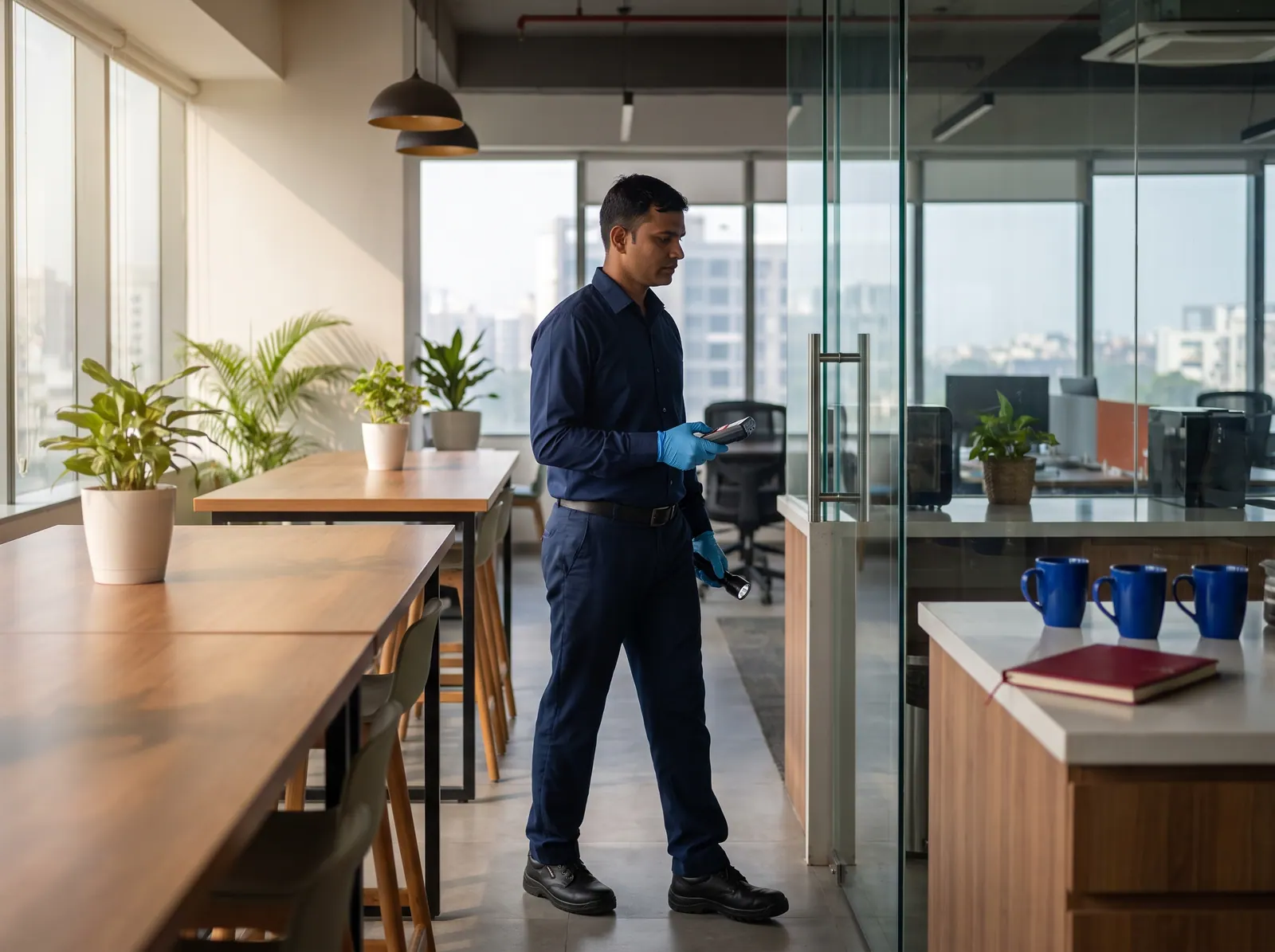
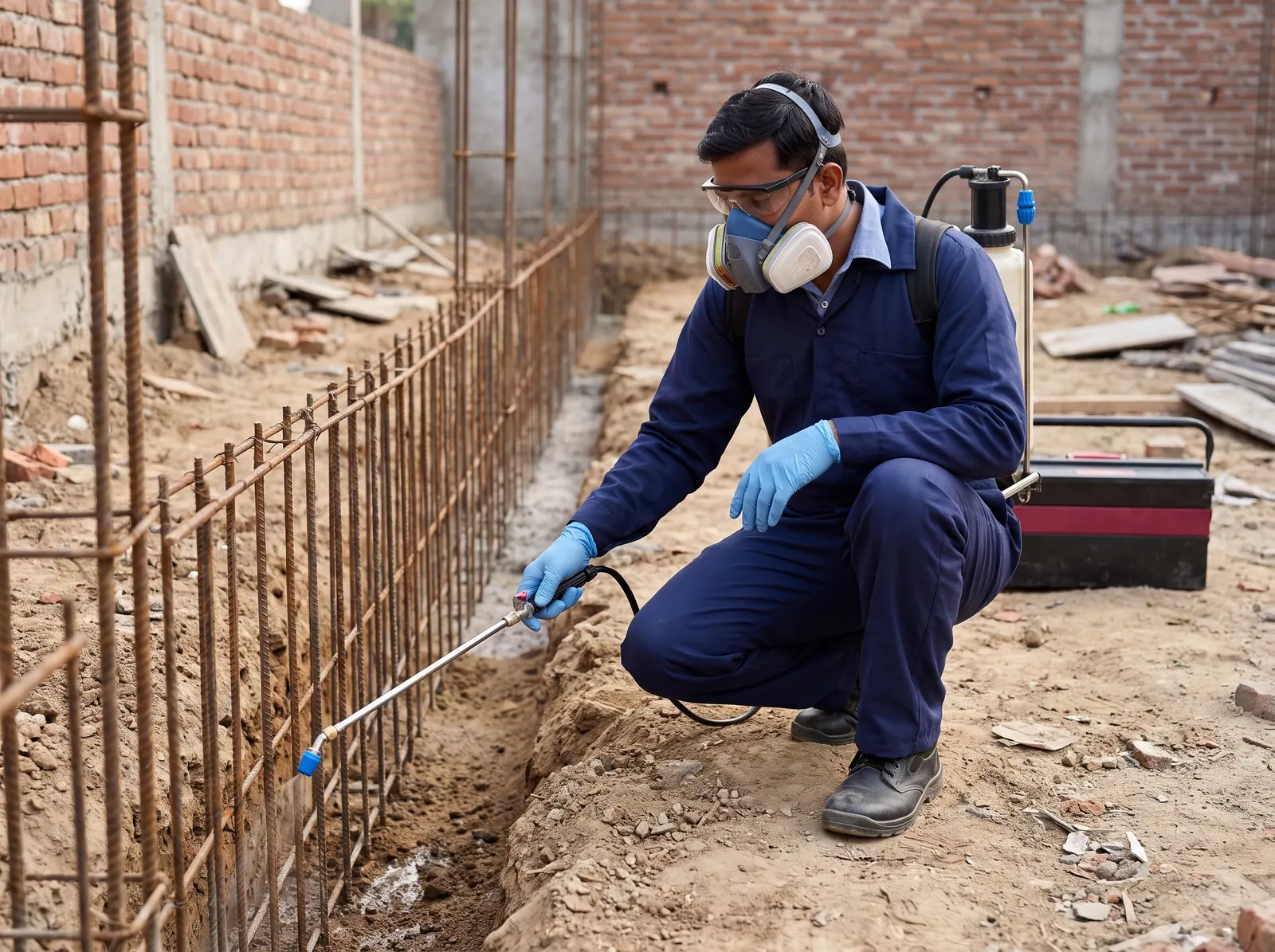
Efficacy Pest Control's Goa branch in Chimbel provides scheduled pest management for warehouses and godowns. The programme focuses on rodents and stored-product insects. It uses tamper-resistant bait stations around the perimeter, traps and checks inside, incoming goods inspection, housekeeping and proofing advice, and targeted treatment or fumigation where appropriate. As a licensed operator in Goa using CIB&RC-registered products, we share a service report after each visit, so you have a record for audits.
Key points
- Warehouse pest management from our Goa branch is scheduled and documented, and follows an Integrated Pest Management approach.
- Locked, numbered bait stations guard the perimeter, while traps are generally used inside storage areas to avoid contaminating goods.
- Checking incoming goods and keeping stock off the floor, rotated and dry are the most effective daily defences.
- A service report is shared after each visit, and Material Safety Data Sheets are maintained for the products used.
- The Goa branch is a licensed pest control operator with the Directorate of Agriculture, Goa, using CIB&RC-registered products.
What does warehouse pest control in Goa involve?
A warehouse or godown holds goods that someone is relying on you to keep clean, dry and intact. For most storage sites, two threats matter most. Rodents gnaw packaging, contaminate stock and damage wiring. Stored-product insects breed inside grain, flour, spices, dry fruit, tobacco and other dry goods. Warehouse pest control in Goa is about keeping both out and catching problems early.
Our Goa branch in Chimbel provides this as part of our commercial pest control service, with scheduled, documented visits built on Integrated Pest Management (IPM). That means inspection first, then sanitation and proofing advice, and then targeted treatment only where it is needed. We are a licensed pest control operator with the Directorate of Agriculture, Goa, and we use CIB&RC-registered products.
Why do warehouses and godowns in Goa attract pests?
Goa's warm, humid coastal climate and very heavy south-west monsoon suit many pests. Damp cartons, sacks and wooden pallets hold moisture, and many stored-product insects multiply fastest in warm, moist stock. During heavy rain, rats also move indoors looking for dry shelter.
Warehouses add their own risks:
- A constant flow of goods. Every inbound consignment can carry insects or rodents from another store, truck or port.
- Large doors and loading docks. Shutters left open, gaps under doors and worn seals give pests easy entry.
- Undisturbed stacks. Slow-moving stock in back corners gives pests time to settle unnoticed.
- Timber. Wooden pallets, racks and dunnage can attract termites and wood-boring beetles.
- High roofs. Trusses and ledges attract pigeons and other birds. Their droppings and nesting material can soil goods.
How do we set up perimeter and internal monitoring?
Monitoring is the backbone of a warehouse programme. Rather than spraying on a calendar, the aim is to place devices where pests travel, check them on every visit and act on what they show.
Perimeter bait stations
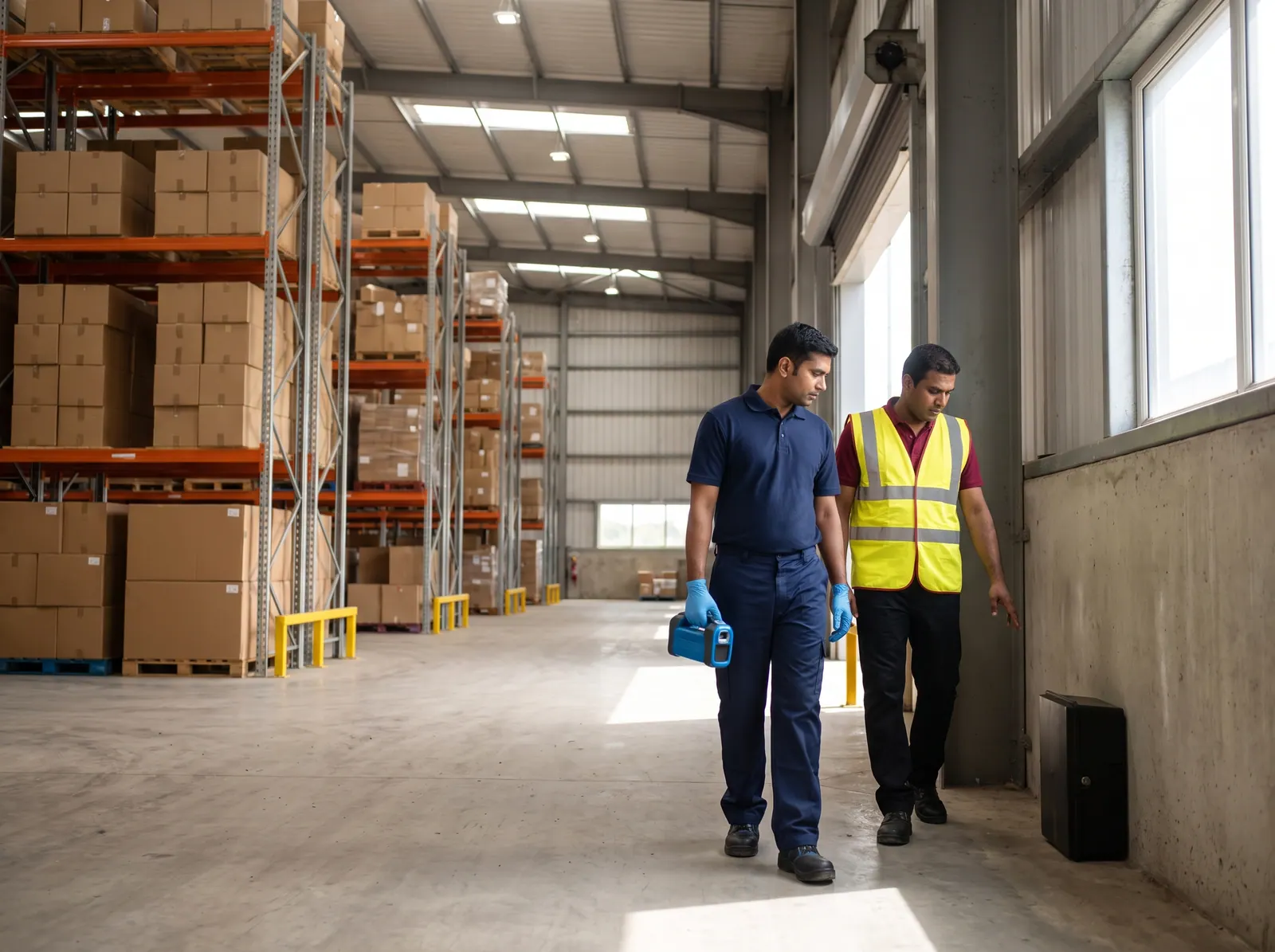
We fix tamper-resistant bait stations along the outside walls, beside entry points and around the boundary, where rats approach the building. The stations are lockable, so children, pets, non-target animals and staff cannot reach the bait. Each station is numbered so its condition and activity can be recorded visit by visit.
Internal traps and checks
Inside storage areas, loose bait near goods is a contamination risk. Internal rodent monitoring therefore generally relies on traps placed along walls, beside doors and near likely hiding places. We also check stock, stacks and harbourage areas for insect activity on each visit. The layout is planned at the first inspection to suit your site, not copied from a fixed template.
A site map you can check
Every station and trap is marked on a site plan. If an auditor asks where station 14 is and what it showed last month, the answer should be on paper.
| Zone | Main risks | Typical measures |
|---|---|---|
| Boundary and outer walls | Rats burrowing and approaching the building | Numbered, locked bait stations; advice on clearing vegetation and debris |
| Loading docks and doors | Rodent and insect entry; birds | Proofing advice for door gaps and seals; traps on either side of doors |
| Storage aisles and racks | Rodent runs; stored-product insects in stock | Traps along walls; stock and stack inspection |
| Roof and high structure | Nesting birds; climbing rats | Inspection; bird netting where suitable |
| Canteen, washrooms and drains | Cockroaches, flies and rodents | Gel baiting, crack-and-crevice treatment and sanitation advice |
Which stored-product insects do we look for?
Stored-product insects are small beetles and moths that live and breed in dry goods. Many are hard to spot until their numbers build up. Common groups include:
- Weevils, such as rice weevils, which develop inside whole grains.
- Flour beetles, which feed on flour, broken grain and processed foods.
- Cigarette and drugstore beetles, which attack spices, tobacco, dried herbs, pet food and some paper products.
- Grain borers, which tunnel into whole grain and leave fine dust behind.
- Stored-product moths, such as the Indian meal moth, whose larvae spin webbing over the surface of food.
Watch for these warning signs:
- small holes in bags
- fine powder around sacks
- webbing or clumped product
- live or dead insects on pallets and window sills
- small moths flying near stacks
Accurate identification matters. A pest that develops inside grains needs a different response from one feeding on surface spillage.
If we find infested stock, we advise on isolating it, cleaning the surrounding area and checking neighbouring lots. Targeted treatment is used on the building and its structure. Where stock, spaces or consignments need it, fumigation may be the appropriate method. Fumigation is a specialised, regulated process. It is carried out only after assessment, with the area sealed and kept clear of people until it is safe to return.
What should your team do between visits?
A scheduled pest control visit cannot make up for poor daily practice. The two habits that help most are inspecting what comes in and keeping the building tidy.
Incoming goods inspection: a simple receiving checklist
- Look inside the vehicle as it opens for droppings, live insects, damp or spilled product.
- Check outer packaging for gnaw marks, holes, webbing, stains and damage.
- Open a sample of sacks or cartons from any doubtful lot and check for insects, powder or clumping.
- Check wooden pallets for mud tubes, tunnels or fine wood dust.
- Keep suspect lots apart from clean stock, and inform your supervisor and your pest control provider.
- Record what was checked, what was found and what action was taken.
Housekeeping that makes a difference
- Stack goods on pallets, never directly on the floor.
- Leave a clear inspection gap between stacks and walls.
- Rotate stock first-in, first-out so old lots do not sit for months.
- Sweep up spillage promptly, including under racks and in corners.
- Keep shutters closed when you are not loading.
- Repair worn door seals and broken drain covers.
- Keep the area outside the building clear of tall grass, scrap and waste.
- Store waste in covered bins and remove it regularly.
- Before and during the monsoon, check roofs and walls for leaks so stock and packaging stay dry.
What documentation and trend reports will you receive?
After each visit we share a service report as proof of service, and clients also receive updates on WhatsApp. Each report records:
- what was inspected
- the activity found at each station or trap
- any treatment carried out
- recommendations for your team, such as a door that needs a new seal or a corner where spillage is building up
We maintain Material Safety Data Sheets for the products we use, and our products are CIB&RC-registered. Keeping these documents with your service reports makes it easier to answer questions from auditors, principals and insurers.
The real value of documentation shows over time. Read together, months of station records reveal trends. You might see activity rising near one dock during the monsoon, a drop after a gap was sealed, or insects linked to a particular supplier's goods. These patterns show where effort should go next. If your auditors or principals need a particular reporting format or trend summary, tell us at the start and we will confirm what we can provide.
Warehouses that store food need records that stand up to food-safety audits. Our documentation for food businesses is aligned with HACCP and FSSAI audit expectations. Our page on pest management for food processing units covers those requirements in more detail. For medicine and healthcare storage, see pest management for pharmaceutical facilities.
How often should a warehouse be serviced?
The right frequency depends on what you store, how fast stock moves, the size of the site and what the first inspection finds. Food and other sensitive goods usually need more frequent checks than, say, building materials. Most warehouses are best served by an Annual Maintenance Contract, with scheduled visits through the year and a report after each one.
In Goa, seasonal timing matters:
- Before the monsoon: a good time to proof doors and drains and check roofs.
- During the rains: monitoring stations and damp stock need closer attention.
- After the monsoon: stock that sat in humid conditions should be inspected for insects.
You can read more about our approach on our page about how we work.
Arranging a warehouse inspection in Goa
Our company records list the towns our Goa branch serves. They include Panaji, Margao, Vasco da Gama (including Dabolim and Chicalim), Mapusa, Ponda (including Kundaim, Farmagudi and Usgao) and Porvorim. For town-specific information, see our pages on commercial pest control in Vasco da Gama and Ponda. If your warehouse is elsewhere in Goa, tell us the location and we will confirm whether we can help.
To get started, contact our Goa branch in Chimbel with your location, the size of the site, what you store and any pest problems you have noticed. A first inspection lets us map the site and agree on a programme that fits your operation.
Frequently asked questions
QDo you handle godowns that store food grains or packaged food?
Yes. Food storage is one of the main reasons warehouses need regular pest management, because rodents and stored-product insects can contaminate stock. Our documentation for food businesses is aligned with HACCP and FSSAI audit expectations. Inside food storage areas, rodent monitoring generally relies on traps, while locked bait stations stay outside. We also advise your team on receiving checks and stock rotation.
QWill pest control visits disrupt our loading and dispatch?
Routine visits are planned around your operations. Checking stations, inspecting stacks and treating structural cracks can usually be done while work continues in other parts of the building. A client representative should accompany our technicians during the service. Fumigation is different, because the treated area or consignment must be sealed and kept clear of people until it is safe. That is planned in advance with you.
QCan you fumigate stock or a consignment in our warehouse?
Fumigation is one of the services our Goa branch provides for stored goods, spaces and consignments. It is used only where it is the appropriate method, which we decide after assessing the goods, the infestation and the space. Because it is a specialised and regulated process, the area must be sealed, cleared of people and declared safe before anyone re-enters.
QOur wooden pallets and racks show signs of termites. Can you treat them?
Termite control and wood treatment are among the services our Goa branch offers. We start by inspecting the building to find where termites are entering, whether through floors, walls or soil contact. We then treat the structure and advise on affected timber. For specific services, a warranty applies to the treated area, as set out in the service agreement.
QPigeons are nesting in our warehouse roof. What can be done?
Birds in high roofs soil goods and packaging with droppings and nesting material. Our Goa branch offers bird netting for ducts, ledges and similar structures. We will look at where the birds are entering and roosting, and recommend netting where it suits the building. Keeping shutters closed when you are not loading also helps reduce the number of birds that get inside.
QWhat information should we have ready before the first inspection?
It helps to share a rough site plan or the approximate floor area, the types of goods stored and how fast they move. Mention any past pest problems or audit findings and the reporting requirements of your principals or auditors. On the day, please give the technician access to all areas, including the perimeter and roof spaces, and have a team member accompany them.
Last updated 13 October 2026. Information on this page is general guidance; your technician will advise on your specific property after inspection.