Quick answer
Efficacy Pest Control's Goa branch provides cockroach treatment in Panaji for flats, houses, restaurants, hotels, offices and shops. Each job starts with an inspection, followed by gel baiting and targeted crack-and-crevice treatment in kitchens, bathrooms, food areas and drains, plus advice on cleaning and sealing gaps. Service reports are shared after visits. For specific services, a warranty applies to the treated area as set out in the service agreement.
Key points
- Cockroach treatment in Panaji is provided by Efficacy Pest Control's Goa branch in Chimbel.
- Treatment is inspection-led, using gel baiting and targeted crack-and-crevice treatment in kitchens, bathrooms, food areas and drains.
- The Goa operation is a licensed pest control operator (Directorate of Agriculture, Goa) using CIB&RC-registered products.
- Service reports are shared after visits, and food businesses receive documentation aligned with HACCP/FSSAI audit expectations.
- For specific services, a warranty applies to the treated area as set out in the service agreement.
Our cockroach treatment in Panaji is built around one idea: find where the cockroaches are living, then treat those spots precisely rather than spraying a whole room. Our Goa branch in Chimbel handles cockroach control for flats, independent houses, restaurants, cafés, hotels, offices and shops across Panaji (also called Panjim).
Every job starts with an inspection. We then use gel baiting and targeted crack-and-crevice treatment in kitchens, bathrooms, food areas and drains. We also give practical advice on cleaning and sealing gaps, so the problem is less likely to come back. This page explains what the treatment involves, what to expect and how to get your property ready.
Which cockroaches are we usually dealing with?
Most indoor cockroach problems involve one of two very different insects. The treatment plan depends on which one you have, so identifying it is the first job during the inspection.
| Small kitchen cockroach (German cockroach) | Large drain cockroach (American cockroach) | |
|---|---|---|
| Appearance | Small and light brown, with two dark stripes behind the head | Large and reddish-brown; can fly short distances |
| Where it lives | Inside kitchen cabinets, door hinges, switchboards and the warm motor areas of fridges and microwaves | Drains, gully traps, sewer lines, ducts and damp shafts; it usually enters rooms from below |
| How it spreads | Breeds quickly indoors and travels in bags, cartons and second-hand appliances | Moves between buildings through shared drainage and comes out at night |
| Main focus of treatment | Gel baiting in many small placements close to where they hide | Treating drain and entry points, plus sealing and covering drain openings |
Both species lay their eggs inside a protective case. That is why a single visit rarely finishes a heavy infestation on its own: young cockroaches keep hatching after the first treatment, and a follow-up is often needed to deal with them.
How does the treatment work, step by step?
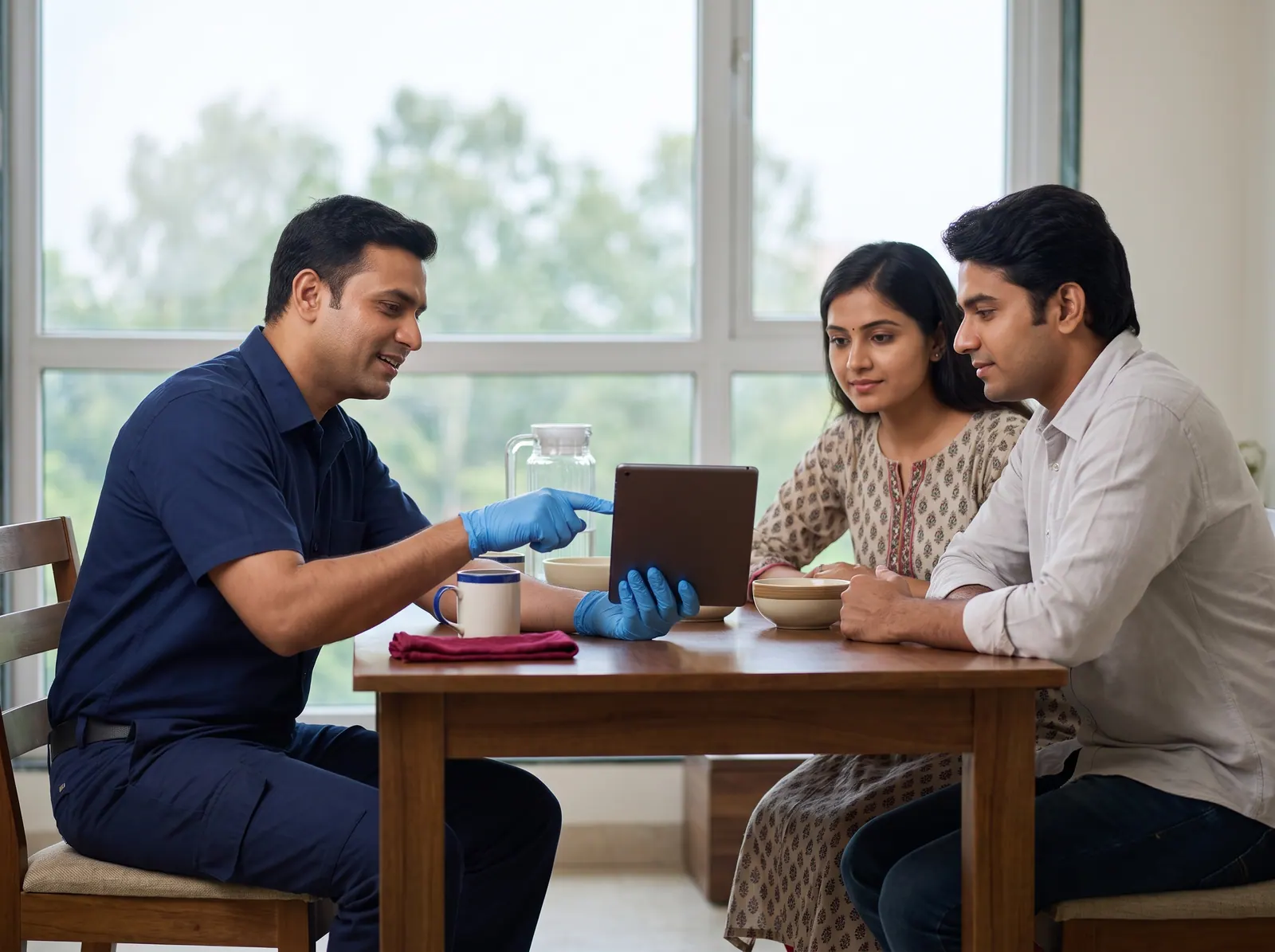
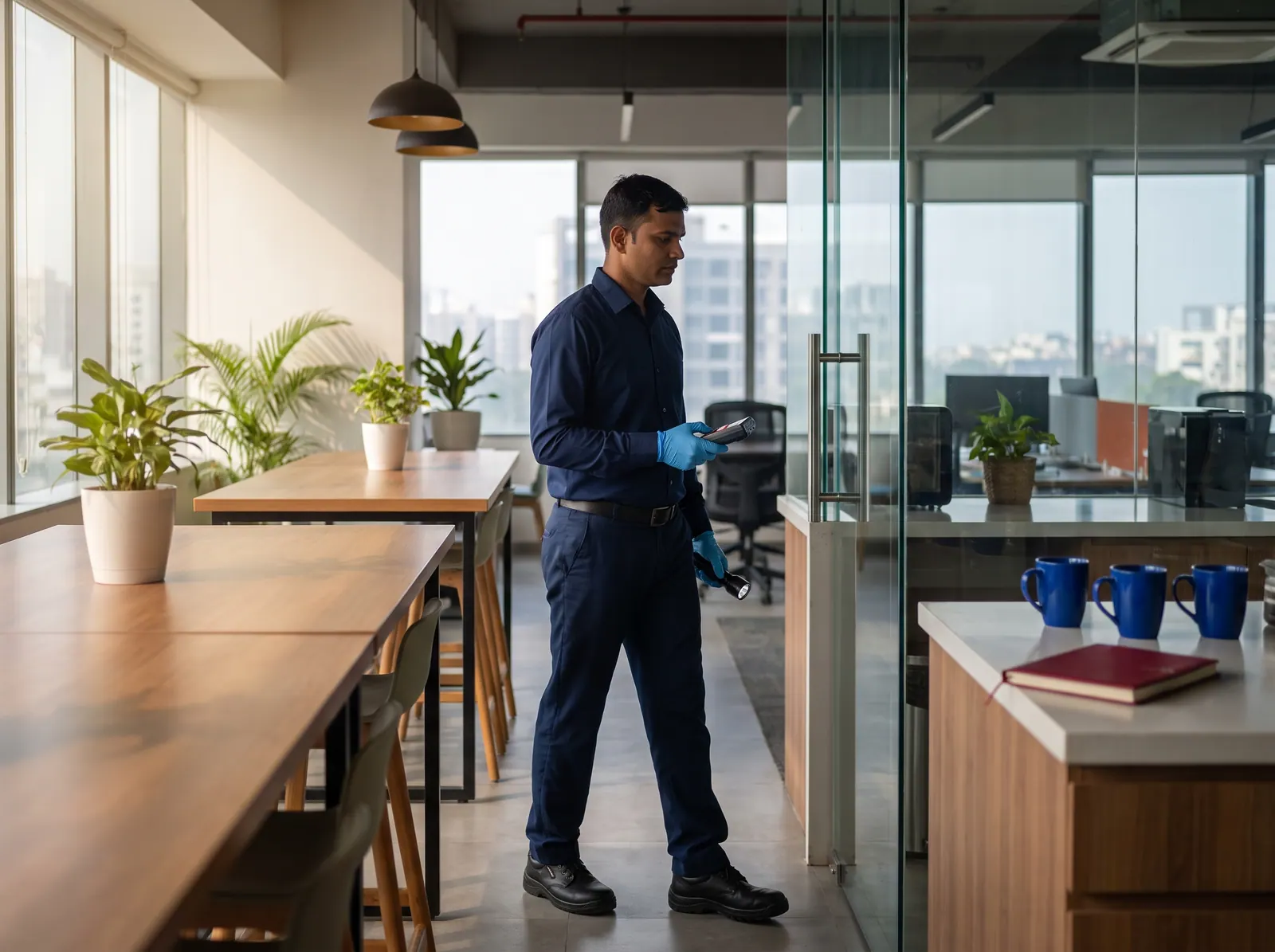
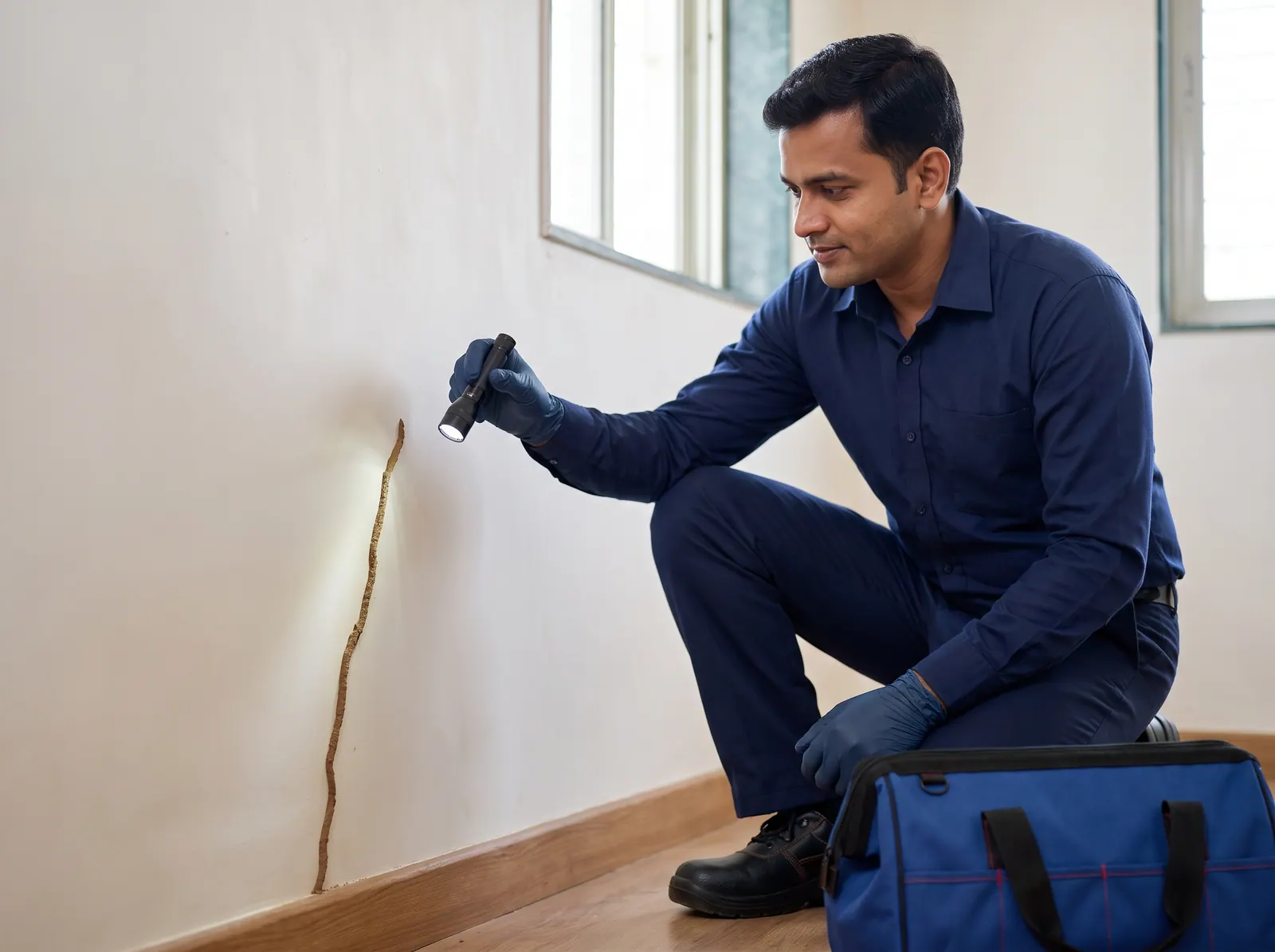
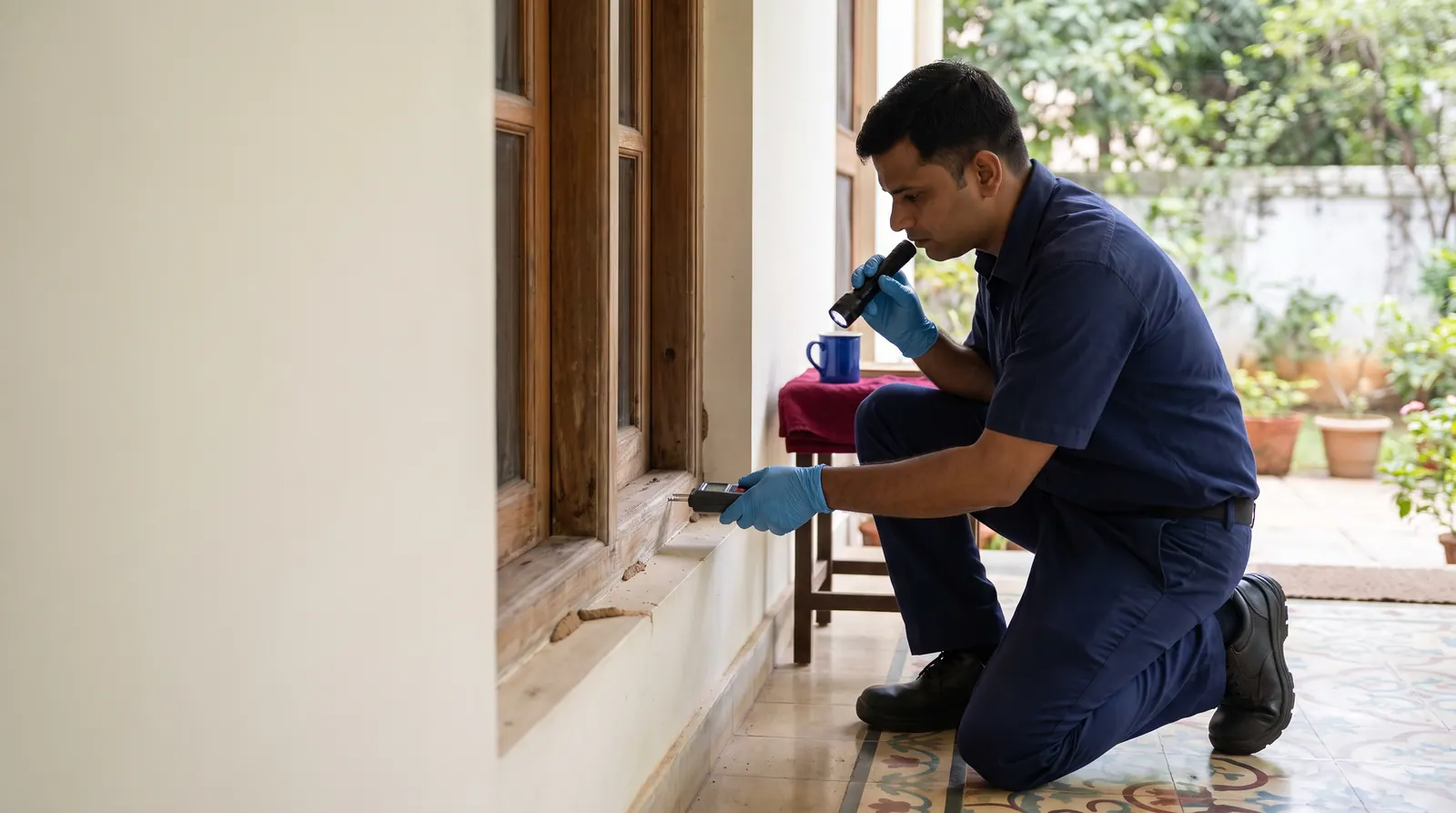
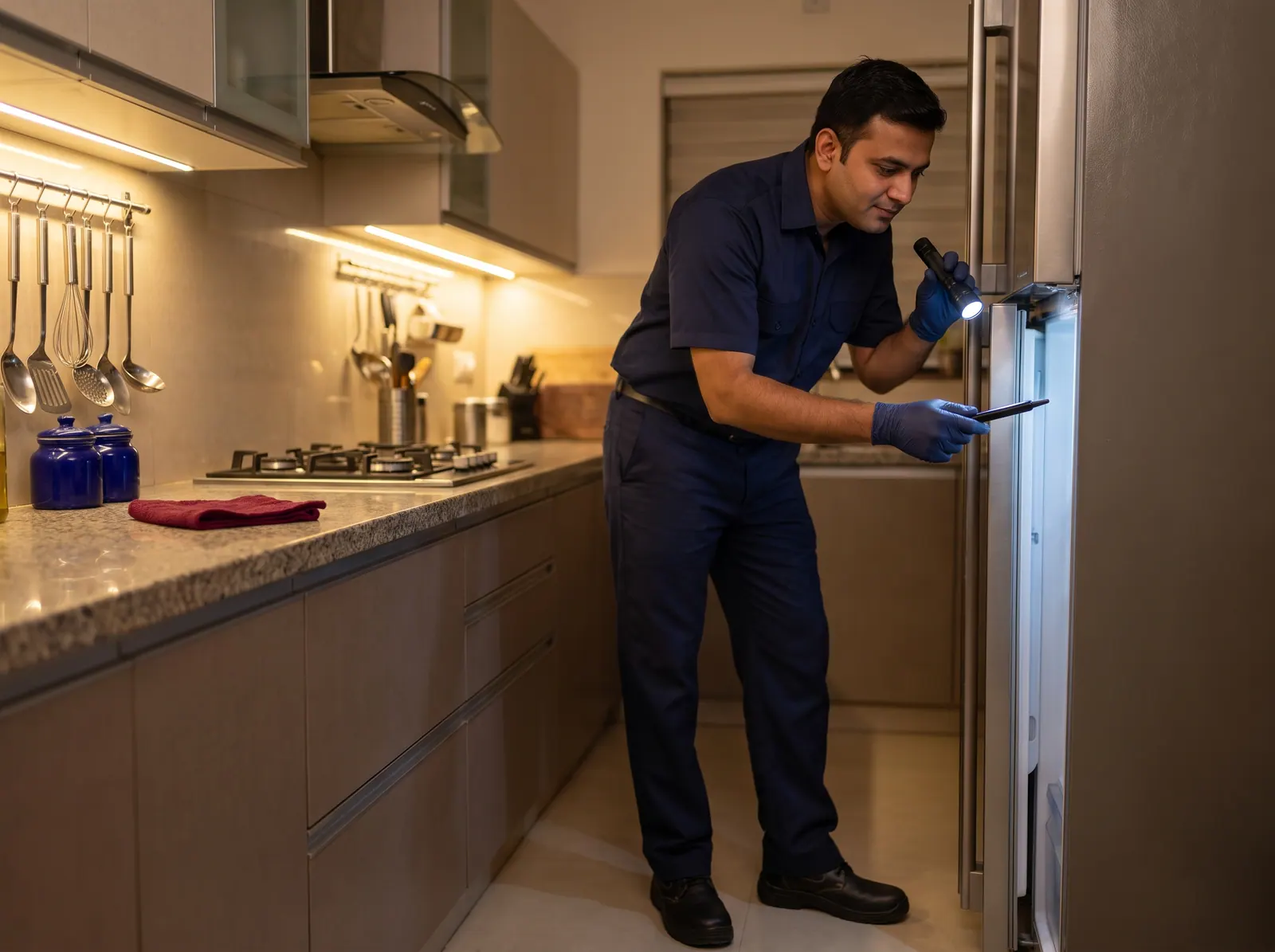
- Inspection. The technician checks kitchens, bathrooms, utility areas, store rooms and drains, looks for droppings, egg cases and live activity, and notes how the cockroaches are getting in.
- Sanitation and proofing advice. We point out what is feeding or sheltering them, such as leaking taps, uncovered gully traps, food left out overnight or cardboard stored under the sink. Treatment works far better once these are fixed.
- Gel baiting. Small dots of gel bait are placed inside cracks, hinges, cabinet corners and behind appliances. Cockroaches feed on the bait and return to their hiding places, so the treatment reaches insects you never see.
- Crack-and-crevice treatment. Where the site needs it, a targeted application is made into gaps, voids and drain points rather than over open surfaces.
- Service report. After the visit you receive a service report as proof of what was treated, and we can keep you updated on WhatsApp.
- Follow-up. Depending on how heavy the infestation is, the technician will recommend a follow-up visit or a scheduled programme, and explain what to expect in the meantime.
This inspection-first, targeted approach is part of the Integrated Pest Management (IPM) method we follow. It means less product in your home and more effort spent where the cockroaches actually are.
Where do cockroaches hide in different Panaji properties?
Panaji has a mix of older houses, newer apartment blocks and busy commercial streets. Each type of building gives cockroaches different places to shelter, and the inspection is planned accordingly.
Apartment blocks in Taleigao, St Inez, Caranzalem and Dona Paula
In flats, cockroaches often travel through shared drainage, plumbing shafts and ducts that connect one home to the next. Treating a single flat helps, but if the shaft or the building's drains are the source, activity can return. For housing societies, treating common drains and shafts alongside individual flats generally gives a more lasting result. Our guide to cockroaches in Goan apartments and their drains, ducts and shafts explains this in more detail.
Older homes in areas such as Altinho and Ribandar
Older houses often have wooden cupboards, gaps around old pipework and drain lines that have been extended over the years. These gaps give cockroaches shelter close to food and water. Here, sealing gaps and fitting proper drain covers matters as much as the treatment itself.
Restaurants, cafés, hotels and offices
Food businesses deal with constant deliveries, heat from cooking equipment and wet floors at closing time, which are conditions cockroaches favour. Treatment is planned around service hours, and for food businesses we provide documentation aligned with HACCP and FSSAI audit expectations. For deeper kitchen work, see our intensive kitchen pest treatment. For scheduled programmes in offices, shops and hotels, see commercial pest control in Panaji.
Does the monsoon make cockroach problems worse?
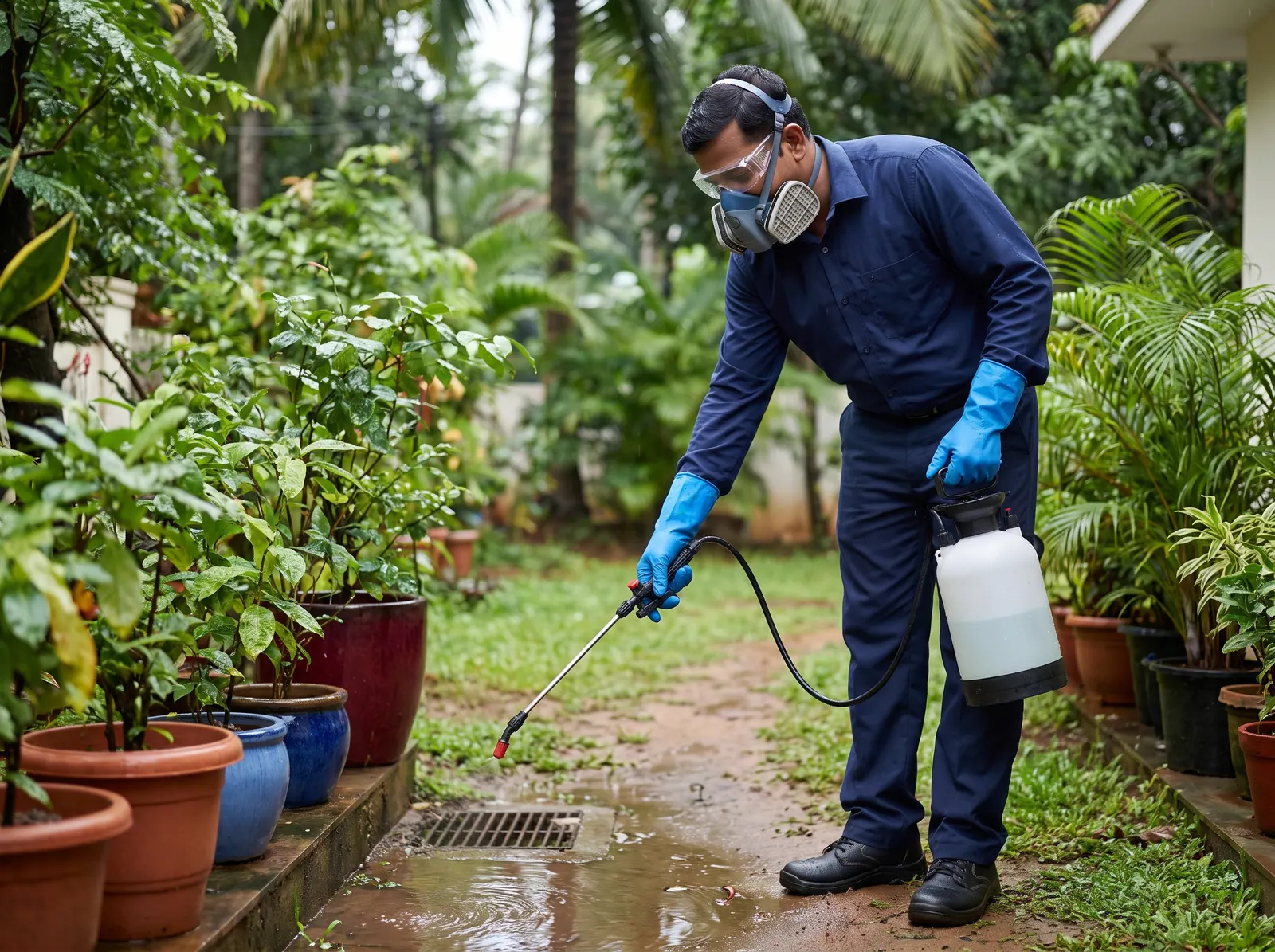
Goa's humid coastal climate suits cockroaches all year, but the heavy south-west monsoon adds extra pressure. When drains run full or back up, cockroaches that normally stay in drain lines are pushed up into bathrooms, kitchens and ground-floor rooms. Damp cupboards and store rooms also give them more places to hide.
If you have had trouble in past monsoons, it helps to arrange treatment before the rains. Check that gully trap covers and drain grilles are in place, and fix any leaks under sinks. Restaurants and hotels on regular schedules can ask for drain points to be given extra attention during the wet months.
How should you prepare, and what happens afterwards?
Good preparation helps the gel and treatment work properly. Our guide on how to prepare for cockroach gel treatment covers this in full. The essentials are:
- Clear kitchen counters and the shelves under the sink, and store food in sealed containers.
- Stop using household cockroach sprays for a few days before the visit, as sprays can drive cockroaches away from the bait.
- Keep children and pets out of the rooms being treated, and arrange for an adult to accompany the technician.
- Tell us about anyone at home with asthma or allergies, and about pets such as birds or fish, so the technician can plan around them.
After the treatment:
- Do not wipe away the small gel spots or spray over them.
- Follow the technician's advice on when children and pets can return to treated areas, ventilate the rooms and wash your hands after handling treated surfaces.
- Expect to see some cockroaches for a few days. Seeing them out in the open, even in daytime, can be a sign the treatment is reaching them.
- Keep up the cleaning and sealing advice, especially around drains and under sinks.
If anyone feels unwell after a treatment, see a doctor and let us know.
Licence, records and warranty
Our Goa operation is a licensed pest control operator with the Directorate of Agriculture, Goa, and uses CIB&RC-registered products. We maintain Material Safety Data Sheets for the products we use.
For specific services, a warranty applies to the treated area as set out in your service agreement. It does not cover changes such as structural work, or problems that arise when post-service instructions are not followed. Cockroaches coming in from a neighbouring flat, a common shaft or outside drains are a separate issue, and our technician can advise you on reducing that risk.
The cost depends on the size and type of premises, how heavy the infestation is and whether follow-up visits are needed. Payment is as per the quotation or invoice.
Which parts of Panaji do we cover?
Our Goa branch covers Panaji, including:
- Altinho
- Campal
- Miramar
- Caranzalem
- Dona Paula
- Taleigao
- St Inez
- Ribandar
If you are elsewhere in the city, ask us. For other services in the city, see pest control in Panaji. If you are just across the Mandovi, see our page on cockroach treatment in Porvorim.
To arrange a visit, contact our Goa branch in Chimbel. Tell us your locality, the type of property and where you are seeing cockroaches. A photo of the cockroach or the affected area helps us plan the inspection.
Frequently asked questions
QHow many visits will my Panaji flat need?
It depends on the type of cockroach and how established the infestation is. A light problem with small kitchen cockroaches may settle after one treatment and a check, while a heavy infestation usually needs a follow-up, because eggs inside their protective cases keep hatching after the first visit. The technician will explain the likely plan after inspecting your flat, and will discuss progress during the follow-up.
QCan I use my kitchen on the same day as the treatment?
In most cases, yes, but follow the specific advice your technician gives for your property. Gel is placed in small spots inside cracks, hinges and corners rather than on worktops. Keep food covered or stored, avoid wiping the gel spots away and ventilate the room. If a crack-and-crevice application has been made, the technician will tell you when treated areas can be used normally.
QIs gel treatment suitable for a home with small children or pets?
Gel is applied in small amounts inside gaps and behind fittings, away from surfaces that children and pets normally touch. We use CIB&RC-registered products and maintain Material Safety Data Sheets for them. Even so, keep children and pets away from treated areas until your technician says they can return, and wash hands after handling treated surfaces. If anyone feels unwell, see a doctor.
QWhy am I seeing more cockroaches just after the treatment?
This is common for a few days. As the bait and treatment take effect, cockroaches often leave their hiding places and appear in the open, sometimes during the day. Avoid spraying them with household sprays, as this can keep others away from the bait. If activity is still high after the period your technician mentioned, let us know so it can be reviewed.
QCockroaches keep coming from the building's drains. Will treating my flat alone help?
Treating your flat will reduce activity inside it, but if the source is a shared shaft, duct or the building's drainage, cockroaches can keep coming in. The warranty applies to the treated area, so cockroaches entering from neighbouring flats or common drains are a separate matter. Where possible, it helps if the housing society arranges for the common drains and shafts to be treated as well.
QCan you provide records for a restaurant's FSSAI or HACCP audit?
Yes. For food businesses, our Goa branch provides documentation aligned with HACCP and FSSAI audit expectations, and service reports are shared after each visit as proof of service. Restaurants, cafés and hotel kitchens usually benefit from a scheduled programme rather than one-off treatment, so that records are kept up to date and drain points and kitchen equipment are checked regularly.
QHow is the price worked out, and how do I pay?
The price depends on the size and type of premises, how heavy the infestation is and whether follow-up visits are needed. Payment is as per the quotation or invoice, and cash, UPI transfer, card, net banking and bank transfer are accepted. If you need to cancel, please do so at least 48 hours before the scheduled visit, as a late-cancellation fee may apply.
Last updated 13 October 2026. Information on this page is general guidance; your technician will advise on your specific property after inspection.