Quick answer
Office pest control in Goa from our Chimbel branch focuses on the places offices have problems: pantries and tea points, false ceilings and cable trays where rodents travel, storerooms and record rooms, and washrooms. We start with an inspection and use targeted treatments such as gel baiting, traps and bait stations. We also give proofing advice, discuss visit timings around your working hours, and share a service report after each visit.
Key points
- Office pests usually concentrate in pantries, false ceilings and cable trays, storerooms, washrooms and drains.
- Rodents in ceiling voids and cable trays can gnaw cables and contaminate hidden areas, so inspection and proofing matter as much as control.
- Goa's heavy south-west monsoon and humid climate bring damp and blocked drains, which can increase indoor pest activity.
- A client representative must accompany technicians during service, including at visits outside office hours.
- The Goa branch shares service reports after visits and maintains Material Safety Data Sheets for products used.
Offices rarely have dramatic infestations. More often it is a cockroach in a pantry drawer, droppings on a false-ceiling tile, ants on the tea counter, or a network fault traced to a chewed cable. Good office pest control in Goa catches these problems early and treats them without disrupting work. It also keeps records your facility team can rely on.
Our Goa branch in Chimbel provides this as part of its commercial pest control service for offices, banks, showrooms and co-working spaces. This page explains where pests turn up in office buildings, how we deal with each area, and how visits and reporting work.
Where do pests usually turn up in an office?
Most office pest problems start in a few places: anywhere with food, water, warmth, clutter or hidden voids. During an inspection we work through these areas.
| Area | What is commonly found | What we check |
|---|---|---|
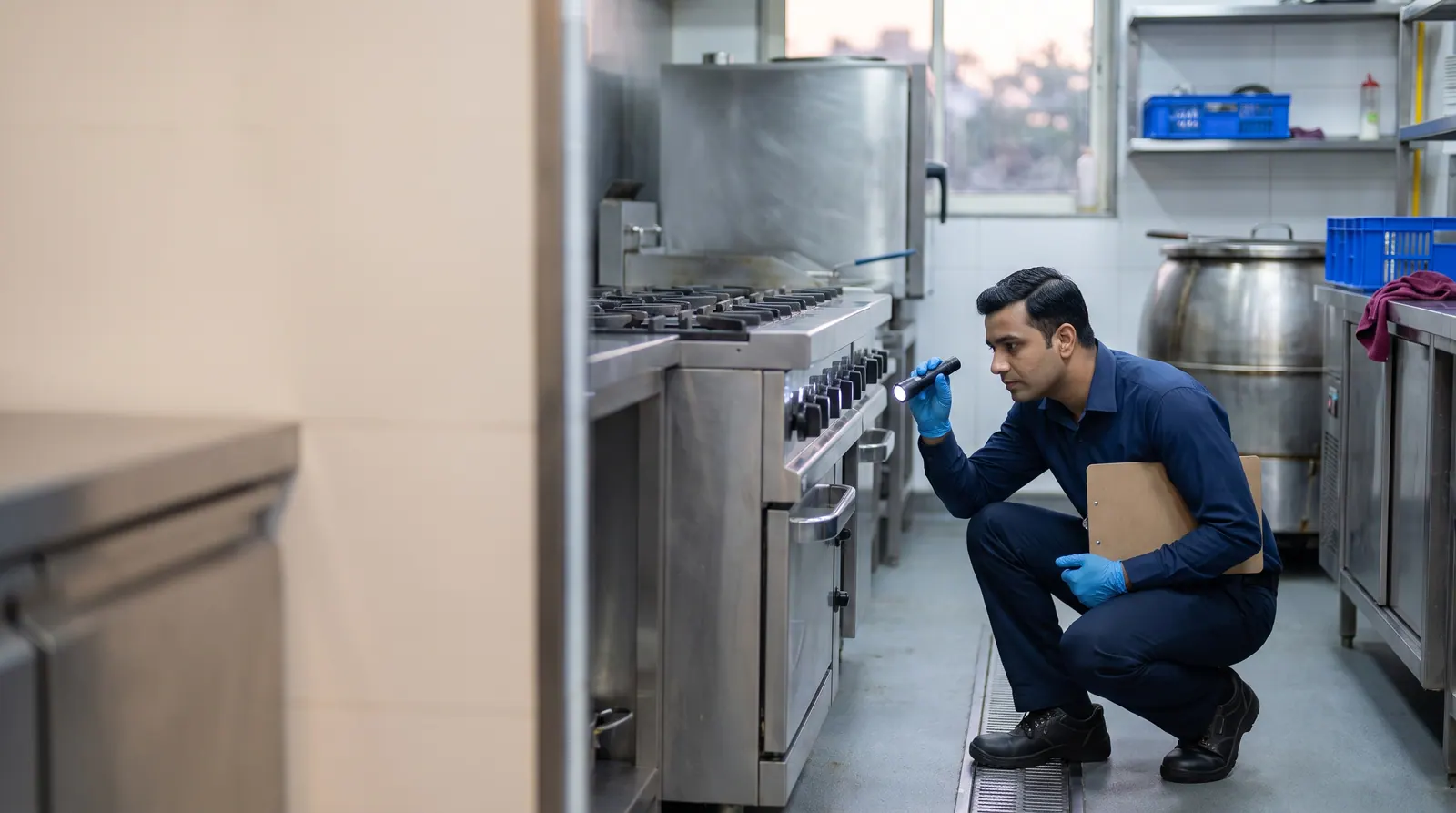
| Pantry, tea point, cafeteria | Cockroaches, ants, fruit flies | Under sinks, behind fridges and water dispensers, appliance housings, drawers, bins |
| False ceilings, cable trays, risers | Rats and mice | Droppings, gnaw marks on cables and tiles, grease marks, gaps around service openings |
| Storerooms, record rooms, archives | Silverfish, cockroaches, rodents | Cartons stacked against walls, damp corners, old paper and packaging |
| Washrooms and drains | Drain flies, cockroaches | Floor traps, rarely used drains, leaks |
| Wooden partitions, doors, furniture | Termites, wood borers | Mud tubes, hollow-sounding wood, fine powder below furniture |
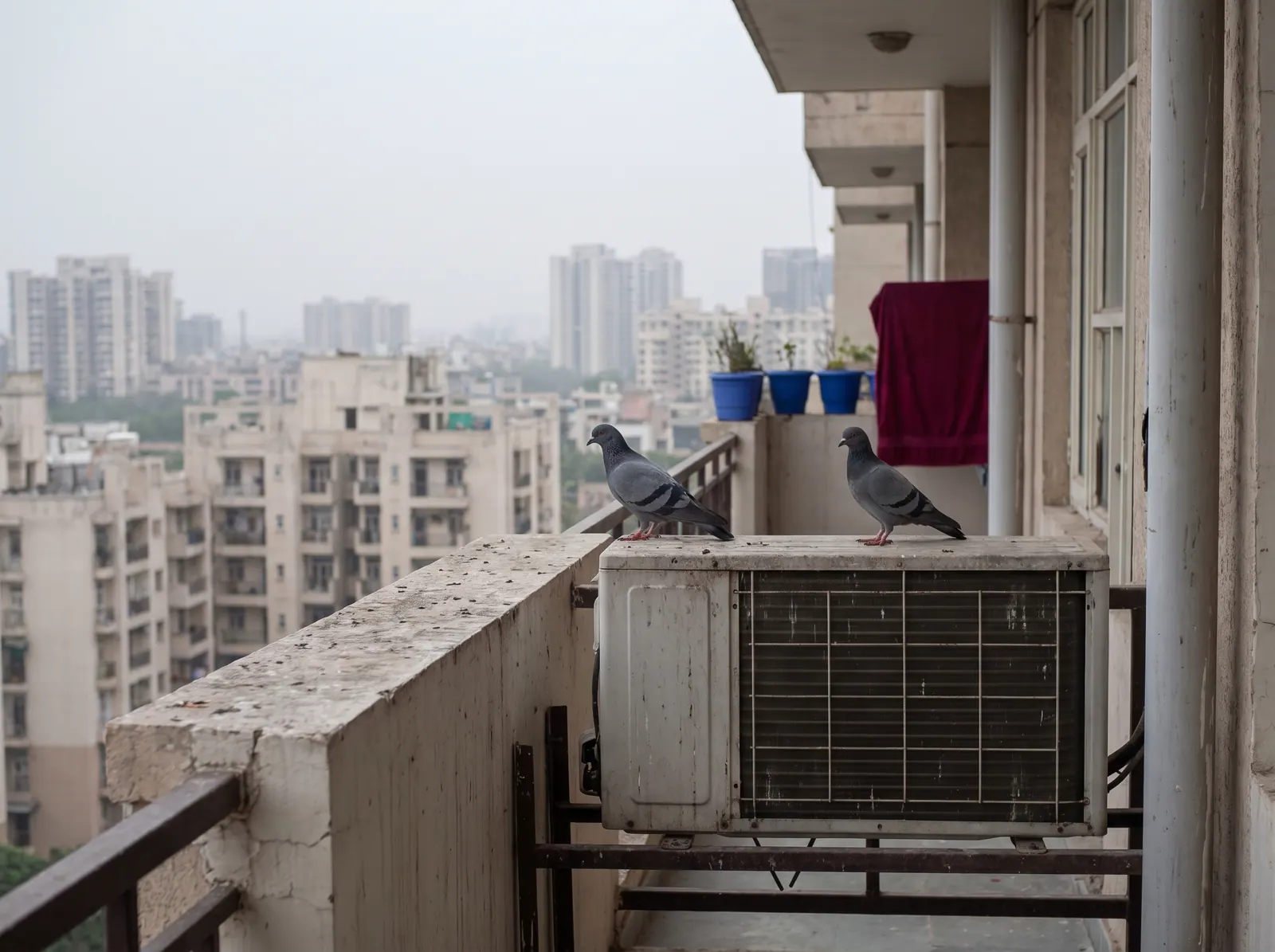
| Windows, ledges, AC outdoor units | Lizards, pigeons | Gaps, lights that draw insects, nesting on ledges and ducts |
Goa's humid coastal climate and heavy south-west monsoon add their own pressure. During the rains, walls stay damp, drains block more easily and water collects on terraces and in AC drip trays. Pests also tend to move indoors, so an office that was quiet in the dry months may need closer attention once the monsoon sets in.
Each type of office has its own weak spots. Banks often have record rooms and strongroom surrounds that are rarely disturbed. Showrooms carry display stock and packaging. Co-working spaces have shared pantries, high footfall and frequent changes in who uses which desk.
How do we handle pantries and food areas?
Staff usually notice pests in the pantry first. It is also where people worry most about spraying near food and cups, so our approach there is targeted rather than blanket.
- Cockroaches: gel baiting and crack-and-crevice treatment in hinges, gaps behind counters, appliance housings and drain points, rather than spraying open surfaces. Our guide to cockroach control in Goa explains these methods in more detail.
- Ants: we follow trails back to where the ants enter or nest, and place bait and spot treatment there.
- Flies: fruit flies and drain flies usually point to a source, such as an overflowing bin, a dirty floor trap or fruit left out. We find the source and advise on cleaning routines as well as treating.
We will also tell you what is feeding the problem. In offices the usual causes are crumbs in desk drawers, opened snack stock, wet mops left in the pantry, and bins emptied only once a day. A few changes to housekeeping often make treatment last longer.
Some offices have an in-house cafeteria run as a food business. FSSAI Schedule 4 hygiene requirements include pest control for food businesses, so in that case we can discuss documentation aligned with HACCP and FSSAI audit expectations.
Why are rodents in false ceilings and cable trays a concern?
The void above a false ceiling is warm, dark and rarely disturbed. Cable trays and risers give rats and mice ready-made runways between floors. Rodents gnaw constantly, and cable insulation, data lines and ceiling tiles are within easy reach. The result can be damage to power, network and equipment, and a hygiene problem from droppings and urine in the void.
Signs your facility team should report
- Droppings on ceiling tiles, in cable trays or behind cabinets
- Scratching or movement sounds, especially when the office is quiet
- Chewed cable sheathing, packaging or tile edges
- Dark, greasy rub marks along beams, pipes or wall edges
- A persistent unpleasant smell in one part of the floor
How we deal with it
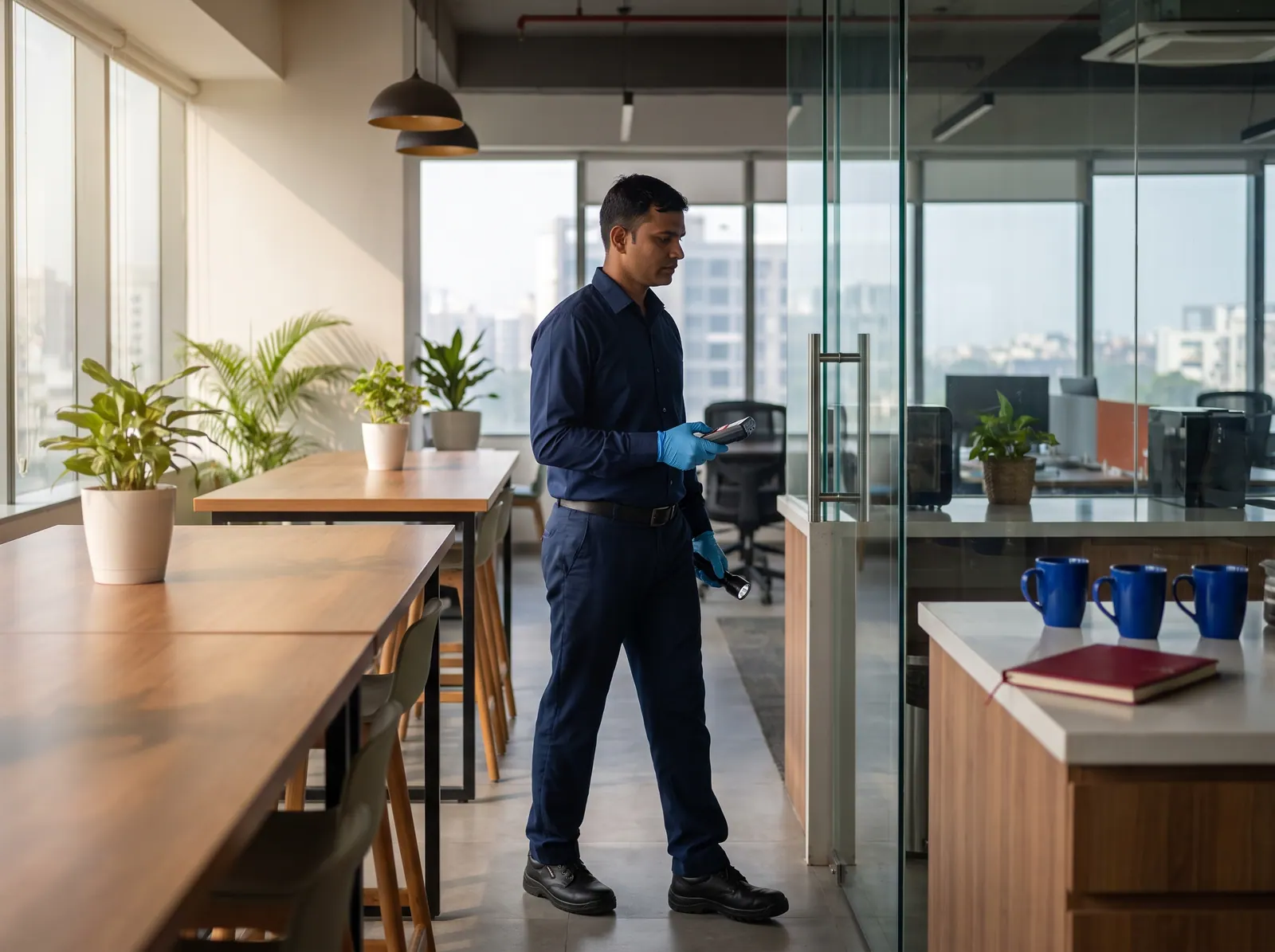
- Inspection: we lift ceiling tiles at representative points and check risers, shafts, the surroundings of electrical and server rooms, and the building perimeter. A member of your team needs to be present.
- Control: we use a combination of traps and tamper-resistant bait stations. Placement depends on where activity is and who uses the space. Inside occupied ceilings we also consider the risk of odour if a rodent dies in a void that is hard to reach.
- Proofing advice: we point out gaps around cable and pipe entries, unsealed service openings and gaps under doors that lead to refuse or loading areas. Your maintenance team or building management can then seal them.
- Follow-up: we check and record activity until it stops, then move to routine monitoring.
In a shared building, rodents often come from common areas, basements or neighbouring units, so treating only your office has limits. We will tell you if we think building management needs to be involved. If your premises include a godown or stock area, see our page on warehouse and godown pest control in Goa.
Can visits be scheduled outside office hours?
Many offices prefer treatment when staff and customers are not around, especially banks and showrooms. Tell us your working hours, weekly off and any building restrictions. We will discuss visit timings that suit you, subject to availability.
Some practical points help an after-hours visit go smoothly:
- Someone from your side must be present. Admin, facility or security staff can do this, but they need access to locked rooms, storerooms and ceiling access points.
- Prepare the pantry. Clear counters, put away food and crockery, and move or cover items as the technician advises.
- Plan re-entry. Keep people away from treated areas until surfaces are dry or for as long as the technician advises. Ventilate before staff return, and anyone handling treated surfaces should wash their hands.
- Reschedule early. If you need to change a visit, let us know at least 48 hours ahead, as a late-cancellation fee may apply.
Routine work such as gel baiting and checking bait stations is discreet. Your technician will tell you if any area needs to be kept clear, and for how long.
What records do facility managers receive?
After each visit we share a service report as proof of service, and clients receive updates on WhatsApp. Over a contract this builds a record of what was done, where and when. That record helps with internal audits, landlord queries and handovers between facility managers.
Our Goa operation is a licensed pest control operator (Directorate of Agriculture, Goa) and uses CIB&RC-registered products. We maintain Material Safety Data Sheets for the products we use, so ask if your safety or admin team needs them on file.
A useful pest control record should let you answer these questions quickly:
- When was the last visit, and which areas were covered?
- What activity was seen, and where?
- What treatment was carried out?
- What housekeeping or proofing actions are pending on your side?
Tell us what your team needs to see, and we will confirm how our reports can support it.
How does a scheduled office programme work?
For most offices a one-off treatment is only a start. Pantries are restocked, cartons arrive, and pests from neighbouring premises keep testing the building. An Annual Maintenance Contract gives you year-round scheduled visits with a service report each time.
We follow an Integrated Pest Management approach: inspection, sanitation and proofing advice, and targeted treatment. Visit frequency depends on the pests involved and the level of activity. A ground-floor office with a busy pantry may need more frequent attention than an upper-floor office with only a tea point.
- Inspection of the premises and a discussion of what you are seeing
- A quotation setting out areas covered and visit frequency
- An initial treatment to bring current activity under control
- Scheduled visits, each with a service report
- Periodic review, adjusting the programme as conditions change
The programme can also cover related needs. These include termite and wood borer treatment for wooden partitions, frames and furniture (see our guide to termite control in Goa), lizard control, mosquito control around terraces and drains, and bird netting for ducts and ledges. For specific services, a warranty applies to the treated area, as set out in the service agreement.
Which parts of Goa do we cover?
Our Goa branch serves offices in the towns listed in our records. These include Panaji (Panjim), Margao, Vasco da Gama, Mapusa, Porvorim, Ponda, Calangute, Candolim and Baga. The full list of localities is on our areas we serve page. If your office is somewhere else in Goa, ask and we will tell you whether we can help.
Arrange an office inspection
Tell our Goa branch in Chimbel your office location, its approximate size, the problem you are seeing and your working hours. We will arrange an inspection and explain the programme we recommend. You can contact us or visit our Goa branch page. Our Goa operation received the Indian Eminence Award (2026 – Goa), Certificate of Excellence, and we bring the same inspection-led approach to every office we take on.
Frequently asked questions
QDo we need to close the office for pest control?
Usually not for the whole day. Much routine office work, such as gel baiting in pantries and checking rodent stations, is discreet. Where a treatment needs an area kept clear, the technician will tell you which area and for how long. Many offices prefer visits outside working hours for this reason, and we can discuss timings with you, subject to availability.
QCan you deal with rodents near our server or electrical room?
Yes, with care. We do not spray liquids onto electrical equipment. Rodent control around these rooms relies on inspection, traps or bait stations placed in suitable positions, and advice on sealing cable and pipe entry gaps. Someone from your facility or IT team should be present and should decide which areas we may access.
QHow often should an office have pest control visits?
It depends on the pests involved, how much activity there is and how the building is used. An office with a busy pantry, ground-floor access or shared refuse areas usually needs more regular attention than a small upper-floor office. After the inspection we recommend a frequency and review it as conditions change, including around the monsoon.
QOur office is in a shared building. Will treating our unit be enough?
It helps, but it may not solve everything. Rats, cockroaches and ants often enter from common areas, basements, shafts or neighbouring units. We will tell you where we think pests are coming from. If the source is outside your unit, involving building management in proofing and common-area treatment usually gives better results.
QIs there a warranty on office treatments?
For specific services, a warranty applies to the treated area, as set out in your service agreement. It varies by pest and treatment. It does not cover structural changes, new construction, or cases where post-service instructions were not followed. If pests come in from neighbouring premises, our technician can advise on preventing that.
QCan you provide documents for our safety or compliance file?
We share a service report after each visit. Our Goa operation is a licensed pest control operator with the Directorate of Agriculture, Goa, and uses CIB&RC-registered products. Material Safety Data Sheets are maintained for the products we use. If your office runs a cafeteria as a food business, we can discuss documentation aligned with HACCP and FSSAI audit expectations.
Last updated 13 October 2026. Information on this page is general guidance; your technician will advise on your specific property after inspection.