Quick answer
Efficacy Pest Control's Goa branch in Chimbel provides termite control in Ponda, including Farmagudi, Kundaim, Shiroda and Usgao. Every job starts with an inspection to find where termites are entering and feeding. Occupied buildings get post-construction drill-fill-seal treatment along wall–floor joints. New buildings get pre-construction soil treatment at each stage of construction. Affected woodwork is treated separately. You receive a treatment plan and quote before work begins, and a service report afterwards.
Key points
- Our Goa branch in Chimbel covers Ponda town, Farmagudi, Kundaim, Shiroda and Usgao.
- Occupied buildings are treated by drill-fill-seal post-construction treatment; new buildings by staged pre-construction soil treatment, in line with IS 6313.
- Ponda's heavy monsoon keeps soil damp for months, which suits subterranean termites.
- Every job starts with an inspection, followed by a quote before work begins and a service report afterwards.
- Where applicable, the warranty covers the treated area as set out in the service agreement.
You may have found mud tubes on a wall, a door frame that sounds hollow, or winged insects around a light after the first monsoon showers. In each case, termite control in Ponda starts with finding out where the termites are coming from. Our Goa branch in Chimbel serves Ponda town and nearby Farmagudi, Kundaim, Shiroda and Usgao. We work with homes, housing societies, shops, offices and building sites.
We inspect first and explain what we find in plain language. Only then do we recommend a treatment. The aim is to cut termites off from the building and from the wood they are feeding on, not simply to spray the damage you can see.
Why are termites a concern for Ponda properties?
Ponda sits inland in central Goa, among hills, plantations and growing residential areas. Like the rest of Goa, it gets a very heavy south-west monsoon, and the soil around foundations stays damp for months. Subterranean termites live in soil and need moisture, so these conditions suit them well.
The type of building also matters. Older houses often have timber rafters, wooden ceilings and door frames set directly into masonry. Newer flats in and around Ponda town have wardrobes, kitchen cabinets and skirting fixed close to floors and walls. Homes beside orchards or with large compound gardens often have tree stumps, leaf litter and stacked wood near the walls. Storage and industrial units around Kundaim and Usgao keep cardboard, pallets and paper, and termites feed on all of these.
Signs worth checking for
- Thin mud tubes running up walls, foundations or the back of cupboards
- Wood that sounds hollow or gives way when pressed, especially door frames, skirting and window sills
- Paint that bubbles or cracks along a wooden surface
- Discarded wings near windows and lights, often around the first heavy rains
- Damage to stored paper, cardboard boxes or the backs of wooden furniture
For a fuller checklist, see our guide to termite warning signs in Goan homes. If you are buying a house or flat in Ponda, a termite inspection before buying property can show whether treatment is needed before you move in.
Which termite treatment does your property need?
| Your situation | Usual approach | What it involves |
|---|---|---|
| Existing house, flat, shop or office with termite activity | Post-construction treatment | Drilling small holes along wall–floor joints and other entry points, injecting termiticide into the soil and masonry beneath, then sealing the holes |
| Building under construction | Pre-construction soil treatment | Treating the soil in stages as foundations, plinth and floors are prepared |
| Termites in a wardrobe, frame or furniture | Wood treatment | Treating the affected woodwork directly, alongside treatment of the route the termites used to reach it |
| Termites on trees, fences or garden structures | Garden and landscape treatment | Treating affected trees and soil areas, particularly those close to the building |
Many properties need more than one of these. Both building treatments follow the approach set out in the Indian Standard IS 6313: Part 2 covers pre-construction treatment and Part 3 covers post-construction treatment. After the inspection, we explain which applies to you and why.
How do we treat termites in an occupied home in Ponda?
Most requests we receive are for houses and flats that are already lived in. For these, we use post-construction termite treatment, often called drill-fill-seal. It works in these steps:
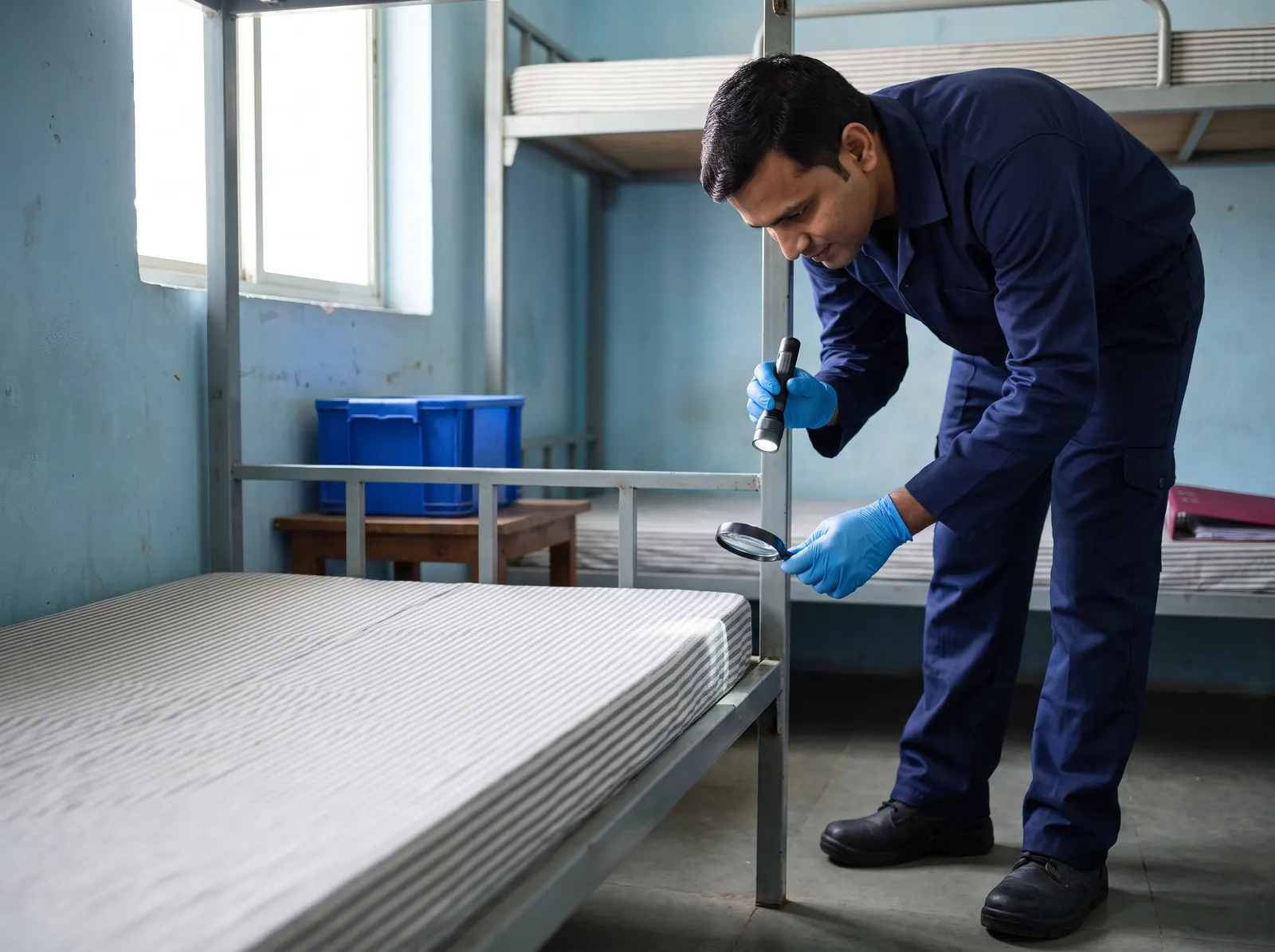
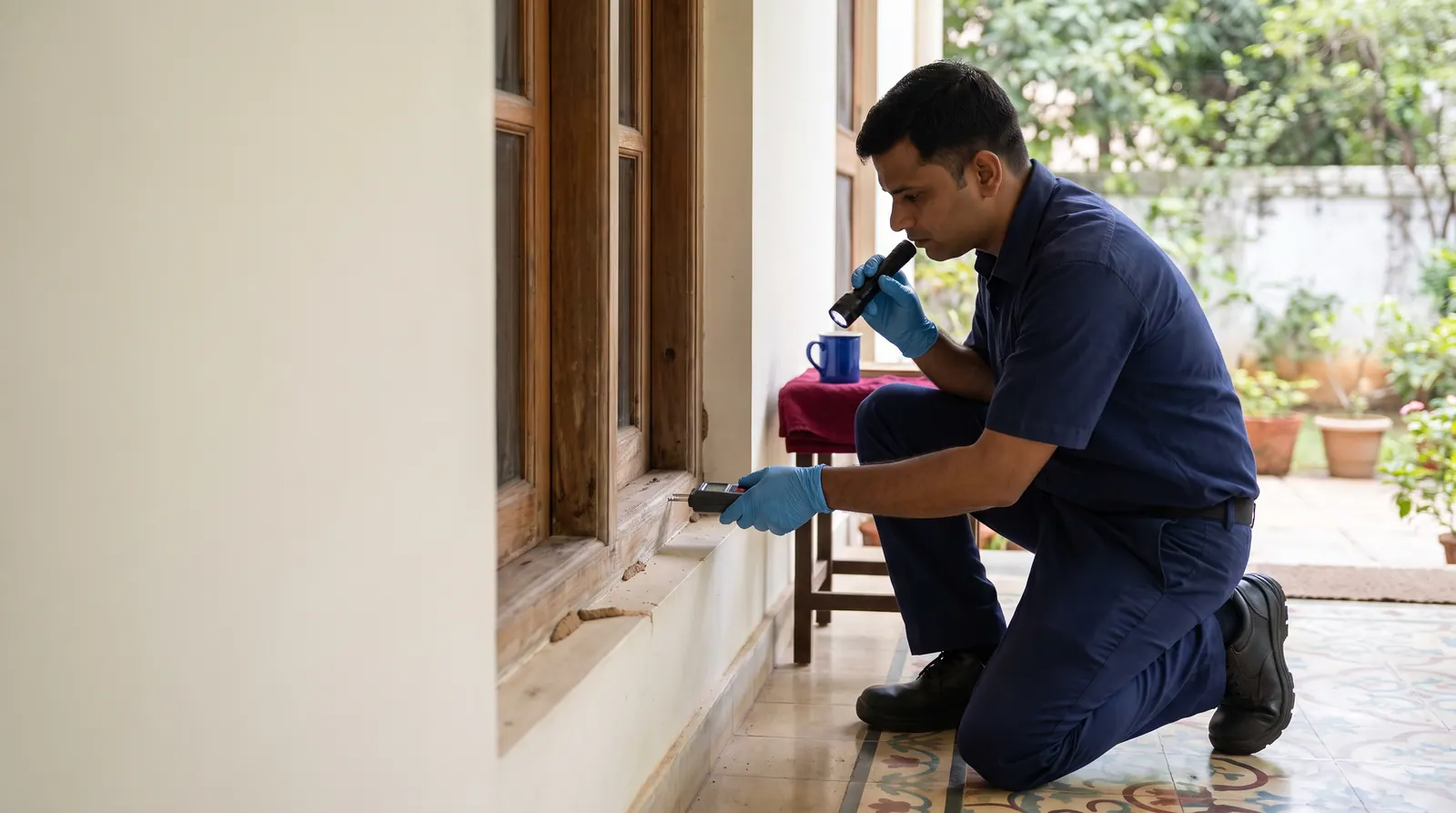
- Inspection: We check wall–floor junctions, cupboards, door and window frames, and roof timber. We look closely at bathrooms and kitchens, where leaks keep walls damp. We also check the outside of the building, where soil meets the wall. We show you what we find.
- Treatment plan: We mark the points that need treatment and explain where drilling is needed and why. We then share a quote before any work starts.
- Drilling and filling: We drill small holes at intervals along the base of walls and at other entry points. A CIB&RC-registered termiticide is then injected to create a treated zone that termites cannot cross safely.
- Sealing: The holes are sealed and the work area is cleaned.
- Wood treatment: We treat affected woodwork directly. If a piece is too badly damaged to save, we will tell you so.
- Report and after-care: You receive a service report, along with WhatsApp updates and simple advice on what to do next.
Preparing your home and staying safe
Before the visit, move furniture a little away from the walls we will be treating and empty the lower shelves of affected cupboards. A family member or representative should be present during the work.
We apply products according to their label directions. Keep children and pets out of treated rooms until surfaces are dry, or for as long as the technician advises. Keep windows open for ventilation, and wash your hands after touching any treated surface. Material Safety Data Sheets are maintained for the products we use, and you are welcome to ask about them. If anyone feels unwell after a treatment, please see a doctor.
Flats and housing societies
In apartment buildings, termites can travel through shared walls, ducts and common areas. Treating a single flat can solve the immediate problem. However, if several flats are affected, it is worth involving the society so that common areas can be inspected as well. We work within society rules on access and timing.
Building a house or commercial site in Ponda?
Protecting a building while it is being built is far simpler than treating it later. Pre-construction anti-termite treatment is carried out in stages as construction progresses. These typically include:
- when foundation trenches and pits are dug
- after the plinth is filled, before the floor is laid
- along the outside of the walls once construction is complete
Builders and owners should share the construction schedule with us early, so each stage is treated before it is covered over. We provide a report for each stage, which is useful for your project records.
What about termites in gardens, trees and furniture?
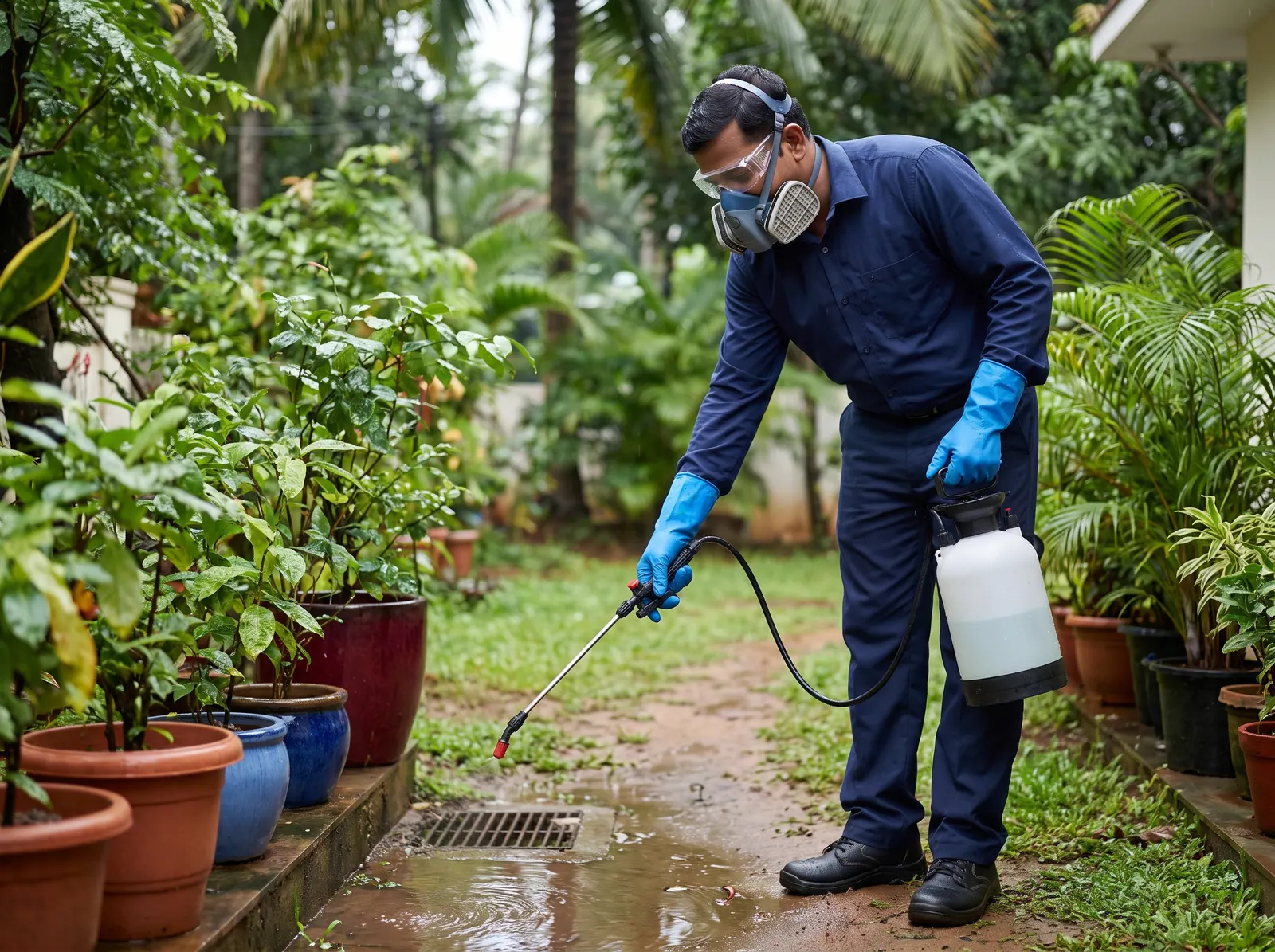
Homes near plantations, or with mature trees in the compound, may see termites on tree bark, wooden fences and garden sheds. If left alone, these colonies can work their way towards the house. Our garden termite treatment deals with affected trees and soil. A few habits also help:
- store firewood, spare timber and coconut husks off the ground and away from the walls
- remove dead stumps and old wooden stakes
- fix leaking taps and clear blocked drains near the foundation
Not all damaged wood is caused by termites. Small round exit holes with fine powder beneath them usually point to wood-boring beetles, which need a different treatment. See wood borer treatment in Ponda for that problem.
How much does termite control in Ponda cost, and what does the warranty cover?
There is no fixed price, because no two properties are the same. The cost depends on:
- the built-up area
- how many entry points need treatment
- the type of flooring we need to drill through
- whether the job is pre-construction or post-construction
- how easily we can reach the affected areas
We give you a clear quote after the inspection, before any work begins. Payment can be made by cash, UPI, card, net banking or bank transfer, as set out in your quotation or invoice. If you need to cancel, please do so at least 48 hours before the visit, as a late-cancellation fee may apply.
For specific services, a warranty applies to the treated area, as set out in your service agreement. The terms vary with the treatment. The warranty does not cover structural changes, new construction, or problems caused by post-service instructions not being followed. Termites can also arrive from a neighbouring plot or an untreated building. If this happens, we will advise you on how to reduce the risk.
What can you expect from our Goa branch?
- A licensed pest control operator (Directorate of Agriculture, Goa), using CIB&RC-registered products
- An Integrated Pest Management approach: inspection, advice on moisture and proofing, then targeted treatment
- Service reports after each visit and WhatsApp updates
- Material Safety Data Sheets maintained for the products we use
In 2026, the company received the Indian Eminence Award (Goa), Certificate of Excellence.
Which parts of Ponda do we cover?
Our company records list Ponda town, Farmagudi, Kundaim, Shiroda and Usgao. If you are elsewhere in Ponda taluka, tell us your village or locality and we will confirm whether we can help. For other pest problems in the area, see our pest control services in Ponda.
To arrange a termite inspection, contact our Goa branch in Chimbel. Tell us where the property is, what type of building it is, and what you have noticed. Photographs of mud tubes or damaged wood are very helpful. We will then suggest the next step.
Frequently asked questions
QDo you treat termites in flats in Ponda housing societies?
Yes. We treat individual flats using the post-construction method, working within the society's rules on access and timing. Termites often travel through shared walls, ducts and common areas. If neighbours are seeing the same signs, it helps to involve the society committee so that staircases, ducts and ground-floor areas can be inspected too. Treating only one flat may leave a route open for termites to return from an untreated area.
QWill drilling damage my floor tiles or granite?
The holes are small and are drilled at intervals along the base of walls and at entry points. They are sealed once treatment is complete. Depending on the flooring, the sealed holes may remain faintly visible, so we discuss where to drill during the inspection. Where possible, we choose grout lines or less visible positions. If you have expensive or delicate flooring, please mention it when you contact us.
QHow long does a post-construction termite treatment take?
It depends on the size of the property and the number of points that need treatment. Most treatments in a typical house or flat are completed within a few hours. Larger houses, commercial premises or buildings with many affected areas take longer. After the inspection, the technician will give you an estimated time so you can plan your day around the visit.
QCan my family stay at home during the treatment?
Usually, yes, though it is better if children and pets are kept away from the rooms being treated. They should stay out until surfaces are dry, or for as long as the technician advises. Keep windows open for ventilation and wash your hands after touching treated areas. If anyone in the household has a health condition, mention it beforehand. Anyone who feels unwell afterwards should see a doctor.
QI saw winged termites once after the rains. Do I need treatment?
Winged termites appearing indoors can mean a colony is nearby, possibly in the building, the soil around it or a garden tree. A single sighting does not always mean your woodwork is being damaged, but it is worth an inspection. We check frames, cupboards and wall joints for mud tubes and hollow wood, and tell you honestly whether treatment is needed now.
QWhat should a builder in Ponda arrange before pre-construction treatment?
Share your construction schedule with us early, so we can plan visits for each stage: foundation trenches, plinth filling and the external perimeter. Each stage must be treated before it is covered, so tell us a few days before excavation or flooring work is due. Make sure there is clear access to the area on the day. We provide a report for each stage for your project records.
QIf termites are in one cupboard, is the whole building infested?
Not necessarily, but termites in furniture usually reached it from somewhere: a wall, the floor or a damp corner. That is why we check the surrounding wall–floor junctions, not just the cupboard itself. Sometimes treating the woodwork and the nearby entry points is enough. In other cases, the inspection shows activity in several rooms and a wider treatment is the better option.
Last updated 13 October 2026. Information on this page is general guidance; your technician will advise on your specific property after inspection.