Quick answer
Rats get into parked cars in gated communities because engine bays are warm, dark and sheltered. They gnaw wiring because their teeth never stop growing. Treating one car at a time rarely works. Keep parking areas free of food waste and clutter, check engine bays regularly and ask your workshop about physical guards. The society should also run a coordinated, monitored rodent programme covering walls, drains and bin areas.
Key points
- Rats and mice gnaw constantly because their front teeth keep growing, so car wiring and hoses are easy targets.
- Engine bays attract rodents because they are warm, dark, sheltered and often left undisturbed.
- Food waste, clutter, open drains and feeding of animals near parking make the problem more likely.
- Repellent sprays and ultrasonic devices give inconsistent results; loose poison should never be placed in or under cars.
- A society-wide programme with hygiene, proofing and mapped, tamper-resistant bait stations works better than individual fixes.
If you live in a gated community in the Hyderabad region, you may have found chewed wires, droppings on the engine cover or a nest of shredded material under the bonnet. Many residents face the same thing. Rats damaging car wiring is a frequent and costly complaint wherever cars stay parked for long periods close to food, drains and cover.
This guide explains why rodents choose engine bays and what individual car owners can do. It also covers why a society-wide approach usually works better than one resident acting alone.
Why do rats choose car engine bays?
To a rat, a parked car is a ready-made shelter. The engine bay offers several things rodents look for:
- Warmth: an engine stays warm for some time after a drive, which is especially welcome on cooler nights.
- Darkness and cover: the space under the bonnet is enclosed and quiet, and protected from cats, dogs and people.
- Nesting material: foam, insulation pads and dry leaves trapped near the windscreen can be shredded into bedding.
- Little disturbance: second cars, cars left while families travel and vehicles used only at weekends can sit untouched for days.
- Food nearby: bin areas, kitchen waste, pet food and grain scattered for birds often lie within easy reach of parking.
Why do they chew the wiring?
A rodent's front teeth grow throughout its life, so it gnaws constantly to keep them worn down. Wires, hoses and plastic covers are convenient things to chew, and pieces of them are also carried off as nest material.
The damage can range from a warning light on the dashboard to a wiring harness that needs replacing. Chewed wires or hoses can also affect how safely the car runs. If you find damage, have a workshop check the car before you drive it any distance.
What are the early signs of rats in a car?
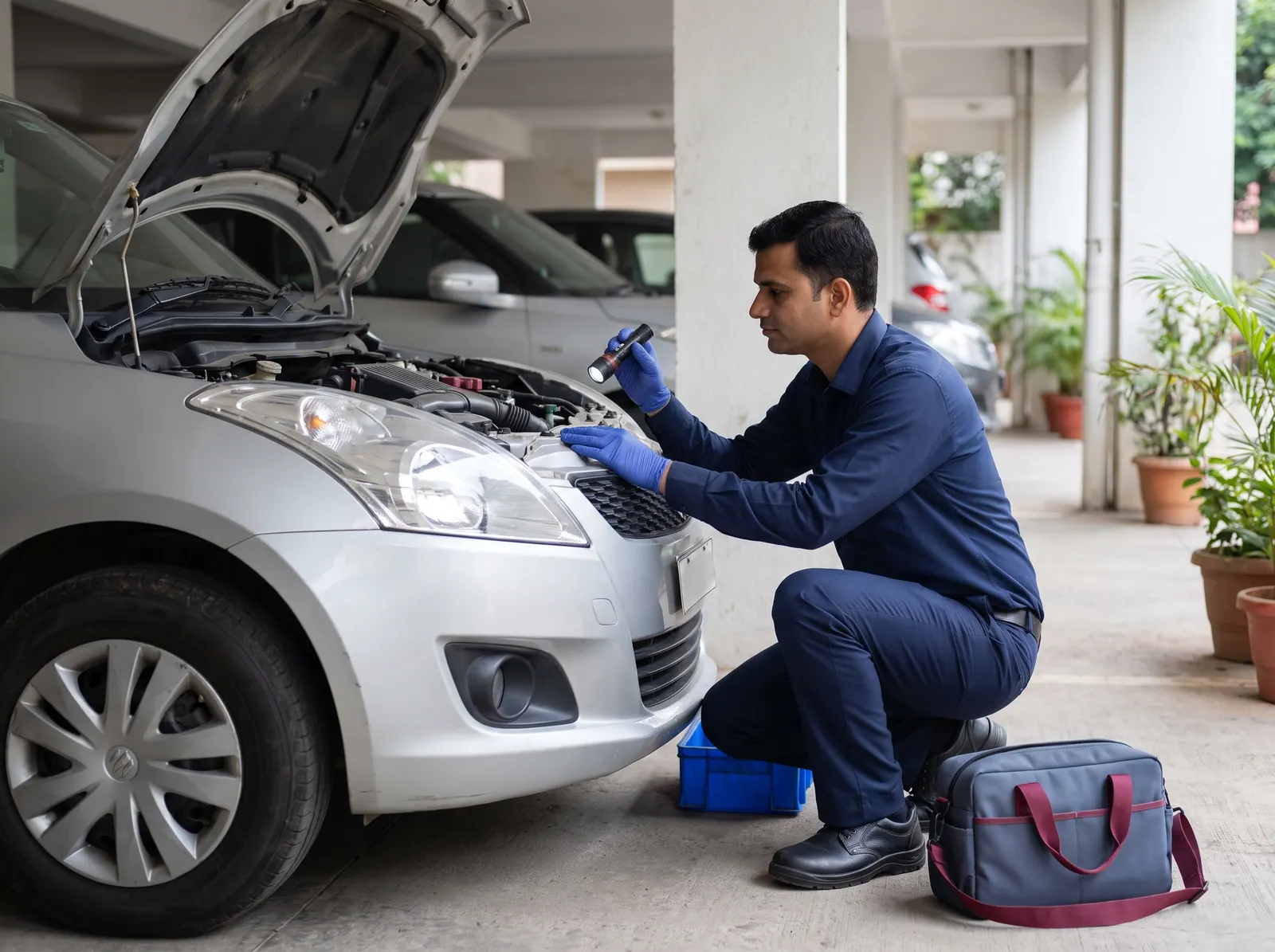
Catching the problem early usually means a smaller repair bill. Look for:
- Droppings on the engine cover, the battery or the floor of your parking slot
- Shredded paper, cloth, leaves or foam packed into corners of the engine bay
- Gnaw marks on wires, hoses or plastic covers
- Small footprints or smudge trails on a dusty bonnet or windscreen
- Stored food such as seeds or fruit pieces hidden under the bonnet
- An unusual musty smell when the blower is switched on
- Rats seen running along parking walls, drains or cable trays in the evening
Handle droppings and nest material with care. Wear disposable gloves and dampen the area before wiping, rather than sweeping it dry. Bag the waste and wash your hands well afterwards. Rodent urine and droppings can carry disease, so if you feel unwell after contact, see a doctor.
Why do gated communities in the Hyderabad region see this problem?
Gated communities concentrate many of the things rodents need in one place. Stilt and basement parking sits close to garbage collection points, drains, landscaped beds and utility ducts. Many vehicles also stand still for long stretches.
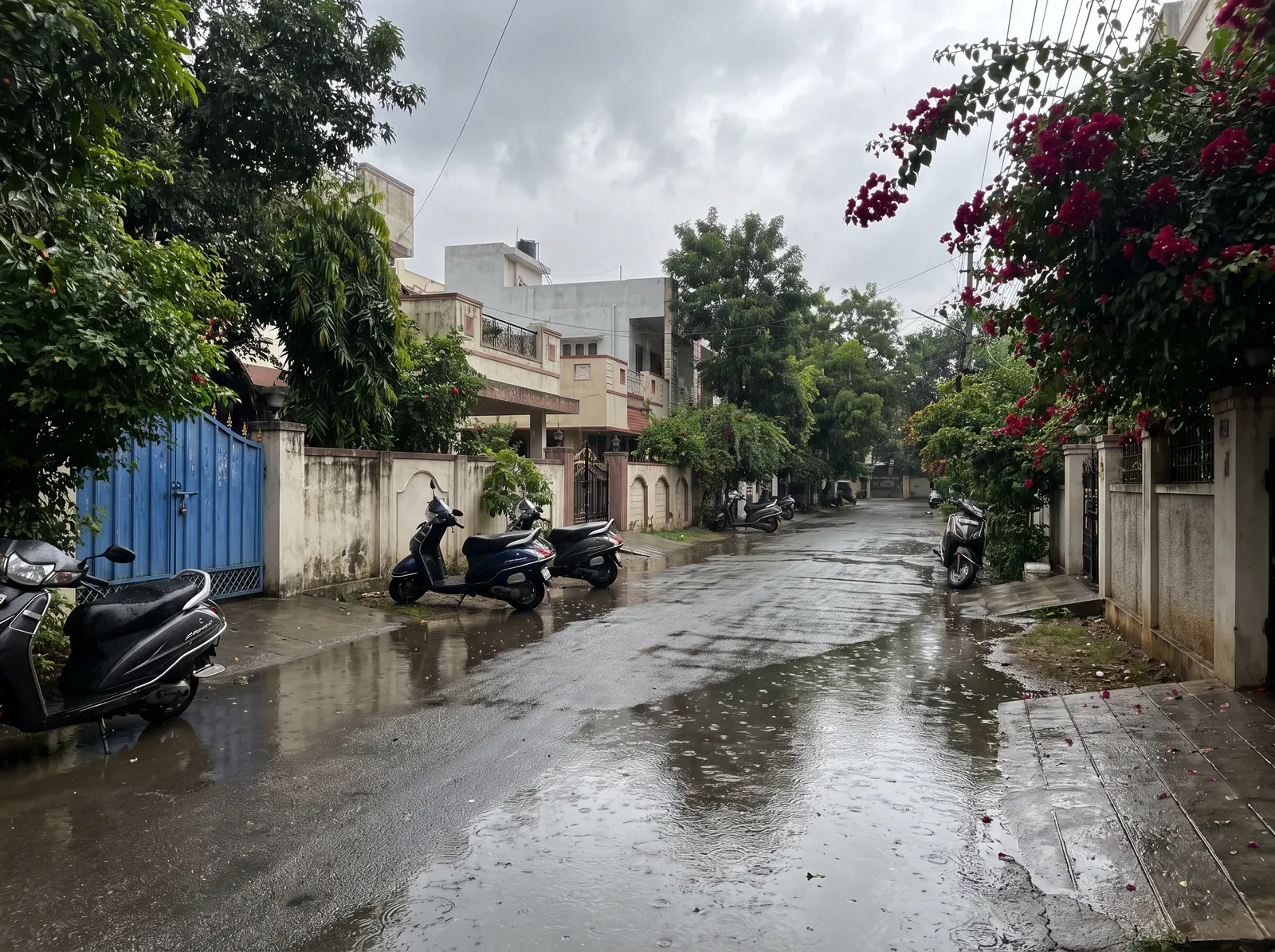
Seasons play a part too. During the monsoon, heavy rain can flood burrows and push rodents towards dry, sheltered spots such as parking levels. Our guide to monsoon pests in Hyderabad covers this in more detail. In the hot, dry summer, shade and any leaking tap or drain near parking become attractive.
Newer communities on the edges of the city often border open land or ongoing construction. Rodents there can be displaced towards occupied buildings.
Parking-area hygiene: what removes the attraction?
The most lasting gains come from making parking areas less inviting. The checklist below is something a facility manager or housekeeping supervisor can work through:
- Keep garbage collection points away from parking, use bins with closing lids and clear them on a fixed schedule.
- Do not let food waste, delivery packaging or leftover snacks from security cabins collect in basements.
- Remove clutter such as old tyres, cartons, scrap furniture and construction leftovers, which give rats cover.
- Trim hedges and creepers near open parking, and keep a clear strip along boundary walls.
- Fit and maintain covers on storm drains and inspection chambers, and fix leaking taps and pipes.
- Seal gaps around cable trays, pipes and service ducts where they pass through walls.
- Agree with residents not to feed birds, stray animals or pets in or next to parking areas.
If your community is newly handed over, these points are easier to fix early. Our pest checklist for new gated-community handovers covers what to inspect before residents move in.
Deterrence and monitoring for individual car owners
While the society works on the wider problem, a few habits reduce the chance of rats settling in your own car:
- Move the car regularly. Even a short drive or a shift of position disturbs a rodent before it settles.
- Do a quick bonnet check. Look under the bonnet once or twice a week, and clear away leaves and debris near the windscreen.
- Keep food out of the car. Snack wrappers, crumbs and grocery spills attract rodents into the cabin as well.
- Ask your workshop about physical guards. Some workshops fit mesh over openings or use rodent-resistant tape on vulnerable wiring. Ask what suits your model.
- Report sightings. Tell the facility manager about every sighting or damage incident, so a pattern can be seen across the community.
Be cautious with repellent sprays and ultrasonic devices. Results are inconsistent, and rodents often get used to them. Do not place rat poison or glue boards inside or under your car. A poisoned rat may die in the engine bay or a duct, causing smell and hygiene problems. Loose bait also puts children, pets and stray animals at risk.
How should a society run a rodent programme?
Rats move freely between parking levels, drains, gardens and bin areas. One resident protecting one car simply pushes the problem to the next slot. A coordinated programme led by the managing committee or facility manager works far better.
- Name one point of contact and keep a simple log of sightings and car damage by location and date.
- Inspect the whole site: boundary walls, parking levels, drains, bin areas, landscaping, electrical and plant rooms, and service ducts.
- Fix hygiene and proofing first: waste handling, drain covers, wall gaps and door gaps on plant rooms.
- Place tamper-resistant bait stations along walls and runways, never inside cars. They should be locked, numbered and marked on a site map, and serviced by a licensed operator. Traps can be used where bait is unsuitable.
- Review on a schedule with written service records, and move or add stations according to the activity found.
- Keep residents informed about where stations are, why they must not be disturbed and how to report problems.
| Who | Main responsibilities |
|---|---|
| Residents | Move cars regularly, check engine bays, keep food out of vehicles, report sightings |
| Managing committee | Approve the programme, set rules on feeding and clutter, review progress |
| Facility manager and housekeeping | Waste schedules, drain and duct upkeep, clutter removal, sighting log |
| Pest control provider | Inspection, station placement and servicing, proofing advice, service records |
Many of the same principles apply to individual homes and larger sites. See our guides on rodent-proofing independent houses and villas and rodent risks in airport-area warehouses and logistics parks.
What should a society ask a pest control provider?
- Is the operator licensed under the state's pest control licensing, and are the products CIB&RC-registered under the Insecticides Act, 1968?
- Are Material Safety Data Sheets available for the products used?
- Does the plan start with inspection, sanitation and proofing advice rather than treatment alone?
- Will you receive a station map and a written report after each visit?
- How will children, pets and stray animals be protected around bait stations?
At our established Goa operation, we follow an Integrated Pest Management approach. That means inspection, sanitation and proofing advice, then targeted treatment. We maintain safety data sheets for the products we use and share service reports after visits. You can read more about how we work.
Talk to our Shamshabad branch
Our Shamshabad branch has recently opened. Tell us your location and the problem, whether it is one car or a whole parking level, and we'll confirm whether we can help. Branch details are on our Hyderabad branch page, and common questions are answered in the Hyderabad branch FAQ.
Frequently asked questions
QWill leaving the bonnet open overnight keep rats away?
Some owners find that an open bonnet makes the engine bay lighter and less sheltered, which can discourage nesting. It is not a dependable fix, though. In shared parking it may also raise security or safety concerns, so check your society's rules first. Regular movement of the car, routine bonnet checks and a clean parking area tend to be more useful, alongside a society-wide programme.
QDo ultrasonic rat repellers for cars actually work?
Results are mixed. Some owners report a short-term effect, but rodents often become used to the sound, especially when food and shelter are close by. Treat these devices as a supplement at best. Removing food sources, sealing gaps, checking the engine bay and asking your workshop about physical guards for wiring will usually do more.
QCan I put rat poison in my own parking slot?
It is best not to. Loose bait in a shared parking area can be reached by children, pets and stray animals. A poisoned rat may also die inside your car or a duct, leaving a smell and a hygiene problem. If baiting is needed, it should be done by a licensed operator using locked, tamper-resistant stations placed as part of a planned programme.
QDoes car insurance cover wiring damage caused by rats?
It depends on your policy and insurer. Cover for rodent damage varies between policies and add-ons. Read your policy wording or ask your insurer before repairs begin, and keep photographs of the damage and the workshop's report. Reporting the incident to your facility manager also helps build a record, which supports the case for a society-wide programme.
QHow soon will a society rodent programme show results?
There is no fixed timeline. It depends on how many rodents are present, how quickly hygiene and proofing issues are fixed, and whether neighbouring land keeps supplying new rodents. Regular servicing of bait stations, a sighting log and scheduled reviews show whether activity is falling. Results usually improve once waste handling and gaps in walls and drains are dealt with consistently.
QAre rat droppings in the car a health risk?
Rodent urine and droppings can carry disease, so clean them carefully. Wear disposable gloves and dampen the area before wiping instead of sweeping dry. Bag the waste and wash your hands thoroughly. If droppings are inside the cabin or air vents, a workshop can advise on cleaning. If you feel unwell after contact, see a doctor.
QCan your Shamshabad branch help our gated community?
Our Shamshabad branch has recently opened and is confirming coverage area by area. Share your community's location and describe the problem, such as the number of cars affected and where rats are seen. We will then confirm whether we can help. In the meantime, the hygiene and monitoring steps on this page are worth starting straight away.
Last updated 13 October 2026. Information on this page is general guidance; your technician will advise on your specific property after inspection.