Quick answer
Rats in a shop usually show themselves through droppings near stock, gnawed sacks and packets, grease marks along walls and noises after closing. In a Hyderabad kirana store, the best defence is to raise stock off the floor and away from walls, keep open grain in sealed containers, close gaps under shutters and doors, and clear spills and waste every night. If signs keep returning, get a professional inspection rather than scattering poison near food.
Key points
- Droppings, gnawed packets, spilled grain and grease marks along walls are the most reliable signs of rodents in a shop.
- Raising stock off the floor, leaving a gap from walls and storing loose grain in sealed containers removes food and hiding places.
- Gaps under shutters, open drains and pipe openings are common rodent entry points in small shops.
- Scattering loose poison near food risks contaminating stock and harming people and pets.
- Food shops are expected under FSSAI hygiene requirements to keep premises free of pests, and written service records help show this.
If you have found droppings behind the rice sacks or a torn biscuit packet on the bottom shelf, you are not alone. Rats in a shop are a common worry for kirana owners across Hyderabad, because a neighbourhood grocery store packs open grain, pulses, snacks and packaged goods into a small space with plenty of hiding places. This guide explains how to recognise the signs, protect your stock and set up simple routines that make your shop far less attractive to rodents.
Why do kirana stores and small shops attract rodents?
Rodents look for three things: food, shelter and a way in. A typical kirana store offers all three. Loose grain and flour spill easily, sacks are often stacked against walls, and the back storeroom is rarely disturbed.
Small shops also tend to share walls, drains and roof spaces with neighbouring units. Rats and mice can move between buildings along cables, drains and gaps under shutters, so a problem next door can quickly become yours. Deliveries arriving in sacks and cartons can occasionally bring mice in with them.
What are the signs of rats or mice in a shop?
Rodents are mostly active at night, so you will usually see evidence before you see the animal. Check for these signs when you open up in the morning:
- Droppings near sacks, along shelf edges, behind fridges and in corners. Fresh droppings are dark and soft; older ones are dry and crumbly.
- Gnawed packaging such as chewed corners on biscuit and namkeen packets, holes in jute or plastic sacks, and nibbled soap or candle stock.
- Spilled grain or flour trailing away from a sack, sometimes with small footprints in the dust.
- Dark grease marks along walls, skirting and pipes where rodents repeatedly brush past.
- Gnawing on the shop itself, for example on wooden shelves, door frames, plastic pipes or electrical cable insulation.
- Nests of shredded paper, cardboard or cloth in quiet spots such as under counters or at the back of the storeroom.
- Scratching or squeaking heard after closing, especially from false ceilings or behind shelving.
- A musty, stale smell in enclosed corners, which can indicate urine build-up.
- Burrows or holes near the shop’s outer walls, drains or the area where waste is kept.
Does it matter whether it is a rat or a mouse?
It does. Mice are small, can squeeze through very narrow gaps and often live inside shelving or stock. Rats are larger, more cautious of new objects and may enter from drains, burrows or roof spaces. Mouse droppings are tiny and pointed; rat droppings are noticeably larger. Knowing which one you have helps decide where to look for entry points and how traps should be placed.
How can you protect grain, snacks and packaged stock?
Stock protection is the part of rodent control you control every day. The aim is to remove easy food and hiding places so rodents have no reason to stay.
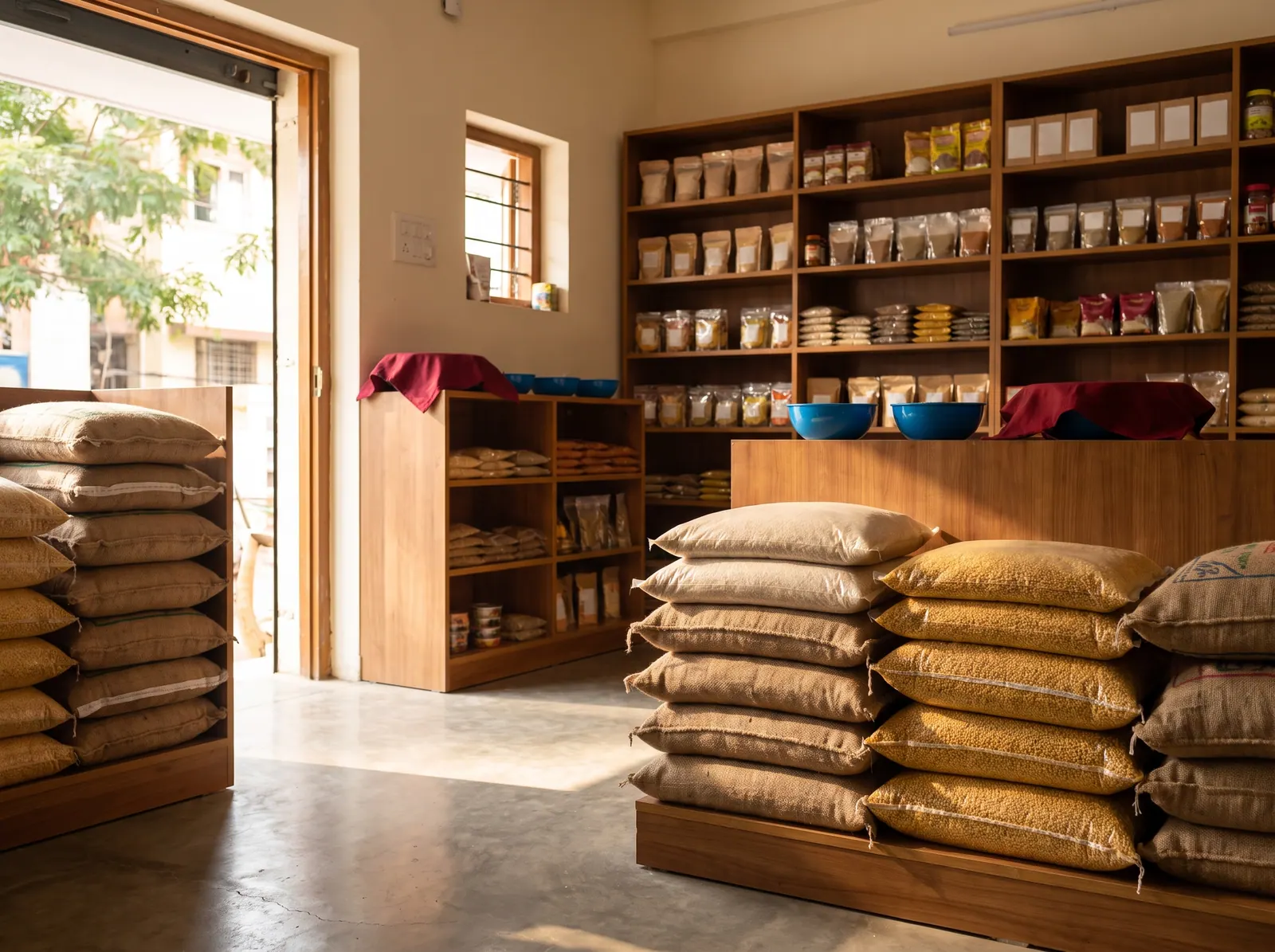
- Raise stock off the floor. Keep sacks and cartons on pallets, racks or platforms rather than directly on the floor.
- Leave a gap from the wall. A small gap between stock and walls lets you see and clean behind it, and removes a protected runway.
- Use sealed containers for loose goods. Store open grain, dal, sugar, flour and dry fruit in lidded metal or thick plastic bins rather than open sacks.
- Rotate stock. Sell older stock first so cartons do not sit untouched for months at the back of the store.
- Check deliveries before shelving. Look for gnaw marks, droppings or holes in sacks and cartons, and reject or separate damaged items.
- Keep the storeroom orderly. Flatten and remove empty cartons promptly; piles of cardboard make ideal nesting material.
- Discard contaminated food. Anything with gnaw marks, droppings or signs of urine should not be sold.
When cleaning up droppings, wear gloves, dampen the area with a household disinfectant first rather than sweeping dry droppings into the air, wipe up, and wash your hands afterwards. If you or a staff member is bitten, or feels unwell after contact with rodent mess, see a doctor.
What should a shop routine for rodent prevention look like?
Short, regular habits work better than a big clean-up once in a while. This routine can be shared with staff and adjusted to your shop:
| When | What to do |
|---|---|
| Every night at closing | Sweep spills, especially around grain and flour; close all bins and containers; remove food waste from the shop; bring down shutters fully. |
| Every morning | Look for fresh droppings, torn packets and grease marks; note where you find them. |
| Weekly | Move a few sacks and cartons to clean behind and under them; clear empty cartons; check drain covers. |
| Monthly | Inspect shutters, doors, pipe openings and wall gaps for new holes or damage; check the storeroom and false ceiling where accessible. |
| Before and after the monsoon | Check drains, outer walls and the waste area; repair gaps before rains push rodents to look for dry shelter. |
How do rodents get in, and how do you close the gaps?
Most rodents enter through openings that shop owners stop noticing. Common entry points in small shops include:
- Gaps under rolling shutters and back doors, particularly where the floor is uneven.
- Open or broken drain covers and floor traps.
- Holes where pipes, cables and AC lines pass through walls.
- Gaps around false ceilings and shared roof spaces.
- Cracks in walls or plinths near the waste storage area.
Rubber or brush strips at the bottom of shutters and doors, intact drain covers, and sealing holes with materials that rodents cannot easily chew through all help. Keeping the area outside the shop free of waste and clutter matters just as much, because rodents settle where food is nearby.
What should you avoid doing?
When rats in a shop become a daily problem, it is tempting to grab the quickest fix. Some common approaches cause more trouble than they solve:
- Scattering loose poison or homemade bait mixtures near food. This risks contaminating stock, and can harm children, pets and customers.
- Leaving rodents to die in hidden places. Poisoned rodents can die inside walls, ceilings or shelving, causing smells and attracting flies.
- Relying only on glue boards. They may catch a few animals, but do nothing about entry points or food sources, and trapped rodents need prompt handling.
- Ignoring the cause. Killing a few rodents without removing food and closing gaps usually means new ones arrive.
For more general guidance, our article on the dos and don’ts of pest control covers safe habits that apply to any premises.
Does rodent activity change through the year in Hyderabad?
Rodents are present year-round, but conditions can shift where you notice them. During the monsoon, heavy rain can flood drains and burrows, and rodents may look for dry shelter indoors. In the hot, dry summer, water sources such as leaking taps, AC drip lines and water storage can draw them in.
Our guides to monsoon pests in Hyderabad and the month-by-month Hyderabad pest calendar explain what else to watch for as the seasons change.
When should you call a professional?
Good routines prevent many problems, but some situations need a trained inspection. Consider calling a pest management professional if:
- You keep finding fresh droppings or damaged stock despite cleaning and sealing.
- You see rodents during the day, which can suggest a larger population.
- There are burrows near the shop or gnawing on electrical cables.
- Rodents appear to be coming from a shared wall, drain or roof space you cannot access.
- You notice a strong smell that may indicate a dead rodent in a hidden spot.
- Your food business needs written proof of pest control for inspections.
How does a professional rodent programme for a shop usually work?
Efficacy Pest Control follows an Integrated Pest Management (IPM) approach: inspection first, then sanitation and proofing advice, then targeted treatment. For a small shop, this generally means identifying the species and entry points, recommending repairs and storage changes, and using traps and tamper-resistant bait stations placed away from food, with their positions recorded so they can be checked on follow-up visits. Material Safety Data Sheets are maintained for the products used.
Shops that sell food are expected under FSSAI hygiene requirements to keep their premises free of pests, and documented pest control helps show this. Our guide to pest control records for food businesses in Telangana explains what such records usually include. If you also run a storage godown, the guide on rodent risks in warehouses and logistics parks covers larger-scale stock protection.
Getting help in the Hyderabad region
Efficacy Pest Control is an established company in Goa, and our Shamshabad office brings the practices developed there to the Hyderabad region. Our Shamshabad branch has recently opened — tell us your location and the problem, and we’ll confirm whether we can help. You can learn more on our Hyderabad branch page or read how we work.
Frequently asked questions
QCan I still sell packets that a rat has nibbled?
No. Any food with gnaw marks, holes in the packaging, droppings nearby or signs of urine should be removed from sale and discarded. Rodents can contaminate food in ways you cannot see. Check neighbouring packets on the same shelf too, and clean the area with gloves and disinfectant before restocking. Keeping stock off the floor and in sealed containers reduces how much you lose next time.
QWill keeping a cat in the shop solve a rat problem?
A cat may deter some mice, but it rarely solves an established problem, especially with rats, which are larger and cautious. A cat in a food shop also brings its own hygiene concerns, such as hair and litter near stock. Removing food sources, closing entry points and, where needed, a planned trapping or baiting programme are more reliable.
QHow long does it take to get rid of rats in a shop?
It depends on how many rodents there are, how they are getting in and how quickly gaps and storage issues are fixed. Some shops see a clear drop in activity within a few weeks, while shared walls or drains can make it slower. Ongoing monitoring matters, because new rodents can arrive from outside if entry points stay open.
QAre rat poison cakes safe to use in a grocery store?
Placing loose poison in a shop that sells food is risky. Bait can be carried by rodents onto shelves and stock, and it can harm children, pets or staff. Poisoned rodents may also die in hidden spots and cause smells. Professionals use tamper-resistant bait stations placed away from food and recorded on a map, alongside traps and proofing.
QDo I need pest control records for my kirana store?
If your shop handles or sells food, FSSAI hygiene requirements expect the premises to be kept free of pests. Written service reports showing what was inspected, where traps or stations are placed and what was found are a practical way to show you are managing this. Keep these records together so they are easy to show during an inspection.
QCan your Shamshabad branch help with rats in my shop?
Our Shamshabad branch has recently opened and is confirming services and coverage area by area. Tell us your shop’s location and what you are seeing, such as droppings, damaged stock or burrows, and we’ll confirm whether we can help. In the meantime, the storage and closing routines in this guide are worth starting straight away.
Last updated 13 October 2026. Information on this page is general guidance; your technician will advise on your specific property after inspection.