Quick answer
Termites can attack a new flat in Hyderabad within months of fit-out. Subterranean termites travel from the soil through cracks, conduits and joints, and new plywood wardrobes, modular kitchens and wooden flooring give them food, moisture and cover. Check the empty flat and ask your builder for anti-termite treatment records before carpentry starts. Choose treated, moisture-resistant boards, raise units off the floor, and watch for mud tubes and hollow-sounding wood.
Key points
- Subterranean termites travel from the soil through cracks, conduits, joints and shafts to reach cellulose such as plywood, MDF and timber.
- New interiors are vulnerable because of residual moisture, leftover construction debris and cabinetry fixed tightly against walls and floors.
- The easiest time to inspect and, if needed, treat a flat is before wardrobes and kitchen units are installed.
- Mud tubes, hollow-sounding wood, blistered laminate and shed wings point to termites; fine powder and small holes usually point to wood borer.
- IS 6313 Part 2 covers pre-construction and Part 3 post-construction anti-termite treatment; ask your builder for treatment records and warranty details.
Termites in a new flat can come as a real shock. A freshly built apartment block can still have termite activity in the soil beneath and around it, and a new fit-out adds a great deal of food: plywood wardrobes, modular kitchen carcasses, wooden flooring, door frames and false-ceiling framing. Where termites are already active, new interiors can be attacked within months, often out of sight behind a wardrobe or under a sink unit.
This guide is for flat owners, interior designers and carpenters planning or finishing a fit-out in Hyderabad. It covers why new interiors are vulnerable, how to choose and protect materials, the early signs to watch for, and the questions to put to your builder before the carpentry goes in. For the wider picture of soil, climate and construction-stage risk, see our guide to termite risk in Hyderabad's soils and new construction.
Why are new interiors so vulnerable to termites?
The termites that cause most damage to buildings in India are subterranean termites. They live in colonies in the soil and forage for cellulose, the material in wood, plywood, MDF, particle board, paper and cardboard. They avoid light and dry air, so they move through cracks, joints and gaps, or build mud tubes over exposed surfaces.
A newly built and newly furnished flat gives them several advantages:
- Moisture. Concrete, plaster and floor screed take time to dry out fully, and kitchens and bathrooms add moisture every day. Termites need humidity, and damp wall–floor junctions suit them.
- Leftover cellulose. Shuttering timber, wooden pegs, offcuts, cement bags and packaging left in basements or buried in backfill can feed termites close to the building before they find their way into the flats.
- Hidden pathways. Electrical conduits, plumbing sleeves, expansion joints, service shafts and hairline cracks give termites routes into a building, and in some cases up to higher floors.
- Interiors fixed hard against walls and floors. Full-height wardrobes, kitchen base units on wooden battens and wooden flooring laid over concrete put cellulose in direct contact with the joints termites use.
- Concealment. Once a wardrobe back panel or kitchen kickboard is fixed, the wall behind it is rarely seen again. Termites can feed for a long time before anyone notices.
None of this means every new flat will have termites. It means the weeks just before fit-out are the best time to check, because a problem is far easier to deal with before carpentry covers the walls.
What should you check before the fit-out starts?
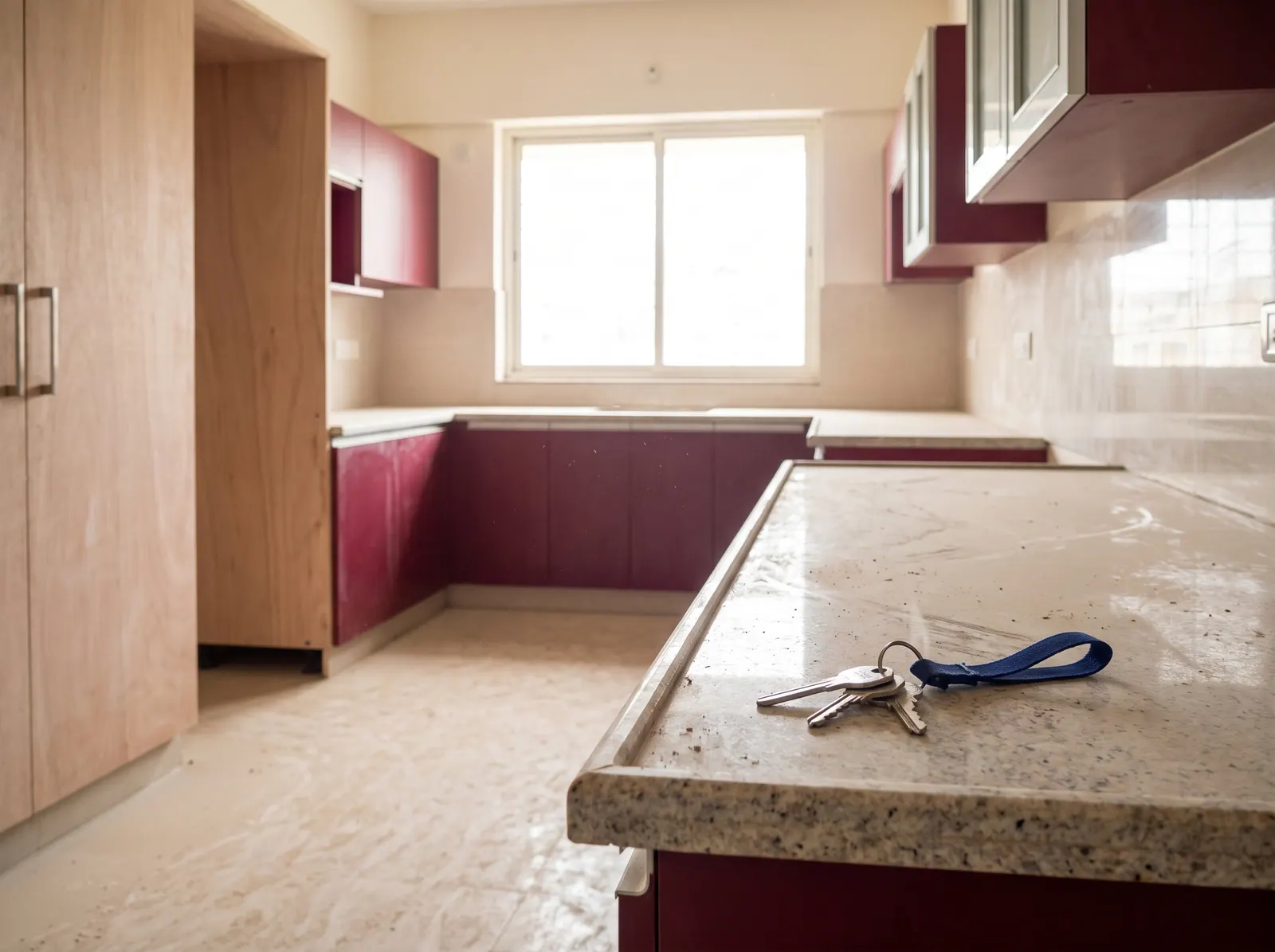
An empty flat is the easiest space to inspect and, if needed, to treat. Before your designer or carpenter begins:
- Walk through with a torch and look closely at wall–floor junctions, door frames, window frame edges, electrical points and any service duct openings for mud tubes or soil-like deposits.
- Look at the building's basement, stilt parking, ground-floor areas and the base of external walls. Activity there is a warning even if your own flat looks clean.
- Ask the builder for records of anti-termite treatment (see the questions below).
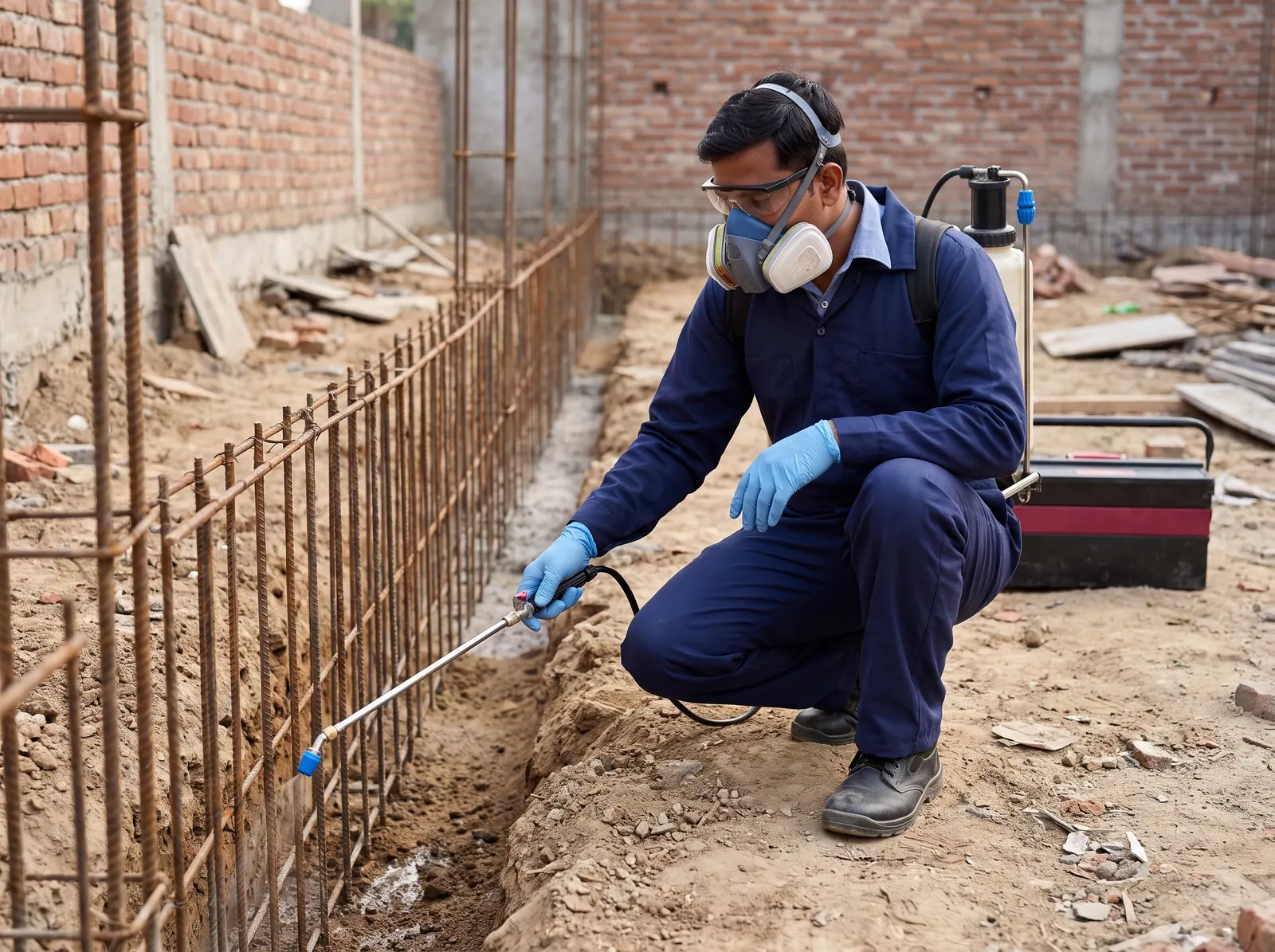
- If you see signs of activity, or there is no record of treatment, arrange a professional inspection before carpentry begins. Post-construction treatment involves drilling along the wall–floor junction, filling the holes with a treatment and sealing them, which is much simpler in an empty room than behind installed cabinets. Our guide to post-construction termite treatment for flat owners explains the process.
- Keep the flat and any store room clear of cardboard, wood offcuts and packing material throughout the fit-out, not just at the end.
How should you choose and treat materials?
No board or timber is completely termite-proof, but choices made at the design stage reduce the risk and make problems easier to spot early. These are worth discussing with your interior designer and carpenter.
Boards and timber
- Ask suppliers for plywood and boards that the manufacturer states are treated against termites and borers, and keep the invoice or product literature that says so. Check that the claim applies to the exact grade you are buying.
- For kitchens, bathroom vanities and anything near water, choose moisture-resistant grades. Damp, swollen board is more attractive to termites and fails sooner.
- Seal all cut edges with edge banding or a suitable finish. Raw edges absorb moisture and are often where damage starts.
- Solid timber for door frames and shutters should be well seasoned and, where appropriate, treated before fixing. Any chemical wood treatment should use CIB&RC-registered products applied according to the label, ideally by a trained operator rather than improvised on site.
Design details that help
- Raise kitchen base units on legs or plinths made of non-wood material, such as aluminium, steel or PVC, rather than wooden battens resting on the floor.
- Where practical, leave a small ventilated gap between wardrobe backs and walls rather than fixing carcasses tight over the wall–floor junction.
- Consider non-cellulose materials for the most exposed spots, such as the sink-unit carcass, shoe racks by the entrance and bathroom vanities. Read manufacturers' claims for composite boards carefully, as some contain wood fibre.
- Fix leaking taps, traps and drain joints before the kitchen is installed, and make sure the sink unit can be opened up easily for inspection.
- Leave removable panels or kickboards at the base of wardrobes and kitchen units so the wall–floor junction can be checked later.
- For wooden or laminate flooring, ask the installer how moisture from the slab is managed and how the floor meets the skirting.
Where do termites tend to show up in a furnished flat?
| Area | Why it is at risk | What to check |
|---|---|---|
| Wardrobes | Fixed against walls; back panels hide the wall | Lower back corners, skirting line, mud lines at the base |
| Modular kitchen | Moisture from the sink; base units close to the floor | Inside the sink unit, kickboard edges, behind appliances |
| Wooden or laminate flooring | Large area over concrete; gaps at the edges | Edges along skirting, soft or hollow patches, lifting boards |
| Door frames | Frame bottoms sit on or in the floor | Base of frames, hollow sound when tapped |
| False ceilings with wooden framing | Conduits and cracks connect to the ceiling void | Around light cut-outs and electrical points |
| Puja units, TV units, bookshelves | Fixed to walls, rarely moved; paper stored low | Behind and beneath, and any books or papers at the bottom |
What are the signs of termites in a new flat?
- Mud tubes: thin, earth-coloured tunnels running up walls, along skirting, around door frames or out of switchboards and conduit openings.
- Surface changes: bubbling paint, blistered laminate or a faint wavy line under the paint.
- Weak wood: board or timber that sounds hollow or gives way when pressed, especially at the bottom of door frames and wardrobe sides.
- Soil where it should not be: small patches of mud at joints, in cracks or inside cabinets.
- Swarms and wings: winged termites indoors, often near lights in the evening around the early monsoon rains, and small piles of shed wings by windows and doors. Not every winged insect is a termite; our guide to flying ants versus flying termites helps you tell them apart.
Fine powder and tiny round holes in furniture usually point to wood borer rather than termites, because termites leave mud, not powder. If that is what you are seeing, read our guide to wood borer in new furniture.
If you find a mud tube, resist the urge to scrape it off and spray it. Breaking tubes and spraying household products can push termites to another route and make the source harder to trace. Photograph what you see, note where it is and leave it in place until it has been inspected.
What should you ask your builder?
Pre-construction anti-termite treatment is applied to the soil at stages of construction, and the Indian Standard IS 6313 (Part 2) covers it; Part 3 covers post-construction treatment of existing buildings. Before handover, or before you start interiors, it is reasonable to ask:
- Was pre-construction anti-termite treatment carried out, and at which stages of construction?
- Who carried it out, and do they hold a pest control operator licence?
- Were CIB&RC-registered products used, and can you share the treatment certificate or records?
- Is there a warranty from the applicator? What does it cover, how long does it run, and is it held by the builder, the owners' association or individual owners?
- Were construction debris, shuttering timber and packaging cleared from the basement, foundations and backfill?
- How are expansion joints, service shafts and pipe or conduit openings sealed?
- Has termite activity been seen anywhere in the project, and how was it handled?
- Will common areas such as basements, parking and gardens be inspected periodically?
Keep copies of whatever you receive with your flat documents. Developers can find more detail in our pre-construction anti-termite treatment guide for builders, and buyers collecting keys may find our pest checklist for new gated-community handovers useful.
Simple habits once you have moved in
- Every month or so, open the sink unit and the lowest wardrobe compartments and look at the back corners with a torch.
- Do not store cardboard boxes, old newspapers or spare wood directly on the floor, especially in lofts and store rooms.
- Fix leaks promptly and wipe up water that collects under the sink.
- On balconies and ground-floor sit-outs, keep planters and soil away from wooden furniture and door frames.
- Do a careful check after the monsoon, when swarming and damp conditions make activity more likely to show.
How is termite activity handled in an occupied flat?
A sound approach follows Integrated Pest Management: inspect first to find where termites are entering and what they are feeding on, give advice on moisture and proofing, and then treat in a targeted way. For occupied buildings this usually means post-construction drill-fill-seal treatment at the wall–floor junction and other entry points, plus treatment of affected woodwork.
Whoever you engage, ask whether they hold a state pest control operator licence, use CIB&RC-registered products, and can share safety information for what they apply; we maintain Material Safety Data Sheets for the products we use. During and after treatment, keep children and pets away from treated areas until they are dry or as advised, ventilate the rooms, and wash hands after touching treated surfaces. If anyone feels unwell, see a doctor.
Need help with termites in a new flat?
Efficacy Pest Control was founded in Goa, where our branch in Chimbel carries out termite control in homes and buildings, and we bring the same inspection-led practices to the Hyderabad region. Our Shamshabad branch has recently opened — tell us your location and the problem, and we'll confirm whether we can help. You can read more on our Hyderabad branch page.
Frequently asked questions
QCan termites reach a flat on an upper floor?
Yes, it can happen. Subterranean termites start in the soil, but they can travel up through cracks, expansion joints, electrical conduits and service shafts, staying hidden inside walls and ducts. Ground-floor flats and lower floors are generally more exposed, yet upper-floor owners should still check behind wardrobes, inside sink units and around switchboards, especially in a new building where activity has been seen in the basement or parking.
QMy builder says the building was treated before construction. Do I still need to check?
Pre-construction soil treatment lowers the risk but is not a reason to stop looking. Ask for the treatment records and any applicator warranty so you know what was done and who to approach if activity appears. Then inspect the empty flat before fit-out. If you find mud tubes or the records cannot be produced, get a professional inspection before the carpentry goes in.
QShould termite treatment be done before or after the interiors are installed?
If treatment is needed, before is far easier. Post-construction treatment involves drilling along the wall–floor junction and other entry points, filling and sealing the holes. In an empty flat the technician can reach every junction. Once wardrobes and kitchen units are fixed, they may need to be emptied, moved or partly opened, and some junctions become hard to reach.
QIs termite-treated plywood enough to protect my wardrobes and kitchen?
It helps, but it is only one layer. Treated board resists attack better than untreated board, yet raw cut edges, constant moisture and direct contact with the floor still raise the risk. Combine treated, moisture-resistant boards with sealed edges, non-wood plinths, fixed leaks and access panels for inspection, and deal with any activity in the building itself.
QCan I get rid of termites myself with a spray from the shop?
Surface sprays rarely reach the colony, which is usually in the soil or deep inside the structure. Spraying mud tubes or damaged wood can kill the termites you see while the rest move to another route, making the source harder to find. Do not mix chemicals or improvise treatments. Photograph the signs, leave them undisturbed and have the flat inspected.
QDoes Efficacy Pest Control provide termite treatment in Hyderabad?
Our Shamshabad branch has recently opened, and services and localities in the Hyderabad region are being confirmed area by area. Tell us where your flat is and what you are seeing, such as mud tubes, swarming or damaged woodwork, and we'll confirm whether we can help. Our established termite work is carried out by our Goa branch in Chimbel.
Last updated 13 October 2026. Information on this page is general guidance; your technician will advise on your specific property after inspection.