Quick answer
A termite problem in Hyderabad usually begins in the soil. Subterranean termites are widespread on the Deccan plateau. They are drawn to buildings by moisture and by buried wood such as stumps, roots and construction scraps. Risk rises on new and backfilled plots, where pre-construction treatment is skipped or disturbed, and where gardens are watered right up to the walls. Dry margins, wood-free soil and properly protected foundations lower the risk.
Key points
- Subterranean termites live in the soil and need moisture, so damp spots next to foundations draw them towards buildings.
- Buried stumps, roots and construction timber can sustain termite colonies under new buildings.
- IS 6313 Part 2 covers pre-construction soil treatment and Part 3 covers post-construction treatment of existing buildings.
- Soil disturbed after anti-termite treatment, for example by plumbing trenches, should be re-treated before it is closed up.
- A dry, wood-free strip of soil against the walls reduces garden-related termite risk.
A termite problem in Hyderabad usually starts below ground. The termites that damage homes across the Deccan are mostly subterranean species. They live in colonies in the soil and travel through it or through sheltered mud tubes. They feed on anything containing cellulose: timber, plywood, paper, cardboard, and the roots and stumps of dead plants.
Whether a particular house is attacked depends on what is happening in and around that plot. The soil, its moisture, the wood left in it and how the building was protected when it went up all matter. This guide explains those factors in plain terms. It pays particular attention to new layouts on the city’s growing edges, including the southern side towards the airport at Shamshabad.
Why do termites cause so much trouble around Hyderabad?
Subterranean termites are widespread on the Deccan plateau, and they were in the ground long before the houses arrived. Scrubland, orchards and farmland are being converted into layouts, but the colonies beneath do not simply disappear. Many survive and find a new food source in the buildings above.
Termites rarely announce themselves. Worker termites avoid light and dry air, so they stay inside soil, wood and mud tubes. A skirting board may sound hollow or a door frame may crumble, but by then a colony may have been feeding for months. That is why it helps to understand the risk early, ideally before or during construction, rather than reacting to damage.
How do soil and moisture affect termite risk?
Soils around Hyderabad vary from plot to plot. Some are lighter, sandy and gravelly soils derived from the region’s granite. Others are heavier, clay-rich soils. Subterranean termites can live in most of them. Moisture matters more than soil type, because termites lose water quickly and must stay in damp surroundings.
- Lighter, free-draining soils dry out quickly at the surface in summer. Termites then tend to move deeper or gather wherever moisture stays available.
- Heavier clay soils hold water longer after rain and can shrink and crack as they dry. Cracks in the soil, and in the slabs or plinths resting on it, can give termites hidden routes into a building.
- Moisture next to the building creates a damp patch that draws foraging termites close to the foundation. Common sources are a leaking pipe, a blocked drain, an overflowing sump, AC condensate dripping onto soil, or rainwater pooling at the plinth.
In a hot, dry climate these damp spots become especially attractive. Picture a house surrounded by dry ground with one corner that is always wet. Termite activity will often start in exactly that corner.
Why are new layouts and backfilled plots at higher risk?
New construction brings together several conditions that termites like. This applies across the city’s expanding edges, where many plots were open land until recently.
Wood left in the ground
Clearing land often leaves tree stumps and roots below the surface. During construction, wooden shuttering offcuts, pegs, formwork scraps and packing timber are easily buried under fill or left beneath steps and ramps. Each of these is food that can keep a colony going next to, or under, the new structure.
Backfilled and levelled plots
Low-lying plots are often raised with imported soil or construction debris. Fill can carry organic matter. It also settles over time, leaving hidden voids under floors and along plinth beams. Disturbed soil is not termite-free soil, and colonies in the surrounding ground readily forage into it.
Gaps in pre-construction protection
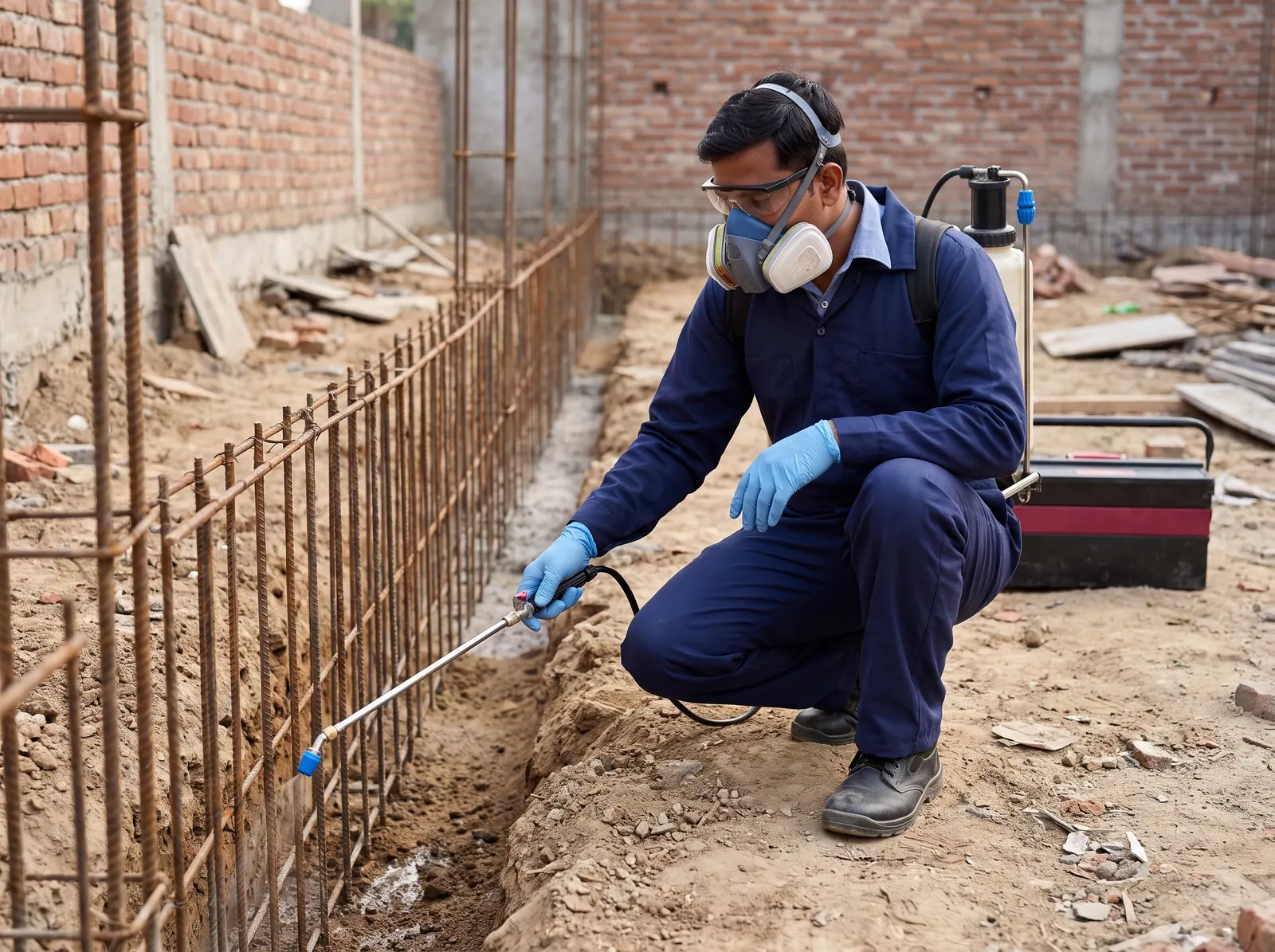
Pre-construction anti-termite treatment creates a treated zone in the soil before the foundations and floor close it off. The Indian Standard IS 6313 (Part 2) describes how this is done.
Problems arise when the treatment is skipped or only partly done. They also arise when treated soil is dug up later without being re-treated, for example for plumbing trenches, electrical conduits, compound walls or extensions. Our guide to pre-construction anti-termite treatment for builders in the Hyderabad region covers the stages in detail.
Joints and service entries
Termites need only a hairline gap to get in. Common entry routes include:
- expansion joints
- the junction between the floor slab and the walls
- points where pipes and cables pass through the slab
Once inside, they often head for wooden frames, wardrobes and built-in furniture. Our guide on termites in new flats and wooden interiors looks at that side of the problem.
How do garden irrigation and outdoor wood raise the risk?
A watered garden is welcome in a dry city, but it also gives termites what they need: steady moisture and, often, wood. Independent houses, villas and ground-floor flats with gardens should look closely at the strip of land right around the building. Common risks include:
- Watering right up to the wall. Lawns, flower beds and drip lines that keep the soil against the plinth permanently wet invite termites close to the foundation.
- Mulch and leaf litter piled against walls. These hold moisture and supply cellulose.
- Wood touching the soil. This includes wooden edging, planters, trellises, pergolas and garden furniture.
- Firewood, old timber and cardboard stored on the ground beside the house or in a utility area.
- Dead stumps and old tree roots left behind after landscaping.
- Climbers and dense planting that hide mud tubes on walls from view.
None of this means you must give up your garden. Keep a dry, visible, wood-free band against the building. Treat any timber in the garden as something termites will eventually find.
How does the weather change termite activity through the year?
Below ground, termite activity continues all year. Hyderabad’s hot dry summer, monsoon and mild winter change where and how you are likely to notice it. For a wider seasonal view, see our Hyderabad pest calendar.
| Season | What tends to happen | What to watch |
|---|---|---|
| Hot, dry summer | Surface soil dries out, so termites concentrate around reliable moisture. | Watered beds, leaking taps, sump areas, AC drain points, bathrooms and kitchens on the ground floor. |
| Monsoon | Damp soil supports activity nearer the surface. Winged termites often swarm from mature colonies around rainy spells. | Swarms near lights, discarded wings on window sills, damp walls, fresh mud tubes on plinths and compound walls. |
| Post-monsoon and cooler months | Feeding continues, but signs can be quieter. | A good time to inspect wood in storerooms, under stairs and in wardrobes against outer walls. |
What practical steps reduce termite risk?
If you are building or buying a plot
- Ask whether pre-construction anti-termite treatment will be done, at which stages, and ask for written records.
- Remove stumps, roots and wood debris before filling and before slabs are cast.
- Keep shuttering offcuts and packing timber off the ground, and never bury them in fill.
- Re-treat any soil disturbed after treatment before it is closed up. This covers trenches for plumbing, electrical work, compound walls and extensions.
- Have joints and service entries through the slab properly sealed.
- Plan drainage so that rainwater runs away from the plinth, not towards it.
Around an existing home and garden
- Keep the strip next to the walls free of mulch and wood, and adjust sprinklers and drip lines so it is not kept wet.
- Fix leaking taps, pipes and sump overflows, and route AC condensate away from the building.
- Store firewood, timber and cardboard off the ground and away from walls.
- Check plinths, compound walls, steps and garden structures for mud tubes a few times a year.
- For outdoor structures, choose suitably treated or durable timber and keep it off bare soil.
Inside the house
- Avoid keeping cardboard boxes and stacks of paper directly on the floor in storerooms and under staircases.
- Look regularly at door frames, skirting and wardrobes that stand against external walls.
- If you find small holes and fine powder rather than mud, the cause may be a different pest. Our guide on telling termites from wood borer explains the difference.
What should you avoid doing yourself?
When people find termites, it is tempting to spray the visible tubes or pour a chemical into the soil. This usually kills a few workers and leaves the colony untouched, and the termites simply reroute. Leave tubes and damaged wood in place until they have been inspected, as they show where the termites are travelling.
Do not pour kerosene, used engine oil or unlabelled chemicals into soil, drains or walls. This is unsafe and can contaminate soil and water. Soil treatment is specialist work. In India, it is carried out with CIB&RC-registered products by pest control operators licensed under the Insecticides Act, 1968. If you use any household product, follow the label exactly, ventilate the area, and keep children and pets away until it has dried.
When is a professional inspection worth it?
An inspection is sensible if any of these apply:
- You see mud tubes on walls or plinths.
- Winged termites emerge indoors.
- Wood sounds hollow.
- Recent work has disturbed soil that was treated during construction.
- You are about to buy a flat or villa. See our guide to termite inspection before buying a home in Hyderabad.
In occupied buildings, post-construction treatment under IS 6313 (Part 3) usually means drilling along floor and wall junctions, filling the holes with treatment and sealing them. Our guide to post-construction termite treatment for flat owners explains what to expect.
Our company follows an Integrated Pest Management approach: inspection first, then sanitation and proofing advice, then targeted treatment. Our Shamshabad office brings these practices from our established Goa operation.
Our Shamshabad branch has recently opened. Tell us your location and the termite problem you are seeing, and we’ll confirm whether we can help. You can find details on our Hyderabad branch page.
Frequently asked questions
QDoes red or black soil make termites more likely on my plot?
No soil type around Hyderabad is termite-free. Subterranean termites can live in both lighter, sandy soils and heavier clay soils. In practice, other factors matter more: how damp the ground near your walls stays, whether stumps or construction timber were buried on the plot, and whether the foundations were properly protected. Clay soils that crack as they dry can open extra routes towards a building, so look out for cracks along plinths and slabs.
QWe are raising a low plot with filler soil. What should we watch for?
Check that the fill does not contain wood, roots, sacks or other organic debris, because these can feed termites under the building. Let the fill settle and compact it properly, since voids under floors are hard to inspect later. Plan pre-construction anti-termite treatment for the right stages. Make sure that any soil disturbed afterwards, such as plumbing or electrical trenches, is re-treated before it is covered.
QAre winged termites after the monsoon rains a sign that my house is infested?
Not necessarily. Winged termites fly from mature colonies, often around rainy spells, and are attracted to lights, so a few at a lit window may have come from outside. It is more concerning if they emerge from inside walls, floors, frames or furniture, or if you find piles of shed wings indoors. Collect a few in a sealed bag or jar so they can be identified during an inspection.
QCan I use mulch and drip irrigation without inviting termites?
Yes, with some care. Keep mulch and drip lines back from the walls so a band of soil next to the building stays relatively dry and easy to see. Avoid wooden edging and planters that touch the soil. Remove dead stumps after landscaping and check the plinth regularly for mud tubes. These simple habits let you keep a healthy garden while lowering the chance of termites foraging into the house.
QThe soil was treated when my house was built. Am I still protected?
That depends on how thoroughly the treatment was done, how long ago, and whether the treated soil has been disturbed since. New trenches, extensions, paving, compound walls and garden digging can all break the treated zone. Leaking pipes and constant watering near the walls also raise the pressure on it. If you see mud tubes or damaged wood, have the property inspected rather than assuming the original treatment is still holding.
QDoes your Shamshabad branch carry out termite treatment in Hyderabad?
Our Shamshabad branch has recently opened, and we are confirming services and localities area by area. Please tell us your location and describe the termite problem you are seeing, and we will confirm whether we can help. The branch brings the inspection-led practices used by our established Goa operation.
Last updated 13 October 2026. Information on this page is general guidance; your technician will advise on your specific property after inspection.