Quick answer
Birds visit open-air restaurants, beach shacks and terraces in Goa because food, water and shelter are easy to reach. The fix is to remove the reward: clear tables promptly, cover food and service stations, and lid every bin. Then close off roosting spots in ceilings, rafters and ducts with bird netting. Never poison, trap or harm birds. Humane exclusion is safer, more effective and less likely to break the law.
Key points
- Open-air dining attracts birds because it offers easy food, water and sheltered roosting spots in one place.
- Bird droppings, feathers and nests can carry microbes that contaminate food and surfaces.
- Removing food and water through prompt clearing, covered service stations and lidded bins is the foundation of bird control.
- Bird netting and mesh physically exclude birds from beams, ceilings, ducts and ledges without harming them.
- Poisoning, trapping or removing active nests is inhumane and may be unlawful; humane exclusion is the safe approach.
Crows waiting on the railing, pigeons cooing in the rafters, sparrows hopping across a table for crumbs. Birds at open-air restaurants in Goa are part of the scenery, but they become a real problem when they land on food, foul seating or nest above a service counter.
This guide is for owners and managers of beach shacks, garden restaurants, rooftop bars and hotel terraces. It explains why birds come and why they matter for food safety. It also covers which housekeeping and design changes help, and where bird netting is, and is not, the right answer.
Why do birds gather at open-air restaurants and shacks?
Birds go where food is easy and safe to reach. An open-air dining area offers all three things they look for in one place.
- Food: leftovers on tables, crumbs under chairs, scraps tossed by diners, open bread baskets and uncovered bins.
- Water: drip trays, ice buckets, pooled rinse water, planters and puddles on terraces.
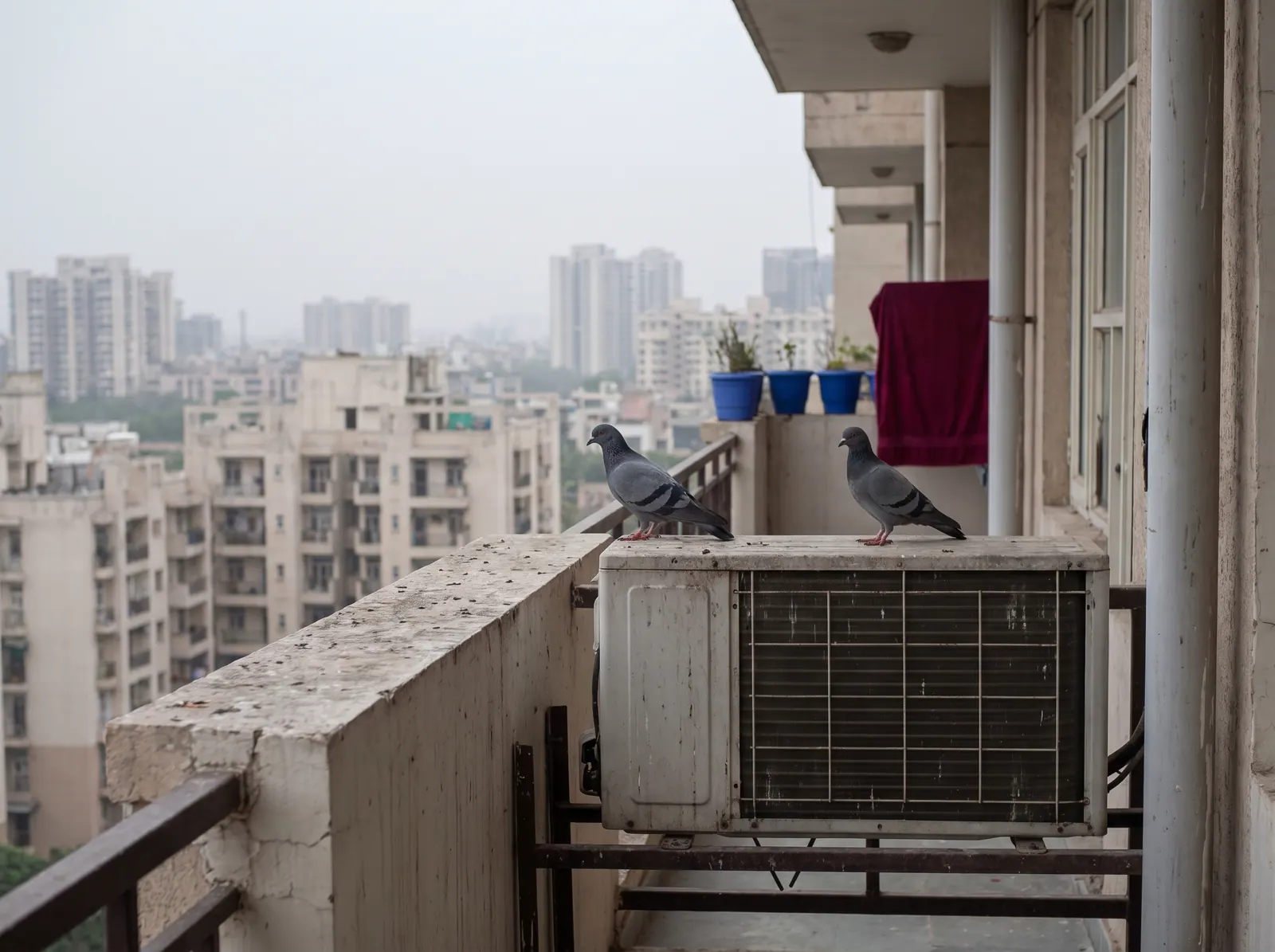
- Shelter: roof beams, thatch, false ceilings, exhaust ducts, signboards, AC outdoor units and ledges under eaves. These are dry, shaded and out of reach.
Goa's humid coastal climate and heavy south-west monsoon add to this. During the rains, birds look for dry roosting spots, and a covered terrace or shack roof is an obvious choice. Once birds learn that a place is reliable for food and shelter, they return daily and may begin nesting.
Which birds are usually involved?
Crows are bold and intelligent. They watch for unattended plates and open bins, and can snatch food from tables. They tend to scatter waste while foraging.
Pigeons are the main roosting and nesting problem. They settle on beams, ledges and ducts, and their droppings build up quickly beneath favourite perches.
Sparrows and other small birds slip through small gaps into ceilings, light fittings and gaps around ducting. They pick at crumbs on and under tables.
Each behaves differently, so the fixes differ too. Crows are mainly a food-handling problem. Pigeons and sparrows are mainly a building and roosting problem.
Why are birds a hygiene and food-safety concern?
Bird droppings, feathers and nesting material can carry bacteria and other microbes that cause illness. When birds perch above food areas, droppings can fall onto tables, cutlery, glassware or open food. When birds pick at plates or service stations, they can contaminate whatever they touch.
There are other knock-on effects too:
- Nests attract mites and other insects, which can move into the building.
- Dried droppings stain and corrode surfaces, and build-up on walkways can be slippery.
- Food scraps that draw birds also draw flies and rodents. See our guide to waste management and pests in Goa restaurants.
- A bird landing on a guest's plate is a quick route to a bad review.
For licensed food businesses, FSSAI Schedule 4 hygiene requirements expect food premises to be kept clean and protected from pests and animals. HACCP-based food safety plans also treat pest and animal access as a hazard to control. Birds in kitchens, stores or food-prep areas are a clear problem at any inspection or audit.
Cleaning droppings safely: wear disposable gloves and a mask. Lightly dampen dried droppings before removing them so dust is not raised, and use an appropriate cleaning product according to its label. Wash hands thoroughly afterwards. If staff feel unwell after cleaning up heavy build-up, they should see a doctor.
Housekeeping fixes that make the biggest difference
Netting and deterrents will struggle if food is freely available. Start with the daily routine.
- Clear tables promptly. Remove plates as soon as guests leave, and wipe down crumbs before the next seating.
- Sweep under tables between services, not only at closing time.
- Use bins with tight-fitting lids in dining areas and back-of-house. Empty them before they overflow, and keep bin areas washed down.
- Do not leave food out. Bread baskets, condiments, fruit displays and garnish trays should be covered or kept indoors.
- Ask guests and staff not to feed birds. A short, polite table card or sign helps, and staff should not throw scraps outside.
- Remove standing water from drip trays, planters and terrace corners. This also cuts mosquito breeding.
- Inspect roosting spots weekly for fresh droppings, feathers or nesting material, so problems are spotted early.
These habits only work if every shift follows them. Our guide to staff training for pest prevention in hotels and restaurants covers how to build them into daily checklists.
Design changes: service stations, ceilings and ducts
Small layout and building changes can remove the places birds use most.
Covered service stations
Keep cutlery, glassware, napkins and condiments in closed cabinets or under covers, not on open shelves. Place service stations under a solid roof, away from beams birds perch on. Pass-through hatches from the kitchen should have food covers so plates are not left exposed while waiting.
Ceilings, rafters and thatch
Open beams and gaps above false ceilings are prime roosting spots. Closing the void above the dining area, with netting or solid panels, keeps birds from settling directly over tables.
Ducts, exhausts and AC units
Exhaust openings, gaps around ducting and the spaces behind AC outdoor units are sheltered and often warm. Mesh guards or netting across these openings stop birds getting in without blocking airflow.
Ledges and signage
Flat ledges, signboards and light fittings become perches. Sloping covers or physical deterrents on these surfaces make them harder to land on.
| Problem spot | What usually draws birds | Practical fix |
|---|---|---|
| Tables and floor | Leftovers and crumbs | Prompt clearing, sweeping between services, no-feeding signs |
| Service stations | Open food, condiments, cutlery | Closed cabinets, covers, siting under a solid roof |
| Bins and waste area | Open or overflowing bins | Lidded bins, regular emptying, washed-down area |
| Roof beams and thatch | Dry, shaded perches | Bird netting below the roof line |
| Ducts and exhausts | Sheltered nesting cavities | Mesh guards or netting over openings |
| Ledges and signage | Flat landing surfaces | Sloped covers or physical deterrents |
When does bird netting help, and when won't it?
Bird netting is a physical barrier. It does not harm birds; it simply stops them reaching an area. It works best where birds are roosting or nesting in an enclosed or semi-enclosed space.
Netting is usually a good fit for:
- Covered terraces and verandas where pigeons sit on beams above tables.
- The void under a sloping roof or above a false ceiling.
- Ducts, shafts and exhaust openings.
- Balconies, ledges and building recesses on hotels and rooftop restaurants.
Netting will not solve:
- Crows taking food from fully open beach seating. There is nothing to net, so food handling is the answer.
- A problem driven mainly by uncovered bins or left-out food.
Before any netting goes up, check the space for active nests. Netting over a nest with eggs or chicks traps them, which is cruel and can create a far worse hygiene problem. Old nests and droppings should be cleaned out first. For seasonal structures, think about how netting will be removed or stored when you close. Our monsoon shutdown pest plan for hotels and shacks covers closing up for the rains.
For a broader look at what netting achieves, see five benefits of installing bird netting. The same principles apply to commercial buildings.
What is humane and lawful?
Birds are part of Goa's environment, and many species are protected under Indian wildlife and animal-welfare law. The safe rule is simple: exclude and discourage, never harm.
- Do not poison birds, use glue boards, or set traps that injure them. Poison near food areas is also a serious food-safety hazard.
- Do not remove or destroy nests with eggs or chicks. Wait until the young have left, or seek advice from the local forest department if a nest is in a dangerous place.
- Do use physical exclusion such as netting and mesh, and deterrents that make perching difficult without injuring birds.
- Do remove the food and water that attract birds in the first place.
Visual scarers such as reflective tape or plastic predator models may give short-term relief. However, birds often get used to them, so they are best treated as a supplement, not a solution.
Birds are often one part of a wider pest picture
The same open food, scraps and standing water that attract birds also attract flies, cockroaches and rodents. Our approach in Goa follows Integrated Pest Management: inspection first, then sanitation and proofing advice, then targeted treatment where it is needed. For flies around bars and drains, see fruit flies and drain flies in Goa bars and restaurants.
For food businesses, our Goa operation provides documentation aligned with HACCP and FSSAI audit expectations, and shares service reports after visits.
Getting advice from our Goa branch
Bird netting is one of the services offered by our Goa branch in Chimbel. If birds are roosting over your dining area, getting into ducts or fouling a terrace, tell us about your premises and the problem. We can advise whether netting, proofing or changes to housekeeping are the right next step. You can find details of the branch and the areas it covers on our Goa branch page.
Frequently asked questions
QIs bird netting suitable for a beach shack?
It depends on the structure. Netting works well under a roof, around beams and over openings where birds roost. It cannot protect fully open seating on the sand, where crows simply fly in for food. For shacks, netting is most useful above the bar, kitchen and covered dining area. Food handling and lidded bins handle the rest. Also plan how netting will be taken down or stored if the shack closes for the monsoon.
QPigeons have built a nest in our ceiling. Can we just remove it?
Check first whether it is active. If there are eggs or chicks, removing the nest or netting over it is cruel and may be unlawful, since many birds are protected. Wait until the young have left, or seek advice from the local forest department if the nest poses a hazard. Once the nest is empty, clean the area carefully with gloves and a mask, then close off the gap so birds cannot return.
QDo fake owls, reflective tape or similar scarers work?
They can help for a short time, especially when first installed. But birds are quick learners and often get used to objects that never move or change. Treat them as a minor extra alongside the measures that work long-term. Those are removing food and water, covering service stations, and using netting or mesh to physically keep birds away from roosting spots.
QWill a food safety inspector care about birds in our restaurant?
Yes. FSSAI Schedule 4 hygiene requirements expect food premises to be clean and protected from pests and animals. Birds or droppings in kitchens, stores or food-prep areas are an obvious concern. HACCP-based plans also treat animal access as a hazard to control. Keeping records of cleaning, proofing and pest-management visits helps you show what you are doing to manage the risk.
QIs it all right to feed birds away from the dining area?
Feeding birds anywhere near a restaurant usually makes the problem worse. Birds learn that the site is a reliable food source, gather in larger numbers and drift towards the tables. It is better not to feed them at all on or near your premises. Ask staff not to throw scraps outside, and use polite signs asking guests not to feed birds.
QAre bird spikes harmful to birds?
Properly designed physical deterrents are intended to stop birds landing, not to injure them. They work by making a ledge or sign awkward to perch on. They should be fitted correctly and checked so that birds cannot become caught. Avoid anything designed to trap, stick to or wound birds, such as glue products. Humane exclusion is the approach that is both kinder and less likely to break the law.
Last updated 13 October 2026. Information on this page is general guidance; your technician will advise on your specific property after inspection.