Quick answer
Efficacy Pest Control's Goa branch offers fly control in Margao, including Fatorda, Navelim, Aquem, Borda, Gogol and Comba. We first identify whether you have house flies, fruit flies or drain flies, then find where they breed. Treatment combines sanitation and proofing advice, targeted treatment and monitoring, because spraying adult flies alone rarely stops them returning. Food businesses receive service reports suited to HACCP and FSSAI audit expectations.
Key points
- Fly control in Margao is provided by Efficacy Pest Control's Goa branch in Chimbel, covering localities including Fatorda, Navelim, Aquem, Borda, Gogol and Comba.
- House flies, fruit flies and drain flies breed in different places, so the fly type determines the control plan.
- Lasting fly control depends on removing breeding sources and proofing, not on spraying adult flies alone.
- The Goa branch is a licensed pest control operator (Directorate of Agriculture, Goa) using CIB&RC-registered products.
- Food businesses receive service reports and documentation aligned with HACCP and FSSAI audit expectations.
Efficacy Pest Control provides fly control in Margao (also called Madgaon) from our Goa branch in Chimbel. We work with homes, apartments and villas, housing societies, restaurants, cafés and bakeries, hotels and guest houses, grocery, meat and fish shops, offices, clinics and warehouses. Our approach is simple: find out which fly you have, find where it breeds, remove or reduce that source, then treat and monitor.
Spraying the flies you can see rarely solves the problem on its own. As long as a drain, bin area or fruit store keeps producing new flies, they come back within days. That is why most of our effort goes into inspection, sanitation and proofing, with targeted treatment where it adds real value.
Which flies are you seeing?
Most indoor fly problems involve one of three groups, and each needs a different plan.
| Fly | What it looks like | Where it usually breeds | What works best |
|---|---|---|---|
| House fly | Medium-sized and grey, with darker stripes on the back | Moist, rotting organic matter such as kitchen waste, garbage and food scraps | Bin hygiene and tight lids, regular waste removal, screens, targeted treatment of resting spots away from food, traps |
| Fruit fly | Tiny and tan-brown, often with red eyes; hovers around fruit and drinks | Overripe fruit and vegetables, juice and syrup spills, beer and wine residue, damp mops | Removing fermenting food, cleaning sticky residue, traps and monitoring |
| Drain fly | Tiny, fuzzy and moth-like; rests on walls near sinks and floor traps | The slimy film inside drains, floor traps and constantly damp areas | Physically cleaning the drain film, fixing leaks and standing water, monitoring |
Fruit flies and drain flies are easily confused. Drain flies tend to sit still on walls near drains, while fruit flies hover around food, bottles and bins. For more on these two small flies in food and drink businesses, see our guide to fruit flies and drain flies in Goa bars and restaurants.
Why do flies build up in Margao premises?
Margao is South Goa's main commercial town, with a busy mix of homes, shops, eateries and market trade. Wherever food is prepared, sold or thrown away, flies have something to breed in. Fish and meat counters, bakeries with sugary waste, juice stalls and restaurant bin areas all need steady attention.
Goa's climate adds to this. Flies develop fastest in warm, humid conditions, and during the heavy south-west monsoon, drains, floor traps and wet waste areas can stay damp for weeks. In housing societies, a shared garbage point or a blocked common drain can affect several flats at once, so it helps if the society and residents tackle it together.
What happens during a fly control visit?
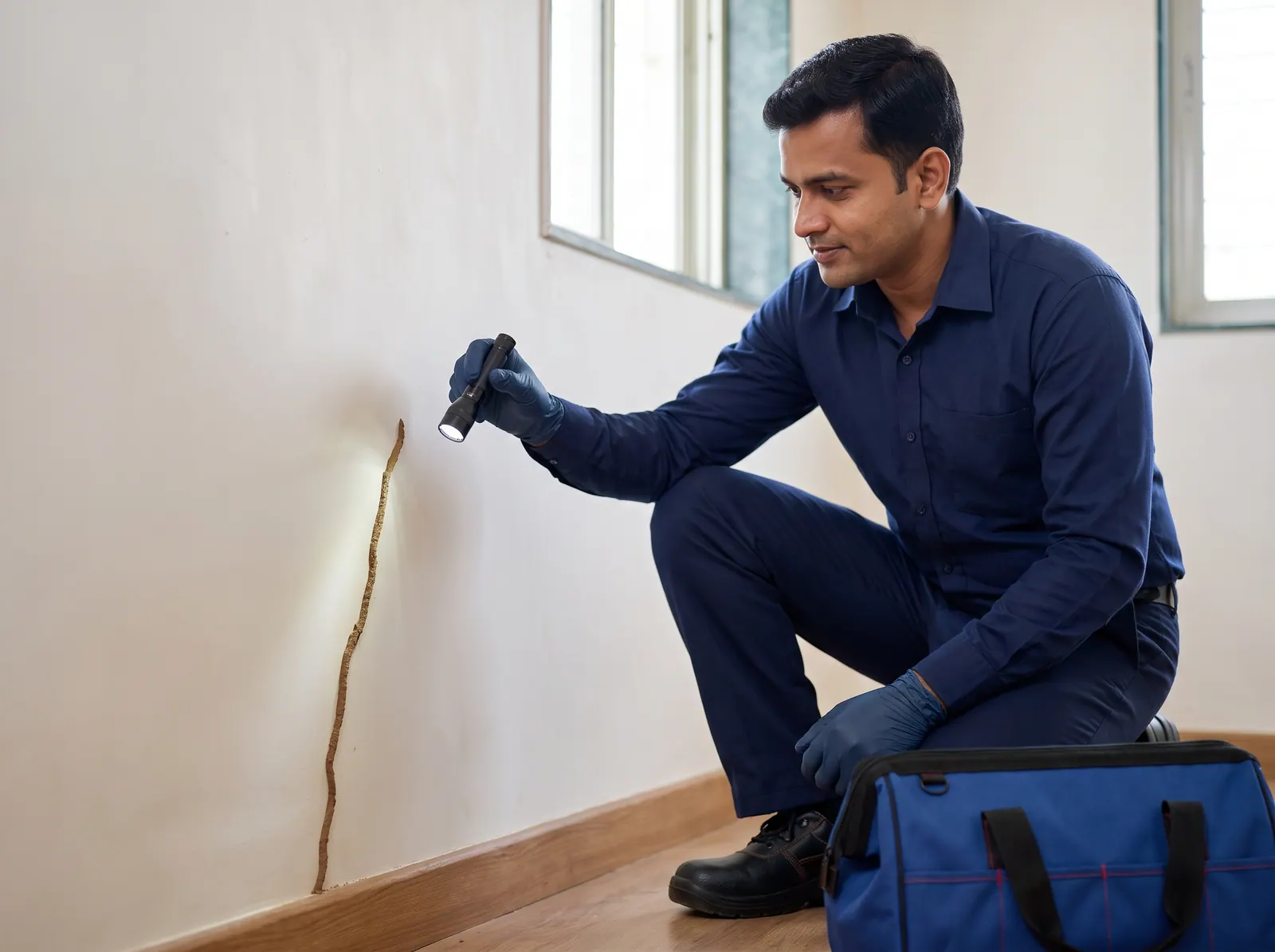
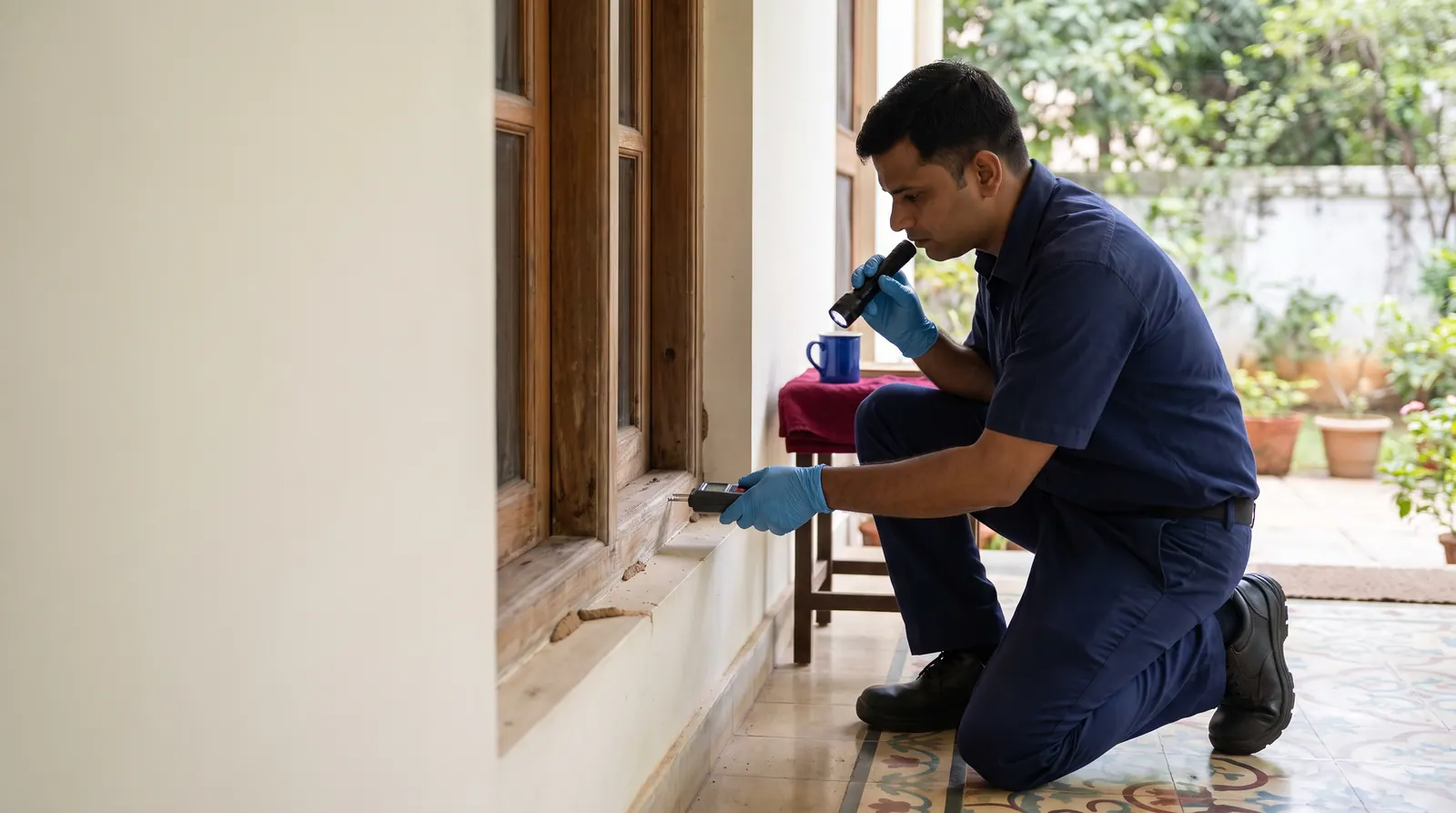
- Inspection. We check where flies rest, where they breed and how they get in: kitchens, stores, drains and floor traps, bins and waste points, and gaps around doors, windows and service openings. We also note leaks, damp corners and humidity.
- Identification. We confirm the type of fly, because the breeding source and the right control method differ for each.
- Sanitation and source reduction. We show you or your staff exactly which sources to clean or remove, such as drain film, residue under equipment, overripe stock or uncovered bins.
- Proofing advice. We recommend practical fixes such as tight bin lids, screens, self-closing doors, sealed gaps and repaired leaks.
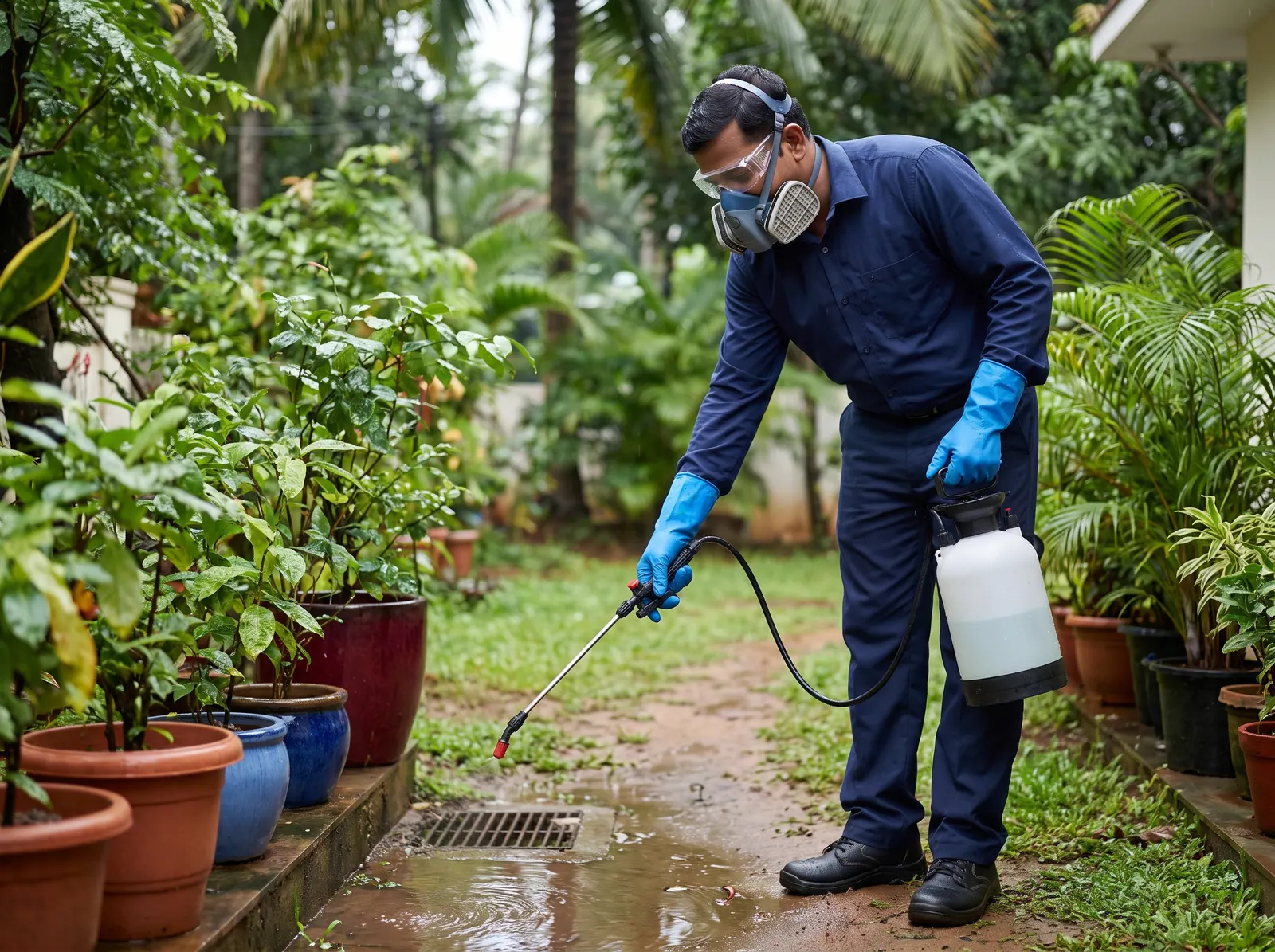
- Targeted treatment. Where appropriate, we treat resting surfaces and hotspots and use traps or baits, keeping treatment away from food and food-contact surfaces.
- Monitoring and follow-up. For persistent or commercial problems we recommend follow-up visits to check that the breeding cycle has been broken and to adjust the plan.
This is our Integrated Pest Management (IPM) approach, explained in more detail on our main fly control service page.
Fly control for restaurants, shops and food businesses
For food businesses, flies are a hygiene and inspection issue, not only a nuisance. FSSAI Schedule 4 hygiene requirements expect food premises to keep pests out, and HACCP-based systems treat pest control as a documented prerequisite. We provide documentation aligned with HACCP and FSSAI audit expectations and share a service report after each visit, with updates on WhatsApp.
A commercial plan usually covers kitchens, wash areas, dry stores, bin and waste areas, and customer areas. We also advise on the staff habits that matter most: closing bins, clearing spills at the end of each shift and cleaning floor drains on a fixed schedule. If you also see cockroaches in the kitchen, cockroach treatment in Margao can be planned alongside fly control, and our commercial pest control in Margao page covers wider programmes for businesses.
Is fly treatment safe in a home kitchen?
Yes, when it is done carefully. We are a licensed pest control operator with the Directorate of Agriculture, Goa, we use CIB&RC-registered products and we maintain Material Safety Data Sheets for the products we use. Our technicians explain what to do before and after the visit.
- Cover or put away food, utensils and pet bowls before treatment.
- Keep children and pets away from treated areas until they are dry, or for as long as the technician advises.
- Ventilate the room afterwards and wash your hands after touching treated surfaces.
- Do not wipe or mop treated surfaces until you have been told it is fine.
If anyone feels unwell after exposure to any pest control product, please see a doctor.
What can you do between visits?
- Empty kitchen bins daily, keep lids closed and rinse bins regularly.
- Refrigerate ripe fruit or keep it covered, and throw out anything fermenting.
- Rinse juice, beer and syrup bottles before storing them for recycling.
- Scrub sink and floor-trap drains with a brush rather than only pouring liquids down them.
- Fix dripping taps and leaks, and dry wet mops and cloths.
- Keep screens and doors closed, especially near the kitchen.
During the monsoon, check that rainwater is not collecting around bin areas. Standing water breeds mosquitoes too; see mosquito control in Margao if that is part of the problem.
Which parts of Margao do we cover?
Our company records list Margao as covered by our Goa branch, including Fatorda, Navelim, Aquem, Borda, Gogol and Comba. If your property is elsewhere in or around Margao, tell us where it is and we will confirm whether we can schedule a visit. For other pest services in the town, see our pest control in Margao page.
What affects the cost of fly control?
We do not quote a fixed price without understanding the site. A fruit-fly problem in one flat's kitchen is a very different job from a restaurant with several drains and a shared waste yard. Before quoting, we look at:
- The size of the area and the number of rooms or sections
- The type of fly and the number of breeding points
- The condition of drains, waste handling and moisture
- Whether follow-up visits or a scheduled programme are needed
- Any special care needed around children, pets or food production
Where a service carries a warranty, it applies to the treated area as set out in the service agreement. Homes and businesses that want regular visits can choose an annual maintenance contract with scheduled visits and service reports.
Arrange fly control in Margao
Contact our Goa branch in Chimbel with your location in Margao, the type of property and what you are seeing: where the flies gather and how long it has been going on. Photos help us prepare. You can also request an inspection online.
Frequently asked questions
QDo you provide fly control in Fatorda, Navelim and other parts of Margao?
Yes. Our company records list Margao as covered by our Goa branch, including Fatorda, Navelim, Aquem, Borda, Gogol and Comba. If you are in another part of Margao or a nearby village, share your location when you contact us and we will confirm whether a visit can be scheduled.
QWhy do I have tiny flies around my sink when the kitchen looks clean?
Tiny flies near a sink are usually drain flies or fruit flies. Drain flies breed in the slimy film inside pipes and floor traps, which you cannot see from above. Fruit flies can breed in a small amount of sticky residue, an old onion or a bottle left unrinsed. Finding and cleaning that hidden source is what stops them.
QIs spraying enough to get rid of flies?
Usually not. Spraying affects the adult flies present at that moment, but new flies keep emerging if eggs and larvae are still developing in a drain, bin or food waste. Lasting control depends on removing the breeding source, proofing entry points and monitoring, with treatment used where it genuinely helps.
QHow many visits will a restaurant in Margao need?
It depends on how many breeding points there are, the condition of drains and waste areas, and how consistently cleaning routines are followed. A single visit may be enough for a minor home problem, but food businesses usually benefit from a scheduled programme with regular visits and service reports that can be shown during audits.
QCan you treat a kitchen while we keep the restaurant running?
We plan treatment around your operations and keep it away from food and food-contact surfaces. Food, utensils and equipment should be covered or stored before treatment, and staff should follow the technician's advice on when areas can be used again. Discuss your service hours when booking so the visit can be planned sensibly.
QWhat if flies come back after treatment?
Flies can return if a breeding source remains or if they come in from neighbouring premises, open drains or waste areas outside your control. Where a service carries a warranty, it covers the treated area as set out in your service agreement. Ask your technician which sources nearby could still be a risk and how to reduce them.
Last updated 13 October 2026. Information on this page is general guidance; your technician will advise on your specific property after inspection.