Quick answer
Good staff training for pest prevention in a hotel or restaurant gives each team a short, role-specific routine. Housekeeping checks beds, linen and rooms for early signs. Kitchen staff clean as they go and keep drains and bait points undisturbed. Stores teams inspect deliveries and store food off the floor in sealed containers. Everyone reports sightings the same way, to one named person, so problems are logged and dealt with quickly.
Key points
- Housekeeping, kitchen and stores teams each need a short checklist matched to the pests and conditions they actually see.
- Staff should not use their own insecticide sprays in kitchens; sprays can contaminate surfaces and reduce the effect of professional baits.
- Deliveries should be checked for droppings, gnaw marks, insects and damp packaging before goods enter the store.
- A single reporting route and a sighting log recording what, where, when and action taken support HACCP and FSSAI audits.
- Seasonal staff in Goa's tourist season should be briefed at induction, and monsoon shutdown plans should include caretaker staff.
Pest treatments only work as well as the daily habits around them. In a hotel or restaurant, the people who notice the first cockroach, the first rat dropping or the first bed bug stain are almost never the pest technician. They are the room attendant, the commis chef and the storekeeper. That is why staff training is one of the most useful parts of pest control in any hotel or food business.
This guide sets out what a practical briefing should cover for housekeeping, kitchen, and stores and receiving teams, and how staff should report sightings. It is written for general managers, executive housekeepers, chefs and purchase managers in Goa, but the principles apply to any hospitality property.
Why does staff training matter so much for pest prevention?
Pests need three things: food, water and shelter. Professional treatment deals with the pests that are already there. Staff decide whether new ones find what they need. A crate of vegetables left on the floor overnight, a drain that is never scrubbed, or a mattress moved from a suspect room to a clean one can undo a good treatment within days.
Training also helps with audits. Food businesses are expected to meet FSSAI Schedule 4 hygiene requirements, and many hotels follow HACCP. Inspectors and auditors look for evidence that pest control is part of everyday practice, not just a service visit once a month. Our guide to HACCP pest control documentation for hotels explains the records side in more detail.
What should every staff briefing cover?
Keep briefings short, practical and specific to the role. A fifteen-minute session at the start of a shift, repeated when new staff join, is usually more useful than a long lecture once a year. Every team should understand these basics:
- What the common pests look like, and their signs: droppings, gnaw marks, egg cases, shed skins, small dark stains, trails.
- Why food, water and clutter matter, and which of these their own area provides.
- What not to touch: bait stations, glue boards, monitoring devices and treated areas should be left in place.
- No do-it-yourself spraying. Staff should not use household insecticide sprays in kitchens or guest rooms. Sprays can contaminate food surfaces and can make professional baits less effective.
- How to report a sighting, and to whom.
- Basic safety: never handle rodents, live or dead, with bare hands; keep away from bee or wasp nests; follow any instructions given after a treatment. Anyone who is bitten, stung or feels unwell should see a doctor.
Housekeeping: what should room attendants look for?
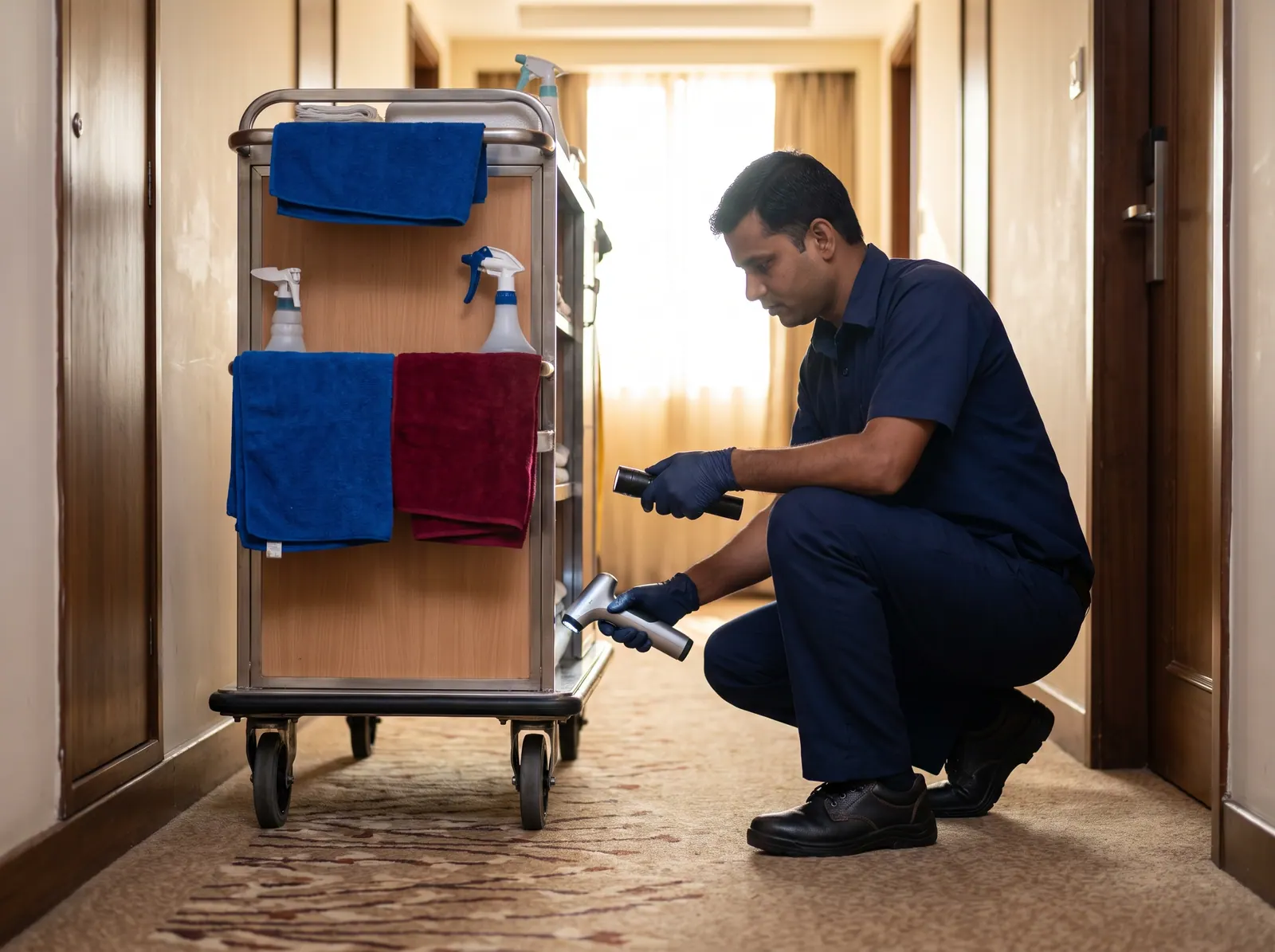
Housekeeping teams see every guest room and most staff areas daily, so they are the best early-warning system a hotel has, especially for bed bugs.
Bed bug checks during room turnover
- When stripping a bed, look along mattress seams, piping, the headboard and the bed frame joints.
- Signs to report: small dark spots (droppings), tiny pale shed skins, small blood stains on sheets, or live reddish-brown insects.
- If anything looks suspicious, stop, do not move the linen or furniture to another room, and report it immediately.
- Bag linen from a suspect room and keep it separate until the supervisor decides what to do.
Staff accommodation needs the same attention as guest rooms, because bed bugs travel easily between shared rooms and back into the hotel on bags and uniforms. See our page on bed bug control for staff accommodation in Goa.
Other housekeeping habits
- Remove food wrappers and leftovers from rooms, minibars and balconies each day.
- Empty standing water from flower vases, plant saucers and AC drip trays to reduce mosquito breeding.
- Report gaps around pipes, damaged window mesh and doors that do not close properly.
- Keep linen rooms and housekeeping stores tidy and off the floor; clutter gives cockroaches and rodents shelter.
Kitchen: which daily habits keep pests out?
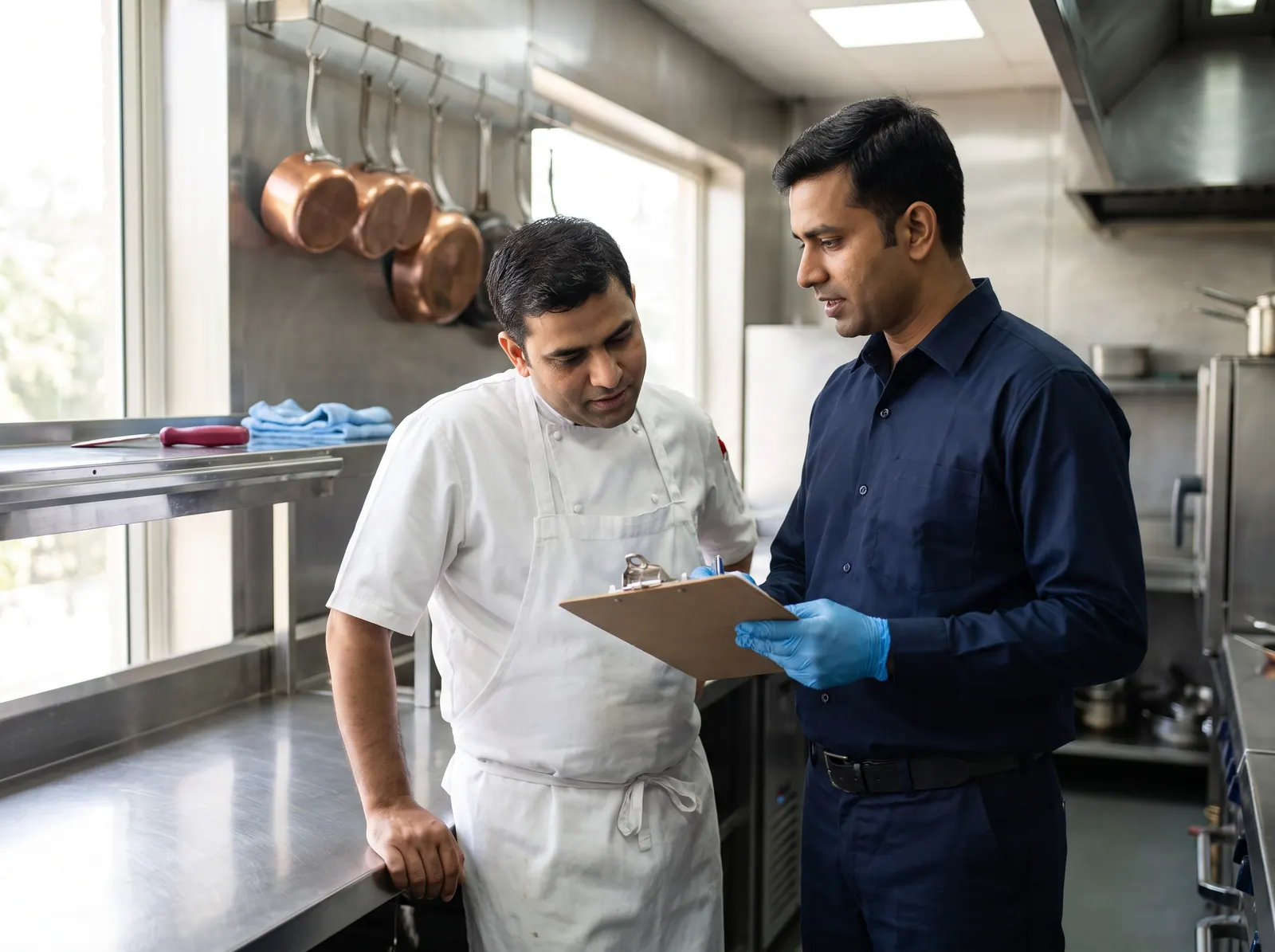
Commercial kitchens offer warmth, moisture and food all day. Cockroaches, rodents and flies will find any gap in routine. The kitchen briefing should focus on cleaning, waste and protecting the treatment that is already in place.
- Clean as you go. Wipe spills and crumbs promptly, especially under and behind equipment.
- Close down properly every night. No food left uncovered, all surfaces wiped, floors and drains cleaned.
- Look after drains and grease traps. Scrub drain channels and gratings regularly; build-up in drains is a common source of drain flies and fruit flies. Our guide to fruit flies and drain flies in Goa bars and restaurants covers this in depth.
- Manage waste. Use lidded bins, empty them at least at the end of each shift, and keep the waste area clean. See waste management and pests for Goa restaurants.
- Remove cardboard quickly. Cockroaches hide and lay eggs in corrugated cartons.
- Leave baits alone. Gel bait placements should not be wiped off, sprayed over or cleaned with strong chemicals. If a placement must be disturbed for cleaning, tell the supervisor so it can be noted for the next service visit.
- Report damage. Broken tiles, gaps behind wall-mounted equipment and loose skirting are hiding places that can often be sealed.
Stores and receiving: how do pests get in with deliveries?
Many infestations arrive through the back door, inside sacks, crates and cartons. Stores and receiving staff need a simple inspection routine for every delivery.
Checking deliveries
- Inspect goods before they enter the store, ideally outside the main storage area.
- Look for droppings, gnaw marks, torn packaging, live or dead insects, webbing in grain or flour, and damp or stained cartons.
- Do not accept or store suspect goods with clean stock. Set them aside and inform the supervisor or purchase team.
- Unpack and discard outer cartons where practical.
Storing goods
- Keep stock on racks or pallets off the floor and slightly away from walls, so staff can see and clean behind it.
- Decant rice, flour, pulses and spices into sealed, labelled containers.
- Use first-in, first-out rotation so old stock does not sit long enough to attract stored-product insects.
- Keep store doors closed, and report damaged door sweeps, gaps and holes.
Back-of-house rodent activity often starts in stores and receiving areas. Our guide to rodent control in hotels, guest areas vs back of house explains how the two areas are managed differently.
How should staff report pest sightings?
A clear reporting routine is the single most valuable thing training can deliver. Without it, sightings are mentioned in passing, forgotten, or reported to different people. Agree one named person per shift, usually a supervisor, and one place to record sightings, such as a pest sighting log kept with the HACCP records.
| What to record | Why it matters |
|---|---|
| What was seen (pest type, or a description) | Different pests need different treatments |
| Exact location (room number, kitchen section, store rack) | Helps target inspection and treatment |
| Date and time | Shows patterns, such as activity after closing |
| How many, alive or dead | Indicates the level of activity |
| A photo, if safe to take | Helps the technician confirm identification |
| Action taken (cleaned, room blocked, goods set aside) | Gives an audit trail for inspectors |
Sightings should be passed to your pest control provider so they can be reviewed at the next visit, or sooner if the problem needs attention. Guest-facing incidents, such as a guest reporting bites or a pest in a room, should be escalated to the duty manager immediately.
What changes with Goa's seasons?
Goa's humid coastal climate and heavy south-west monsoon bring their own pressures. During the monsoon, damp stores, blocked drains and standing water need closer attention, and pests may move indoors. Properties that close or scale down for the monsoon should brief the caretaker team before shutdown; our monsoon shutdown pest plan for Goa hotels and shacks sets out what to check.
The tourist season brings a different challenge: many properties take on seasonal staff who have not been briefed. Make the pest prevention briefing part of induction for every new hire, and refresh it for existing teams before the busiest months.
How does Efficacy Pest Control support your staff?
Our Goa branch provides hotel and restaurant pest management using an Integrated Pest Management (IPM) approach: inspection, sanitation and proofing advice, and targeted treatment. During visits our technicians share practical prevention advice with the client's staff, pointing out what is attracting pests and where proofing would help.
We are a licensed pest control operator with the Directorate of Agriculture, Goa, and use CIB&RC-registered products. Material Safety Data Sheets are maintained for the products we use. After visits we share service reports, with WhatsApp updates for clients, and for food businesses we provide documentation aligned with HACCP and FSSAI audit expectations. Your staff sighting log and our service reports together give a clear record of pest control at your property.
If you would like help reviewing your staff routines or pest management programme, contact our Goa branch in Chimbel and tell us about your property and the problems you are seeing.
Frequently asked questions
QHow often should hotel staff receive pest prevention training?
A short briefing at induction for every new staff member is the most important step, followed by brief refreshers. Many properties cover pest awareness in regular shift meetings and repeat a fuller briefing before the tourist season and before the monsoon. Short, frequent reminders tied to each team's daily tasks tend to stick better than a long annual session.
QShould kitchen staff spray insecticide themselves if they see cockroaches?
No. Household sprays used in a commercial kitchen can contaminate food-contact surfaces and can make professional gel baits less attractive to cockroaches, which reduces their effect. Staff should report the sighting with its location, keep the area clean, and leave chemical treatment to your licensed pest control provider, who can target the problem properly.
QWhat should housekeeping do if they suspect bed bugs in a guest room?
Stop work in that room, avoid moving linen, mattresses or furniture to other rooms, and report it to the supervisor straight away. Bag the linen and keep it separate. The room is usually taken out of use until it has been inspected. Moving items from a suspect room is one of the easiest ways to spread bed bugs through a hotel.
QDo we need a pest sighting log for FSSAI or HACCP audits?
Auditors generally look for evidence that pest control is managed every day, not only on service days. A sighting log showing what was seen, where, when and what action was taken, kept alongside your pest control service reports, is a practical way to demonstrate this. Our guide to HACCP pest control documentation explains how these records fit together.
QCan your technicians advise our staff during service visits?
Yes. Our Goa operation follows an Integrated Pest Management approach that includes sanitation and proofing advice. During visits, technicians can point out conditions that attract pests, such as drain build-up, cluttered stores or gaps around pipes, and suggest practical changes. Contact our Goa branch to discuss what your teams need.
QWhich team usually spots pest problems first in a hotel?
It varies by pest. Housekeeping often notices bed bugs, ants and lizards in rooms, kitchen staff tend to see cockroaches and flies first, and stores teams are well placed to find rodent signs and stored-product insects in deliveries. That is why each team needs its own short checklist and why all sightings should go to one named person.
Last updated 13 October 2026. Information on this page is general guidance; your technician will advise on your specific property after inspection.