Quick answer
An intensive kitchen treatment is a focused deep treatment for kitchens with a heavy cockroach infestation, where routine gel baiting alone is not enough. Our Goa branch inspects the kitchen and asks you to empty and clean the cabinets. It then combines gel baiting in cracks and hinges with targeted spraying of drains, voids and appliance backs. A review visit and prevention advice follow, to stop cockroaches re-establishing.
Key points
- An intensive kitchen treatment is meant for established infestations, such as daytime sightings, droppings, egg cases or activity inside appliances.
- Emptying cabinets, removing grease and stopping household sprays beforehand make the treatment noticeably more effective.
- Gel baiting in cracks and targeted spraying of drains and voids are used together but kept apart, because spray over bait makes it less attractive.
- Cockroach egg cases are protected from treatment, so a review visit is recommended to deal with newly hatched young.
- Our Goa branch is a licensed pest control operator with the Directorate of Agriculture, Goa, using CIB&RC-registered products.
Some kitchens need more than a routine visit. Cockroaches may be out in daylight, living inside the fridge motor housing, or coming back after a couple of gel treatments. For these situations our Goa branch offers a Kitchen Intensive Spray Treatment.
This is a focused, deep kitchen pest control service for heavily infested home and commercial kitchens in Goa. It combines preparation and cleaning advice, gel baiting and targeted spraying in one planned treatment.
This page explains when an intensive treatment makes sense, how to prepare, what the technicians actually do and how to keep the kitchen clear afterwards. For lighter, everyday problems, our standard cockroach control service is often enough.
When does a kitchen need an intensive treatment?
Seeing a few cockroaches near a drain at night is common in Goa, especially during the monsoon when drains fill and push them indoors. An intensive treatment is meant for something different: a population that has settled inside the kitchen itself and is breeding there.
Signs that point to an intensive treatment include:
- Cockroaches seen during the day, which usually means their hiding places are crowded.
- Small dark droppings, like ground pepper, along shelf edges, hinges and drawer runners.
- Egg cases or cast skins in cabinet corners, behind the stove or under the sink.
- Cockroaches inside appliances such as the fridge motor area, microwave, mixer, oven or dishwasher.
- A musty, oily smell in closed cupboards.
- Earlier gel or spray treatments that helped for a few weeks and then faded.
- A commercial kitchen facing an inspection or audit with live activity in stores or prep areas.
The cockroach that typically builds up inside kitchens is the small, light-brown German cockroach, which has two dark stripes behind its head. It breeds quickly and stays close to warmth, food and moisture.
The female carries her egg case until it is nearly ready to hatch, so the young inside are protected from treatments applied before they emerge. That is why a heavy infestation calls for a combined approach and a review visit rather than a single spray.
The larger reddish-brown cockroaches that come up from drains and chambers need more attention on drains and entry points. Both types can be present in the same kitchen.
Routine treatment or intensive treatment?
| Routine cockroach treatment | Kitchen intensive treatment | |
|---|---|---|
| Typical situation | Occasional sightings, mostly at night | Daytime sightings, droppings, egg cases, activity inside appliances |
| Preparation | Light: clear counters, store food | Full: empty cabinets and drawers, remove grease, move appliances where possible |
| Methods | Mainly gel baiting in key spots | Gel baiting plus targeted spraying of drains, voids and hiding places outside the bait zone |
| Time on site | Shorter | Longer; depends on kitchen size and how much has been emptied |
| Follow-up | As advised by the technician | Review visit recommended to deal with newly hatched young |
How do I prepare the kitchen and empty the cabinets?
Preparation makes the single biggest difference to how well an intensive treatment works. Technicians need to reach the cracks, hinges and corners where cockroaches hide, and food and utensils must be kept away from treated surfaces.
We will give you specific instructions when you book. The general checklist is below, and our guide on how to prepare for cockroach gel treatment covers the gel side in more detail.
- Stop using household cockroach sprays and chalks for a few days before the visit. They scatter cockroaches deeper into walls and can make baits less attractive.
- Empty kitchen cabinets, drawers and the space under the sink. Pack food in sealed containers or bags and move it to another room.
- Clear the counters. Remove utensils, crockery and small appliances such as mixers, toasters and kettles, or cover them if they cannot be moved.
- Remove grease and food residue from shelves, stove surroundings and the backsplash. Grease is a competing food source that draws cockroaches away from bait.
- Clear out cardboard and paper. Empty and clean bins, and remove old newspaper shelf liners, cardboard boxes and paper bags. Cardboard is a favourite hiding place.
- Make room behind large appliances. If it is safe to do so, pull the fridge and cooking range slightly forward so the area behind can be reached.
- Keep children and pets out of the kitchen during treatment. Arrange for someone from the household or staff to accompany the technician.
Restaurants, hotel kitchens and canteens should schedule the visit for after service or on a closed day. This leaves time to move dry stores into sealed containers, clear prep surfaces and cover equipment.
If you need to reschedule, please tell us at least 48 hours in advance. A late-cancellation fee may apply under our terms.
Which methods are combined in an intensive kitchen treatment?
Our work follows an Integrated Pest Management (IPM) approach. We inspect first, fix the conditions that feed and shelter pests, and then treat precisely. In a heavily infested kitchen, that means several methods used together, each where it works best.
Inspection and mapping
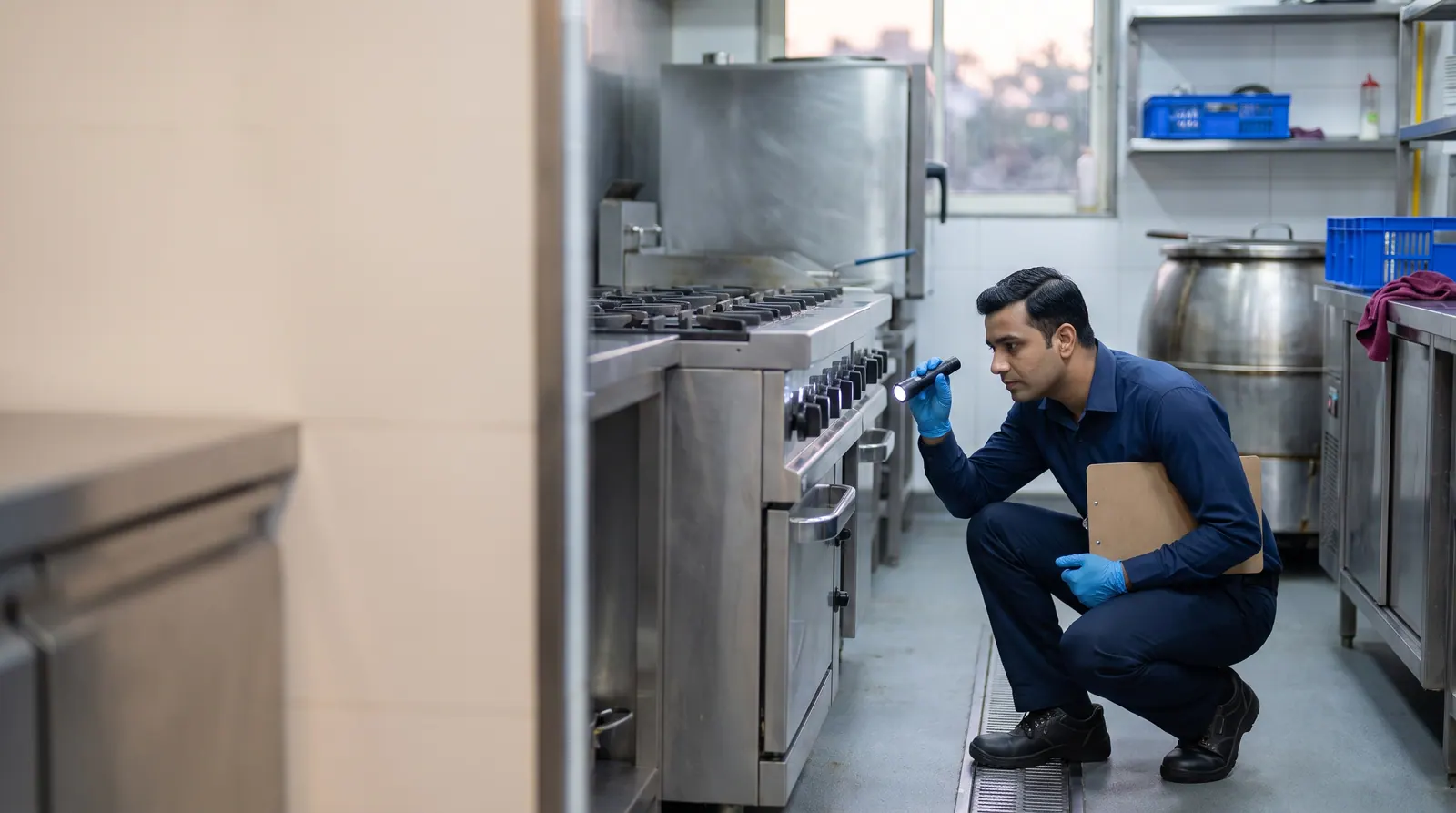
The technician checks hinges, drawer runners, the gap behind the sink, the stove and fridge, electrical boxes, false ceilings, drain points and gaps around pipes. They note where activity is heaviest, and this decides where bait goes and where spraying is appropriate.
Gel baiting in cracks and crevices
Small spots of gel bait are placed inside hinges, cracks, joints and other hiding places close to where cockroaches feed and rest. Cockroaches eat the bait and carry it back to their shelter, which helps reach those that never come out in the open. Gel is placed out of reach and away from food-contact surfaces.
Targeted spraying
A targeted residual spray is used where bait is not suitable. This includes drain outlets and gully traps, voids under kitchen platforms, the backs of appliances, wall-floor junctions and areas outside the immediate bait zone.
Spray and gel are kept apart, because spray over bait makes it less attractive. This is not a blanket spray of the whole kitchen.
Drains, ducts and entry points
In Goa's humid climate, sink traps, floor drains and service shafts often keep feeding cockroaches into a kitchen. These are treated, and you will get advice on gaps to seal, damaged drain covers and leaks.
If you live in a flat and suspect the problem is coming through the building, see our guide to cockroaches in Goan apartments and their drains, ducts and shafts.
We are a licensed pest control operator with the Directorate of Agriculture, Goa, and we use CIB&RC-registered products. Material Safety Data Sheets are maintained for the products we use.
What should I do after the treatment?
- Keep children and pets out of treated areas until surfaces are dry, or for as long as the technician advises. Ventilate the kitchen.
- Wash your hands after touching treated surfaces, and wipe food-contact surfaces before using them again.
- Do not wipe away or spray over the gel spots. Avoid scrubbing inside hinges and cracks for the period the technician advises.
- Expect to see some cockroaches for a few days, sometimes more than usual, as they are disturbed and affected. Let us know if activity has not reduced within the time the technician explained.
- If anyone feels unwell or has any reaction after treatment, see a doctor.
Follow-up and keeping the kitchen clear
Because egg cases are protected, a new wave of young cockroaches can appear in the weeks after treatment. We recommend a review visit to check activity, top up bait where it has been eaten and treat any remaining hotspots. The number of visits and what they include are set out in your quotation and service agreement.
After that, prevention is mostly about denying cockroaches food, water and shelter:
- Clean the stove, the area around the chimney and the floor edges every night, and do not leave dishes soaking overnight.
- Store dry food in sealed containers rather than open packets.
- Fix dripping taps and leaks under the sink, and wipe the counter dry at night.
- Keep drain covers in place, and use mesh or closed covers on floor drains.
- Seal gaps around pipes and at the backs of cabinets.
- Unpack cardboard boxes from markets or suppliers outside the kitchen where you can.
Where a warranty applies to a service, it covers the treated area as set out in your service agreement. It cannot cover cockroaches arriving from a neighbour's flat or from outside. It also excludes structural changes, new construction and cases where post-service instructions were not followed. Our technicians can advise on what you can do from your side.
Intensive kitchen treatment for restaurants, hotels and food businesses
Commercial kitchens face the same cockroach biology but higher stakes: food safety, guest complaints and inspections. FSSAI Schedule 4 hygiene requirements expect food businesses to keep their premises free of pests, and HACCP-based systems expect pest control to be planned and recorded.
For food businesses in Goa, we can provide documentation aligned with HACCP and FSSAI audit expectations. We share service reports and proof of service after visits, along with WhatsApp updates.
An intensive treatment can bring a badly infested kitchen under control. A scheduled Annual Maintenance Contract then keeps it monitored through the year. Beach shacks and seasonal cafés have their own challenges, covered in our guide on cockroach control for beach shacks and cafés.
One Goa purchase manager, Mr. Sunil Ambokar, wrote in a published testimonial:
Also Cockroach treatment, lizard treatment, rodent treatment we are happy with Efficacy Pest Control.
Where in Goa is this service available?
Our Goa branch in Chimbel offers kitchen intensive treatment in the towns and localities listed in our records. These include Panaji (Panjim), Margao, Vasco da Gama, Mapusa, Porvorim, Ponda, Calangute, Candolim and Baga, and their surrounding neighbourhoods.
See areas we serve for the full list, or read more about our Goa branch in Chimbel.
To arrange a visit, contact our Goa branch in Chimbel and tell us:
- what kind of kitchen it is (home, restaurant, hotel or canteen);
- its rough size;
- where you see cockroaches;
- whether it has been treated before.
We will suggest whether a routine or intensive treatment fits and explain the preparation needed. You can also read how we work, from first contact to the final service report.
Frequently asked questions
QDo I really have to empty every kitchen cabinet?
For an intensive treatment, yes, as far as possible. Cockroaches in a heavily infested kitchen hide in hinges, drawer runners and the back corners of cabinets. Technicians can only treat these spots properly when shelves are clear. Emptying also keeps your food, utensils and crockery away from treated surfaces. If some cabinets cannot be emptied, tell us when you book so the technician can plan around them.
QCan we use the kitchen on the same day as the treatment?
The technician will tell you when it is reasonable to start using the kitchen again, based on what was applied and where. Keep children and pets out until treated surfaces are dry or as advised, and ventilate the room. Before cooking, wipe food-contact surfaces and wash your hands. Do not wipe off the small gel spots placed in cracks and hinges.
QWhy am I seeing more cockroaches after the treatment?
It is common to see more cockroaches for a few days after a heavy infestation is treated. The treatment disturbs their hiding places and affects them, so they come out into the open. Activity should then drop. If it has not reduced within the time the technician explained, contact our Goa branch so the situation can be reviewed.
QShould I keep using my own cockroach spray between visits?
It is best not to, unless the technician says otherwise. Household aerosol sprays and chalks can scatter cockroaches deeper into walls and appliances. They can also make the gel bait less attractive, which undermines the treatment. If you see activity between visits, note where it is and share it with us so the area can be checked at the review visit.
QIs this treatment suitable for a restaurant preparing for a food-safety inspection?
An intensive treatment can help bring a heavily infested commercial kitchen under control before an inspection. For food businesses in Goa, we can provide documentation aligned with HACCP and FSSAI audit expectations, and share service reports after visits. Ongoing control matters as much as the first treatment, so many businesses follow it with a scheduled maintenance contract.
QWill an intensive treatment get rid of cockroaches for good?
No pest treatment can promise permanent results. Cockroaches can return from neighbouring flats, drains, deliveries or outside areas. An intensive treatment, a review visit and good kitchen hygiene give the best chance of keeping the kitchen clear. Where a warranty applies, it covers the treated area as set out in your service agreement.
Last updated 13 October 2026. Information on this page is general guidance; your technician will advise on your specific property after inspection.