Quick answer
Efficacy Pest Control's Goa branch in Chimbel provides scheduled, documented pest management for food processing units, commercial bakeries and food manufacturers. Each programme starts with a site survey and risk-based zoning. It then uses monitoring points, targeted treatment and proofing advice under an Integrated Pest Management approach. You receive a service report after every visit for your HACCP or FSSAI audit file. We support your documentation; we do not certify your unit.
Key points
- Food processing programmes start with a site inspection and risk-based zoning of perimeter, storage, production and support areas.
- Monitoring points are numbered and mapped so that activity can be traced and trends spotted.
- Corrective actions are recorded from finding to verified closure, forming the audit trail auditors look for.
- In Goa, Efficacy Pest Control is a licensed pest control operator (Directorate of Agriculture, Goa) using CIB&RC-registered products.
- Documentation supports HACCP and FSSAI audits; certification remains with the food business.
Food factory pest control in Goa has two jobs. It must keep pests away from raw materials, production lines and finished goods, and it must show auditors and customers that this is being done. Our Goa branch in Chimbel offers scheduled, documented pest management for food manufacturers, commercial bakeries and processing units handling products such as cashew, spices, flour, seafood or packaged foods.
This page explains how we build a programme for a food processing site. For our wider service covering offices, shops and industrial premises, see commercial pest control.
Why does Goa's climate matter for a food processing unit?
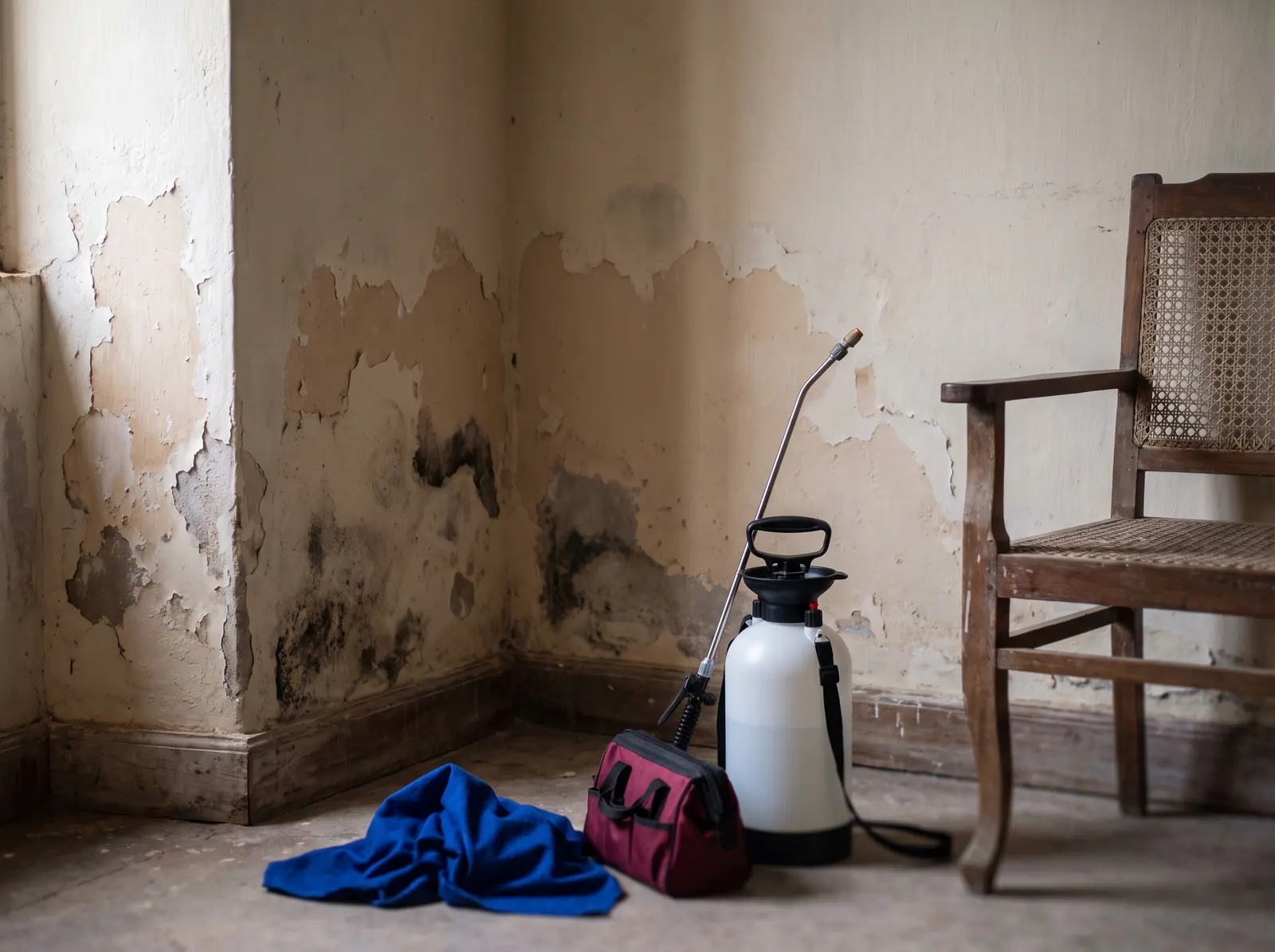
Goa's long, very heavy south-west monsoon and humid coastal climate suit many pests that trouble food businesses. Stored-product insects such as beetles and moths develop faster in warm, humid conditions, especially in flour, grains, nuts and spices. Wet floors, damp drains and organic waste support flies and cockroaches.
Heavy rain also drives rats and mice towards dry buildings and stores. Birds roost on ledges and enter through loading bays left open. Damp soil and timber, including old pallets, can attract subterranean termites. A good programme plans for these seasonal pressures instead of reacting to them.
How do we zone your site and assess risk?
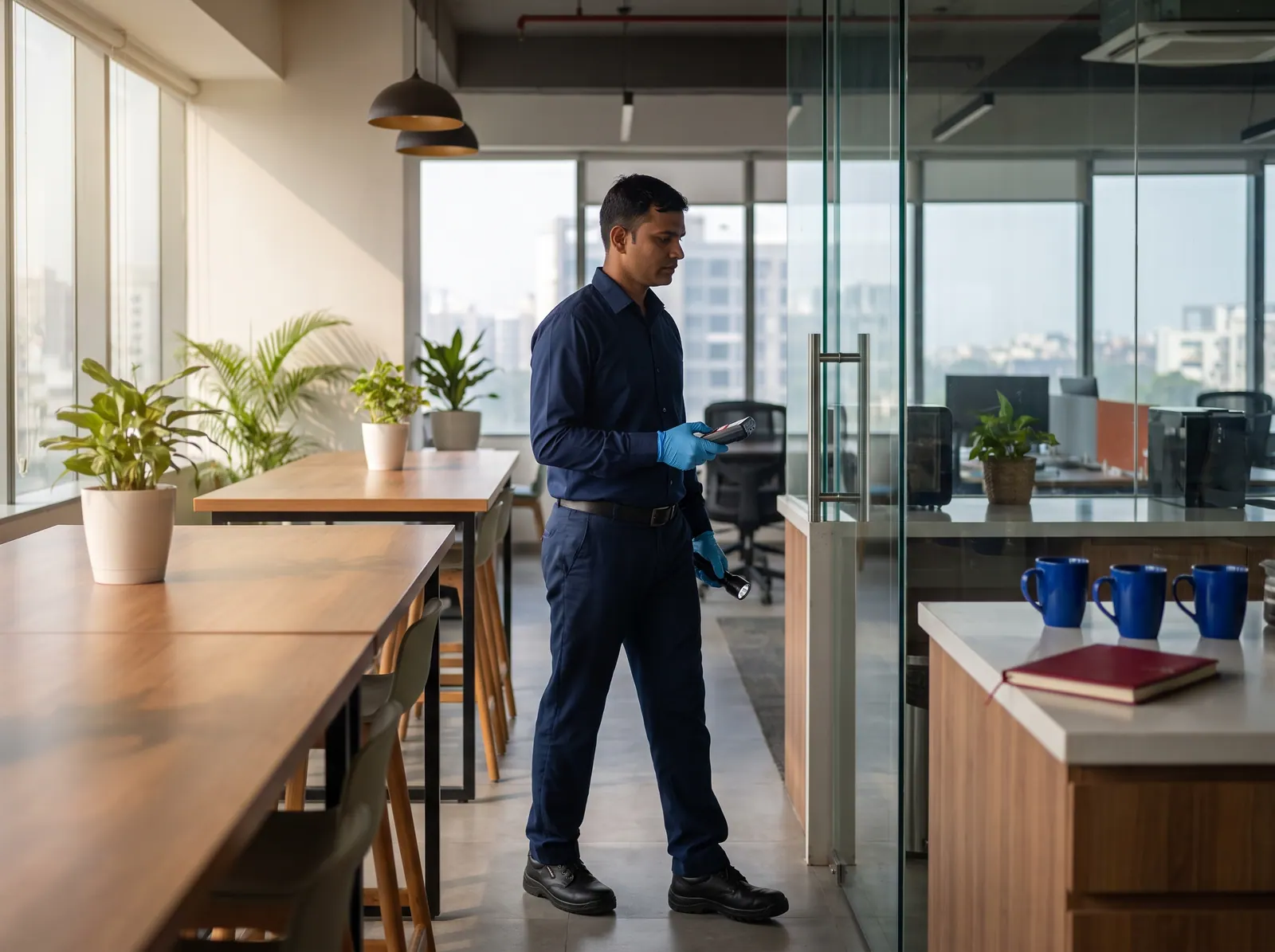
Every programme begins with an inspection of the whole site, inside and out. We look at what you produce, whether food is exposed or enclosed, where pests could enter, how waste is handled, what surrounds the boundary (fields, drains, nalas or other units) and any pest history you have recorded.
From this we divide the site into zones, because a raw-material store and an open filling line need very different controls.
| Zone | Examples | Main concerns | Typical approach |
|---|---|---|---|
| External perimeter | Boundary, yard, waste area, external drains | Rodents, birds, flies breeding in waste | Secured, tamper-resistant bait stations; waste and drainage advice; bird-proofing where needed |
| Receiving and storage | Loading bay, raw-material store, packaging store | Rodents, stored-product insects, birds entering through open doors | Traps and monitoring points; stock inspection and rotation advice; fumigation only where it is the appropriate method |
| Production and high-care | Processing halls, mixing, filling and packing areas | Contamination of exposed product | Non-toxic monitoring only, no loose bait; treatments timed to shutdowns |
| Support areas | Canteen, changing rooms, toilets, offices, internal drains | Cockroaches, ants, flies | Gel baiting and targeted crack-and-crevice treatment |
The risk assessment produces a zone plan, the number and position of monitoring points, a visit frequency and agreed action levels. These are the levels of activity that trigger a corrective action.
Which monitoring devices are used, and how are they recorded?
Monitoring tells you whether pests are present before they become a contamination problem. The devices are chosen zone by zone:
- External rodent bait stations – tamper-resistant, fixed in place and numbered, around the perimeter and waste areas.
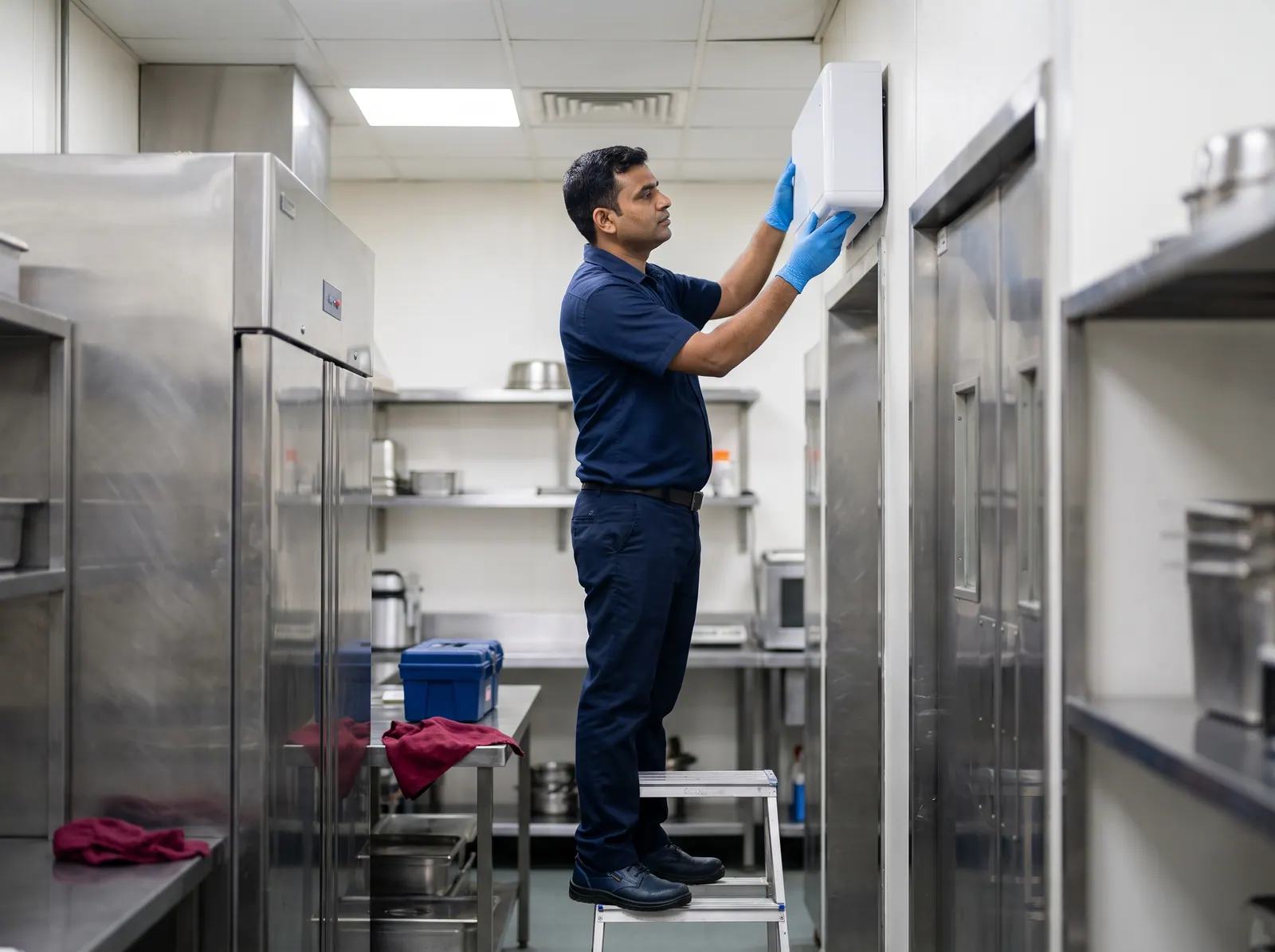
- Internal rodent traps or monitoring stations – without toxic bait, so nothing can find its way into product.
- Glue boards for crawling insects – at points such as drains, under equipment and near doors.
- Insect light traps – if your site already uses them, their catch should be reviewed and recorded in the same file.
- Visual inspection – of stored materials, pallets, ceilings, ledges and voids, where devices cannot tell the whole story.
Each monitoring point is numbered and marked on a plan of your site. At every visit the technician records the condition of each point, any activity found and any action taken. Numbered records matter because they show patterns. A single loading-bay door with repeated rodent activity points to a different fix than activity spread across the store.
What happens when monitoring finds activity?
Auditors rarely expect zero pest sightings. What they want to see is that every finding was dealt with and the loop was closed. We follow a simple sequence:
- Record the finding – monitoring point, pest, quantity and date.
- Inform your site contact – through the service report shared after the visit, with WhatsApp updates where useful.
- Find the cause – a damaged door seal, a gap around pipework, spillage under a machine, a blocked drain or infested incoming material.
- Act – targeted treatment by our technicians, and structural or hygiene fixes by your maintenance or housekeeping team.
- Verify and close – check the area at the next visit or a follow-up, and record that the issue is resolved.
Kept together, these entries form the audit trail that sits inside your HACCP plan. Our guide to pest control records for food-safety audits in Goa explains in more detail how auditors read these records.
Who is responsible for hygiene and housekeeping?
No pest programme works if food residues, open doors and blocked drains are left for the pest technician to find. FSSAI Schedule 4 hygiene requirements treat pest control as part of the business's overall sanitation. That means your own staff carry much of the load. Agreeing roles in writing avoids gaps.
| Task | Your site team | Our role |
|---|---|---|
| Daily cleaning of floors, drains and under equipment | Housekeeping | Point out residues and harbourage that attract pests |
| Waste removal and bin hygiene | Housekeeping or stores | Inspect waste areas at each visit |
| Doors, mesh, seals and drain covers kept in repair | Maintenance | Identify gaps and entry points in reports |
| Inspection of incoming raw materials | Stores or QA | Advise on signs of stored-product insects and rodents |
| Logging sightings between visits | All staff, reported to QA | Review the log and respond |
| Monitoring, treatment and service reports | Accompany technicians | Carried out by our technicians |
Simple staff habits make a real difference. Keep food out of production areas and lockers, clean spillages promptly, keep doors closed, and report any pest or droppings seen. Our technicians can share prevention tips specific to your site during visits.
How are treatments kept safe around food production?
We follow an Integrated Pest Management approach: inspection, sanitation and proofing advice first, then targeted treatment only where it is needed. In Goa we are a licensed pest control operator under the Directorate of Agriculture, and we use CIB&RC-registered products. Material Safety Data Sheets are maintained for the products we use.
- Treatments inside production areas are scheduled for shutdowns or between production runs, as agreed with your QA team.
- Exposed product, packaging and food-contact surfaces are removed or covered before treatment. Your team cleans as agreed before production restarts.
- Products are applied according to label directions, and treated areas are kept clear of people until it is safe to return.
- A representative from your site accompanies our technicians during the service.
- Fumigation of stored goods or consignments is considered only where it is the appropriate method, with the area cleared and secured.
What should your pest control audit file contain?
Our documentation for food businesses is aligned with HACCP and FSSAI audit expectations. It supports your food safety system; certification and licensing remain with your business and the relevant auditors or authorities. A well-kept file usually holds:
- Details of our pest control operator licence and the products used
- Material Safety Data Sheets for those products
- The site plan showing zones and numbered monitoring points
- Service reports from every visit
- Findings, corrective actions and verification of closure
- Your own sighting log and housekeeping records
Most food units run this as an annual maintenance contract, with visits scheduled to suit the risk assessment and a service report after each one. Where a warranty applies to specific services, it covers the treated area as set out in the service agreement. You can read more about how we work.
Where in Goa can we support food processing units?
Our company records list coverage in and around Panaji, Margao, Vasco da Gama, Mapusa, Porvorim, Calangute, Candolim, Baga and Ponda, including Kundaim and Usgao. Details for that area are on our commercial pest control in Ponda page. If your unit is elsewhere in Goa, tell us the location and we will confirm whether we can help.
If your site is mainly storage, our warehouse and godown pest control page is more relevant. Manufacturers with cleanroom-style controls may also find our pharmaceutical facility pest management page useful.
To get started, contact our Goa branch in Chimbel. Tell us where your unit is, what you produce, any pest problems you are seeing and when your next audit is due. We will arrange an inspection and propose a programme that suits your site.
Frequently asked questions
QCan you certify our food unit for FSSAI or HACCP?
No. We provide pest management and documentation aligned with HACCP and FSSAI audit expectations, such as service reports, product safety data sheets and records of corrective actions. These support your food safety system and your audits. Licensing, registration and certification remain with your business, your auditors and the relevant authorities. We can talk through which pest control records your auditor is likely to ask for.
QWill pest control visits interrupt our production?
Monitoring checks can usually be done while you are working, because they involve inspecting and recording devices rather than applying products. Treatments in production areas are planned for shutdowns, cleaning windows or between runs, as agreed with your QA team. Exposed product and food-contact surfaces are removed or covered first, and your team cleans as agreed before restarting the line.
QDo you use rodent poison inside production areas?
Toxic bait is generally kept out of areas where food is exposed, because of the risk of bait or affected rodents contaminating product. Inside, rodents are monitored with traps or monitoring stations that do not contain toxic bait. Secured, tamper-resistant bait stations are used outside, around the perimeter and waste areas. The exact layout depends on your site's zoning and risk assessment.
QHow often should a food processing unit have pest control visits?
It depends on the risk. Relevant factors include what you produce, how exposed the product is, the condition of the building, the surroundings and your pest history. Higher-risk sites may need more frequent visits than lower-risk ones, and visits can be weekly, monthly or quarterly. Frequency is set after the initial inspection, written into the agreement, and reviewed if monitoring shows a change.
QWhat should our staff do if they see a pest between visits?
Record it in your sighting log: what was seen, where, when and by whom. If it is safe to do so, keep the specimen or take a clear photograph, as this helps with identification. Inform your QA or hygiene lead, check the area for spillage or an open entry point, and let us know so it can be investigated and added to the corrective-action record.
QCan you fumigate incoming raw materials or stored goods?
Fumigation is one of the services offered by our Goa branch. It is used for stored goods, spaces or consignments only where it is the appropriate method. Whether it suits your materials depends on the product, the pest involved and how the goods are stored. We assess this first and agree area clearance and safety arrangements with you before any fumigation.
QIs there a warranty on the work?
For specific services, a limited warranty applies to the treated area as set out in the service agreement. Terms vary by pest and treatment. They exclude problems caused by structural changes, new construction or not following post-service instructions. Pests arriving from outside the treated area need proofing and housekeeping on your side, and our technicians can advise on this.
Last updated 13 October 2026. Information on this page is general guidance; your technician will advise on your specific property after inspection.