Quick answer
The cost of pest control in Goa depends mainly on the size and type of property, which pest is present and how severe the infestation is, the treatment method, how many visits are needed, whether you choose a one-time treatment or an annual maintenance contract, and how easy the site is to access. Because these vary so much, an on-site inspection is the most reliable way to get an accurate quote.
Key points
- Pest control cost depends on property size and type, pest and severity, treatment method, number of visits, access and documentation needs.
- One-time treatments suit a single defined problem; Annual Maintenance Contracts provide scheduled year-round visits with service reports.
- An inspection confirms the pest, its spread and its causes, which makes a quote accurate.
- Anti-termite treatment in India follows IS 6313, with Part 2 for pre-construction and Part 3 for post-construction work.
- Ask any provider about method, areas covered, visits included, product registration, licensing and warranty exclusions.
If you have asked around about pest control cost in Goa, you have probably noticed that nobody gives the same figure twice. That is not evasion. A two-bedroom flat in Porvorim with a few cockroaches and a hotel kitchen with a rodent problem are very different jobs, even if both are called pest control.
This guide explains what actually goes into a quote, so you can compare offers fairly and know what to ask before you agree to anything.
Why is there no single price for pest control?
A pest control quote is really an estimate of time, materials, skill and follow-up. Each of those changes with the property, the pest and the goal. Getting rid of an existing infestation takes more work than routine prevention, and some pests need several visits by their nature.
This is why we do not publish fixed prices on this page. A figure without an inspection would either be padded to cover the worst case or too low to cover what the job really needs.
What are the main factors that affect the cost?
Property size and type
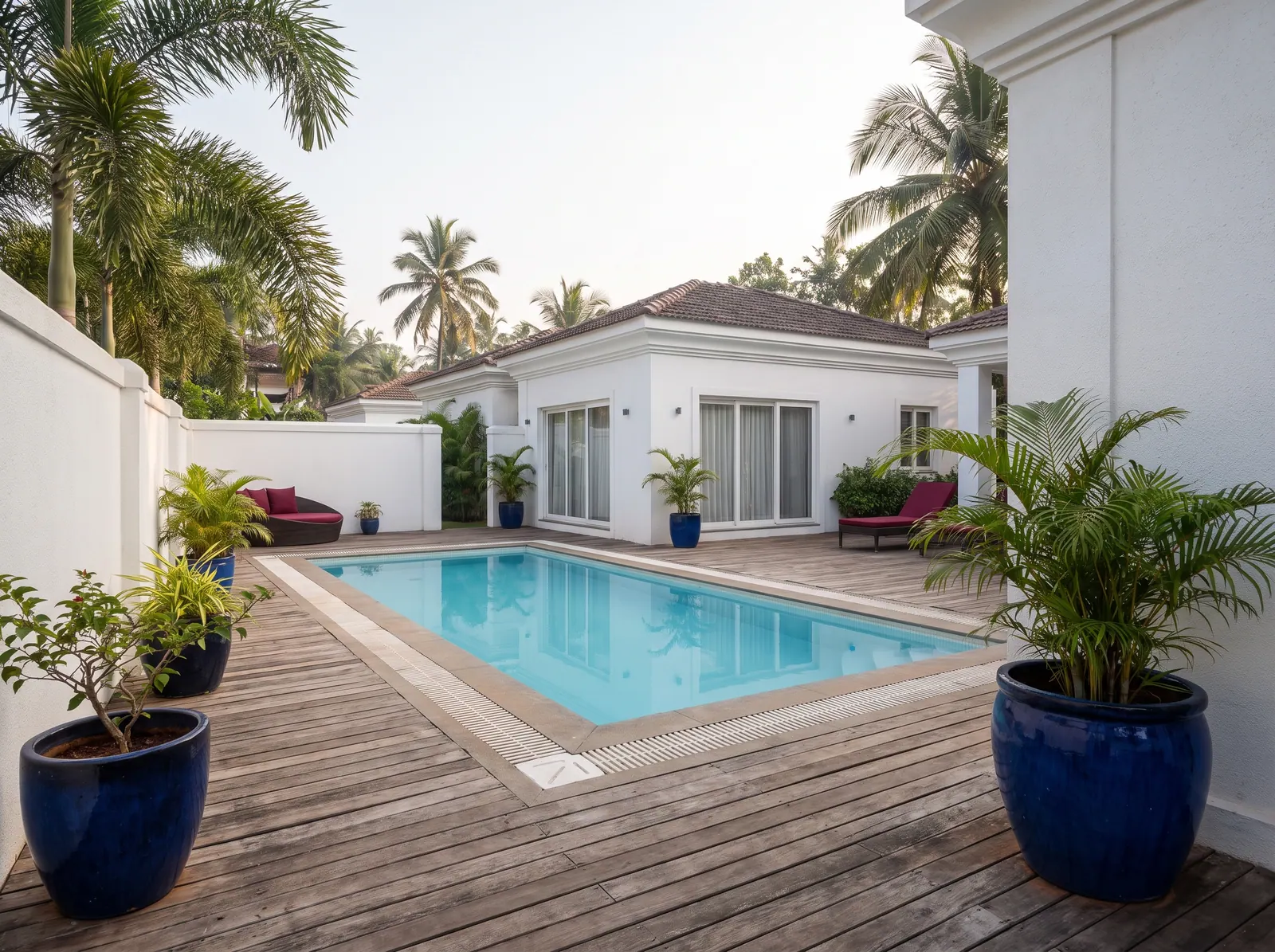
The area to be treated is the starting point. A studio flat, an independent house, a villa with a garden and a housing society with shared stairwells, terraces and drains all need different amounts of time and material.
Property type matters too. Commercial premises such as restaurants, hotels, offices and warehouses usually have more zones, stricter hygiene expectations and areas that can only be treated at certain times.
Which pest, and how established it is
Different pests call for different work. Cockroaches are typically managed with gel baiting and crack-and-crevice treatment, while termites need inspection of walls, floors and woodwork before treatment is planned. Bed bugs need careful room-by-room work.
Severity changes the scope. A few ants on a kitchen counter is a small job; a long-established infestation that has spread through several rooms, or into furniture and structural timber, takes longer and may need repeat visits.
The treatment method
The method is chosen to suit the pest and the building, and some methods involve more labour than others. For example, termite control in Goa may mean pre-construction soil treatment for a new building, or drilling, filling and sealing along walls and floors in an occupied home. These approaches follow the Indian Standard IS 6313 (Part 2 for pre-construction and Part 3 for post-construction treatment), and the work involved is quite different.
Other services have their own requirements. Fumigation is used only where it is the appropriate method, bird netting depends on the area being covered, and wood borer treatment depends on how much furniture or timber is affected.
Number of visits and follow-ups
Some problems are dealt with in a single visit. Others, such as bed bugs, usually need follow-up visits because eggs and hidden insects can survive the first round. Our bed bug treatment in Goa is planned room by room with follow-ups for this reason.
A quote should make clear how many visits are included, so you are not comparing a one-visit offer with a multi-visit one as if they were the same.
Access, preparation and location within Goa
How easy the site is to work in affects time on site. Cluttered storerooms, false ceilings, locked areas or a kitchen that can only be treated after closing all add complexity.
Location can also play a part in planning a visit. Our Goa branch in Chimbel serves a set of towns and localities listed on our areas we serve page, including Panaji, Margao, Vasco da Gama, Mapusa, Ponda, Porvorim and the Calangute–Candolim–Baga belt. If you are unsure whether your area is covered, ask when you request a quote.
Records and documentation
Food businesses often need documentation that supports HACCP and FSSAI audit expectations. Preparing structured records, service reports and product information is part of the service for these clients, and the scope of documentation needed is worth discussing up front.
| Factor | Why it changes the quote |
|---|---|
| Property size and type | More area, rooms or zones means more time and material |
| Pest and severity | Established or spread infestations need more work |
| Method | Drill-fill-seal, fumigation or netting involve more labour than spot treatment |
| Visits | Follow-ups or scheduled visits add to the total scope |
| Access and timing | Restricted areas or after-hours work take more planning |
| Documentation | Audit-ready records for food businesses add to the service |
One-time treatment or Annual Maintenance Contract?
A one-time treatment targets a specific, current problem. An Annual Maintenance Contract (AMC) provides year-round scheduled visits with service reports. Which suits you depends on how often pests are likely to return and how much monitoring the property needs.
| One-time treatment | Annual Maintenance Contract | |
|---|---|---|
| Best suited to | A single, clearly defined problem | Homes and businesses wanting ongoing prevention |
| Visits | One visit, or a short series for pests like bed bugs | Scheduled visits across the year |
| Records | Report for the visit | Service reports for each scheduled visit |
| How to think about cost | Pay for the job you need now | Spread planned prevention across the year |
For restaurants, hotels and other food businesses, scheduled and documented service is usually the more practical choice, because hygiene audits look for a consistent record rather than a single treatment. For a home, a one-time treatment may be enough if the cause has been fixed.
Does Goa's climate affect what you need?
Goa's humid coastal climate and very heavy south-west monsoon create conditions that suit many pests. Damp timber and walls can encourage termites and wood borers, standing water supports mosquito breeding, and pests often move indoors seeking shelter during heavy rain.
This does not set a price, but it can affect what is recommended. Some properties benefit from treatment timed around the monsoon, or from an AMC that covers the seasons when problems tend to rise.
Why does an inspection lead to a more accurate quote?
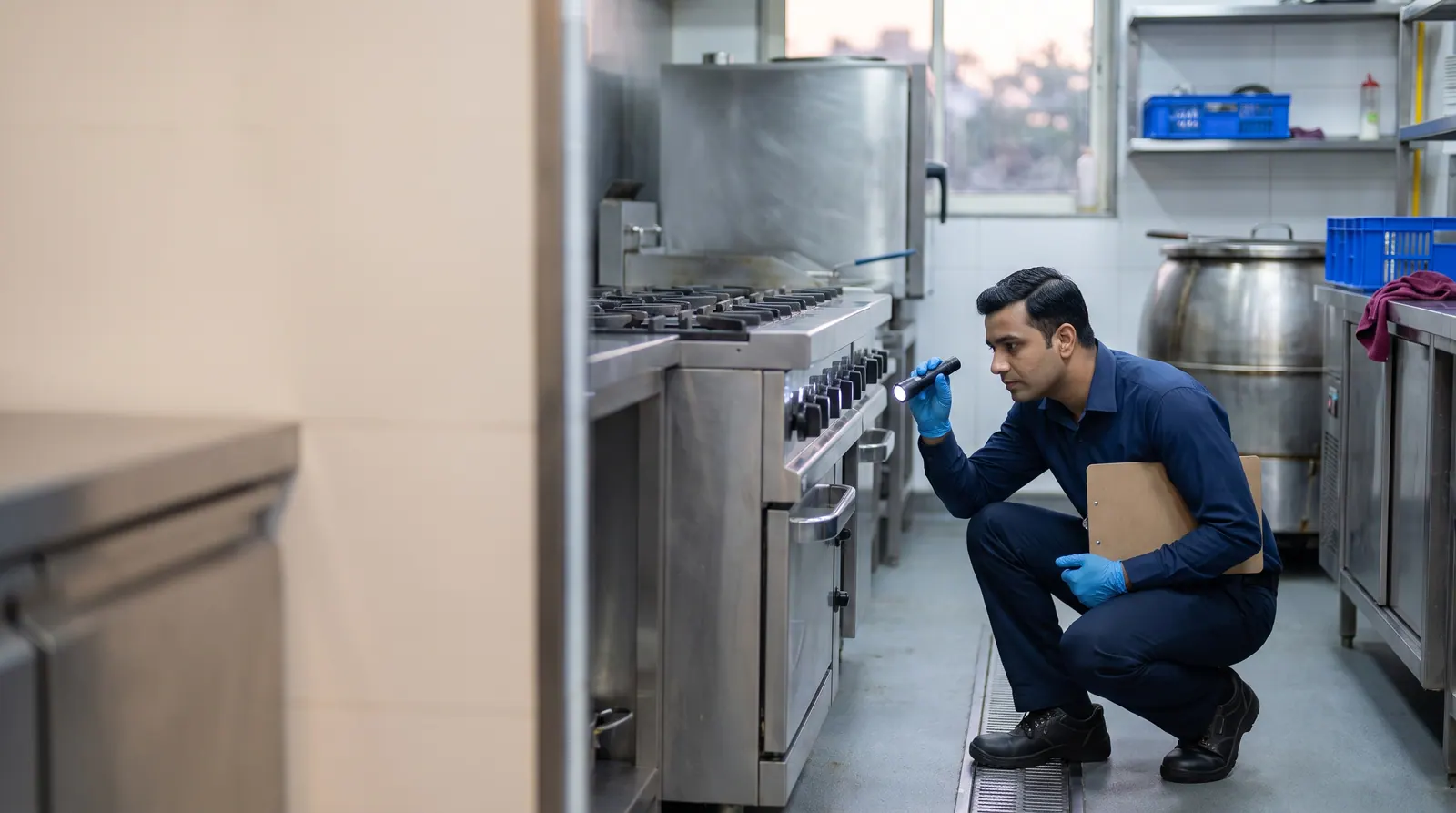
Our approach follows Integrated Pest Management: inspection first, then sanitation and proofing advice, then targeted treatment. The inspection is what makes the quote accurate.
During an inspection, a technician typically looks at:
- Which pest is present, confirmed rather than guessed
- How far the infestation has spread and where it is coming from
- Entry points, moisture and food sources that keep pests coming back
- Which areas need treatment and which do not
- Access, timing and any safety considerations for children, pets or food areas
This avoids paying for treatment in areas that do not need it, and avoids under-treating a problem that will simply return. You can request an inspection to get a quote based on your actual property.
What questions should you ask about a pest control quote?
Whichever company you speak to, these questions help you compare quotes on equal terms:
- What pest have you identified, and how severe is it? The quote should be based on what was found, not assumed.
- What method will you use, and why? You should understand the approach in plain language.
- Which areas are included? Ask whether gardens, terraces, common areas or storerooms are covered.
- How many visits are included? Check whether follow-ups are part of the price.
- Are the products CIB&RC-registered, and is safety information available? Material Safety Data Sheets should be available for products used.
- Is the operator licensed? In Goa, pest control operators are licensed through the Directorate of Agriculture.
- Is there a warranty, and what does it exclude? Ask what area it covers and what conditions apply.
- What do I need to do before and after treatment? Preparation and aftercare affect results.
- Will I receive a service report? This matters most for businesses and AMCs.
For our own answers to common questions, see our Goa pest control FAQ.
How can you keep costs sensible without cutting corners?
The cheapest quote is not always the lowest cost if the problem returns. A few practical steps help you get value from any treatment:
- Act early. Smaller infestations are simpler to deal with.
- Fix the causes you can, such as leaks, food left out and gaps around pipes and doors.
- Prepare the property as instructed so the technician can work efficiently.
- Follow post-treatment advice. Keep children and pets away from treated areas until dry or as advised, ventilate rooms and wash hands after contact with treated surfaces.
- Choose the service level the property actually needs, rather than the largest package.
Getting a quote from our Goa branch
Our Goa branch in Chimbel is a licensed pest control operator (Directorate of Agriculture, Goa) using CIB&RC-registered products. After visits, we share service reports, and clients receive updates on WhatsApp. Where a warranty applies, it covers the treated area for specific services, as set out in the service agreement.
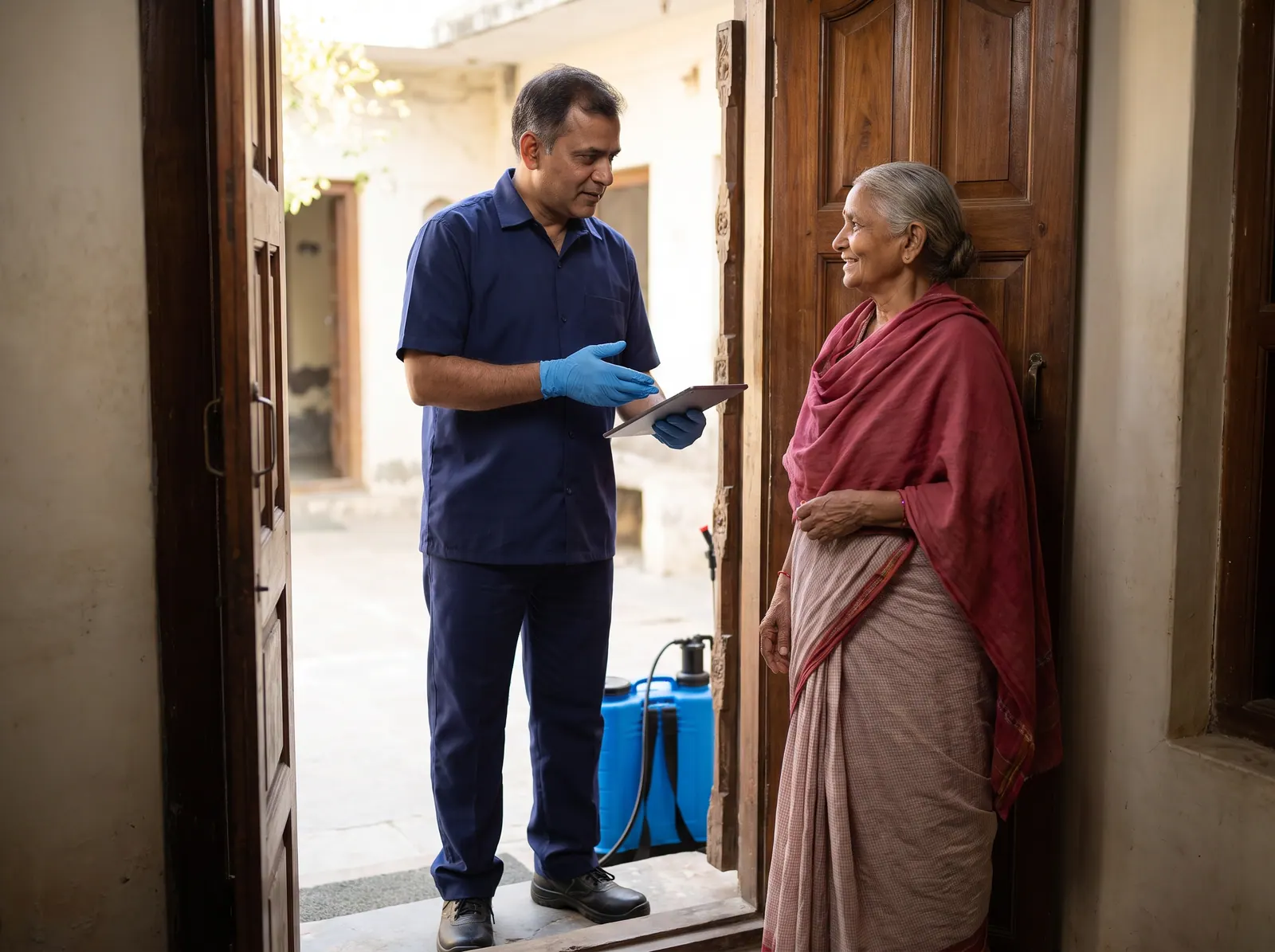
To get an accurate quote, tell us your location, the type of property and the pest problem you are seeing. You can find branch details on our Goa branch page, or browse our full range of pest control services in Goa first.
Frequently asked questions
QCan you give me a price over the phone without an inspection?
We can discuss your problem and explain what a treatment would usually involve, but an accurate quote needs an inspection. The pest, how far it has spread, the size of the area and access conditions all change the scope of work. Quoting without seeing the property risks either overcharging for work you do not need or under-treating a problem that will come back.
QIs an Annual Maintenance Contract better value than a one-time treatment?
It depends on the property. If you have a single problem whose cause has been fixed, a one-time treatment may be enough. If pests tend to return, or you run a food business that needs consistent records for audits, scheduled AMC visits with service reports are usually more practical. We can explain both options after inspecting the property.
QDoes the warranty affect what I pay?
Warranties apply to the treated area for specific services, as set out in the service agreement, and they vary by pest and treatment. They do not cover structural changes, new construction or cases where post-service instructions were not followed. Ask for the warranty terms in writing so you know exactly what is and is not included in your quote.
QHow can I pay for a pest control service?
Payment is made as per the quotation or invoice. We accept cash, UPI transfer, card, net banking and bank transfer. If you are a business with particular invoicing requirements, mention them when you request a quote so the paperwork matches your process.
QWhat happens if I need to cancel or reschedule?
Please let us know at least 48 hours before the scheduled service. A late-cancellation fee may apply if the visit is cancelled with less notice. Rescheduling early also helps us plan visits for other customers in your part of Goa.
QIs pre-construction termite treatment priced differently from treatment in an existing home?
Yes, because the work is different. Pre-construction treatment is applied to the soil before and during building, while post-construction treatment in an occupied building usually involves drilling, filling and sealing along walls and floors. Both are guided by IS 6313. The size of the plot or building and the stage of construction determine the scope, so each is quoted separately after assessment.
Last updated 13 October 2026. Information on this page is general guidance; your technician will advise on your specific property after inspection.