Quick answer
Efficacy Pest Control provides wood borer treatment in Baga from its Goa branch in Chimbel. A technician first inspects furniture, doors, frames and roof timber to confirm whether borer activity is current. The affected wood is then treated directly, typically by injecting exit holes and treating bare surfaces. You also get advice on moisture, sealing and timber too weak to save. Service reports are shared after visits.
Key points
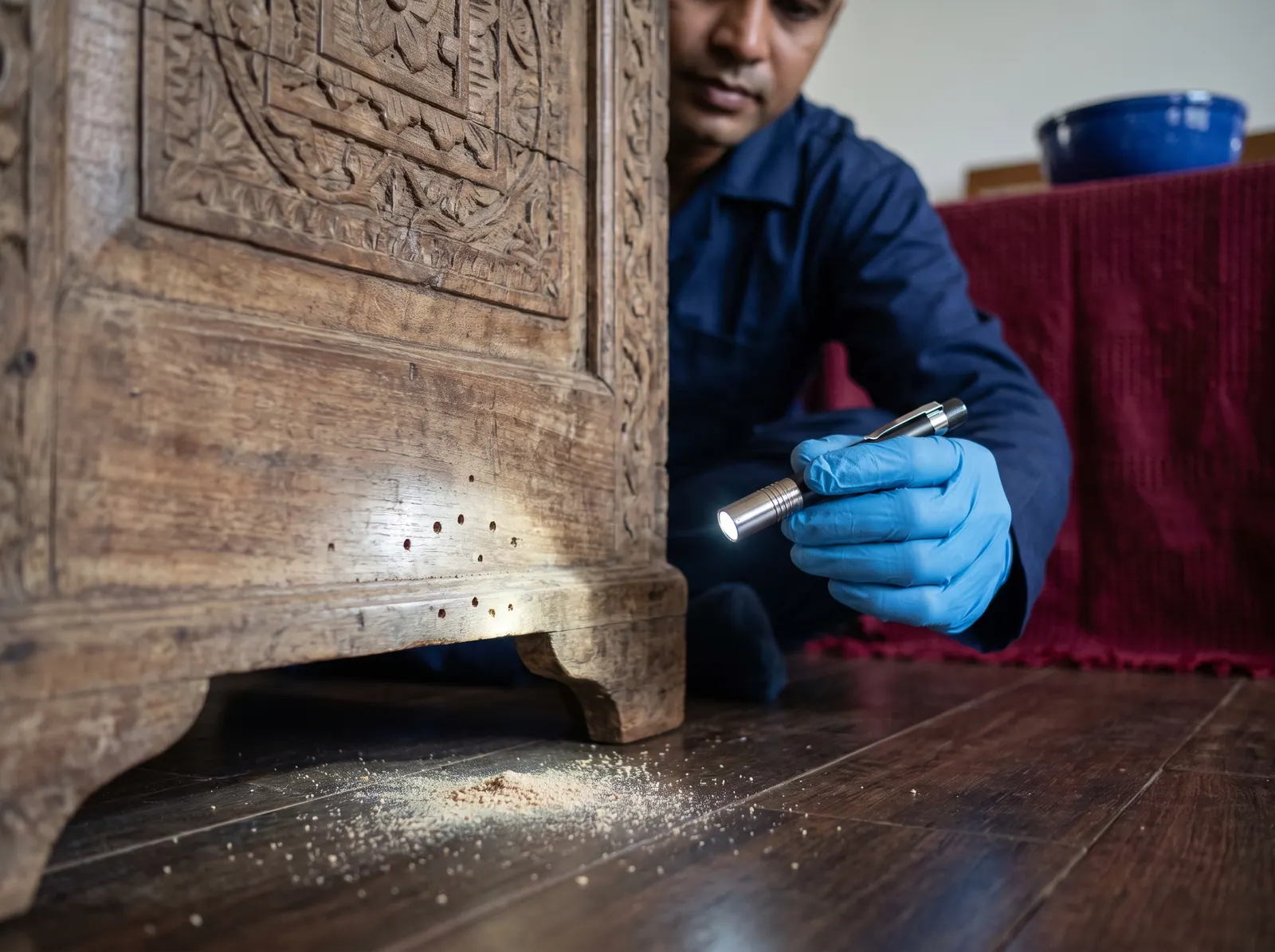
- Wood borer larvae feed hidden inside wood; small round exit holes and fresh fine powder are the usual visible signs.
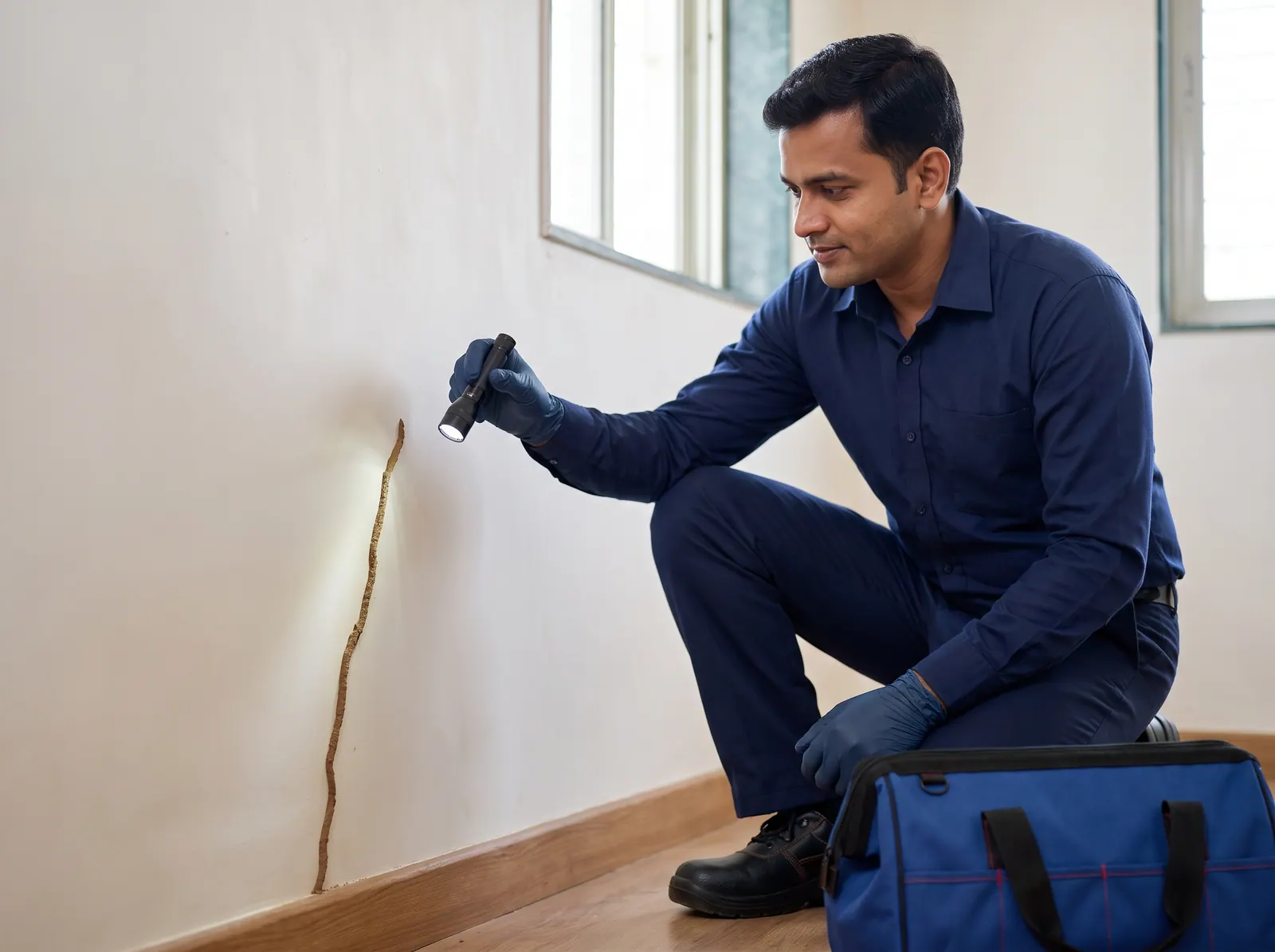
- Termites leave mud tubes and soil-lined galleries, and need a different treatment from wood borer.
- Treatment is targeted: injection into holes and galleries plus treatment of unpolished surfaces where beetles lay eggs.
- Damp, poorly ventilated timber, such as in rooms closed through the monsoon, is more vulnerable to some borer beetles.
- Treatment cannot restore wood the larvae have already eaten; badly weakened timber may need repair or replacement.
If you have found small round holes in a bed frame, or a little heap of fine powder under a cupboard or door, you may be dealing with wood borer. We provide wood borer treatment in Baga, Goa from our Goa branch in Chimbel. Baga is in our company coverage records, and wood borer treatment is a confirmed service for the Goa branch.
We work on family homes, rented villas, guesthouses and restaurants. This page explains what we look for, how treatment works on different kinds of timber, and how to plan it around a busy season. For a general overview of the service, see our wood borer treatment service page.
Why does timber in Baga need watching?
Baga is a coastal village in North Goa, next to Calangute. Like the rest of the coast, it has humid air for much of the year and a very heavy south-west monsoon. Wood that stays damp, or sits in closed, poorly ventilated rooms, is more open to attack by some borer beetles.
Many properties here have wooden beds, wardrobes, louvred doors and window frames. Older houses often have timber rafters under tiled roofs. Many guesthouses and rentals also keep some rooms shut through the monsoon. Borer damage can go unnoticed in those rooms until they reopen and someone finds powder on the floor or on the bedsheets.
How can you tell if wood borer is active?
"Wood borer" is a general name for beetles whose larvae feed inside wood. The adult lays eggs in cracks, joints or old holes, usually on unpolished surfaces. The larvae then tunnel out of sight, often for a long time, before emerging as adults through small round exit holes. So by the time you see holes, the damage inside has usually been going on for a while.
Signs worth checking:
- Fresh powder (frass): fine, light-coloured dust below holes, on shelves or on the floor. If it reappears after you sweep, the activity is likely current.
- Clean, sharp-edged holes: new exit holes look pale inside. Old holes are usually darkened or clogged with polish and dirt.
- Weak or crumbly edges: a screwdriver sinks easily into the wood, or corners break away.
- Small beetles near windows or lights in rooms with wooden furniture.
Termites leave different evidence, such as mud tubes and soil-lined galleries, and they need a different treatment. If you are unsure which one you have, our guide on how to tell termites from wood borer explains the differences. Termite problems in the area are covered on our termite control in Baga page.
What does our wood borer treatment involve?
We follow an Integrated Pest Management (IPM) approach: inspection first, then advice on conditions such as damp and ventilation, then treatment aimed only at the affected timber.
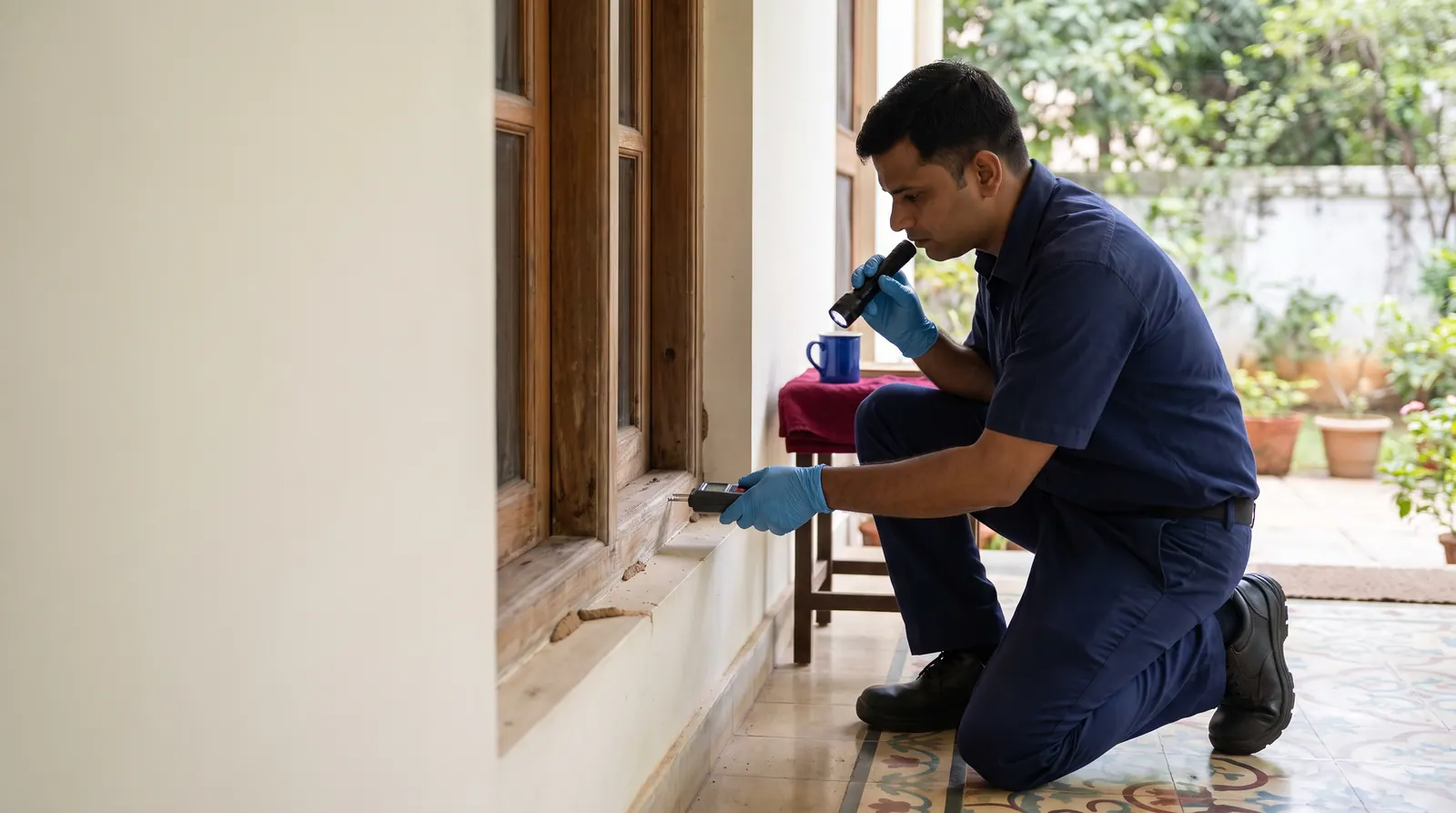
- Inspection. The technician checks the items and areas you point out, plus nearby timber. That includes undersides, backs, joints, door bottoms and frame ends. The aim is to judge whether activity is current and how deep it goes, and to rule out termites.
- A clear plan. We tell you which items can be treated, which may be too weak and are better repaired or replaced by a carpenter, and how to prepare each room.
- Preparation. You clear surfaces and drawers, remove cushions and fabrics, and pull furniture slightly away from walls where possible. Keep food and utensils out of the work area.
- Targeted treatment. Treatment is injected into exit holes and galleries. Unpolished surfaces such as backs, undersides and frame joints are also treated, because that is where beetles prefer to lay eggs. Fixed timber is treated in place wherever it can be reached.
- Fumigation where it fits. Fumigation may be discussed for heavily infested movable items, or for goods that cannot be treated piece by piece. We only use it where it is the appropriate method.
- Service report. After the visit, we share a service report recording what was treated.
Different timber, different approach
| Timber | What we usually check | Typical approach |
|---|---|---|
| Beds, wardrobes, chairs, dining tables | Undersides, back panels, joints, drawer runners | Injection into holes plus treatment of unpolished parts. Badly affected pieces kept apart until treated. |
| Doors, windows and frames | Bottom edges, hinge areas, frame joints near floor and walls | Treatment in place. Frames touching masonry are also checked for termites. |
| Roof rafters, beams, timber ceilings | Powder falling onto floors or beds, soft or sagging sections | Treatment where accessible. Weakened members referred to a carpenter or engineer. |
| Antique and heirloom pieces | Finish, earlier repairs, extent of tunnelling | Careful, targeted injection. Effects on the finish discussed before we start. |
Older carved furniture needs particular care. Our guide to wood borer in teak and rosewood furniture covers this in more detail.
Planning treatment for guesthouses, villas and restaurants
For a property with guests, timing matters as much as method. We can work room by room, so you only take a few rooms out of use at a time. If rooms have been closed for the monsoon, it is sensible to have the timber checked before they reopen.
Owners who want regular checks can include wood borer inspection in an annual maintenance contract, alongside other pest control. Our commercial pest control in Baga page explains how scheduled, documented visits work for businesses.
Is the treatment safe in an occupied home?
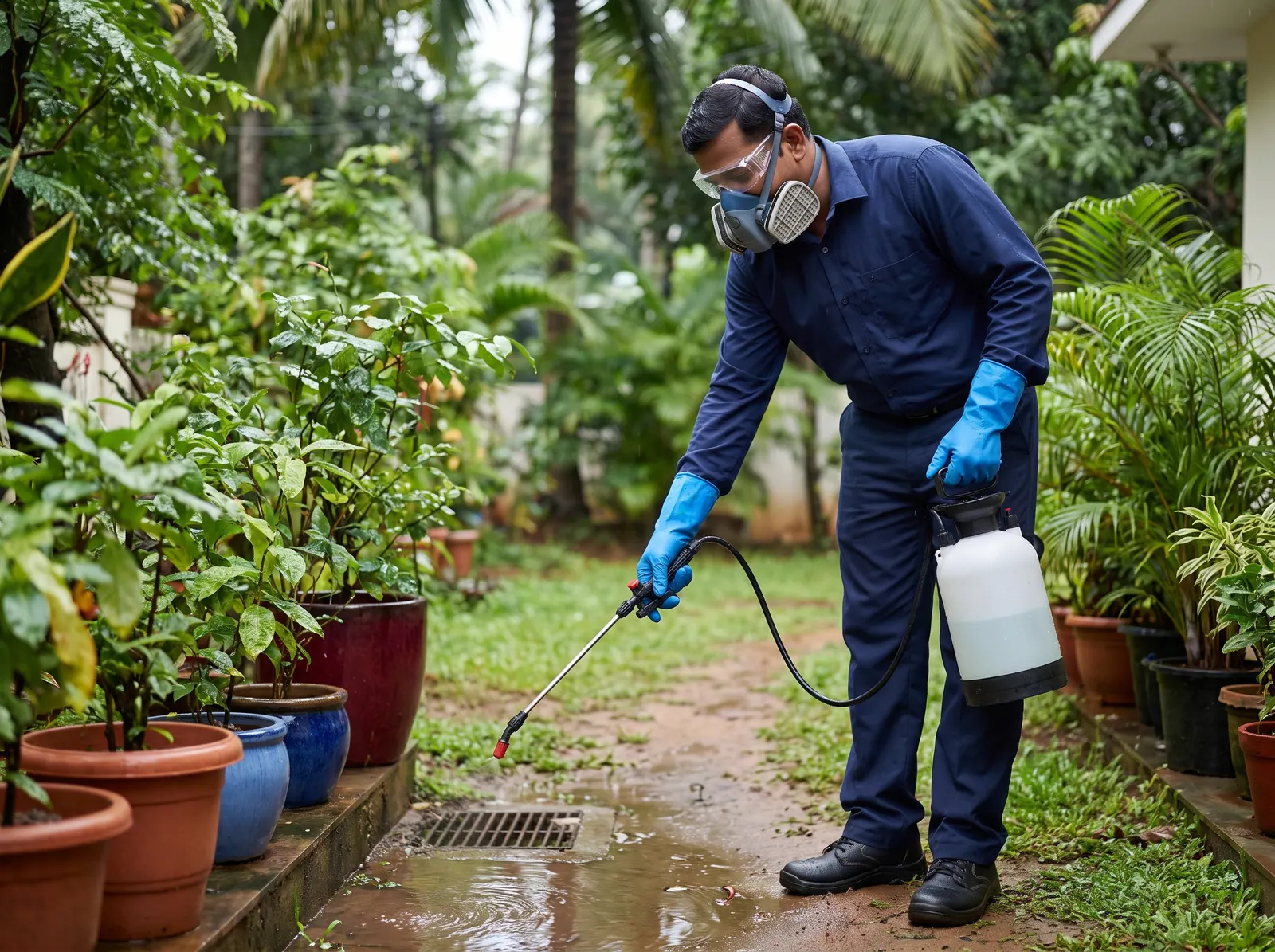
We are a licensed pest control operator with the Directorate of Agriculture, Goa. We use CIB&RC-registered products and maintain Material Safety Data Sheets for the products we use. Products are applied according to label directions, and only to the affected wood.
- Keep children and pets away from treated furniture and rooms until surfaces are dry, or for as long as the technician advises.
- Open windows and ventilate treated rooms.
- Do not sit on, or put bedding back onto, treated furniture until it is dry.
- Wash your hands if you touch treated surfaces.
- A member of the household or staff should be present during the service.
If anyone feels unwell after any pest treatment, please see a doctor.
Keeping timber borer-free afterwards
Larvae deep inside wood are hidden, so it can take some weeks to be sure activity has stopped. After treatment, fill or mark old holes once the wood is dry. That way, any fresh hole or new powder is easy to spot.
Other good habits:
- Fix leaks and keep furniture a little away from damp walls.
- Air closed rooms regularly, especially through the monsoon.
- Keep bare wood polished or sealed, as finishes discourage egg-laying on the surface.
- Inspect second-hand or antique furniture before bringing it into the property.
- Do not store old timber or firewood against the house.
Where a warranty applies, it covers the treated area for specific services, as set out in your service agreement. It does not extend to new timber brought in later, structural changes, or cases where the post-service instructions were not followed.
Arranging wood borer treatment in Baga
Tell our Goa branch in Chimbel where your property is in Baga and which items or areas are affected. Let us know whether you are seeing fresh powder, and send photos if you can, as they help us plan the visit. You can reach us through our contact page. For other pests at the same property, see pest control in Baga.
Frequently asked questions
QDo you provide wood borer treatment in Baga?
Yes. Baga is listed in our company coverage records for Goa, and wood borer treatment is a confirmed service of our Goa branch in Chimbel. Let us know where your property is and what you have noticed, such as holes, powder or weak timber. We will then arrange an inspection and explain the treatment that suits the affected wood.
QCan furniture damaged by wood borer be saved?
Often it can, if the timber is still sound. Treatment targets the larvae inside, but it cannot restore wood they have already eaten. If a leg, joint or rafter has become crumbly or weak, we will advise having it repaired or replaced by a carpenter. Treatment alone will not make weakened wood strong again.
QDo we have to close rooms or move guests out during treatment?
Usually only the rooms being treated need to be out of use, and only until surfaces are dry or for as long as the technician advises. For guesthouses and villas, we can plan the work room by room. Ventilate treated rooms, and keep children and pets away until they are cleared for use again.
QHow do I know whether the treatment has worked?
Borer larvae live hidden inside the wood, so results are judged over time rather than on the day. Once the wood is dry, fill or mark the old holes, then watch for new holes or fresh light-coloured powder over the following weeks. If you see new signs, tell us so the item can be re-checked.
QWill polishing or varnishing stop wood borer?
A good finish discourages beetles from laying eggs on the surface, which helps with prevention. It does not kill larvae already tunnelling inside the wood, though, and they can still emerge through polish. Active borer needs targeted treatment first. Polishing or sealing afterwards then helps protect the wood.
QIs it wood borer or termites in my door frame?
Wood borer typically leaves small round holes and fine powder. Termites usually leave mud tubes or soil-lined galleries, and they often work up from the floor or wall. Door frames touch masonry, so they can be affected by either pest. Our inspection checks for both, because the treatments are different.
Last updated 13 October 2026. Information on this page is general guidance; your technician will advise on your specific property after inspection.