Quick answer
Efficacy Pest Control's Goa branch in Chimbel provides fly control in Calangute for homes, villas, guest houses, restaurants, beach shacks and hotels. We start with an inspection to find where house flies, fruit flies or drain flies are breeding. We then combine sanitation and proofing advice with targeted treatment of breeding and resting sites. Food businesses receive service reports aligned with HACCP and FSSAI audit expectations.
Key points
- House flies, fruit flies and drain flies breed in different places — waste, fermenting sugars and drain build-up respectively — so treatment follows the breeding site.
- In warm, humid weather flies can develop from egg to adult in a week or two, so lasting control depends on removing breeding sources.
- Fly control in Calangute is handled by Efficacy Pest Control's Goa branch in Chimbel using an inspection-led IPM approach.
- Food businesses receive service reports with documentation aligned with HACCP and FSSAI audit expectations.
- Keep children and pets away from treated areas until dry or as advised, ventilate, and wash hands after contact.
Fly problems in Calangute rarely come from one place. A restaurant may have house flies drawn to its waste area, fruit flies around the bar and drain flies rising from a floor trap, all at the same time. Our fly control in Calangute – Goa starts by finding where each type is breeding, because removing the source achieves more than any spray on its own.
The work is handled by our Goa branch in Chimbel, and Calangute is one of the localities in our service records. Below we explain which flies you are likely dealing with, what a visit involves and what you can do between visits. For a broader overview of the service, see our fly control service page.
Which flies are you seeing, and where are they breeding?
Identifying the fly matters because each type breeds somewhere different, and the fix follows the breeding site.
| Fly | How to recognise it | Where it usually breeds | Typical Calangute setting |
|---|---|---|---|
| House fly | Grey, medium-sized, lands on food and surfaces | Garbage, food waste, wet organic matter, animal droppings | Restaurant bin areas, market waste points, homes near open dumping |
| Fruit fly | Small and tan, often with red eyes, hovers near ripe fruit | Fermenting fruit, spilt juice, beer and syrups, damp mops and cloths | Bars, juice counters, bakeries, kitchens with fruit baskets |
| Drain fly | Tiny, fuzzy and moth-like, rests on walls near sinks | Slimy organic build-up inside drains, floor traps and sump areas | Commercial kitchens, guest-house bathrooms, wash areas |
In warm, humid conditions flies can develop from egg to adult in a week or two, which is why a problem can seem to appear overnight. Fruit flies and drain flies are often mistaken for each other; our guide to fruit flies and drain flies in Goa bars and restaurants explains how to tell them apart.
Why does fly pressure in Calangute change through the year?
Calangute's year follows two rhythms: the tourist season and the monsoon. Both change how much food waste, moisture and footfall a property has to manage.
| Period | What changes | What to focus on |
|---|---|---|
| Tourist season (roughly from after the monsoon into early summer) | More diners, guests and deliveries; bins fill faster; shacks operate on the beach | Frequent waste removal, covered bins, daily drain cleaning in kitchens, screened food-preparation areas |
| Pre-monsoon summer | Heat speeds up breeding and waste decomposes faster | Same-day waste disposal, sealed food storage, checking fruit stores and cold rooms |
| South-west monsoon | Very heavy rain, waterlogging, damp corners and blocked drains; many beach businesses close | Clearing drains and gutters, drying wet areas, checking closed premises periodically |
| Post-monsoon reopening | Kitchens and rooms reopen after months of damp | Deep cleaning drains and traps before trading resumes; an inspection before the season starts |
Standing water in the monsoon also breeds mosquitoes, which need a different approach — see mosquito control in Calangute.
What happens during a fly control visit?
We follow an Integrated Pest Management (IPM) approach: inspection first, then sanitation and proofing advice, then targeted treatment where it will actually help.
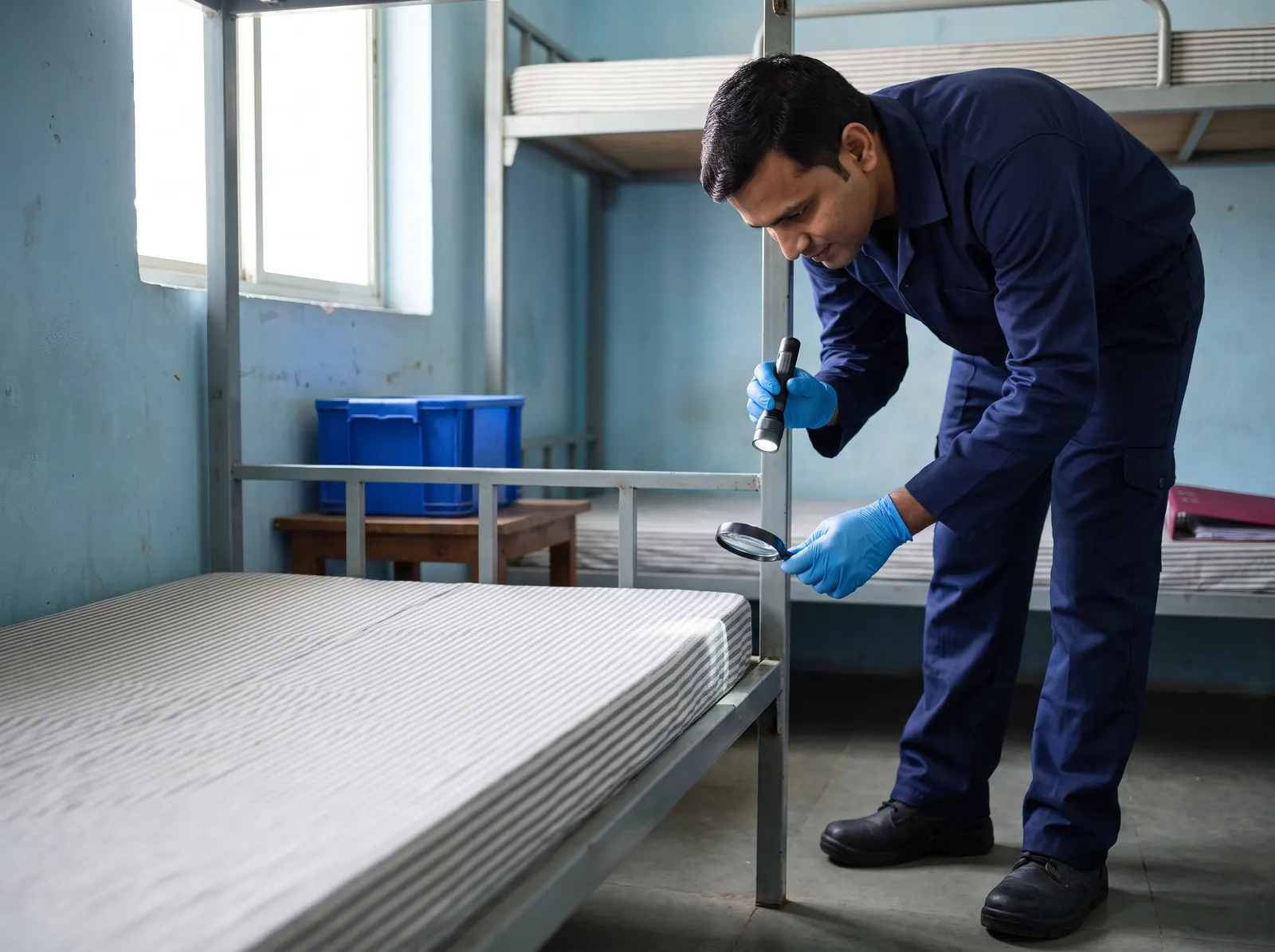
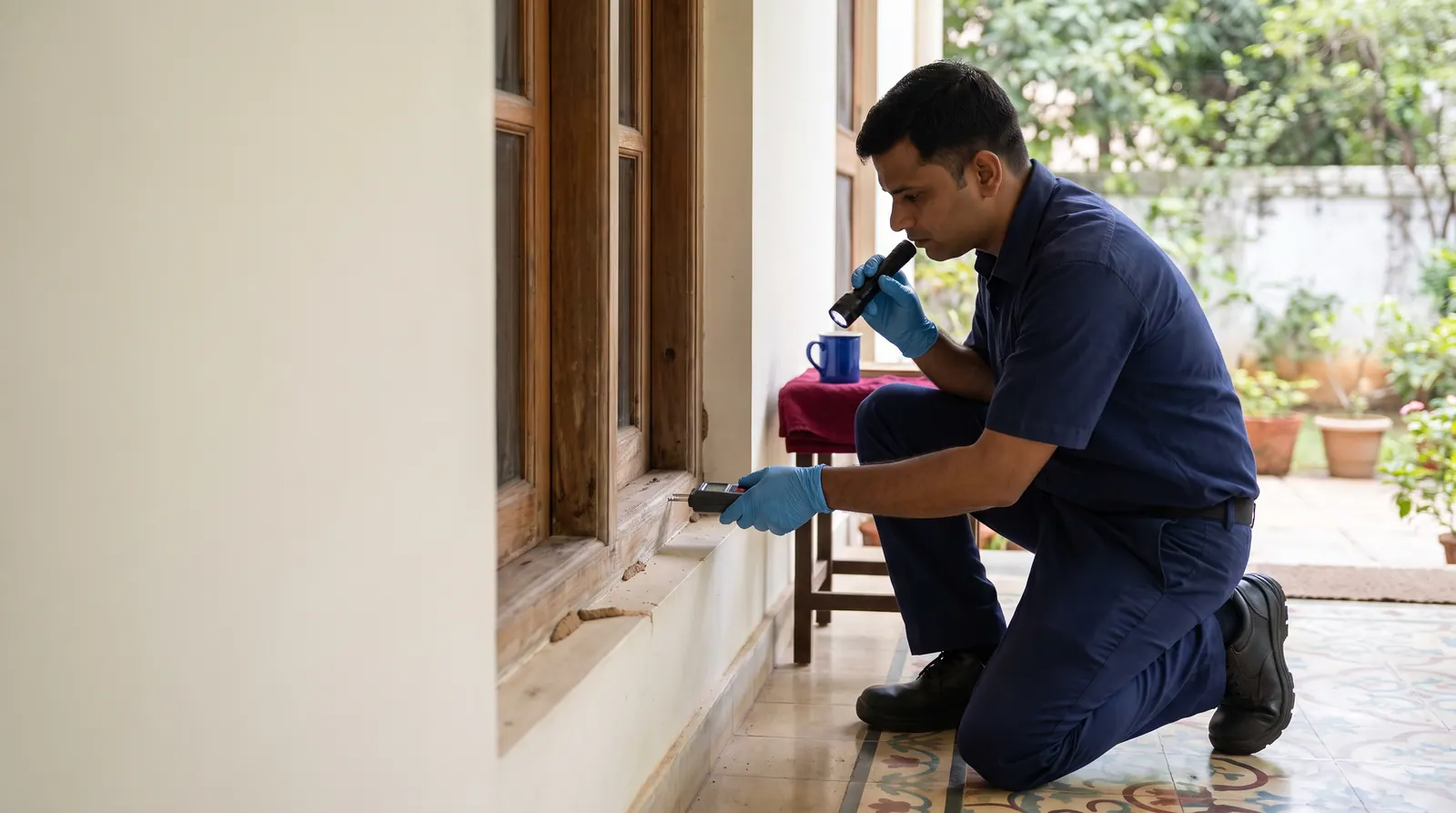
- Inspection. We look at bins and waste areas, drains and floor traps, food storage, bar counters, wet corners and the outside of the building, and note which flies are present.
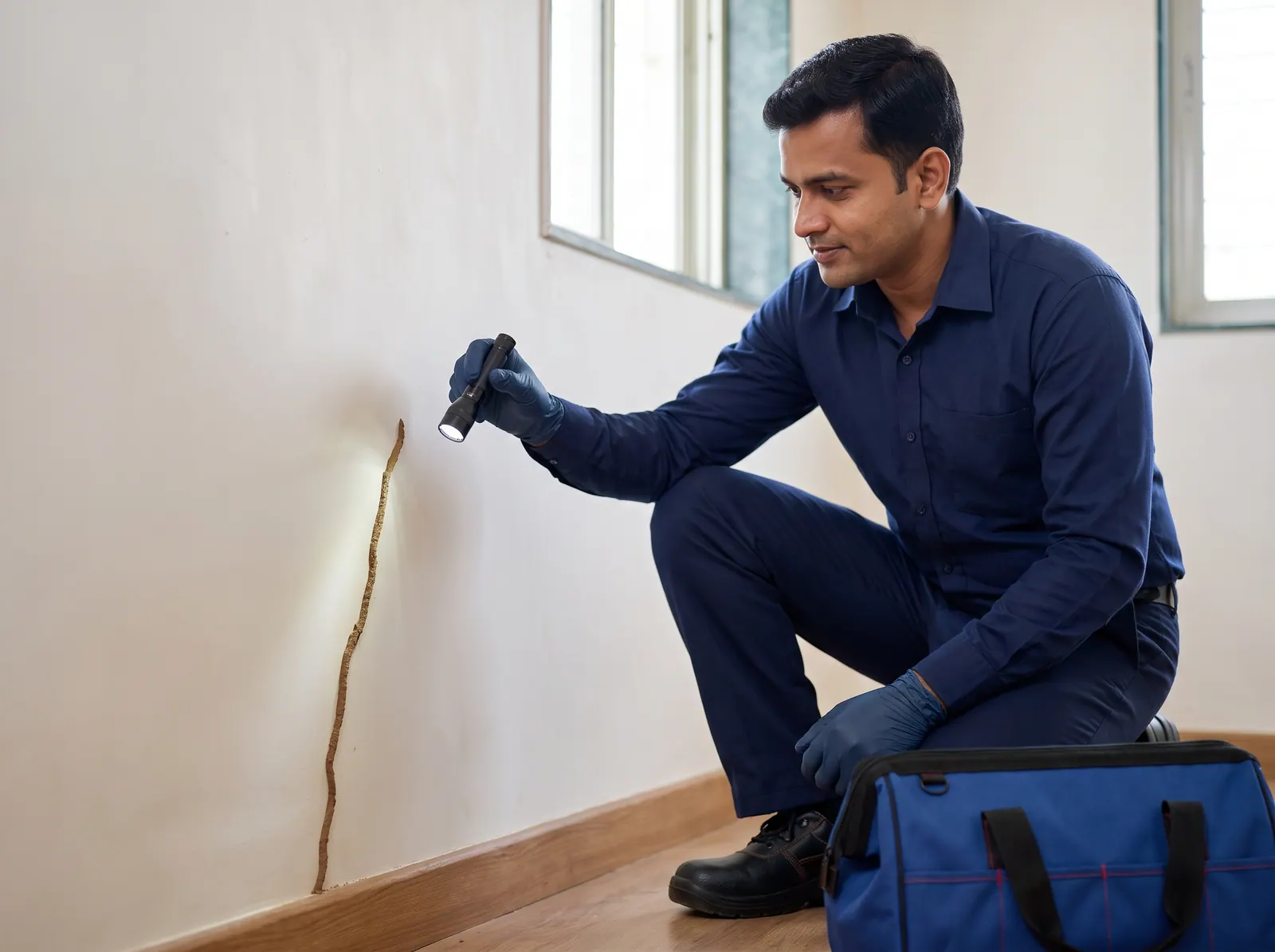
- Finding breeding sites and entry points. We mark where flies are breeding, where they rest and how they get in — open doors, unscreened windows, gaps around service hatches or exhaust openings.
- Sanitation advice. We explain in practical terms what needs cleaning and how often: for example, scrubbing drain walls rather than only pouring water down them, or emptying and washing bar drip trays every night.
- Proofing advice. We suggest measures such as mesh on windows, self-closing doors, strip curtains at kitchen entries and sealing gaps.
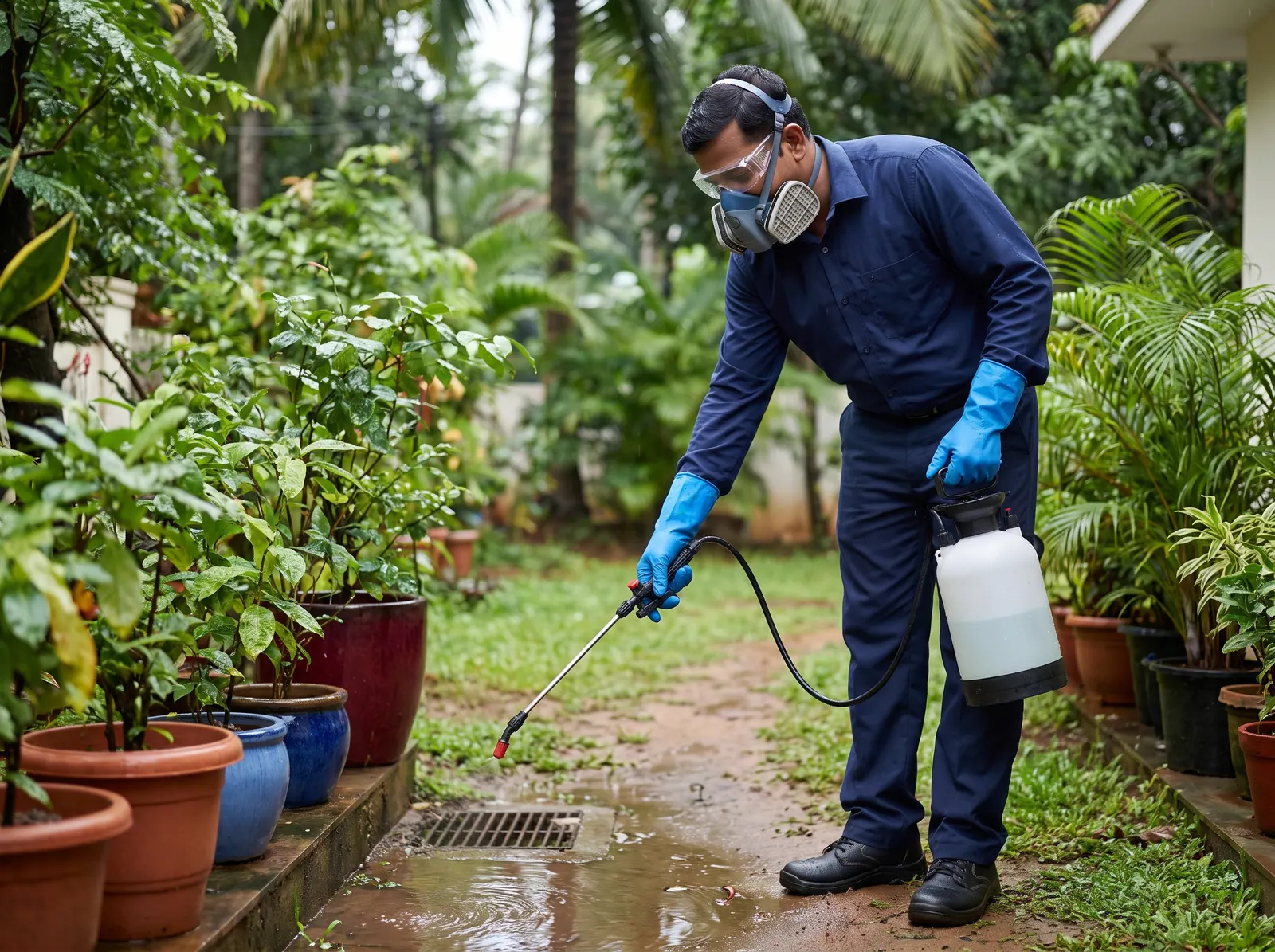
- Targeted treatment. We treat breeding points and fly resting surfaces with CIB&RC-registered products, applied according to label directions. Treatment is focused, not sprayed across the whole property.
- Service report. After the visit we share a report of what was done and what still needs attention, with updates on WhatsApp.
Flies coming in from outside — from a neighbouring waste point or open land — cannot be fully controlled by treating one property. In those cases we concentrate on keeping them out and removing anything that attracts them indoors.
Fly control for restaurants, shacks and hotels in the beach belt
Calangute's beach belt has a dense mix of restaurants, bars, beach shacks, hotels and guest houses. Food businesses here face two pressures: guests notice flies immediately, and FSSAI Schedule 4 hygiene requirements expect pest control to be in place and recorded.
For food businesses we provide documentation aligned with HACCP and FSSAI audit expectations, so you have a record of each visit, the areas covered and the corrective actions recommended. Typical focus areas include:
- Kitchen floor drains, grease traps and wash-up areas, where drain flies often breed
- Bar counters, drip trays, empty-bottle storage and juice stations, which attract fruit flies
- Bin stores and back-of-house waste points, the main draw for house flies
- Open-sided dining areas, where screening is limited and source control matters more
- Hotel stores, staff canteens and room-service pantries
Open-air shacks cannot be sealed like an indoor restaurant, so we concentrate on the kitchen and storage side, waste handling and drainage. Many food businesses prefer scheduled visits through an Annual Maintenance Contract. For wider programmes covering cockroaches, rodents and other pests, see commercial pest control in Calangute.
Fly control for homes, villas and homestays
Away from the beach road, Calangute's residential lanes have independent houses, apartments, villas and homestays. Household fly problems usually trace back to a few things: kitchen waste kept too long, fruit left out, a sink or bathroom drain with build-up, or a nearby waste point.
For homes the visit is usually shorter and the advice simpler: where to keep the bin, how to clean a slow drain, which windows need mesh. Villas and holiday homes left empty for weeks can develop drain flies in unused bathrooms, so running the taps and cleaning traps before guests arrive helps. If you want flies handled alongside cockroaches, ants and other household pests, our residential pest control in Calangute page covers that.
What can you do between visits?
Treatment works best when the conditions that bred the flies are removed. A short daily routine makes a large difference:
- Use bins with tight lids, line them, and empty kitchen bins at least once a day.
- Rinse bins and the floor around them regularly; spilt liquid under a bin is a common breeding spot.
- Scrub inside floor drains and sink outlets with a brush to remove slimy build-up.
- Store ripe fruit in the fridge or covered, and discard overripe fruit promptly.
- Wash and dry mops, cloths and drip trays at the end of each day.
- Keep doors closed and screens in good repair, especially during busy service hours.
- Fix leaks and dry damp corners, particularly through the monsoon.
Is fly treatment safe, and what should you expect afterwards?
Our Goa branch is a licensed pest control operator (Directorate of Agriculture, Goa) and uses CIB&RC-registered products. We maintain Material Safety Data Sheets for the products we use. Before treatment, put away or cover food and utensils and clear the areas to be treated; a member of your household or staff should be present during the service.
After treatment, keep children and pets away from treated areas until they are dry or for as long as the technician advises, ventilate the room, and wash hands after touching treated surfaces. If anyone feels unwell, please see a doctor.
You may notice fewer flies within days, but lasting results depend on breeding sources being removed. For specific services, a warranty applies to the treated area as set out in your service agreement.
How is fly control priced, and how do you book?
There is no single price, because a fruit-fly problem in a home kitchen and a busy restaurant with several drains are very different jobs. The quotation depends on:
- The type of property and the area to be covered
- Which flies are present and how many breeding sites there are
- The condition of drains, waste areas and screening
- Whether you need a one-time service or scheduled visits
To arrange a visit, contact our Goa branch in Chimbel and tell us where you are in Calangute, the type of property and what you are seeing. We will explain the plan before any work begins. For other services in the area, see our pest control in Calangute page.
Frequently asked questions
QCan you control flies at an open-air beach shack?
Partly. An open-sided shack cannot be screened like an indoor restaurant, so treatment alone will not keep every fly away. We focus on what can be controlled: the kitchen and storage area, bin handling, drainage and spilt drinks at the bar. Covered food, frequent waste removal and clean drip trays make the biggest difference, and targeted treatment is used on breeding points and resting surfaces around the back-of-house area.
QWill spraying alone get rid of the flies in my kitchen?
Usually not for long. Flies keep returning while their breeding source is still there, such as a slimy drain, a bin with old liquid at the bottom or overripe fruit. Spraying may reduce the adults you can see, but new flies emerge from eggs and larvae within days. That is why every visit begins with finding the source and includes cleaning and proofing advice alongside targeted treatment.
QShould we book a fly inspection before the tourist season starts?
It is a sensible time to do it. Kitchens, bars and guest rooms that stayed closed through the monsoon often have damp drains and traps where drain flies have built up. An inspection before reopening lets you deep-clean those areas and fix screens or door closers before guests arrive, rather than dealing with flies during your busiest weeks.
QDo we need to leave the house or close the restaurant during treatment?
It depends on what is being treated and where. Many fly treatments are targeted at drains, bin areas and resting surfaces, so the whole property does not always need to be vacated. The technician will tell you beforehand which areas to clear, how long to keep people and pets away, and when food preparation can resume. Please cover or remove food and utensils before the visit.
QWhat records will a restaurant or hotel receive?
After each visit we share a service report recording the date, the areas inspected and treated, and the corrective actions we recommend, such as drain cleaning or screen repairs. For food businesses this documentation is aligned with HACCP and FSSAI audit expectations, so it can be kept with your hygiene records. We also send updates on WhatsApp.
QHow often does a food business in Calangute need fly control?
There is no fixed rule; it depends on the type of business, how busy it is and what the inspection finds. Many restaurants and hotels choose scheduled visits through an Annual Maintenance Contract so that drains, waste areas and records are checked regularly through the year. Homes usually need help only when a problem appears, along with good daily habits.
Last updated 13 October 2026. Information on this page is general guidance; your technician will advise on your specific property after inspection.