Quick answer
Baby cockroaches (nymphs) are wingless young that stay close to where they hatched, so seeing them means cockroaches are breeding in your home. Keeping babies and adults away takes three things: finding the hiding places, using targeted gel baiting and crack-and-crevice treatment that reaches every stage, and cutting off the food, water and gaps they rely on. Eggs can hatch after treatment, so follow-up checks matter.
Key points
- Baby cockroaches (nymphs) are wingless and stay close to where they hatched, so seeing them signals breeding nearby.
- Cockroach eggs develop inside a protective case, which is why treatment that only kills visible cockroaches often fails.
- Gel bait placed in cracks and hinges near hiding places reaches cockroaches where they shelter; household sprays over bait can make it less effective.
- Keeping kitchens dry, food sealed and gaps closed helps stop cockroaches from re-establishing after treatment.
If you have spotted tiny, wingless cockroaches running across the kitchen counter, you are looking at nymphs, or baby cockroaches. They are a clear sign that cockroaches are not just visiting but breeding somewhere close by. This guide explains how to recognise them, where they hide, and how our cockroach treatment and a few household habits keep both baby and adult cockroaches away.
What are baby cockroaches, and what does seeing them mean?
Cockroaches develop in three stages: egg, nymph and adult. Eggs are laid inside a hard, purse-shaped case called an ootheca. When they hatch, the nymphs look like small, wingless versions of the adults and grow by moulting their skin several times before they become adults.
A freshly moulted nymph can look almost white for a short while before it darkens. Nymphs of the small German cockroach are usually dark with a pale stripe down the back, while young American cockroaches are reddish-brown. The species matters because it changes where they live and how they are treated, as our guide to German vs American cockroaches explains.
Nymphs rarely travel far from where they hatched. If you see several babies, the hiding place is usually within a few metres, most often in the kitchen or bathroom. Seeing cockroaches of different sizes together means the population is established and reproducing.
How are baby and adult cockroaches different?
| Baby cockroaches (nymphs) | Adult cockroaches | |
|---|---|---|
| Wings | None | Usually present, depending on species |
| Size | Very small at hatching, larger after each moult | Full size, which varies by species |
| Where you see them | Close to the hiding place: hinges, cracks, appliances | Forage more widely; may come in from drains or neighbouring areas |
| What they suggest | Breeding is happening nearby | Could be a stray visitor or part of an established population |
| Reaching them with treatment | Forage less, so treatment must reach their hiding places | Feed actively on bait placed near where they shelter |
Where do baby cockroaches hide?
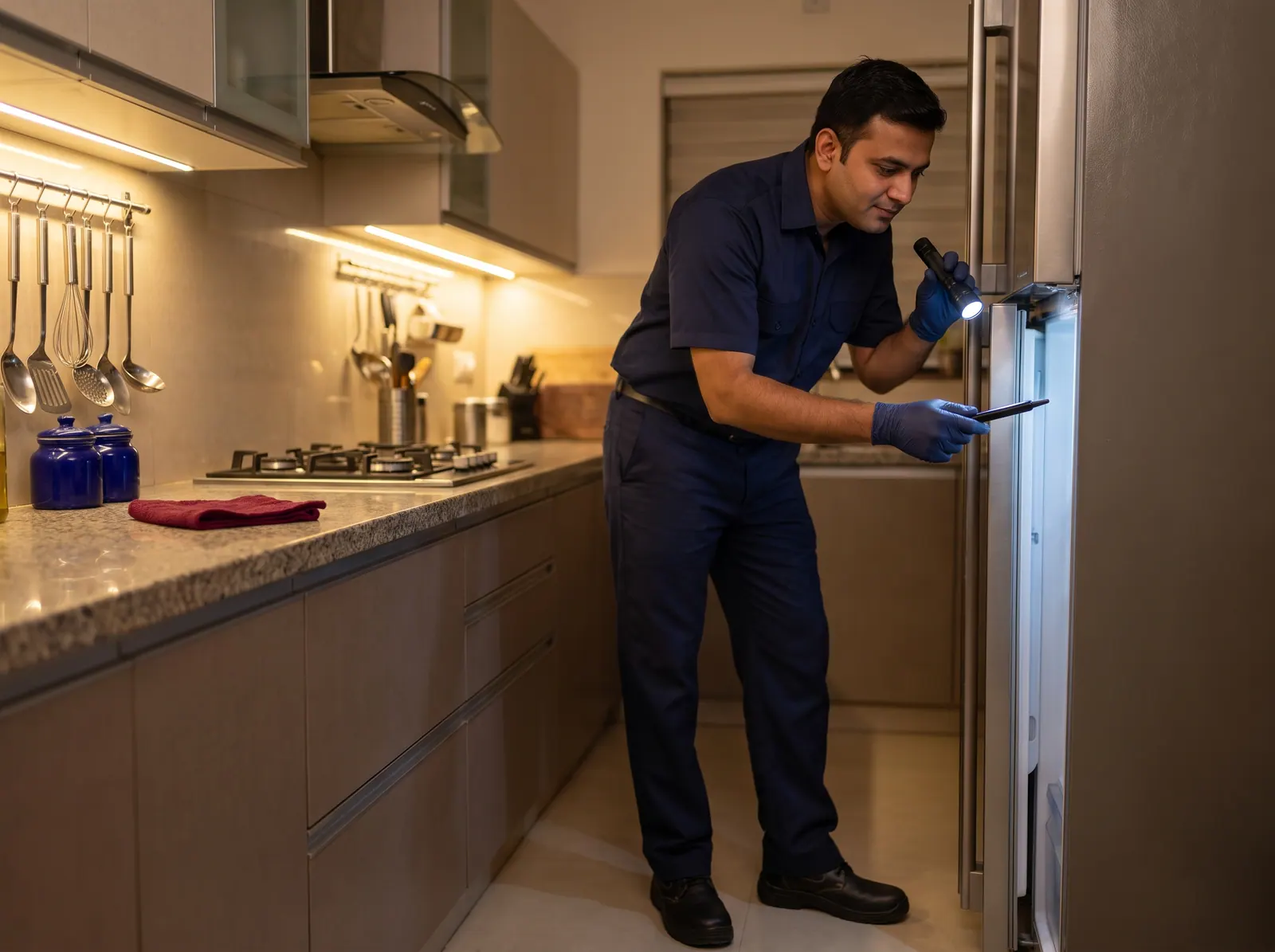
Cockroaches look for places that are warm, dark, slightly damp and close to food. Check these spots with a torch, ideally at night when they are most active:
- Hinges and inside corners of kitchen cabinets, especially near the stove
- Behind and under the fridge, around the warm motor area
- Under the kitchen sink and around pipe openings
- Inside or behind appliances such as the microwave, oven, toaster, mixer and water purifier
- Gaps around gas pipes, switchboards and loose or cracked tiles
- Floor traps, drain outlets and bathroom ducts
- Cardboard boxes, stacked newspapers and stored grocery cartons
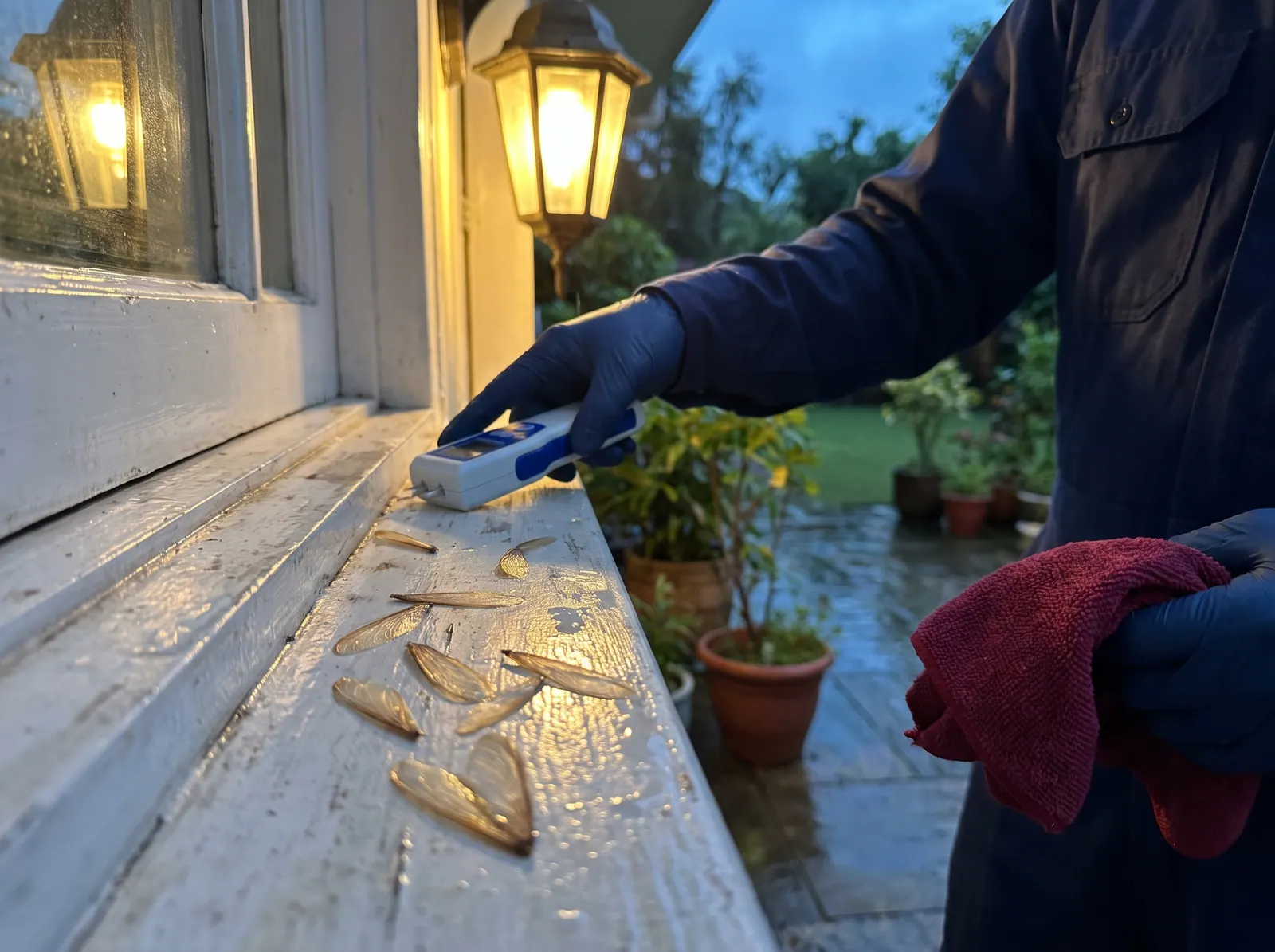
Other signs include droppings that look like ground pepper or coffee grounds, shed skins, empty egg cases and a musty smell in closed cupboards. Seeing cockroaches in daylight often means their hiding places are already crowded.
Why do baby cockroaches survive household sprays?
Most people reach for a can of spray first. It kills the cockroaches it touches, but it rarely solves a breeding problem, for several reasons:
- Eggs are protected. The egg case shields developing eggs, so killing only the cockroaches you can see leaves the next generation to hatch.
- Nymphs hide deep. The smallest nymphs sit in narrow cracks that a surface spray does not reach.
- Some sprays repel. Cockroaches may scatter into new rooms or neighbouring flats instead of dying.
- Sprays can spoil baits. Spraying over or near gel bait can contaminate it so cockroaches avoid it.
This is why baiting placed where cockroaches shelter usually works better for a breeding problem. Our comparison of gel bait and spray for cockroaches goes into the trade-offs.
How does our cockroach treatment deal with every stage?
Our cockroach control service follows an Integrated Pest Management (IPM) approach: inspection first, sanitation and proofing advice, then targeted treatment where cockroaches actually live. A typical treatment looks like this:
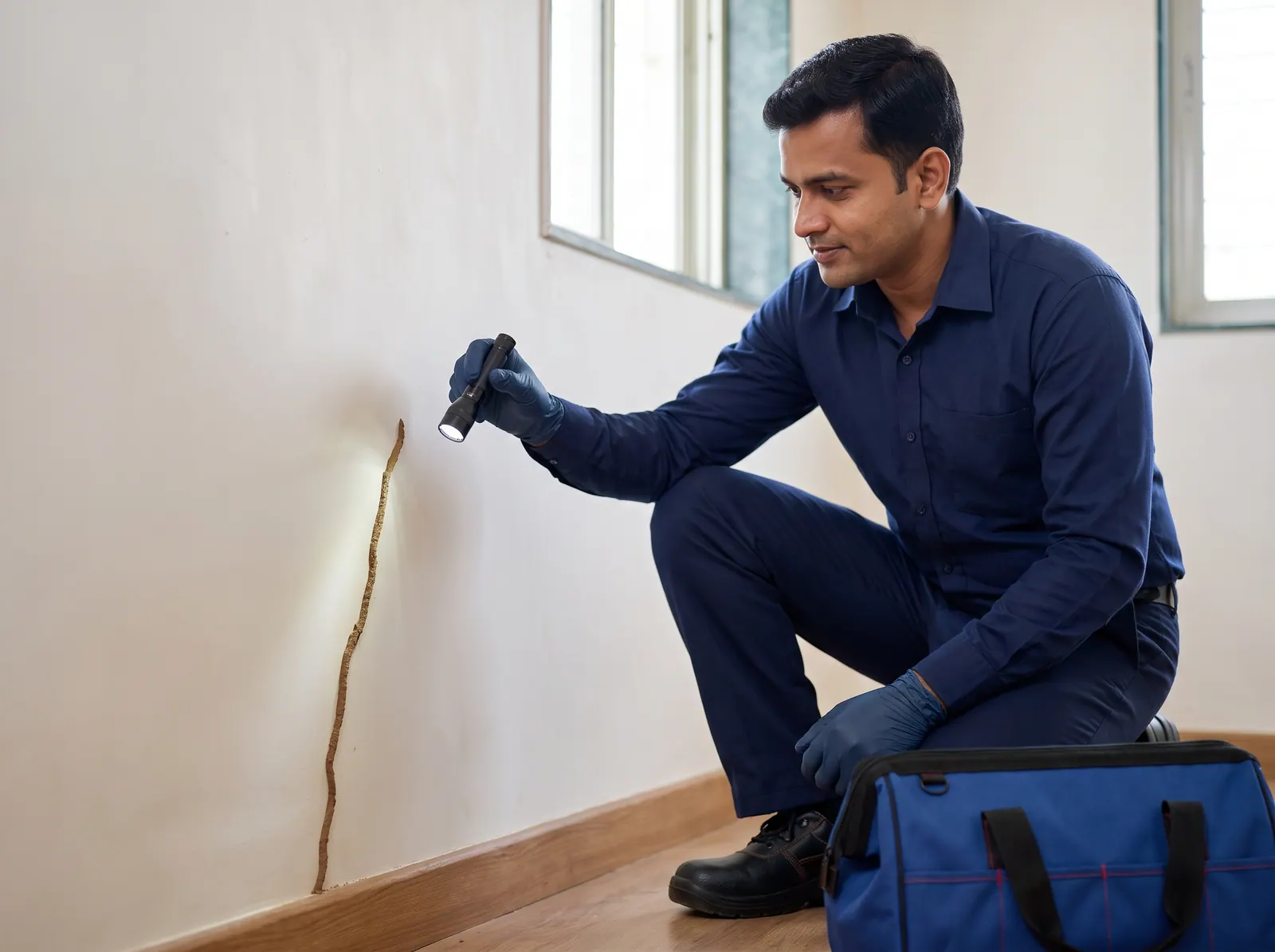
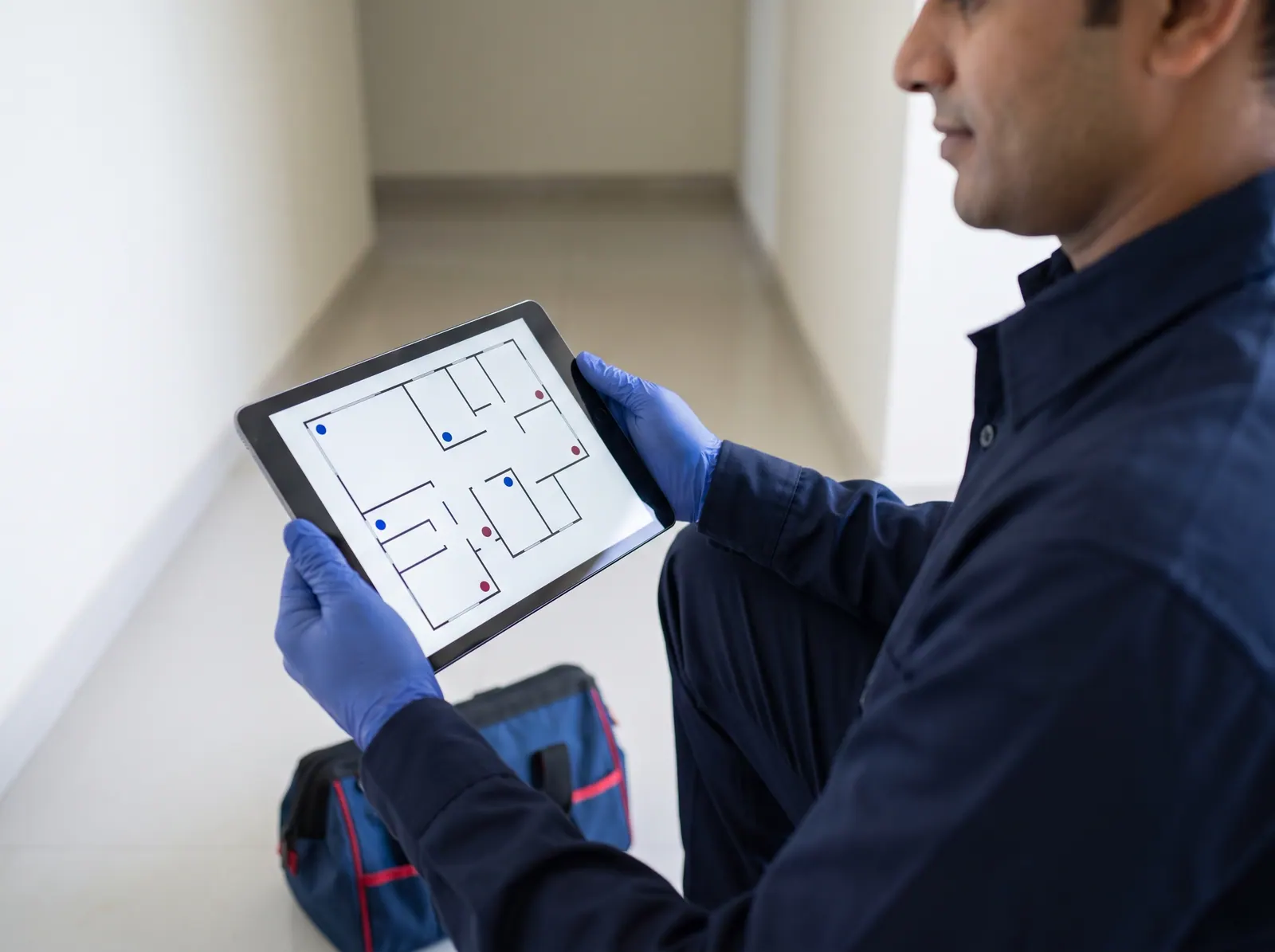
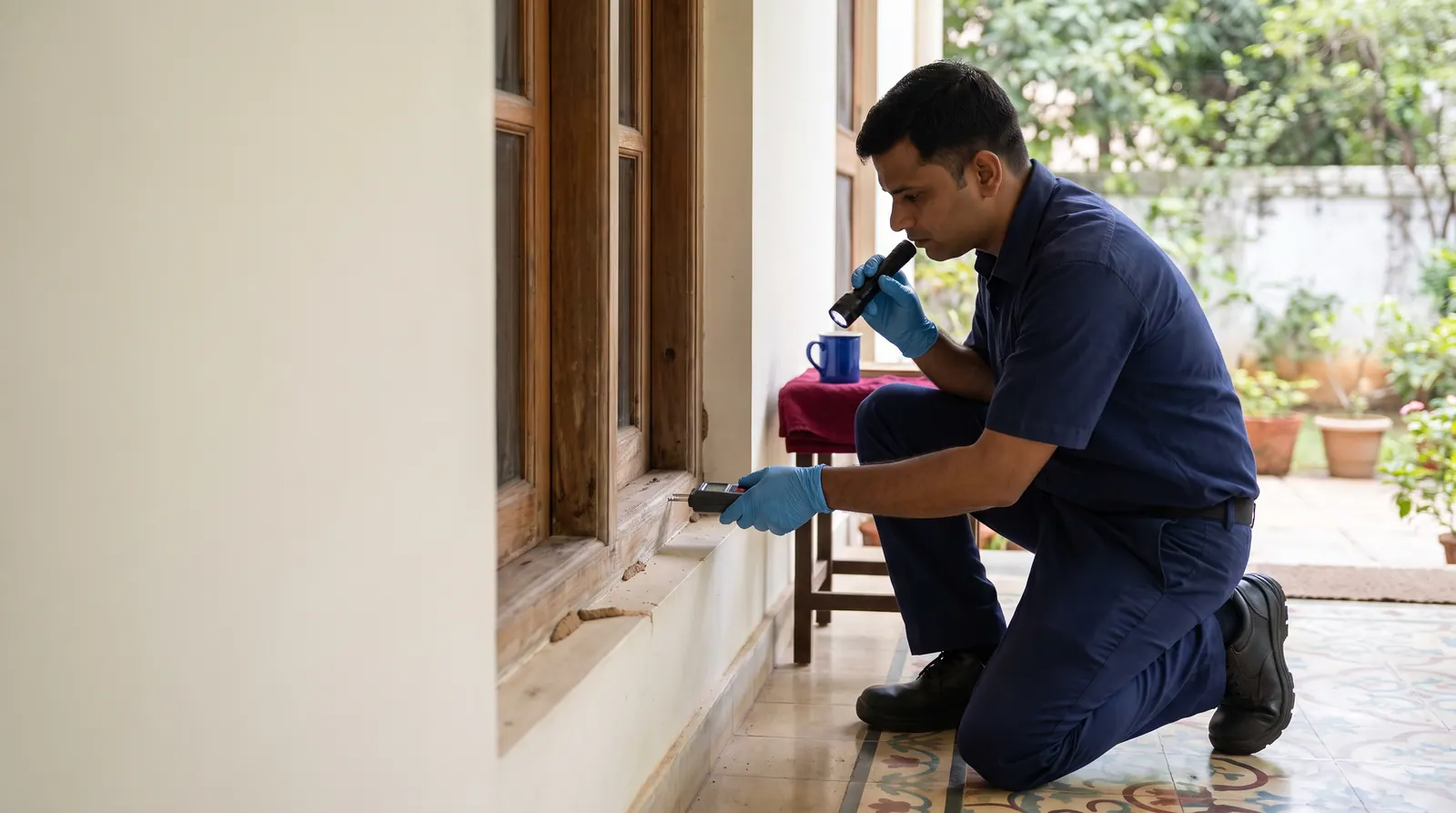
- Inspection. The technician checks the kitchen, bathrooms, drains, appliances and storage areas for hiding places, droppings, egg cases and entry points. The mix of sizes seen helps judge how established the problem is.
- Gel baiting. Small spots of gel are placed in cracks, hinges and gaps close to where cockroaches shelter, out of easy reach. Cockroaches feed and return to their hiding places. With many baits, nymphs that forage little are also affected through contact with the droppings and remains of treated cockroaches.
- Crack-and-crevice treatment. Where needed, a targeted application goes into gaps, voids and drain areas rather than being sprayed across open surfaces.
- Advice. You are told what to clean, seal or change so the treatment can work.
- Follow-up. Because eggs can hatch after the visit, the technician will explain what to watch for and whether a follow-up visit is part of your plan.
Before your visit, read how to prepare for cockroach gel treatment so the technician can reach every hiding place. You can also see our overall approach on how we work: inspection, treatment and follow-up.
In Goa, clients receive a service report after each visit, along with WhatsApp updates. For restaurants, hotels and other food businesses, our Goa team provides documentation aligned with HACCP and FSSAI audit expectations. Where a warranty applies, it covers the treated area for specific services, as set out in the service agreement. In a published testimonial, Goa purchase manager Mr Sunil Ambokar listed cockroach treatment among the services his team was happy with.
How can you keep cockroaches from coming back?
Treatment works best when cockroaches have nowhere comfortable to rebuild. These habits make the biggest difference:
- Store food, including pet food, in sealed containers and avoid leaving dishes in the sink overnight.
- Wipe oil and food residue from the stove, counters and the area behind the gas cylinder.
- Fix dripping taps and leaking pipes, and dry the sink and kitchen floor at night.
- Use a lidded dustbin and empty it daily.
- Cut down on cardboard; unpack groceries and deliveries and check boxes before storing them.
- Seal gaps around pipes, cables and tiles, and keep floor traps covered or water-sealed.
- Leave gel bait spots alone. Do not wipe them away or spray household insecticide over them.
Moisture is the common thread. Goa's humid coastal climate and heavy monsoon keep kitchens and drains damp for long periods, while in Hyderabad's hot, dry summer cockroaches gather around sinks, drains and any reliable water source. Either way, keeping wet areas dry removes one of the things they need most.
Is cockroach treatment safe in a home with children and pets?
Gel baiting uses small amounts placed inside cracks and hinges rather than across open surfaces, which keeps exposure low. In Goa we work as a licensed pest control operator (Directorate of Agriculture, Goa) using CIB&RC-registered products, and we maintain Material Safety Data Sheets for the products we use.
Follow your technician's instructions after the visit. Keep children and pets away from treated areas until they are dry or for as long as advised, ventilate rooms after any crack-and-crevice application, and wash hands after handling items from treated cupboards. Cockroach droppings and shed skins can trigger allergies and asthma in some people. If anyone at home has breathing problems or allergy symptoms, please see a doctor.
Need help with cockroaches in Goa or the Hyderabad region?
Cockroach control is a confirmed service at our Goa branch in Chimbel. Tell us where you are seeing cockroaches, whether they are babies, adults or both, and the type of property, and we will plan an inspection.
Our Shamshabad branch has recently opened. Tell us your location and the problem, and we'll confirm whether we can help.
Frequently asked questions
QI only see a few baby cockroaches. Do I really need treatment?
A few nymphs usually means more are hidden nearby, because babies stay close to where they hatched and most of the population stays out of sight during the day. Acting early is easier than waiting until cockroaches appear in daylight. Start by checking cabinet hinges, the fridge motor area and under the sink, and consider an inspection so the hiding places can be found and treated properly.
QDoes gel treatment kill cockroach eggs?
Eggs inside the protective case are hard for any treatment to reach directly. Gel baiting works on the cockroaches that feed on it, and with many baits it also affects nymphs through contact with treated cockroaches. When eggs hatch, the young cockroaches encounter bait still in place. This is why bait spots should be left undisturbed and why your technician may recommend a follow-up check.
QHow soon will baby cockroaches disappear after treatment?
Some cockroaches die quickly, while overall activity typically drops over the following days to weeks as bait spreads through the population. You may briefly see more cockroaches in the open as they come out to feed, which is normal. The time depends on the species, how established the problem is, and how well food, water and clutter are controlled. Your technician will tell you what to expect.
QCan I use my own cockroach spray after a gel treatment?
It is best not to. Household sprays can contaminate gel bait so cockroaches avoid it, and repellent sprays can push them into new hiding places. If you see a cockroach, a simple trap or swatting it is fine. If activity is not reducing after the period your technician advised, contact the branch rather than spraying over treated areas.
QAre baby cockroaches harmful?
Nymphs do not bite people in normal circumstances, but like adults they move between drains, waste and food areas and can contaminate food and surfaces. Their droppings and shed skins can trigger allergies and asthma in some people. Throw away any food that cockroaches may have touched, clean the area, and see a doctor if anyone has breathing or allergy symptoms.
QIs cockroach control available from your Shamshabad branch?
Our Shamshabad branch has recently opened and services are being confirmed area by area. Cockroach control is not yet confirmed there. Share your location and describe what you are seeing, and the team will let you know whether and how they can help. In Goa, cockroach control is a confirmed service from our Chimbel branch.
Last updated 13 October 2026. Information on this page is general guidance; your technician will advise on your specific property after inspection.