Quick answer
Flies gather at meat and poultry shops because blood, offal, feathers and wet waste give off strong odours that attract them and give them places to lay eggs. Effective fly control for a meat shop in Hyderabad starts with sanitation: sealed bins emptied daily, clean drains, covered displays, fine screens and strip curtains at openings, and correctly placed glue-board fly traps. Chemical treatment should only support these measures, never replace them.
Key points
- Flies are drawn to meat shops by the odour of blood, offal, feathers and wet waste, which also serve as breeding sites.
- In hot weather, flies can develop from egg to adult in roughly a week or so, so daily waste removal matters.
- Drain flies breed in the organic film inside drains; scrubbing, not just flushing, is needed to remove it.
- Glue-board insect light traps are generally preferred over electric zappers in food premises and should not be placed above exposed food.
- FSSAI Schedule 4 hygiene requirements expect food businesses to keep premises free from pests.
Anyone who runs a meat or poultry shop knows how quickly flies appear once trading starts. Good fly control for a meat shop in Hyderabad is less about spraying and more about removing what flies are looking for: food, moisture and somewhere to breed. This guide explains why flies gather, and sets out practical steps for waste, drains, screens, devices and a daily routine that keep a shop cleaner and easier to inspect.
Why do flies gather at meat and poultry shops?
Flies find food by smell. Fresh blood, offal, fat trimmings, feathers and the wet residue left on chopping blocks and floors all give off odours that carry well beyond the shop front. Once flies arrive, the same material gives them a place to feed and lay eggs.
Three groups of flies are usually involved:
- House flies – grey, medium-sized flies that breed in moist, decaying organic matter such as waste bins, wet feathers and droppings.
- Blow flies – the metallic blue or green flies drawn strongly to meat, blood and offal. They lay eggs directly on exposed meat or scraps.
- Drain flies – small, fuzzy, moth-like flies that breed in the slimy film inside floor drains and blood channels.
In hot weather, a fly can go from egg to adult in roughly a week or so. That means a bin left uncleaned, or a drain full of sludge, can produce a fresh batch of flies before the shopkeeper notices the source. Fly activity generally rises in Hyderabad’s hot summer and humid monsoon months and eases in the milder winter; our Hyderabad pest calendar shows how pest pressure shifts through the year.
Poultry shops that hold live birds have an added source: droppings, spilled feed and soiled bedding in holding cages. These are ideal breeding material for house flies if they are not cleared every day.
Why fly control matters for hygiene and compliance
Flies land on waste, drains and droppings, then on meat, counters and knives. They can carry disease-causing bacteria on their bodies and legs, which is why fly control is treated as a basic food-safety measure rather than a matter of appearance.
Food businesses, including meat and poultry retailers, are expected to follow the hygiene and sanitation requirements in FSSAI Schedule 4, which include keeping premises free from pests. Inspectors and auditors typically look for evidence that pests are being managed: clean waste areas, working screens, maintained traps and records of what has been done. Our guide to pest control for cloud kitchens in Hyderabad covers related hygiene points for food premises.
How should a meat shop handle waste?
Waste is the single biggest fly attractant in most meat shops. If waste is controlled, everything else becomes easier.
- Use bins with tight-fitting lids, ideally foot-operated so staff do not leave them open. Keep lids closed between uses.
- Line bins with strong bags and tie them before removal so liquid does not leak.
- Remove offal, feathers, bones and trimmings at least daily, and never leave waste in the shop overnight.
- Wash and dry bins regularly. Residue at the bottom of an empty bin is enough for flies to breed in.
- Keep the outside waste point clean. A dirty collection spot near the entrance draws flies straight to the shop.
- Clear live-bird cages daily, removing droppings, feathers and spilled feed, and rinse trays.
Waste areas also attract rats and mice. If you see droppings or gnawing near bins or stores, our guide on rodents in kirana stores and small shops covers proofing and monitoring that applies equally to meat shops.
How do you stop drains from breeding flies?
Meat shops use a lot of water, and blood and fat wash into floor drains every day. Over time this forms a sticky organic film inside drain pipes and channels, which is exactly where drain flies, and sometimes house flies, breed.
- Fit gratings or strainers on every floor drain so solids such as fat, skin and feathers are caught before they enter the pipe.
- Empty strainers at the end of each day into a sealed waste bag.
- Scrub drains and blood channels with a stiff brush and detergent. Flushing with water alone does not remove the film.
- Keep drain traps filled with water so odours and insects from the sewer line do not come up into the shop.
- Remove standing water from floors, under counters and around washing areas before closing.
- Report broken or slow drains to the building owner promptly. Cracked pipes and blocked lines create hidden breeding spots.
Screens, strip curtains and fly-control devices
Keeping flies out of the shop
Where a shop opens fully onto the street, physical barriers become important. Fine-mesh insect screens on windows and ventilation openings stop most flies without cutting airflow. PVC strip curtains or air curtains at the main entrance and at back doors reduce the number of flies drifting in during trading hours. Self-closing doors on cold rooms and stores help too.
Inside, keep meat in closed glass display cabinets or chillers wherever possible, and cover any meat waiting to be cut. A fly that cannot reach the meat cannot lay eggs on it.
Choosing and placing fly traps
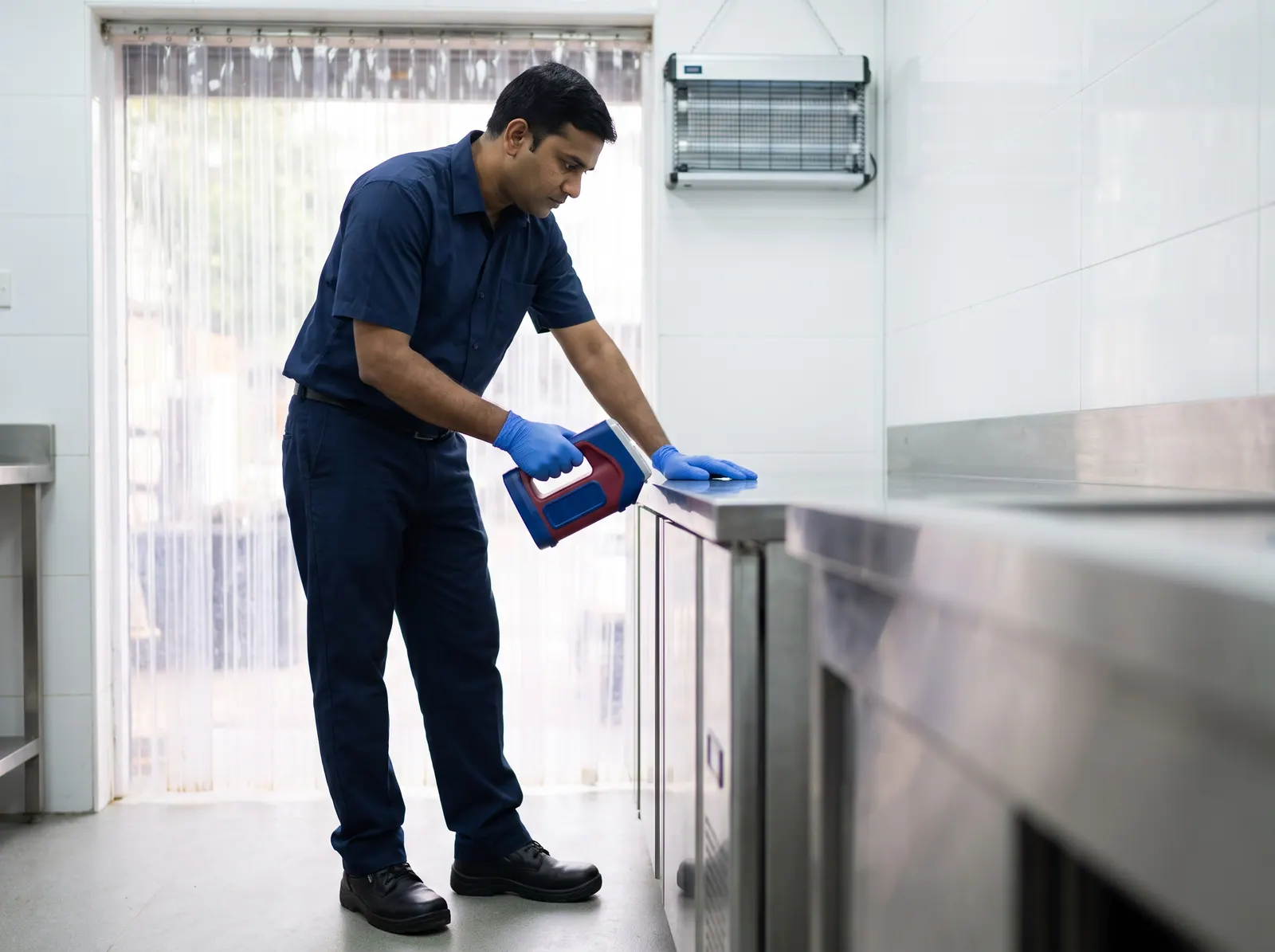
Insect light traps use ultraviolet light to attract flies. For food premises, models that catch flies on a glue board are generally preferred over electric-grid “zappers”, because zappers can scatter insect fragments onto nearby surfaces.
- Do not place traps directly above meat, chopping blocks or packing areas.
- Avoid placing them where the light is visible from the street, as this can pull flies in from outside.
- Mount them at a moderate height, since flies tend to fly fairly low.
- Change glue boards before they fill up, and replace UV tubes as the manufacturer advises, because their attracting power fades over time even while they still glow.
- Keep a simple log of board changes; counting catches helps you spot when fly numbers are rising.
What about insecticide sprays?
Spraying insecticide inside a meat shop carries a real risk of contaminating food and surfaces, and it does nothing about the waste or drains producing the flies. Any chemical treatment should be carried out by a licensed pest control operator using CIB&RC-registered products, applied away from exposed food and food-contact surfaces, and strictly according to the label. After any treatment, ventilate the area, clean food-contact surfaces as advised and make sure staff wash their hands. Avoid household aerosols over counters and displays.
A daily fly-control routine for meat and poultry shops
Fly control works best when it becomes part of opening and closing duties rather than an occasional deep clean. A simple routine might look like this:
| When | What to do |
|---|---|
| Before opening | Check screens and strip curtains are in place; switch on fly traps; confirm bins are clean, lined and lidded; cover displays. |
| During trading | Keep meat covered or in chillers; put scraps into lidded bins straight away; wipe blood and fat from counters and floors between customers. |
| At closing | Remove all waste from the shop; empty drain strainers; scrub chopping blocks, counters and floors; clear standing water; clean live-bird cages. |
| Weekly | Scrub drains and blood channels thoroughly; wash bins inside and out; check and change fly trap glue boards; look for damaged screens or gaps. |
| Monthly or seasonally | Review fly trap logs; check for drain or pipe damage; step up routines ahead of the hot and monsoon months. |
Assign each task to a named person and keep a short checklist on the wall. A routine that everyone knows is far more reliable than relying on whoever happens to be on shift.
When is it time to get professional help?
If flies persist despite good housekeeping, there is usually a breeding source you have not found: a hidden drain, a cavity behind equipment, or a waste point outside the shop. A professional inspection follows an Integrated Pest Management approach: find the source, advise on sanitation and proofing, then use targeted treatment only where it is needed. You can read more about how we approach fly control, and if you also run or supply live-bird holding sites, see our guide on fly and rodent control around poultry and livestock sheds.
In our established Goa operation, we share service reports after visits and provide documentation for food businesses aligned with HACCP and FSSAI audit expectations.
Our Shamshabad branch has recently opened — tell us your location and the problem, and we’ll confirm whether we can help. You can find out more about the Hyderabad branch in Shamshabad or read answers to common questions in our Hyderabad branch FAQ.
Frequently asked questions
QWhy are there more flies in my meat shop during the monsoon?
Warm, humid conditions speed up fly breeding, and rain keeps waste, drains and outdoor areas wet for longer. Moist organic matter is exactly what house flies and blow flies need to lay eggs. During the monsoon it helps to empty bins more often, scrub drains more frequently, clear standing water around the shop front and check that screens and strip curtains are intact after heavy rain.
QAre electric fly zappers suitable for a meat shop?
Electric-grid zappers kill flies on contact, but they can scatter insect fragments onto nearby surfaces, which is a concern where meat is exposed. For food premises, insect light traps that catch flies on a glue board are generally preferred. Whichever type you use, keep it away from meat, counters and cutting areas, and maintain it regularly so it keeps working.
QHow often should drains in a meat shop be cleaned?
Drain strainers should be emptied at the end of every trading day, because trapped fat, skin and feathers start to rot quickly. Drains and blood channels should be scrubbed with a brush and detergent at least weekly, and more often in hot or humid weather. Flushing with water alone leaves the slimy film where drain flies breed, so physical scrubbing matters.
QCan I spray insecticide in my shop to get rid of flies?
Spraying near meat risks contaminating food and surfaces, and it does not remove the waste or drains producing the flies, so numbers soon return. Any chemical treatment in a food shop should be done by a licensed pest control operator using registered products, applied away from food and strictly according to the label. Sanitation, screens and traps should always come first.
QWhat records should a meat shop keep for fly control?
Useful records include a daily cleaning checklist, dates of drain and bin cleaning, fly trap glue board changes with rough catch counts, and reports from any professional pest control visits. These show an inspector or auditor that pests are being managed systematically, and they help you notice when fly activity is increasing so you can act early.
QDo live-bird holding cages attract flies?
Yes. Droppings, spilled feed, feathers and wet bedding in holding cages are ideal breeding material for house flies. Clearing droppings and feed spills daily, rinsing trays, and keeping the cage area dry makes a noticeable difference. Waste from cages should go into lidded bins and leave the shop the same day, just like meat waste.
Last updated 13 October 2026. Information on this page is general guidance; your technician will advise on your specific property after inspection.