Quick answer
Bird netting in Goa keeps pigeons and other birds off balconies, utility ducts, ledges and sit-outs without harming them. A tensioned net is fixed to a perimeter frame or wire rope anchored into the wall, sealing every gap birds could use. Near the coast, choose UV-stabilised netting and corrosion-resistant fixings so salt air, monsoon humidity and strong sun do not weaken the installation early.
Key points
- Pigeons return to sheltered ledges, ducts and balconies where they have nested before, so physical exclusion works better than repeated cleaning.
- Accumulated droppings stain and corrode surfaces, block drains and can carry fungi and bacteria; clean them with gloves and a mask, and dampen them first.
- Near Goa's coast, UV-stabilised nets and corrosion-resistant fixings help installations withstand salt air, monsoon humidity and strong sun.
- Sealed edges around walls, pipes and AC brackets are the most important detail in keeping persistent pigeons out.
- Check society or landlord permission, clear the area and plan AC access before installation day.
Bird netting in Goa is a practical, long-term way to keep pigeons and other birds off balconies, utility ducts, window ledges and sit-outs without harming them. Our Goa branch in Chimbel measures the space and recommends a net and fixing method suited to it. We then install the net so that birds cannot find a way back in.
This page explains why birds settle on Goan buildings and what the netting options are. It also covers how coastal salt air affects materials and what to prepare before installation day. For a general overview of the service, see our bird netting service page.
Why do pigeons settle on balconies, ducts and ledges?
Pigeons naturally nest on cliff ledges. To them, building ledges, sunshades, AC unit brackets and utility ducts look much the same: high, sheltered and rarely disturbed. Once a pair has nested successfully, they tend to return to the same spot and can raise several broods in a year.
Duct shafts between apartment blocks are especially attractive because they are shaded and quiet. The space behind an outdoor AC unit offers similar shelter.
Goa's long, heavy south-west monsoon adds another reason. During spells of rain, birds look for dry, covered corners, and an unused balcony or sit-out is ideal. By the time residents notice, there is often an established nest and a build-up of droppings.
Why are bird droppings more than a cleaning problem?
A few droppings are a nuisance. Regular roosting and nesting cause wider problems:
- Damage and staining: droppings mark paint, tiles and stone, and can corrode metal railings and fittings over time.
- Blocked drains: droppings, feathers and nesting material clog balcony outlets and duct drains. This matters in the monsoon, when water must drain away quickly.
- Hygiene: accumulated droppings and old nests can harbour mites and other insects. Dried droppings can carry fungi and bacteria that become airborne as dust.
- Equipment: nests behind AC units and in ducts can obstruct airflow and make servicing harder.
- Hotels and restaurants: birds near guest rooms, terraces or food areas create hygiene concerns and complaints.
If you clean an affected area yourself, wear gloves and a mask. Lightly dampen the droppings rather than dry-sweeping them, and wash your hands afterwards. Anyone who develops breathing difficulty or feels unwell after exposure should see a doctor.
For more on why households choose netting over repeated cleaning, read five benefits of installing bird netting at your home.
Which netting option suits your space?
Netting is a form of proofing. It removes access rather than treating the birds, which fits our Integrated Pest Management approach of inspection, proofing advice and targeted action. The right layout depends on the space.
Balconies and sit-outs
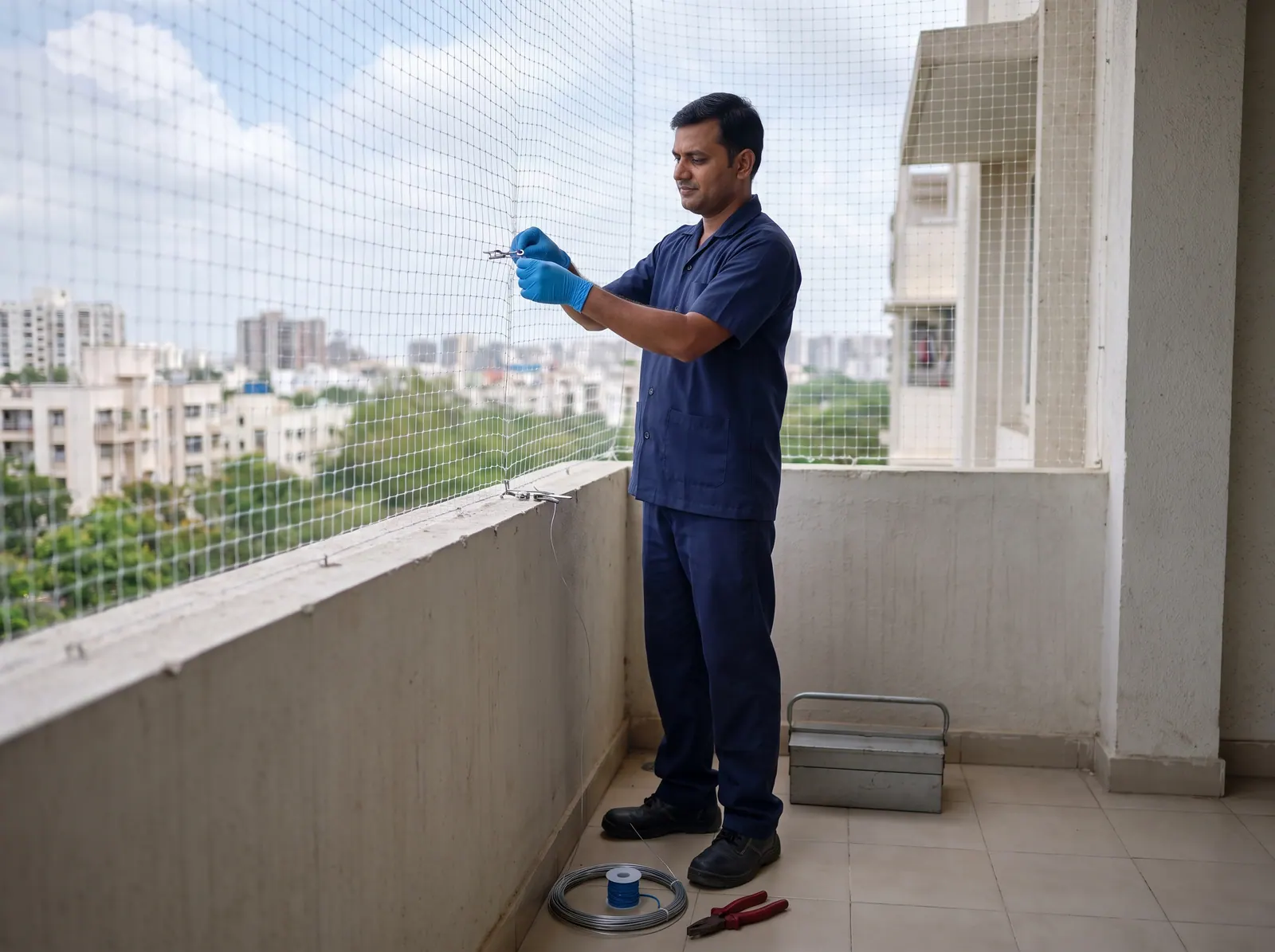
The usual approach is a single net across the open face of the balcony, from ceiling to parapet or railing. A closable opening can be built in so you can still reach plants, clean the glass or hang washing outside if needed.
Utility and service ducts
Ducts can be netted at the top, at each floor's opening, or along the open face, depending on the building. Plumbers and AC technicians will still need access, so we plan openings or removable sections. High or hard-to-reach ducts may need special access arrangements, which we discuss after the site visit.
Ledges, sunshades and window recesses
Deep recesses and sunshades can often be enclosed with a small net panel. Some narrow ledges are not well suited to netting. If that is the case for your building, we will say so rather than install something that will not work.
Hotels, resorts and villas
Typical areas include sea-facing room balconies, rooftop plant areas, service yards, staff accommodation and terraces. These properties often have many similar openings, so a consistent layout and fixing method across the building makes later inspection easier. Hotels in beach areas such as Calangute are especially exposed to salt air, which affects material choice.
How is bird netting fixed?
Methods vary with the structure, but a typical installation follows these steps:
- Survey and measurement: we check the opening, the wall or frame material, existing grilles and AC units, and where birds are currently getting in.
- Clearing birds and nests: birds and nesting material are removed from the area before the net is closed, so no bird is trapped inside.
- Perimeter fixings: anchors or hooks are drilled into concrete or masonry at intervals around the opening.
- Wire rope or frame: a tensioned wire rope or frame runs around the perimeter to carry the net.
- Fitting the net: the net is laced or clipped to the perimeter and tensioned so it does not sag or leave gaps.
- Edge check: we close any remaining gaps where the net meets walls, pipes, grilles or AC brackets.
The edges are the most important detail. Pigeons are persistent and will squeeze through surprisingly small gaps at corners and around pipes.
How do salt air, humidity and UV affect netting materials?
Much of Goa's housing and hospitality sits close to the sea, from Panaji and Dona Paula to Vasco and the beach belt of the north coast. Salt-laden breeze, months of monsoon humidity and strong sun in the dry season are all hard on outdoor materials. An installation that would last for years inland can fail sooner on the coast.
| Component | What the coastal climate does | What to look for |
|---|---|---|
| Net | Sunlight breaks down plastic fibres, making them brittle over time | UV-stabilised netting, such as high-density polyethylene, with a mesh size suited to the birds involved |
| Wire rope and fittings | Salt air corrodes ordinary steel, causing rust streaks and weak points | Corrosion-resistant metal such as stainless steel; ask what grade is proposed |
| Wall anchors | Moisture enters drill holes, especially in older plaster or laterite walls | Anchors suited to the wall material, set firmly and sealed |
| Ties and clips | Small plastic parts are often the first to fail in the sun | UV-resistant ties and clips, used consistently around the edge |
We explain which materials we propose for your site and why, so you can compare like with like. It is sensible to check nets and edges after each monsoon, particularly on sea-facing or high floors.
What should you prepare before installation?
- Permissions: check with your housing society, landlord or building management, especially for duct or façade work.
- Clear the area: move plants, furniture and drying lines away from the edges being netted.
- Tell us about nests: let us know if you have seen eggs or chicks so we can plan timing.
- AC servicing: if your outdoor unit is due for service, have it done first, or plan an access opening.
- Heavy droppings: clean these safely beforehand, or discuss it with us during the site visit.
- Power and access: keep a power point and a clear path to the work area available.
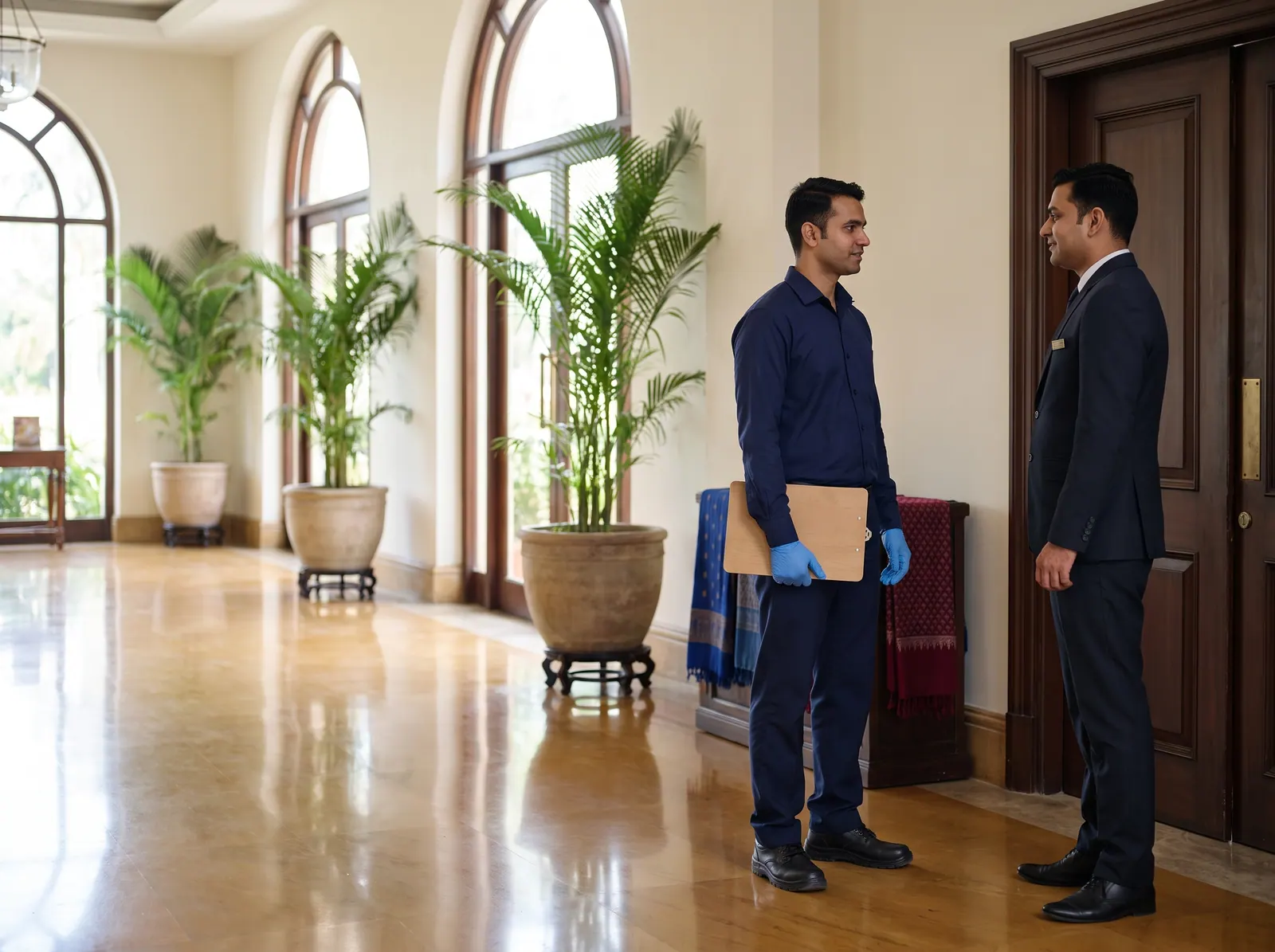
- Someone present: a family member or staff representative should accompany our technicians during the work.
- Children and pets: keep them indoors and away from drilling and ladders.
Bookings are subject to availability. If you need to cancel, please tell us at least 48 hours before the scheduled visit, as a late-cancellation fee may apply.
Which parts of Goa does our Chimbel branch cover?
Our Goa branch in Chimbel covers these areas:
- Panaji (Panjim), including Altinho, Campal, Miramar, Caranzalem, Dona Paula, Taleigao, St Inez and Ribandar
- Margao, including Fatorda, Navelim, Aquem, Borda, Gogol and Comba
- Vasco da Gama, including Dabolim, Chicalim and Bogmalo
- Mapusa, Calangute and Baga
- Candolim, including Sinquerim and Nerul
- Ponda, including Farmagudi, Kundaim, Shiroda and Usgao
- Porvorim, including Alto Porvorim, Socorro, Sangolda and Penha de França
For local details, see our page on pest control in Panaji. If your area is not listed, ask us and we will tell you whether we can help.
How do you arrange bird netting with our Goa branch?
Please contact our Goa branch with your locality, the type of property and the areas affected. Photos of the balcony, duct or ledge help us understand the job. We then arrange a visit to measure the area and send a quotation.
After the work, we share a service report as proof of service, and clients can receive updates on WhatsApp. For housing societies and hotels with several blocks, we can plan the work in stages. Answers to general questions about visits and preparation are on our Goa pest control FAQ page.
Frequently asked questions
QDoes bird netting harm pigeons?
No. Netting is a barrier, not a trap or a poison. Birds and nesting material are cleared from the area before the net is closed, so no bird is shut inside. A well-tensioned net with sealed edges gives birds nothing to get caught in. Once pigeons find the spot closed, they move on to look for somewhere else.
QWill netting block the light, breeze or view from my balcony?
Bird nets are made of fine strands with an open mesh, so light and air pass through easily. From inside, most people stop noticing the net after a few days. It is far less intrusive than a metal grille. Discuss net colour and layout with us during the site visit, especially for sea-facing flats where the view matters.
QCan I still use my balcony and get my AC unit serviced after netting?
Yes. We can plan a closable opening or removable section where you need regular access, such as for cleaning glass, tending plants or servicing an outdoor AC unit. Let us know how you use the space before installation. If your AC is due for service, it is easier to have it done first.
QHow long does bird netting last near the sea in Goa?
It depends on the materials, how exposed the site is and how well the edges are fixed. Salt air corrodes ordinary steel fittings, and strong sun weakens nets that are not UV-stabilised. Choosing suitable materials and checking the net and fixings after each monsoon helps it last longer. Sea-facing and high floors need the closest attention.
QDo I need my housing society's permission before installing netting?
It is wise to check first, particularly for duct shafts, common areas or anything visible on the building's façade. Many societies have rules on external fittings, and some prefer a uniform look across all flats. If several residents face the same problem, netting a shared duct together is often more effective than netting flats one by one.
QHow is the cost of bird netting worked out, and is there a warranty?
Cost depends on the area to be netted, the height and access, the wall material and the materials chosen. We visit, measure and then send a quotation, and payment follows the quotation or invoice. Any warranty for specific services is set out in your service agreement, so ask us what applies to your netting before you confirm.
Last updated 13 October 2026. Information on this page is general guidance; your technician will advise on your specific property after inspection.