


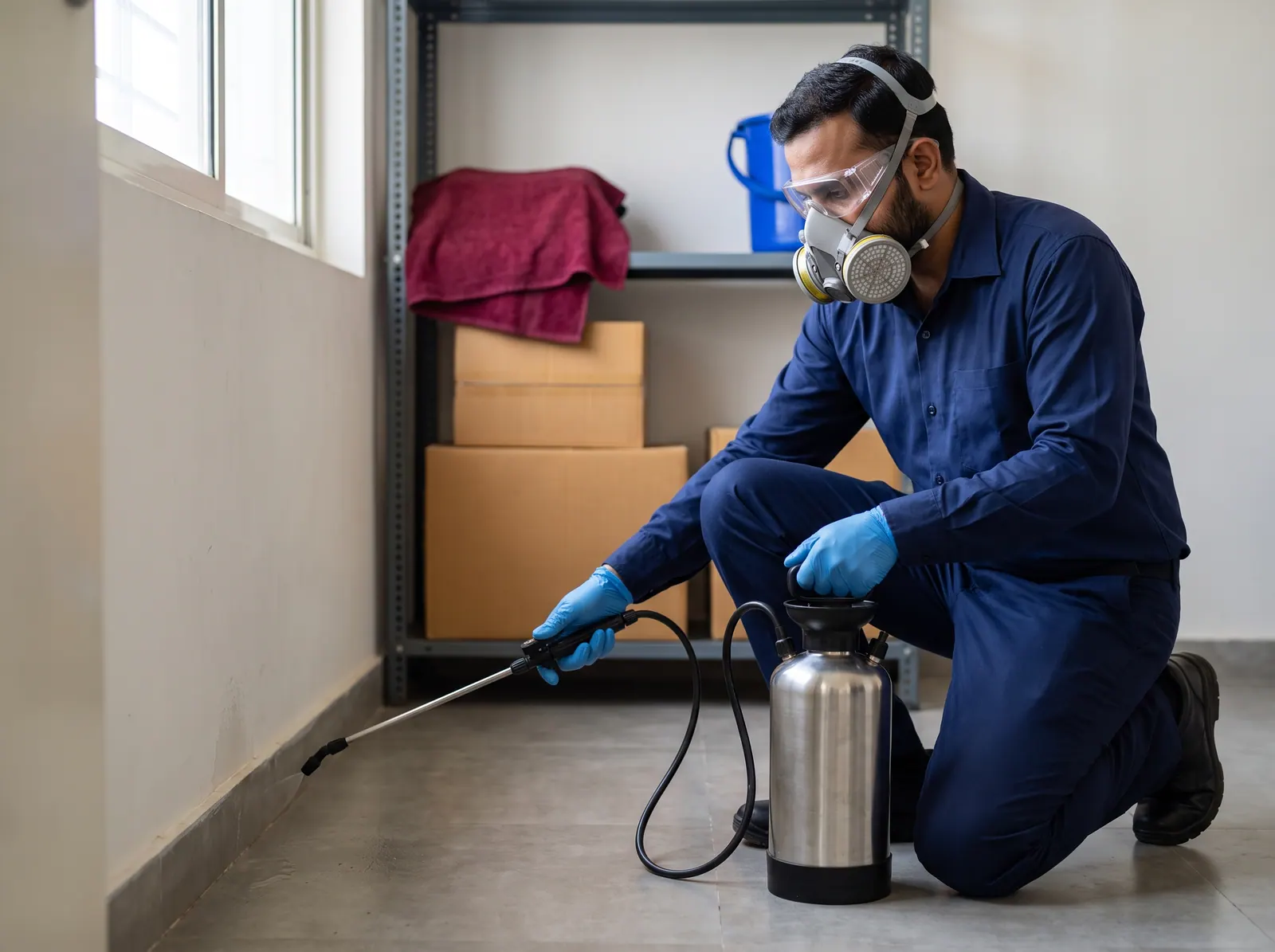
Quick answer
General pest management in Mapusa is a planned service from our Goa branch for common crawling insects such as cockroaches, ants, spiders and silverfish, in homes, shops, offices and eateries. A technician inspects first to find where insects hide and enter. They then use targeted gel baiting, crack-and-crevice and spot treatments, and share a service report with prevention advice. Mosquitoes, rodents and termites need separate treatments, which can be arranged alongside.
Key points
- General pest management targets common crawling insects: cockroaches, ants, spiders and silverfish.
- Mapusa is listed in the service records of Efficacy Pest Control's Goa branch in Chimbel.
- Visits follow an IPM approach: inspection first, then sanitation and proofing advice and targeted treatment.
- Mosquitoes, rodents, termites and bed bugs need separate treatments rather than a general service.
- Goa's humid climate and heavy south-west monsoon keep many buildings damp, which helps crawling insects shelter indoors.
General pest management in Mapusa is our routine service for the crawling insects that turn up in most Goan buildings at some point: cockroaches, ants, spiders and silverfish. It is delivered from our Goa branch in Chimbel, and Mapusa is one of the towns listed in our service records.
The property might be a flat near the market, an older family house, a shop or a small eatery. In each case the approach is the same. We inspect first, treat only where it is needed, and leave you with clear advice so the problem is less likely to return. This page explains what the service covers, how a visit works, what you need to do, and when a different treatment is the better choice.
What does general pest management cover?
The service is designed for common crawling insects. Each one behaves differently, so the treatment is matched to the insect rather than applied the same way everywhere.
- Cockroaches shelter in warm, damp gaps behind kitchen units, under sinks, around drain outlets and inside appliance housings. They are mostly active at night, so a few daytime sightings often point to a larger hidden population.
- Ants follow scent trails between food and their nest. Spraying the ants you can see rarely reaches the nest, so baits that workers carry back to the colony usually work better.
- Spiders feed on other insects. Reducing the insects they hunt, and clearing webs from ceilings, corners and window frames, brings their numbers down.
- Silverfish prefer dark, humid places and feed on starchy material such as paper, book bindings, cardboard and some fabrics. Store rooms, cupboards and boxes of old documents are typical hiding spots.
Mosquitoes, rats and mice, termites and bed bugs are not part of a general service. Each needs its own method, and the table further down shows which treatment fits which problem. You can read more about the service itself on our general pest control in Goa page.
Why do crawling insects keep coming back in Mapusa properties?
Mapusa lies inland in Bardez, but it shares Goa's humid coastal climate and very heavy south-west monsoon. Damp walls, wet drains and stored goods that never fully dry give insects water and shelter for much of the year. During heavy rain, ants and cockroaches often move indoors in search of dry ground.
The town's buildings add their own conditions. Older Goan houses with tiled roofs, wooden ceilings and thick walls have many gaps and voids. Newer apartment blocks share drains, ducts and garbage areas, so insects can move between flats.
Around the busy market area, shops and stores receive deliveries in cartons and sacks. These can bring cockroaches and silverfish in from elsewhere and give them places to hide.
None of this makes an infestation inevitable. It does mean that a treatment which ignores moisture, gaps and clutter tends to wear off quickly. That is why every visit starts with an inspection.
How does a general pest control visit work?
- Inspection and identification. The technician checks the kitchen, bathrooms, store areas and utility spaces. They look for droppings, egg cases, ant trails, shed skins and webs, and note entry points such as pipe gaps, door gaps and loose drain covers, along with damp spots.
- A plan for your property. You are told which insects were found, where treatment will go, what needs to be cleared and whether anyone should stay out of a room for a while. For shops and eateries, the visit can be planned around your working day.
- Targeted treatment. Gel bait is placed in cracks, hinges and spaces behind appliances. Crack-and-crevice treatment goes into gaps where cockroaches and silverfish shelter, ant baits go along active trails, and drains or outdoor edges get spot treatment where needed. Products are CIB&RC-registered and applied as per label directions.
- Report and prevention advice. A service report is shared after the visit, with WhatsApp updates for clients. It records what was applied and where, and lists practical fixes such as sealing gaps, repairing leaks or changing how food and cartons are stored.
This is the Integrated Pest Management (IPM) approach. Inspection, sanitation and proofing advice come first, and treatment is targeted at the places that matter rather than sprayed across every surface.
What should you do before and after treatment?
Before the visit
- Clear the cabinet under the kitchen sink and any shelves the technician will need to reach.
- Store food, utensils and crockery in closed containers or cupboards.
- Move pets to another room and cover fish tanks. Ask the technician whether aquarium pumps should be switched off.
- Tell the technician if anyone in the home has asthma or allergies, is pregnant, or if there is an infant, so the plan can be adjusted.
- Make sure an adult from the household or business is present during the service.
After the visit
- Keep children and pets away from treated areas until they are dry, or for as long as the technician advises.
- Ventilate rooms and wash your hands after touching treated surfaces.
- Do not wipe away gel bait spots or wash treated cracks until you are told it is fine to do so.
- Seeing some insects for a few days afterwards can be normal while baits take effect.
- If anyone feels unwell or has a reaction, see a doctor.
Is general pest control the right treatment for your problem?
| What you are noticing | What it usually points to | Suitable service |
|---|---|---|
| Occasional cockroaches, ants on counters, spiders in corners, silverfish in cupboards | Common crawling insects | General pest management |
| Many cockroaches in a kitchen, including in daylight | An established cockroach infestation | Cockroach treatment in Mapusa |
| Ant trails that keep returning, or nests in walls or gardens | A persistent ant colony | Ant control in Mapusa |
| Mud tubes on walls, hollow-sounding wood, winged insects after the first rains | Termites | Termite control in Mapusa |
| Itchy bites at night, small blood spots on bedsheets | Bed bugs | Bed bug treatment |
| Droppings, gnawed packets, scratching in ceilings | Rats or mice | Rodent control |
If you are not sure, describe what you have seen and the inspection will confirm it. Several treatments can be arranged in the same visit where that makes sense.
General pest management for Mapusa shops, offices and eateries
Businesses usually need more than an occasional treatment. They need scheduled visits and records that show pest control is being done. Our Goa operation provides documentation for food businesses aligned with HACCP and FSSAI audit expectations, which helps when premises are checked against FSSAI Schedule 4 hygiene requirements.
For year-round cover, an Annual Maintenance Contract gives scheduled visits with a service report each time. Larger or more complex sites are covered on our commercial pest control in Mapusa page.
How often should a Mapusa property be treated?
Frequency depends on the insect, the level of activity and the type of building. Many homes manage well with periodic visits, while kitchens and food businesses usually need more frequent service. The technician will recommend a schedule after the first inspection.
- Before the monsoon: a good time to seal gaps, clear drains and treat, before rain drives insects indoors.
- During the monsoon: keep an eye on damp store rooms, bathrooms and cupboards, where cockroaches and silverfish shelter.
- After the monsoon: check books, files and stored clothes for silverfish damage as the house dries out.
- Dry months: keep kitchens and drains clean, because ants go looking for food and water indoors.
What standards does our Goa branch work to?
- Licensed pest control operator with the Directorate of Agriculture, Goa, using CIB&RC-registered products.
- Material Safety Data Sheets maintained for the products we use.
- An IPM approach: inspection, sanitation and proofing advice, then targeted treatment.
- Service reports shared after each visit.
- For specific services, a warranty on the treated area as set out in your service agreement.
Arranging general pest management in Mapusa
Tell us the type of property, which insects you have seen and where, and your exact location in Mapusa. Our Goa branch in Chimbel will confirm the details and arrange an inspection.
The quotation depends on the area, the number of rooms, the level of activity and how many visits are needed. You can reach the team through our contact page. For other treatments available in the town, see pest control in Mapusa, Goa.
Frequently asked questions
QDoes general pest management include mosquitoes and rats?
No. The general service covers common crawling insects such as cockroaches, ants, spiders and silverfish. Mosquitoes need breeding-site reduction and other targeted methods, and rats and mice need inspection, bait stations, traps and proofing. Our Goa branch offers both mosquito control and rodent control as separate services. If you are dealing with more than one problem, mention it when you get in touch so the visit can be planned to cover everything needed.
QIs the treatment safe with children and pets at home?
Treatments are targeted at cracks, gaps and hiding spots rather than open surfaces, and products are applied as per label directions. Keep children and pets away from treated areas until they are dry or for as long as the technician advises. Ventilate rooms and wash your hands after touching treated surfaces. Tell the technician beforehand about infants, pregnancy, asthma or allergies in the household. If anyone feels unwell afterwards, see a doctor.
QDo I have to leave my home during the visit?
It depends on what is being treated and where. The technician will tell you during the inspection whether any room should be kept empty, and for how long. An adult from the household should stay on the premises during the service, because our terms ask for a client representative to accompany technicians. Clearing kitchen shelves and the under-sink cabinet beforehand makes the visit quicker.
QWhat happens if cockroaches or ants come back after treatment?
For specific services, a warranty applies to the treated area as set out in your service agreement. The terms vary by pest and treatment. The warranty does not cover structural changes, new construction, or cases where post-service instructions were not followed. Insects can also return from a neighbouring flat or from outside, so sealing gaps and following the prevention advice in your service report matters as much as the treatment itself.
QDo you cover every part of Mapusa?
Mapusa is one of the towns listed in our Goa branch's service records. If your property is on the edge of town or in a nearby village, share your exact location when you contact us. The team will confirm whether a visit can be arranged there.
QCan a Mapusa restaurant or food shop get records for inspections?
Yes. Our Goa operation provides documentation for food businesses aligned with HACCP and FSSAI audit expectations, along with a service report after each visit. Keeping these records in one place makes it easier to show inspectors that pest control is being carried out regularly. For ongoing cover, an Annual Maintenance Contract sets up scheduled visits through the year.
QHow do I book, and can I reschedule?
Bookings can be made through the website, by email or by phone, subject to availability. If you need to cancel, please do so at least 48 hours before the scheduled service, as a late-cancellation fee may apply. Payment is as per your quotation or invoice. Cash, UPI, card, net banking and bank transfer are accepted.
Last updated 13 October 2026. Information on this page is general guidance; your technician will advise on your specific property after inspection.




