Quick answer
The five signs of a pest infestation you shouldn't ignore are droppings or smear marks, unusual smells or night-time sounds, damage to wood, wiring, fabric or food packets, nests, mud tubes or egg cases, and live pests seen in the open, especially by day. Goa's humid climate and heavy monsoon let these problems build quickly. Note where you see each sign and arrange a proper inspection early.
Key points
- The five main signs of an infestation are droppings or marks, smells or sounds, damage, nests or mud tubes, and live pests seen in the open.
- Rodent droppings should not be swept or vacuumed dry; wear gloves and wash hands afterwards.
- Shed wings near lights or window sills after early monsoon showers can indicate swarming termites.
- Random household spraying can scatter cockroaches and ants and make the source harder to find.
- Goa's humid coastal climate and heavy south-west monsoon favour cockroaches, termites and wood borers, and push rodents and ants indoors.
Most pest problems show themselves long before they become serious. The trouble is that the early signs are easy to dismiss. A few dark specks in a kitchen drawer, a faint musty smell in a cupboard or a little powder under a wooden chair can all point to an infestation that is already established.
This guide explains the top five signs of a pest infestation you shouldn't ignore. It covers what each sign usually means and what to do next if you live or work in Goa.
The five signs at a glance
| Sign | What it looks like | Pests it often points to | Where to check |
|---|---|---|---|
| 1. Droppings and marks | Dark pellets, pepper-like specks, rust-coloured spots, greasy smears | Rats, mice, cockroaches, bed bugs | Behind appliances, cabinet corners, drawer hinges, mattress seams |
| 2. Smells and sounds | Musty, oily or ammonia-like odour; scratching or scurrying at night | Rodents, heavy cockroach or bed bug activity | False ceilings, lofts, store rooms, behind wardrobes |
| 3. Damage | Gnawed wires and packets, hollow or crumbling wood, small holes with fine powder | Rodents, termites, wood borers | Door frames, skirting, furniture, wiring, pantry shelves |
| 4. Nests and structures | Shredded-paper nests, mud tubes, egg cases, bee or wasp nests | Rodents, termites, cockroaches, bees, wasps | Wall bases, under sinks, eaves, balconies, ducts |
| 5. Live pests in the open | Insects or rodents seen by day, steady ant trails, shed wings | Cockroaches, rodents, ants, termites | Kitchens, bathrooms, window sills, near lights |
1. Droppings, stains and smear marks
Droppings are one of the most reliable signs because they show where pests actually travel and feed. Rat droppings are larger and roughly spindle-shaped. Mouse droppings are smaller, about the size of a grain of rice. Cockroach droppings look more like ground pepper or coffee grounds and collect in cabinet corners, behind the fridge and along drawer runners.
Rats also leave dark, greasy smear marks where their fur repeatedly brushes against walls, pipes and beam edges. On beds and sofas, look for small rust-coloured or dark spots along mattress seams and in fabric folds. These can indicate bed bugs, so check quickly in homes, hostels and staff accommodation.
If you need to clean up droppings, do not sweep or vacuum them dry, as this can raise dust. Wear gloves, clean carefully and wash your hands afterwards.
2. Unusual smells and night-time sounds
A persistent musty or oily smell in a kitchen cupboard or store room can come from a large cockroach population. Rodents tend to leave a stale, ammonia-like odour where urine collects. Heavy bed bug activity is sometimes described as having a sweetish, musty smell.
Sounds matter too. Scratching or scurrying in a false ceiling, loft or wall cavity after the house goes quiet usually means rodents are moving along a regular route. Note the time and the spot, because that helps an inspector find entry points and nesting areas faster.
3. Damage to wood, wiring, fabric and food
Rodents gnaw constantly to keep their front teeth worn down. Chewed wire insulation, torn food packets and gnaw marks on doors or plastic pipes are therefore strong signs. Damaged wiring is also a safety concern, so don't leave it for later. Our page on rodent control in Goa explains how rodent problems are usually handled.
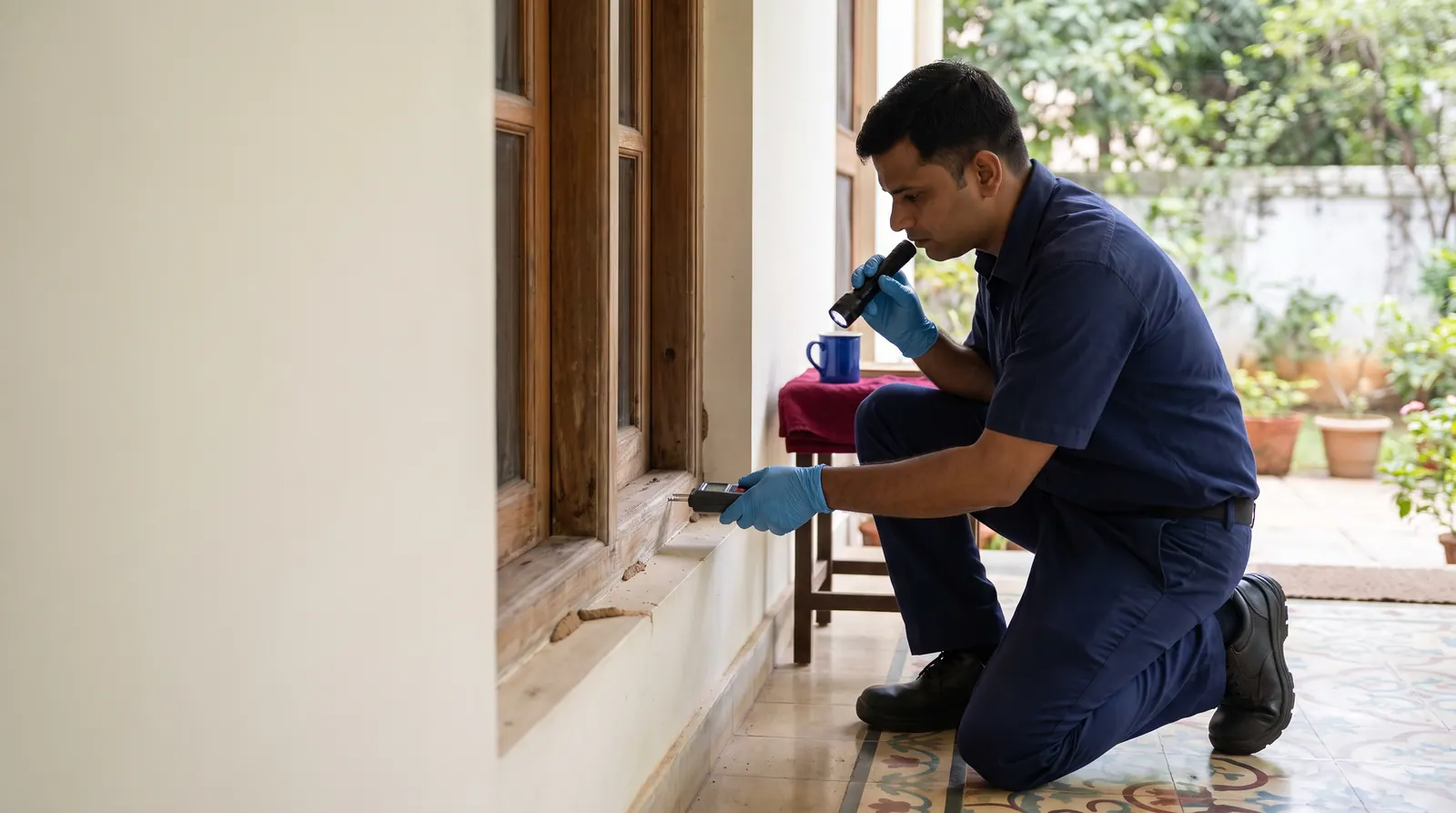
Wood damage needs a closer look. Termites eat wood from the inside, so a door frame or skirting board may look fine but sound hollow when tapped, or give way under light pressure. Small round exit holes with fine, flour-like powder beneath them are more typical of wood borer beetles in furniture and timber.
Our guide to termite warning signs in Goan homes covers termite damage in more detail. If you are finding powder around furniture, read about wood borer treatment in Goa.
4. Nests, mud tubes and egg cases
Finding where pests live tells you the problem has settled in. Rodents build nests from shredded paper, cloth and packaging, often behind appliances, inside storage boxes or in roof spaces. Cockroaches leave small brown egg cases in cracks, hinges and behind kitchen fittings.
Termites build pencil-thin mud tubes up walls, foundations and the backs of cupboards so they can travel without drying out. If you break a tube and it is rebuilt within days, the colony is active.
Leave bee and wasp nests under eaves, on balconies or in window frames alone. Disturbing them can provoke stings. Keep children and pets away and have the nest handled by a professional. If anyone has a reaction to a sting, see a doctor.
5. Live pests in plain sight
Seeing one cockroach or a short line of ants can feel minor. But pests that normally hide often appear in the open only once their numbers have grown. A cockroach in daylight, a rat crossing a courtyard in the evening, or ants trailing steadily to the same spot all suggest a larger population nearby.
In Goa, watch for small piles of shed wings on window sills or near lights after the first monsoon showers. These are often left by swarming termites looking for a new site.
Bites you cannot explain, especially after sleeping, may point to bed bugs. See a doctor about any bites, and read about bed bug control in Goa to understand the next steps. If you see cockroaches in your kitchen regularly, our page on cockroach control in Goa explains how they are usually treated.
Why these signs can build up quickly in Goa
Goa's humid coastal climate and very heavy south-west monsoon suit many pests. Damp walls, blocked drains and rarely opened store rooms give cockroaches, termites and wood borers the moisture and shelter they like. Heavy rain also pushes rodents and ants indoors in search of dry ground and food.
The type of property matters as well, because each one has its own weak spots:
- Older homes: timber roof frames and wooden furniture need regular checks for termites and wood borers.
- Restaurant kitchens: busy kitchens in places such as Calangute, Baga and Candolim are vulnerable at drains and food stores.
- Hotels: staff quarters need watching for bed bugs.
- Housing societies: in Panaji, Porvorim or Margao (also called Madgaon), shared refuse areas and ducts can let pests move between flats.
What should you do when you notice a sign?
- Write it down. Note what you saw, where and when. Take a clear photo if you can.
- Check nearby spots. Look behind appliances, under sinks, inside cupboards and along skirting in the same room.
- Cut off easy food and water. Store food in sealed containers, clear crumbs, fix dripping taps and empty standing water.
- Avoid random spraying. Household sprays can drive cockroaches and ants deeper into walls and make the source harder to find. If you do use a product, follow the label, ventilate the room and keep children and pets away until it is dry.
- Leave nests alone. Do not disturb bee or wasp nests, and do not keep breaking open termite mud tubes.
- Arrange an inspection. An inspection identifies the pest, how far the activity has spread and what is attracting it.
How a professional inspection helps
We follow an Integrated Pest Management (IPM) approach. We inspect first, advise on sanitation and proofing, and then treat only where it is needed.
In Goa we are a licensed pest control operator under the Directorate of Agriculture, Goa. We use CIB&RC-registered products and keep Material Safety Data Sheets for the products we use.
After each visit, our Goa clients receive a service report and updates on WhatsApp. For hotels, restaurants and other food businesses, we provide documentation aligned with HACCP and FSSAI audit expectations. Where a warranty applies, it covers the treated area for specific services, as set out in the service agreement.
You may find signs in more than one area, or the same pest may keep returning. In that case a scheduled programme may suit you better than a single treatment. Our guide on choosing between an AMC and one-time pest control explains the difference.
Noticed any of these signs? Contact our Goa branch in Chimbel. Tell us where you are and what you've seen, and we'll advise on the next step.
Frequently asked questions
QHow can I tell rat droppings from cockroach droppings?
Rat droppings are dark, roughly spindle-shaped pellets, noticeably larger than mouse droppings, which are about the size of a rice grain. Cockroach droppings are much smaller and look like ground pepper or coffee grounds, often with brown stains in cabinet corners and hinges. Location helps too. Rodent droppings tend to line walls and regular routes, while cockroach specks gather near warmth, moisture and food. A photo helps our technicians identify the pest.
QAre flying insects after the first monsoon rain a sign of termites?
They can be. In Goa, swarms of winged insects around lights after early monsoon showers are often termites leaving a colony to start new ones. So are piles of shed wings on window sills. Flying ants also swarm, and the two look similar at first glance. Termites have straight bodies and wings of equal length, while ants have a pinched waist. If you find wings indoors, check nearby frames and walls for mud tubes or hollow-sounding wood.
QShould I spray the area myself before an inspection?
It is better not to. Spraying can drive cockroaches and ants into wall voids and hide the activity an inspector needs to see. Instead, note where you saw the signs, keep food sealed, and leave droppings or damage visible if it is safe to do so. If you have already used a household product, follow its label and ventilate the room. Keep children and pets away until it dries, and tell the technician what you used.
QHow soon should I act after spotting one of these signs?
As soon as is practical. Cockroaches, rodents and bed bugs breed steadily, and termites can damage timber out of sight, so a small problem rarely stays small. Acting early usually allows a more targeted treatment. Some signs deserve particular urgency: gnawed wiring, bee or wasp nests near doorways, and suspected bed bugs in guest rooms or staff accommodation.
QCan a restaurant or hotel get records after an inspection or treatment?
Yes. Our Goa branch shares service reports after visits. We also provide documentation for food businesses aligned with HACCP and FSSAI audit expectations. Keep these records alongside your own cleaning schedules and pest-sighting logs, as together they help show that pest activity is being monitored and acted on. Tell us what your auditor or management usually asks to see, and we'll explain the reports you will receive.
QWhat happens if pests come back after treatment?
Where a warranty applies, it covers the treated area for specific services, as set out in your service agreement. Cover varies by pest and treatment. It excludes structural changes, new construction and cases where post-service instructions were not followed. Pests can also come in from neighbouring flats or from outside, so ask our technician about sealing gaps, managing waste and other prevention steps for your property.
Last updated 13 October 2026. Information on this page is general guidance; your technician will advise on your specific property after inspection.